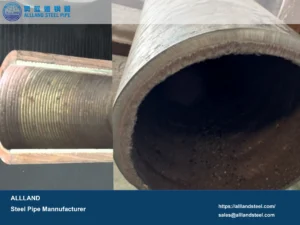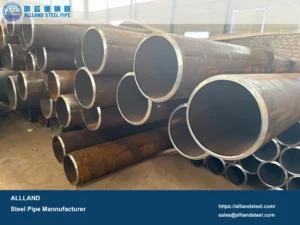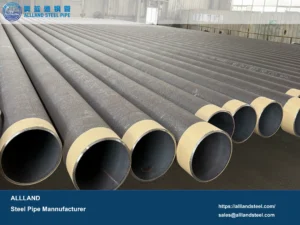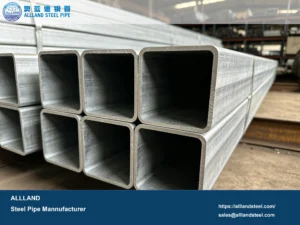



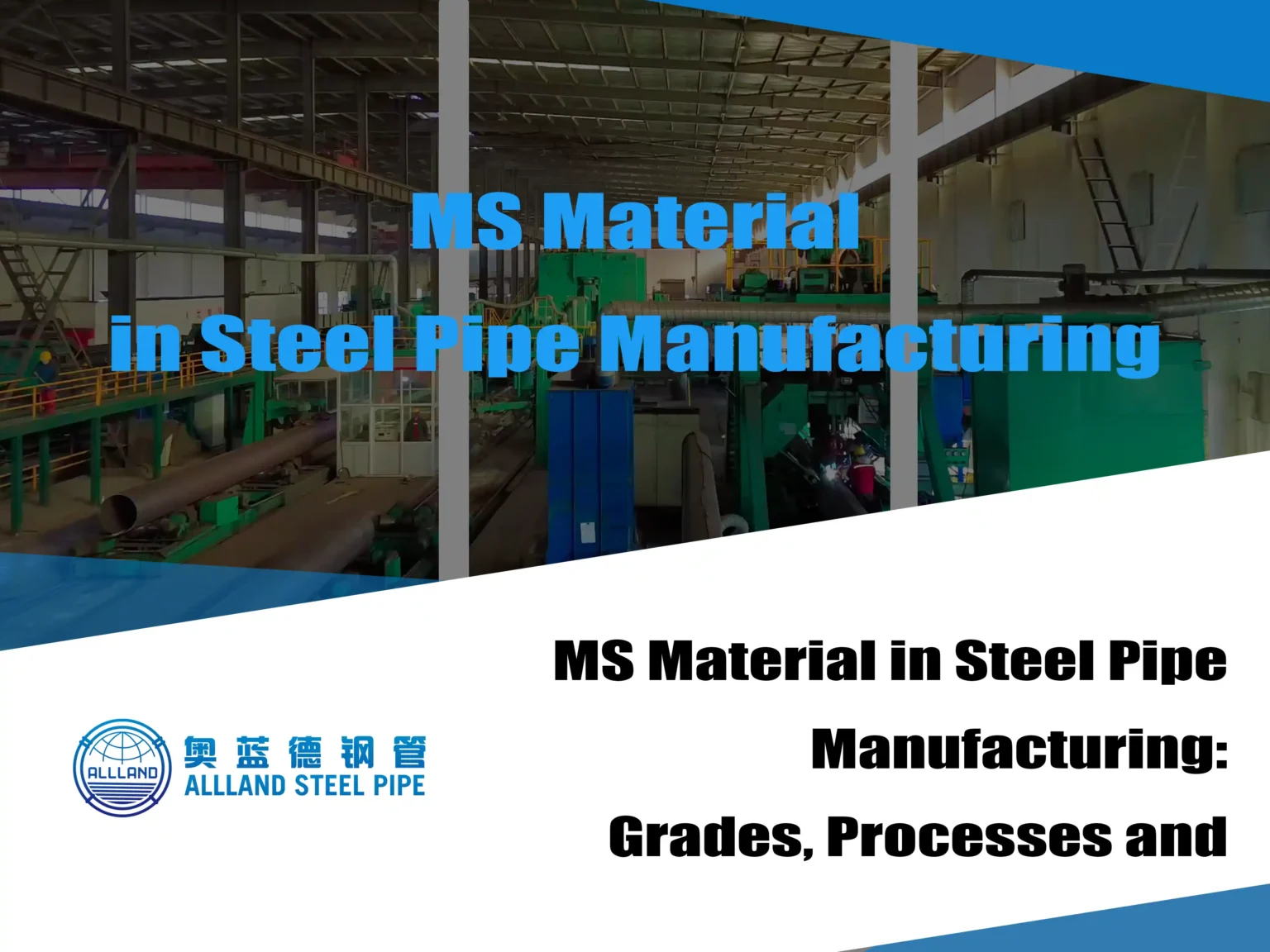
MS (Mild Steel) is widely used in steel pipe manufacturing because of its weldability, formability, and cost-effectiveness. It can be supplied as steel coils, strips, or plates and processed into different pipe types for structural engineering, fluid transportation, infrastructure, and industrial applications.
Selecting suitable MS material involves more than identifying a steel grade. Manufacturers and buyers must also consider the applicable pipe standard, manufacturing process, dimensional requirements, mechanical properties, and service environment.
What Determines MS Material Selection for Steel Pipes?
MS material selection depends on the intended pipe application, manufacturing method, and operating conditions. Before production, manufacturers and buyers need to evaluate several factors to ensure that the selected material meets the technical and project requirements.
- Required Mechanical Strength: The material must provide sufficient yield strength and tensile strength to meet the pipe’s structural or pressure-bearing requirements.
- Pipe Diameter and Wall Thickness:Pipe dimensions influence material requirements, forming conditions, and manufacturing feasibility, particularly for large-diameter or heavy-wall pipes.
- Welding and Forming Requirements: The material’s weldability, ductility, and forming characteristics affect its suitability for ERW, LSAW, and SSAW manufacturing processes.
- Operating Pressure and Service Environment: Pressure, temperature, corrosion exposure, and transported media determine the required material properties and protective measures.
- Applicable Project Standards:Material grades and chemical and mechanical requirements must comply with the specified standards, such as API 5L, ASTM A53, ASTM A500, or EN 10219, depending on the pipe application.
For readers unfamiliar with the abbreviation, our guide to MS material full form and meaning provides a basic explanation of the term.
MS Material Grades and Standards for Steel Pipes
MS steel pipes can be manufactured to different material grades and product standards according to their applications. A material grade defines the steel’s specified chemical and mechanical properties, while a pipe product standard establishes requirements for the finished product, including manufacturing, dimensions, testing, and acceptance criteria.
The following are examples of commonly specified carbon steel pipe and tube standards:
| Pipe Application | Product Standard | Common Grades |
| Line Pipes | API 5L | Gr. B, X42, X52, X60, X65, X70 |
| General Fluid Transportation | ASTM A53/A53M | Gr. A, Gr. B |
| Structural Steel Pipes | ASTM A500/A500M | Gr. A, B, C, D |
| Structural Hollow Sections | EN 10219 | S235JRH, S275J0H, S355J2H |
| General Structural Pipes | JIS G 3444 | STK400, STK490 |
These standards serve different product and application requirements:
- API 5L: Specifies requirements for steel line pipe used in pipeline transportation systems. Its grade range includes conventional and higher-strength line pipe grades.
- ASTM A53/A53M: Covers black and hot-dip zinc-coated welded and seamless steel pipe for specified mechanical and pressure applications.
- ASTM A500/A500M: Covers cold-formed welded and seamless carbon steel structural tubing in round, square, rectangular, and special shapes.
- EN 10219: Applies to cold-formed welded structural hollow sections made from non-alloy and fine-grain structural steels.
- JIS G 3444: Specifies carbon steel tubes for general structural purposes.
The material grade and applicable product standard must be specified together when ordering steel pipes. For example, API 5L X52 identifies a line pipe grade, whereas ASTM A53/A53M defines the requirements for a category of finished steel pipe.
These grades should not be considered interchangeable simply because they are all associated with carbon steel. Their chemical composition, mechanical properties, manufacturing requirements, and testing criteria must be checked against the relevant standard edition.
MS Material Grades and Standards for Steel Pipes
MS (Mild Steel) is widely used in steel pipe manufacturing because it combines good weldability, formability, and cost-effectiveness.
Key Advantages:
- Good Weldability: Suitable for common welding processes, including ERW and submerged arc welding.
- Easy Forming: Can be rolled, bent, and shaped into different pipe diameters and configurations.
- Cost-Effective: Offers a practical balance between material performance and production costs.
- Wide Availability: Available in various grades, thicknesses, and product forms.
- Versatile Applications: Used in construction, infrastructure, water transportation, and industrial piping.
Main Consideration:
Mild steel has limited natural corrosion resistance compared with stainless steel. For outdoor, underground, or moisture-exposed applications, protective treatments such as hot-dip galvanizing, FBE, or 3LPE coating may be required.
Overall, MS material offers a practical solution for many steel pipe applications when the grade and surface protection are selected according to service conditions.
MS Material in Different Steel Pipe Manufacturing Processes
MS material is processed through different pipe manufacturing methods depending on the required diameter, wall thickness, production volume, and application. The starting material is generally supplied as steel coils, strips, or plates.
MS Material for ERW Steel Pipes
In ERW (Electric Resistance Welded) pipe manufacturing, MS steel coils or strips are gradually formed into a cylindrical shape through a series of forming rolls. High-frequency electrical resistance is then used to heat and join the longitudinal edges without adding filler metal.
ERW is commonly used for small- and medium-diameter steel pipes, including structural tubes, fluid transportation pipes, and general-purpose industrial pipes.
MS Material for LSAW Steel Pipes
LSAW (Longitudinal Submerged Arc Welded) pipes are manufactured from MS steel plates. The plates are formed into a cylindrical shape using JCOE or UOE forming processes, followed by longitudinal submerged arc welding.
This process is suitable for producing large-diameter and heavy-wall steel pipes. Material selection is particularly important because the steel plate must meet the required strength, toughness, weldability, and dimensional specifications.
MS Material for SSAW Steel Pipes
SSAW (Spiral Submerged Arc Welded) pipes are produced from MS steel coils or strips. The raw material is fed into a spiral forming machine, where it is continuously shaped into a cylindrical pipe with a helical weld seam.
The spiral forming process allows manufacturers to produce large-diameter pipes from relatively narrower steel coils. SSAW pipes are commonly used in water transmission, infrastructure, foundation engineering, and other large-scale projects.
ERW, LSAW and SSAW Manufacturing Comparison
| Parameter | ERW | LSAW | SSAW |
| Starting Material | Steel coil/strip | Steel plate | Steel coil/strip |
| Weld Direction | Longitudinal | Longitudinal | Spiral |
| Forming Method | Roll forming | JCOE / UOE | Spiral forming |
| Typical Application | Small and medium-diameter pipes | Large-diameter, heavy-wall pipes | Large-diameter pipes |
| Main Material Considerations | Formability and weldability | Plate strength, toughness and weldability | Coil quality and forming performance |
The manufacturing process does not determine the material grade by itself. The steel chemistry, mechanical properties, and raw material specifications must comply with the selected pipe standard and project requirements.
Industrial Applications of MS Material
MS (Mild Steel) is widely used across industrial sectors due to its good weldability, formability, and versatility. Depending on the material grade, pipe specifications, and surface treatment, it can be manufactured into various products for structural, transportation, and infrastructure applications.
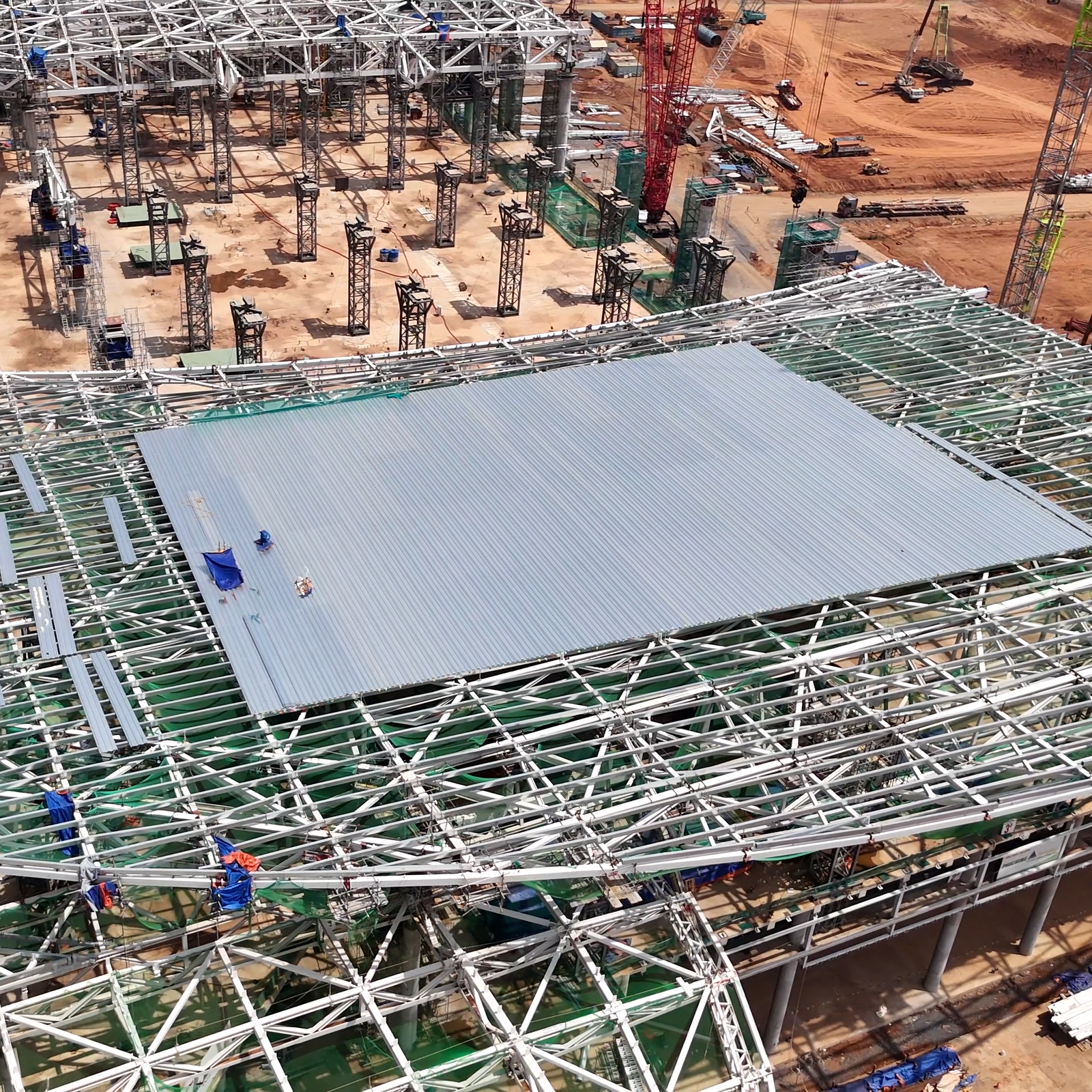
MS material is commonly used in building frameworks, support columns, machinery frames, and structural hollow sections.
For applications requiring square profiles, mild steel square hollow sections (SHS) offer a practical solution for structural support and general fabrication.
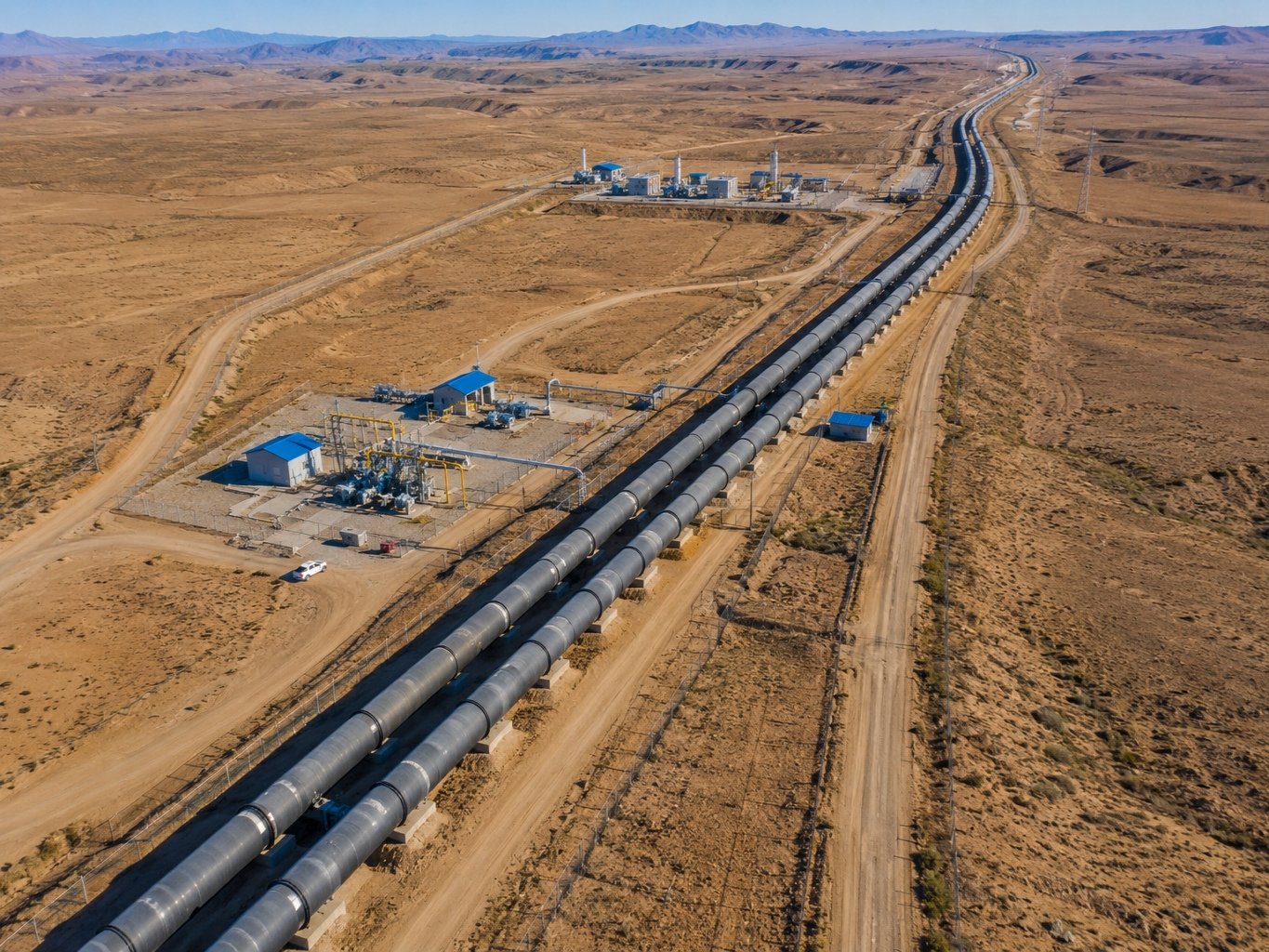
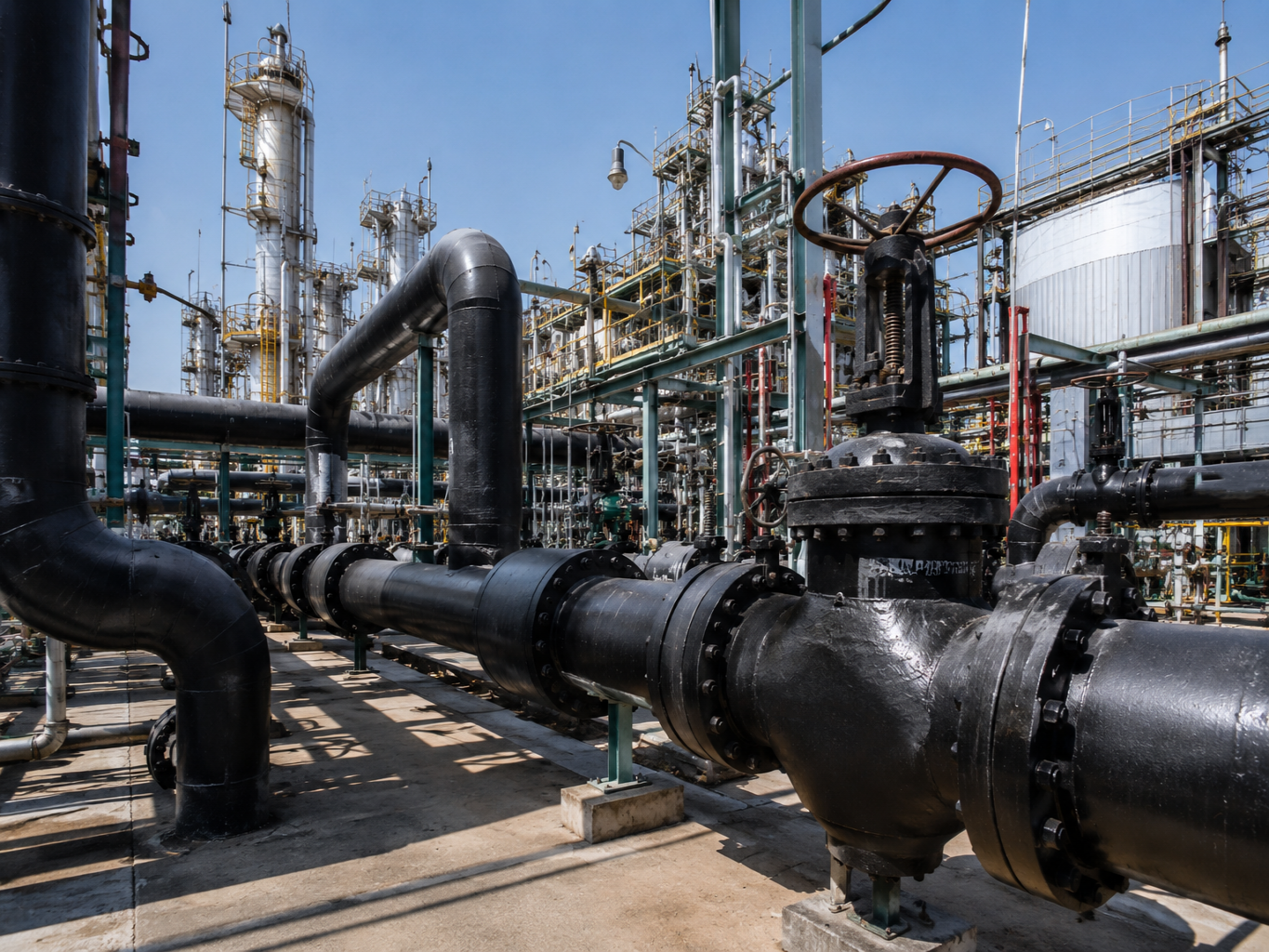
MS steel pipes are used in oil and gas transportation systems, auxiliary pipelines, and industrial facilities. The selection of pipe grade, wall thickness, and manufacturing standard depends on operating pressure, transported media, and project requirements.
Mild steel pipes are widely used in water transmission pipelines, distribution networks, and water treatment facilities. Large-diameter pipes with suitable internal and external coatings help meet the requirements of long-distance water transportation and underground installation.
MS steel pipes are used in foundation piles, bridge foundations, marine structures, and port construction. For example, SSAW steel pipes used in port construction can serve as foundation piles, quay wall components, and other large-scale infrastructure elements.
Mild steel is widely used in machinery frames, equipment supports, material handling systems, and general industrial piping. Its formability and weldability make it suitable for manufacturing components with different dimensions and structural configurations.
MS and structural steel tubes are used in power transmission infrastructure, including tubular transmission towers and support structures.
Their material grades and structural specifications must meet project loading requirements. Applications involving structural steel tubes for transmission towers also require consideration of strength, weldability, and corrosion protection.
Key Specifications for MS Steel Pipe Procurement
When purchasing MS steel pipes, buyers need to define the technical specifications clearly to ensure the supplied products meet project requirements. The main considerations include material grade, pipe dimensions, manufacturing standards, and surface treatment.
| Specification | Key Requirements |
| Material Grade | ASTM A53 Gr. B, API 5L Gr. B, S235JR, Q235B, etc., according to the applicable product standard |
| Outside Diameter (OD) | Specified pipe diameter based on design requirements |
| Wall Thickness (WT) | Selected according to structural loads, working pressure, or project specifications |
| Pipe Length | Commonly 6 m, 9 m, or 12 m; customized lengths may be available |
| Manufacturing Process | ERW, LSAW, or SSAW, depending on pipe dimensions and application |
| End Finish | Plain end, beveled end, or threaded end |
| Surface Treatment | Black, painted, hot-dip galvanized, 3LPE, or FBE coating |
| Inspection Requirements | Dimensional inspection, mechanical testing, weld inspection, and hydrostatic testing where applicable |
Important considerations for buyers:
- Confirm that the material grade matches the specified pipe product standard.
- Specify OD, WT, length, and dimensional tolerances in the purchase order.
- Define coating type, thickness, and inspection requirements for coated pipes.
- Confirm testing requirements and request an EN 10204 3.1 Mill Test Certificate (MTC) when required.
Providing complete specifications helps manufacturers evaluate production feasibility, control product quality, and deliver MS steel pipes that meet project requirements.
FAQ
What does MS material stand for?
MS stands for Mild Steel, a low-carbon steel category commonly used in structural products, pipes, and general engineering applications.
Is MS material suitable for steel pipe manufacturing?
Yes. Mild steel is commonly used to manufacture ERW, LSAW, and SSAW pipes, provided the selected material grade meets the applicable product standard and project requirements.
Which standards are used for MS steel pipes?
Commonly specified standards include API 5L, ASTM A53/A53M, ASTM A500/A500M, EN 10219, and JIS G 3444. The appropriate standard depends on the pipe type and intended application.