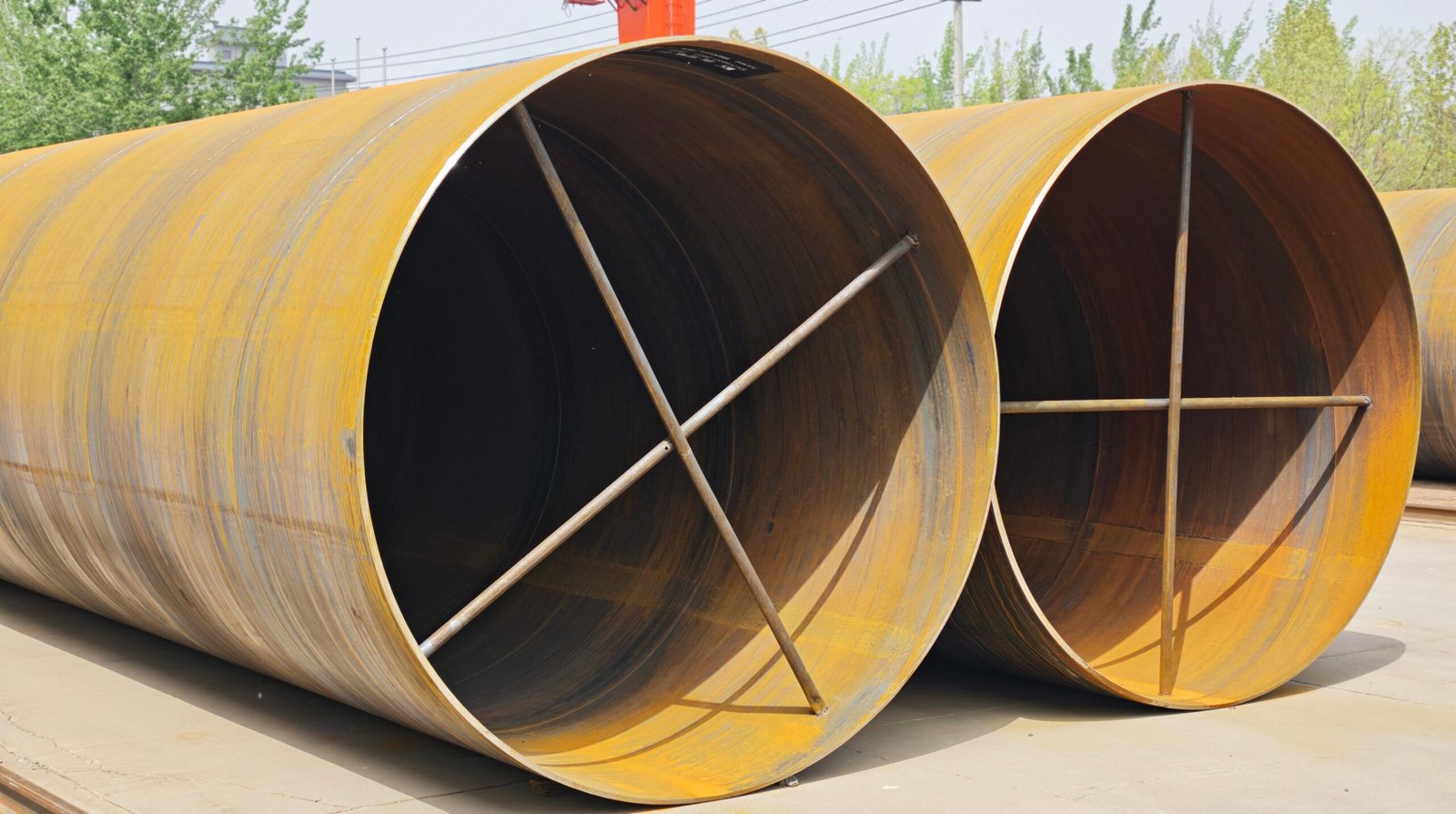
Welcome to ALLLAND Steel Pipe Co., Ltd.
ALLLAND GB/T 8163 Steel Pipe Supply
Welcome to ALLLAND. Our GB/T 8163 seamless steel pipes are widely used in pipelines for transporting fluids such as water, oil, and gas. Our steel pipes are made from high-quality carbon steel and low-alloy steel, including grades such as Q195, Q215, Q235, 20#, and 45#. They are manufactured through rigorous hot-rolling, hot-expansion, or cold-drawing processes to ensure excellent mechanical properties and consistent dimensional accuracy. ALLLAND’s GB/T 8163 steel pipes are reliable, corrosion-resistant, and long-lasting, making them the ideal choice for industrial and civil pipeline projects. Please feel free to contact us for custom orders; we will provide you with the most professional solutions and high-quality service.
Alllandsteel is a steel pipe manufacturer based in China with 25 years of experience.
The facility spans 22,000 square meters, represents a RMB 700 million investment, and operates four production lines (JCOE, ERW, SMLS, SSAW) alongside five coating lines.
With an annual production capacity of 250,000 tons, the factory covers specifications ranging from Ø406 to Ø1524 and holds multiple international certifications (API/ASTM/EN/ISO/JIS). Focused on steel pipes, creating value for you!
HOT PRODUCTS
POPULAR ARTICLES
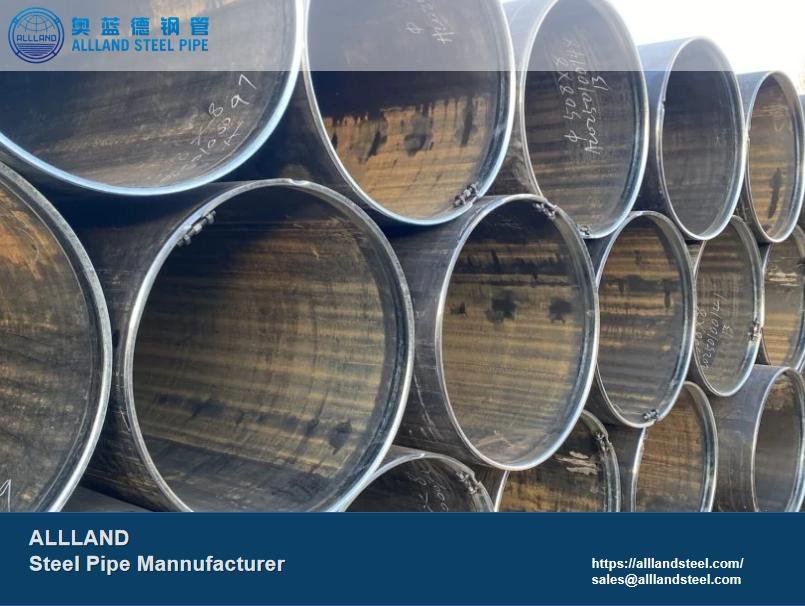
GB/T 8163 is a Chinese national standard, with the full title “Seamless Steel Pipes for Liquid Service.”
The latest current standard is GB/T 8163-2018, which specifies the ordering requirements, dimensions, external shape, weight, technical requirements, test methods, inspection rules, packaging, marking, and quality certificates for seamless steel pipes for liquid service. This standard applies to low- and medium-pressure pipes for general fluid conveyance (excluding specialized pipeline standards).
GB/T 8163-2018 is currently one of the most widely applied steel pipe standards in China’s fluid transportation sector, covering materials ranging from mild carbon steel to low-alloy high-strength steel. Common steel grades include 10#, 20#, Q235, Q345, Q390, Q420, and Q460.
O.D.:
6–325 mm
W.T.:
1–32 mm
Length:
4–12 m (can be cut to customer specifications)
Steel Grades:
10#, 20#, Q235, Q345, Q390, Q420, Q460
Processes:
Hot-rolled, hot-expanded/pierced, cold-drawn, heat-treated
Surface Treatments:
Pickled, galvanized, oil-coated, powder/epoxy-coated
Tube Ends:
Full-length pipes, short pipes, end-faced, bent, straightened
Delivery Conditions:
Grade, Specification, Furnace Number, Standard
| OD (mm) | WT(mm) | Common Sizes (OD × WT) |
| 25 | 1.5 / 2 / 2.5 / 3 | 25×2 / 25×2.5 |
| 32 | 2 / 2.5 / 3 / 3.5 | 32×2.5 / 32×3 |
| 38 | 2 / 3 / 3.5 / 4 | 38×3 / 38×3.5 |
| 42 | 2.5 / 3 / 3.5 / 4 | 42×3 |
| 48 | 2.5 / 3 / 3.5 / 4 | 48×3 / 48×3.5 |
| 57 | 3 / 3.5 / 4 / 5 | 57×3.5 / 57×4 |
| 60 | 3 / 3.5 / 4 / 5 | 60×3.5 |
| 76 | 3 / 3.5 / 4 / 5 / 6 | 76×4 / 76×5 |
| 89 | 3.5 / 4 / 5 / 6 / 8 | 89×4 / 89×5 |
| 102 | 4 / 5 / 6 / 8 | 102×4 |
| 108 | 4 / 4.5 / 5 / 6 / 8 | 108×4.5 |
| 114 | 4 / 5 / 6 / 8 / 10 | 114×5 / 114×6 |
| 133 | 4 / 5 / 6 / 8 / 10 | 133×6 |
| 140 | 5 / 6 / 8 / 10 | 140×6 |
| 159 | 5 / 6 / 8 / 10 / 12 | 159×6 / 159×8 |
| 168 | 6 / 8 / 10 / 12 | 168×6 |
| 180 | 6 / 8 / 10 / 12 | 180×8 |
| 194 | 6 / 8 / 10 / 12 | 194×8 |
| 203 | 6 / 8 / 10 / 12 | 203×8 |
| 219 | 6 / 8 / 10 / 12 / 14 | 219×6 / 219×8 |
| 245 | 8 / 10 / 12 / 14 | 245×10 |
| 273 | 8 / 10 / 12 / 14 / 16 | 273×8 / 273×10 |
| 299 | 8 / 10 / 12 / 16 | 299×10 |
| 325 | 8 / 10 / 12 / 14 / 16 | 325×10 |
| 351 | 10 / 12 / 14 / 16 | 351×12 |
| 377 | 10 / 12 / 14 / 16 / 20 | 377×12 |
| 406 | 10 / 12 / 14 / 16 / 20 | 406×12 |
| 426 | 10 / 12 / 14 / 16 / 20 | 426×12 |
| 457 | 12 / 14 / 16 / 20 / 25 | 457×14 |
| 508 | 12 / 14 / 16 / 20 / 25 | 508×16 |
| 530 | 12 / 14 / 16 / 20 / 25 | 530×16 |
| 630 | 14 / 16 / 20 / 25 / 30 | 630×20 |
| Types of Steel Tubes | Permissible tolerance for outer diameter (mm) |
| Hot-rolled (expanded) steel tubes | ±1%D or ±0.5, whichever is greater |
| Cold-rolled (expanded) steel tubes | ±0.75%D or ±0.3, whichever is greater |
| Types of Steel Pipes | Nominal outer diameter D | S/D | Permissible wall thickness tolerance (mm) |
| Hot-rolled (expanded) steel tubes | ≤102 | – | ±12.5%S or ±0.4, whichever is greater |
| >102 | ≤0.05 | ±15%S or ±0.4, whichever is greater | |
| >0.05-0.10 | ±12.5%S or ±0.4, whichever is greater | ||
| >0.10 | ±12.5%S to -10%S | ||
| Hot-expanded | – | ±17.5%S to -12.5%S | |
| Types of Steel Tubes | Nominal wall thickness of steel pipes S | Permissible tolerance (mm) |
| Cold-rolled | ≤3 | ±15%S/-10%S, or ±0.15, whichever is greater |
| >3–10 | +12.5%S/-10%S | |
| >10 | ±10%S |
| Fixed length (mm) | Permissible tolerance (mm) |
| ≤6000 | +30 mm / 0 mm |
| >6000 | +50 mm / 0 mm |
When steel pipes are delivered in multiples of standard lengths, GB/T 8163-2018 specifies the following cutting allowances:
For D ≤ 159 mm, the cutting allowance is 5–10 mm.
For D > 159 mm, the cutting allowance is 10–15 mm.
| Nominal wall thickness of steel pipe S/mm | Deflection per meter (mm/m) |
| ≤15 | ≤1.5 |
| >15–30 | ≤2.0 |
| >30/D ≥ 351 | ≤3.0 |
| The total length deflection of the steel pipe shall not exceed 0.15% of its total length. | |
In accordance with GB/T 17395, the density of steel is taken as 7.85 kg/dm³.
Permissible deviations between the actual weight and theoretical weight of delivered steel pipes:
Single steel pipe: ±10%
Batches of steel pipes weighing at least 10 tons: ±7.5%
| Grade | Chemical Requirements(%) | |||||||
| C | Si | Mn | P | S | Cr | Ni | Cu | |
| 10 | 0.07~0.13 | 0.17~0.37 | 0.35~0.65 | ≤0.030 | ≤0.030 | ≤0.15 | ≤0.30 | ≤0.20 |
| 20 | 0.07~0.23 | 0.17~0.37 | 0.35~0.65 | ≤0.030 | ≤0.030 | ≤0.25 | ≤0.30 | ≤0.20 |
Q345 offers higher strength and good low-temperature toughness. This means it can be used in low-temperature environments or applications that demand high strength.
Q390 is a new grade introduced in the GB/T 8163-2018 standard. Building on the properties of Q345, it offers greater load-bearing capacity and is suitable for large-scale engineering equipment, heavy-duty machinery components, or high-pressure fluid conveyance pipelines.
| Grades | level | Hemical Composition | CEV/% | ||||||||||||||
| C | Si | Mn | P | S | Nb | V | Ti | Cr | Ni | Cu | N | Mo | B | ||||
| ≤ | |||||||||||||||||
| Q345 | A | 0.20 | 0.50 | 1.70 | 0.035 | 0.035 | 0.30 | 0.50 | 0.20 | 0.012 | 0.10 | – | 0.45 | ||||
| B | 0.035 | 0.035 | |||||||||||||||
| C | 0.030 | 0.030 | 0.07 | 0.15 | 0.20 | ||||||||||||
| D | 0.18 | 0.030 | 0.025 | ||||||||||||||
| E | 0.025 | 0.020 | |||||||||||||||
| Q390 | A | 0.20 | 0.50 | 1.70 | 0.035 | 0.035 | 0.07 | 0.20 | 0.20 | 0.30 | 0.50 | 0.20 | 0.015 | 0.10 | – | 0.46 | |
| B | 0.035 | 0.035 | |||||||||||||||
| C | 0.030 | 0.030 | |||||||||||||||
| D | 0.030 | 0.025 | |||||||||||||||
| E | 0.025 | 0.020 | |||||||||||||||
| Q420 | A | 0.20 | 0.50 | 1.70 | 0.035 | 0.035 | 0.07 | 0.20 | 0.20 | 0.30 | 0.80 | 0.20 | 0.015 | 0.20 | – | – | |
| B | 0.035 | 0.035 | |||||||||||||||
| C | 0.030 | 0.030 | 0.015 | ||||||||||||||
| D | 0.030 | 0.025 | |||||||||||||||
| E | 0.025 | 0.020 | |||||||||||||||
| Q460 | C | 0.20 | 0.60 | 1.80 | 0.030 | 0.030 | 0.11 | 0.20 | 0.30 | 0.80 | 0.20 | 0.015 | 0.20 | 0.005 | 0.015 | 0.53 | |
| D | 0.030 | 0.025 | |||||||||||||||
| E | 0.025 | 0.020 | |||||||||||||||
Except for grades Q345A and Q345B, all other grades must contain at least one of the grain-refining elements Al, Nb, V, or Ti. When these elements are combined, Nb + V + Ti ≤ 0.22%
Mo + Cr ≤ 0.30%
When Cr and Ni are present as residual elements in each grade, their respective contents shall not exceed 0.30%.
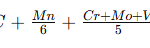
Formula for calculating carbon equivalent (CEV):
| Grade | Grade | Tensile Properties | Impact Test | |||
| Tensile Strength, Rm(Map) | Yield Strength, ReL /Rp0.2 | Elongation, A | Test Temperature, ℃ | Absorbed Energy, kJ/m² | ||
| 10 | – | 335~475 | ≥205 | ≥24 | – | – |
| 20 | – | 410~350 | ≥245 | ≥20 | – | – |
| Q345 | A | 470~630 | ≥345 | ≥20 | – | – |
| B | 20 | 34 | ||||
| C | ≥21 | 0 | ||||
| D | -20 | |||||
| E | -40 | 27 | ||||
| Q390 | A | 490~650 | ≥390 | ≥18 | – | – |
| B | 20 | 34 | ||||
| C | ≥19 | 0 | ||||
| D | -20 | |||||
| E | -40 | 27 | ||||
| Q420 | A | 520~680 | ≥420 | ≥18 | – | – |
| B | 20 | 34 | ||||
| C | ≥19 | 0 | ||||
| D | -20 | |||||
| E | -40 | 27 | ||||
| Q460 | C | 550~720 | 460 | 17 | 0 | 34 |
| D | -20 | |||||
| E | -40 | 27 | ||||
The testing system under the GB/T 8163 standard includes chemical composition analysis, mechanical property testing, process performance testing, and pressure and leak testing.
Every batch of GB/T 8163 steel pipes must undergo a Tensile Test, primarily to determine the pipe’s tensile strength (Rm), yield strength (ReL / Rp0.2), and elongation.
When dealing with low-temperature environments or certain specific steel grades, an Impact Test is required, with the Charpy V-notch (CVN) test commonly serving as the standard.
The flattening test is one of the core tests for GB/T 8163 steel pipes, designed to evaluate the pipe’s ductility and crack resistance.
The flaring test is applicable to small-diameter steel pipes; this test assesses the quality and ductility of the pipe ends.
The hydrostatic test is mandatory for every GB/T 8163 steel pipe to detect leaks and ensure its pressure-bearing capacity.
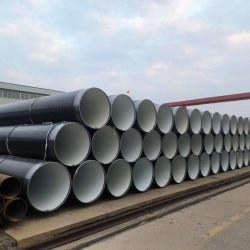
GB/T 8163, as a standard for general-purpose fluid conveyance pipes, can be treated with internal coatings, 3PE, or anti-corrosion coatings, making it suitable for a wide range of applications.
Oil and Gas (Low to Medium Pressure): Oilfield gathering and transportation pipelines, refinery process pipelines, etc.
Grades 20#, Q345, and Q390 are suitable for these applications, which may involve corrosion and pressure requirements.
Mechanical and Structural Manufacturing: Equipment piping, oil drilling pipes, construction steel scaffolding, etc. This sector places specific demands on the strength and load-bearing capacity of steel pipes.
Grade 20# offers the best overall performance and is suitable for equipment piping; for scaffolding in mechanical structures, which requires high load-bearing capacity and safety, Grade Q345 is a more reliable choice.
Power and Energy Industry: Cooling water systems, auxiliary steam pipelines, etc.
In power plants and energy facilities, there are many processes that require pipeline transportation. Under moderate pressure and low-temperature conditions, 20# can be selected.
It should be noted that GB/T 8163 is prohibited for use in boiler bodies and high-temperature, high-pressure pipelines.
Water Supply and Drainage Systems: Municipal water supply, drainage systems, fire protection piping, etc. These applications have lower strength requirements and involve extensive welding, so low-cost, easily weldable grades such as 10#, 20#, and Q235 are suitable.
Fill in the form below and our team will be happy to assist you