
Welcome to ALLLAND Steel Pipe Co., Ltd.
ALLLAND Steel Pipe Supply
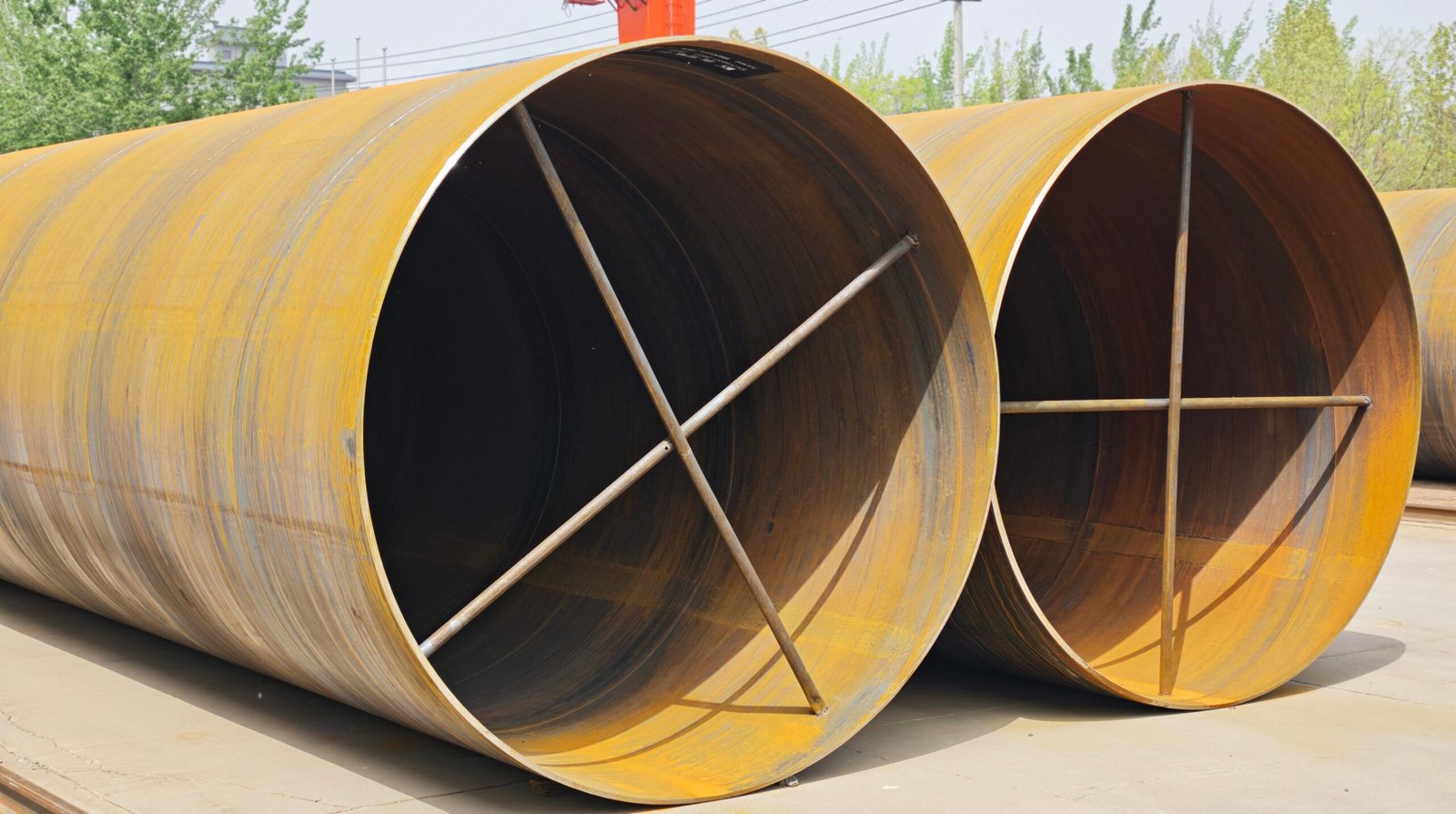
GB/T 3091 is a key standard for low-pressure fluid conveyance welded steel pipes in China. ALLLAND’s GB/T 3091 welded steel pipe production process encompasses a variety of welding techniques, including ERW, HFW, and SSAW. While ensuring weld strength, the company maintains strict control over pipe dimensions and overall quality, resulting in excellent machinability.
With rigorous quality control and intelligent manufacturing, ALLLAND is committed to providing pipeline products that meet international engineering standards to customers worldwide.
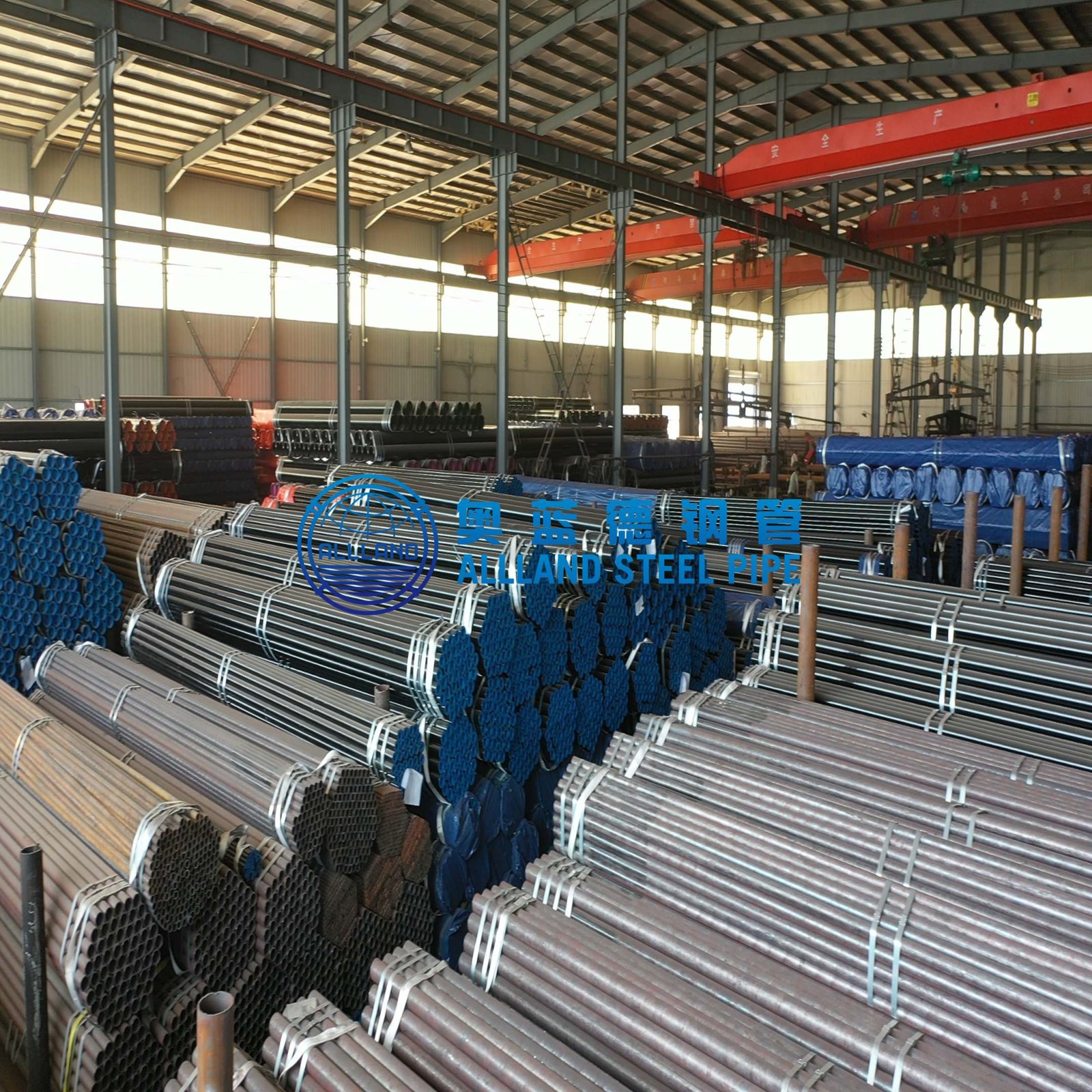
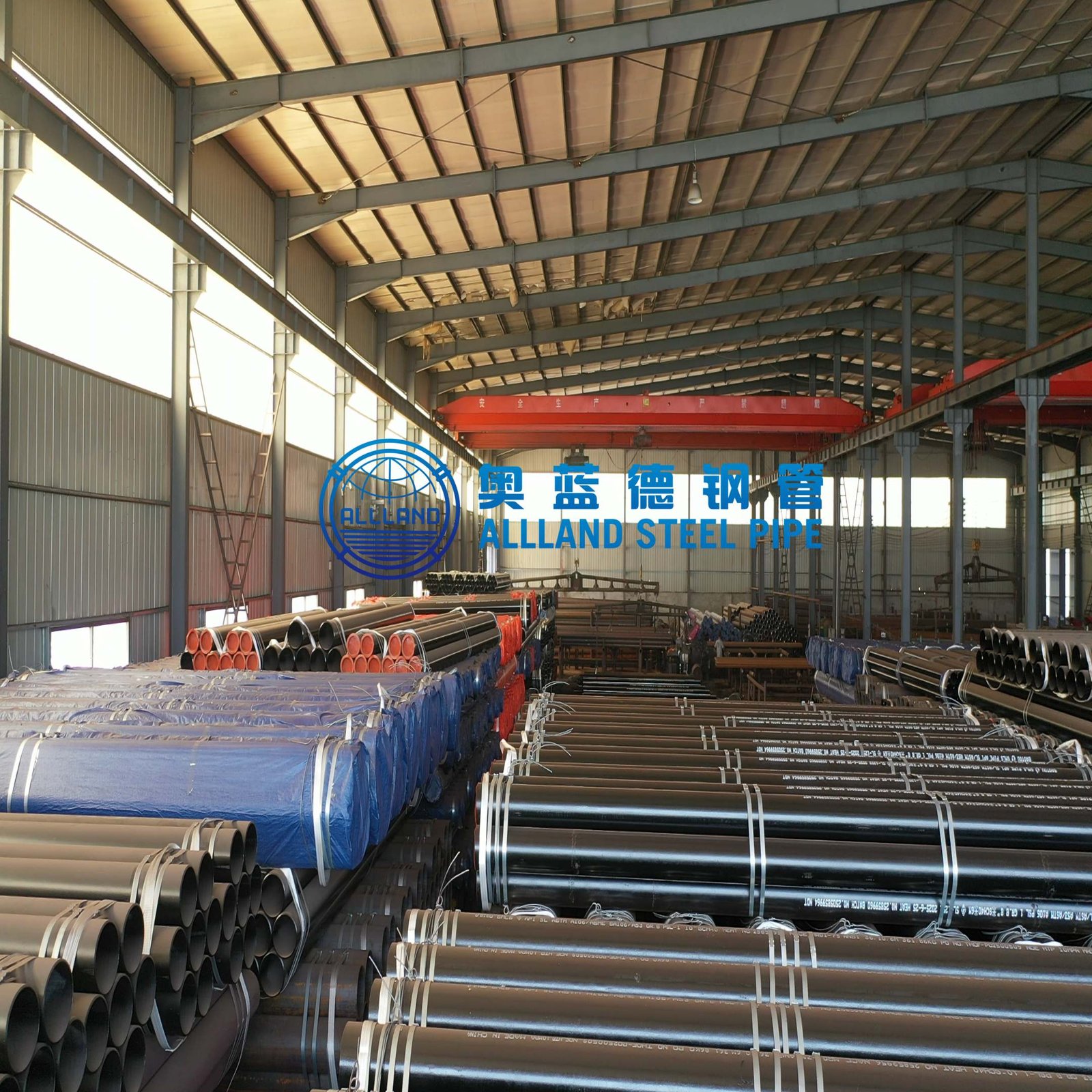
Alllandsteel is a steel pipe manufacturer based in China with 25 years of experience.
The facility spans 22,000 square meters, represents a RMB 700 million investment, and operates four production lines (JCOE, ERW, SMLS, SSAW) alongside five coating lines.
With an annual production capacity of 250,000 tons, the factory covers specifications ranging from Ø406 to Ø1524 and holds multiple international certifications (API/ASTM/EN/ISO/JIS). Focused on steel pipes, creating value for you!
HOT PRODUCTS
POPULAR ARTICLES
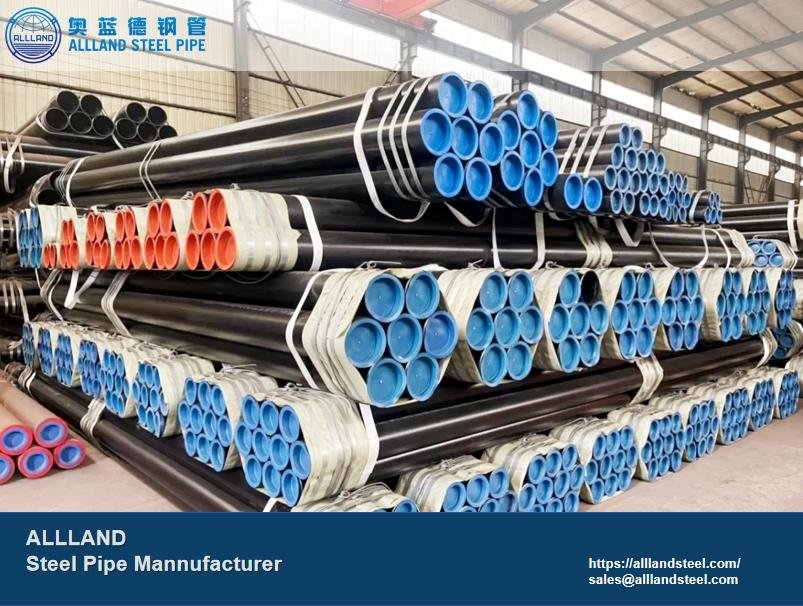
GB/T 3091 is a standard in China’s steel pipe industry that specifies welded steel pipes for low-pressure fluid conveyance. It is widely used in non-pressure conveyance applications such as construction, municipal engineering, water supply and drainage, and gas distribution.
This standard is a fundamental and widely used standard in China’s steel pipe industry.
Its full English title is “Welded steel pipes for low-pressure fluid conveyance,” and the latest version is GB/T 3091-2025.
O.D.:
10.3 mm – 660 mm
DN6 – DN50
DN65 – DN200
Length:
3–12 m / As per customer requirements (cut to length / in multiples of standard lengths)
W.T.:
1.2 mm – 25.0 mm
Delivery Condition:
Black steel pipe
Galvanized steel pipe (GI)
Common Steel Grades:
Q195Q / 215A / Q215B / Q235A
Q235B (most common) / Q275 / Q355B
Applicable Steel Pipe Types:
ERW/ HFW/ LSAW / SAWL/ SSAW/ Galvanized Steel Pipe
Galvanized Coating Requirements:
Hot-dip galvanizing, zinc coating weight ≥ 300 g/m²
GB/T 3091: Comparison Table of Common Sizes and NPS
| DN (mm) | NPS (inch) | OD (mm) | WT (mm) | Corresponding to SCH | Theoretical weight (kg/m) |
| 15 | 1/2 | 21.3 | 2.75 / 3.25 | SCH 10 / 20 | 1.7 / 2.0 |
| 20 | 3/4 | 26.9 | 2.75 / 3.5 | SCH 10 / 20 | 2.1 / 2.6 |
| 25 | 1 | 33.7 | 3.25 / 4.0 | SCH 10 / 40 | 3.1 / 3.8 |
| 32 | 1 1/4 | 42.4 | 3.25 / 4.0 | SCH 10 / 40 | 3.8 / 4.7 |
| 40 | 1 1/2 | 48.3 | 3.5 / 4.0 | SCH 10 / 40 | 4.5 / 5.2 |
| 50 | 2 | 60.3 | 3.5 / 4.5 | SCH 10 / 40 | 5.8 / 7.0 |
| 65 | 2 1/2 | 76.1 | 3.75 / 4.5 | SCH 10 / 40 | 7.6 / 9.0 |
| 80 | 3 | 88.9 | 4.0 / 4.75 | SCH 10 / 40 | 8.6 / 10.2 |
| 100 | 4 | 114.3 | 4.0 / 6.0 | SCH 10 / 40 | 12.3 / 18.0 |
| 125 | 5 | 139.7 | 4.5 / 6.0 | SCH 10 / 40 | 17.0 / 22.0 |
| 150 | 6 | 168.3 | 4.5 / 7.0 | SCH 10 / 40 / 80 | 21.5 / 32.0 |
| 200 | 8 | 219.1 | 6.0 / 8.0 | SCH 40 / 80 | 35.0 / 46.5 |
| 250 | 10 | 273.0 | 7.0 / 9.0 | SCH 40 / 80 | 50.0 / 65.0 |
| 300 | 12 | 323.9 | 8.0 / 10.0 | SCH 40 / 80 | 70.0 / 90.0 |
| 350 | 14 | 355.6 | 9.0 / 12.0 | SCH 40 / 80 | 90.0 / 120.0 |
| 400 | 16 | 406.4 | 10.0 / 12.0 | SCH 40 / 80 | 120 / 145 |
| 450 | 18 | 457.0 | 10.0 / 14.0 | SCH 40 / 80 | 135 / 170 |
| 500 | 20 | 508.0 | 12.0 / 16.0 | SCH 40 / 80 | 170 / 220 |
| 600 | 24 | 609.6 | 14.0 / 18.0 | SCH 40 / 80 | 230 / 300 |
| Diameter Nominal DN | Outside Diameter D | OD Tolerance | Minimum Nominal Wall Thickness t | WT Tolerance |
| 6 | 10.2 | ±0.5 | 2.0 | ±10%t |
| 8 | 13.5 | 2.0 | ||
| 10 | 17.2 | 2.2 | ||
| 15 | 21.3 | 2.2 | ||
| 20 | 26.9 | 2.2 | ||
| 25 | 33.7 | 2.5 | ||
| 32 | 42.4 | 2.8 | ||
| 40 | 48.3 | 3.0 | ||
| 50 | 60.3 | ±1%D | 3.2 | |
| 65 | 76.1 | 3.2 | ||
| 80 | 88.9 | 3.2 | ||
| 100 | 114.3 | 3.5 | ||
| 125 | 139.7 | 3.5 | ||
| 150 | 165.1 | 3.5 | ||
| 200 | 219.1 | 4.0 | ||
| The nominal diameter (DN) listed in the table represents an approximate internal diameter (ID) and is used as a standardized designation rather than an exact measured value. | ||||
Outside Diameter D | OD Tolerance | WT Tolerance | |
| Pipe Body | Pipe End* | ||
| >219.1~610 | ±0.75%D or ±3.2 mm (whichever is smaller) | ±0.5%D or ±1.6 mm (whichever is smaller) | t≤5.0,±0.5 t>5.0~15,±10%t t>15,±1.5 |
| >610~1422 | ±0.5%D or ±4.0 mm (whichever is smaller) | ±2.5 | |
| >1422 | ±5.0 mm or as agreed | ±3.5 mm or as agreed | |
| *Pipe end refers to the section within 100 mm from each pipe end. | |||
The length of steel pipes in multiples of standard length is typically controlled within the range of 3 to 12 meters.
For straight-seam high-frequency electric-welded steel pipes, the allowable deviation in total length for multiples of standard length is ±15 mm; for submerged-arc welded steel pipes, the allowable deviation is ±50 mm.
For each cut made along the length of the board, leave a 5–15 mm allowance.
For steel pipes with a nominal outer diameter of ≥114 mm, the bend is ≤ 0.2% × the length of the pipe.
Unit: mm
Nominal Diameter DN | Outside Diameter D | Ovality Tolerance ≤ |
| 6 | 10.2 | 0.20 |
| 8 | 13.5 | 0.20 |
| 10 | 17.2 | 0.20 |
| 15 | 21.3 | 0.30 |
| 20 | 26.9 | 0.35 |
| 25 | 33.7 | 0.40 |
| 32 | 42.4 | 0.40 |
| 40 | 48.3 | 0.50 |
| 50 | 60.3 | 0.60 |
| 65 | 76.1 | 0.60 |
| 80 | 88.9 | 0.70 |
| 100 | 114.3 | 0.80 |
| 125 | 139.7 | 1.00 |
| 150 | 165.1 | 1.20 |
| 200 | 219.1 | 1.60 |
| >219.1 | Tube end out-of-roundness: D≤610,0.5%D 610 < D ≤ 1422, and provided that (1) D/t ≤ 15, 1%D or 13,(whichever is smaller) (2) D/t>75, As agreed. D>1422, As agreed (by mutual agreement). | |
| The nominal diameter (DN) listed in the table represents an approximate internal diameter (ID) and is used as a standardized designation rather than an exact measured value. | ||
| Type | Tolerance |
| Single steel pipe | ±10 % |
| Bulk delivery | ±7.5 % |
Formula for calculating the theoretical weight of steel pipes: W = 0.02466 × (D − t) × t
GB/T 3091 does not directly specify the chemical composition of the steel, but instead refers to national steel standards.
The chemical composition shall comply with the provisions for Q195, Q215A, Q215B, Q235A, Q235B, Q275A, and Q275B in GB/T 700, and for Q355B in GB/T 1591.
| Grade | C (%) | Si (%)≤ | Mn (%) | P (%) ≤ | S (%) ≤ | Note |
| Q195 | 0.06 – 0.20 | 0.30 | 0.25 – 0.50 | 0.045 | 0.045 | Low-carbon steel, easy to weld. |
| Q215 | 0.06 – 0.22 | 0.30 | 0.35 – 0.65 | 0.045 | 0.045 | Common structural steel, slightly higher strength. |
| Q235B | 0.14 – 0.22 | 0.30 | 0.30 – 0.65 | 0.045 | 0.045 | Most commonly used, good weldability, moderate strength. |
| Q275 | 0.18 – 0.25 | 0.30 | 0.50 – 0.80 | 0.045 | 0.045 | Medium-strength steel, used for pressure pipes. |
The mechanical property requirements for steel tubes are primarily reflected in yield strength, tensile strength, and elongation.
| Grade | Yield strength ReL / ReH (MPa) | Tensile strength Rm (MPa) | Elongation δ5 (%) |
| Q195 | ≥ 135 – 195 | 270 – 410 | ≥ 25 |
| Q215 | ≥ 195 | 270 – 410 | ≥ 23 |
| Q235B | ≥ 235 | 375 – 500 | ≥ 22 |
| Q275 | ≥ 275 | 410 – 550 | ≥ 20 |
| Q345 | ≥ 345 | 470 – 630 | ≥ 17 |
Q235B is a mainstream steel grade with optimal overall performance and is widely used in municipal and industrial piping systems.
Mechanical property standards determine the load-bearing capacity, toughness, and safety of steel pipes.
The GB/T 3091 standard stipulates that high-frequency electric resistance welded steel pipes with a nominal outer diameter of 60.3 mm or less shall undergo a bending test, during which the test specimen must not exhibit any cracks or fissures.
High-Frequency Electric Resistance Welded Pipe (HFW Pipe) with a nominal outer diameter greater than 60.3 mm shall undergo a flattening test.
Submerged Arc Welded Pipe (SAW Pipe) must undergo a face bend test to ensure the integrity and formability of the weld.
GB/T 3091 specifies the following requirements for test results:
1. After bending, the weld surface shall be free of cracks, delamination, and lack of fusion.
2. Minor cracks are permitted, provided they do not exceed the specified length.
Each steel pipe must undergo a hydraulic test before leaving the factory; this is a common method for testing strength.
Formula for calculating hydraulic test pressure:
P = 2St/D
P: Allowable working pressure, MPa
S: Allowable stress, MPa
t: Pipe wall thickness, mm
D: Pipe outer diameter, mm
For SSAW/LSAW pipes, welds must be free of cracks, lack of fusion, and inclusions, and the height of any protrusions or the depth of any depressions must not exceed 10% of the wall thickness.
The inner and outer surfaces of the steel pipe shall be flat and smooth, with no noticeable protrusions or dents. The pipe ends shall be flat and free of tears or deformation.
For repair welding of defects, repair welding is not permitted on straight-seam high-frequency welded steel pipes with a nominal outer diameter of 219.1 mm or less.
For other steel pipes, the length of the repair weld shall be no less than 50 mm; for high-frequency welded steel pipes, the length of the repair weld shall not exceed 150 mm.
The repair weld length for each steel pipe shall not exceed 10% of the pipe’s total length.
GB/T 3091 is a standard for welded steel pipes used in low-pressure conveyance systems, primarily applicable to welded steel pipes used for conveying low-pressure fluids such as water, air, heating steam, and gas.
Urban Water Supply
Main water mains, water distribution pipes, and pump station piping.
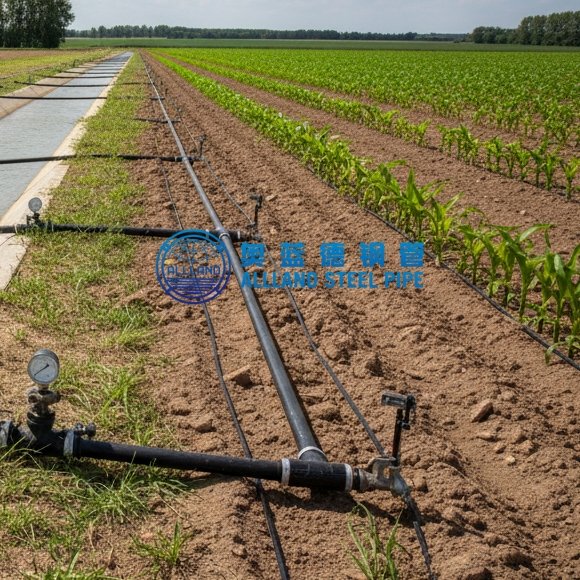
Agricultural Irrigation
Agricultural canals and irrigation pipes
Natural Gas Transmission (Low Pressure)
Building Structures
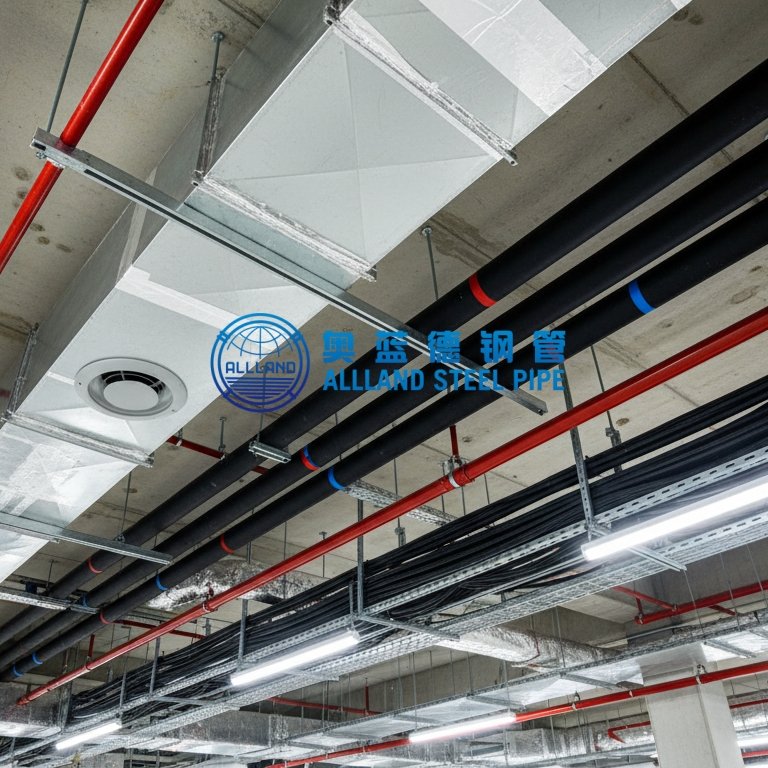
Scaffolding and HVAC piping
GB/T 3091 steel pipes are cost-effective and well-suited for large-diameter, low-pressure applications, offering excellent value for money.
Available in sizes ranging from DN 10 to 426 mm with wall thicknesses from 1.8 to 16 mm, these pipes can be paired with a variety of corrosion-resistant treatments—such as hot-dip galvanizing, plastic coating, and FBR coating—to accommodate a wide range of pipeline configurations.
Fill in the form below and our team will be happy to assist you