Welcome to ALLLAND Steel Pipe Co., Ltd.
ALLLAND Steel Pipe Supply
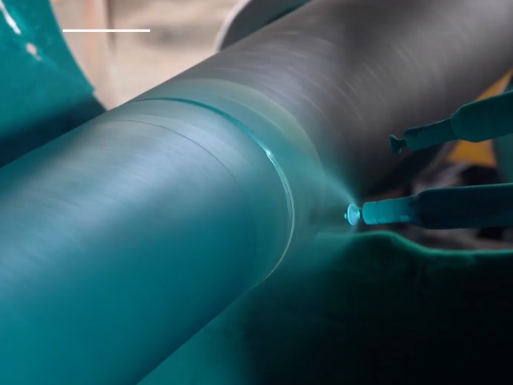
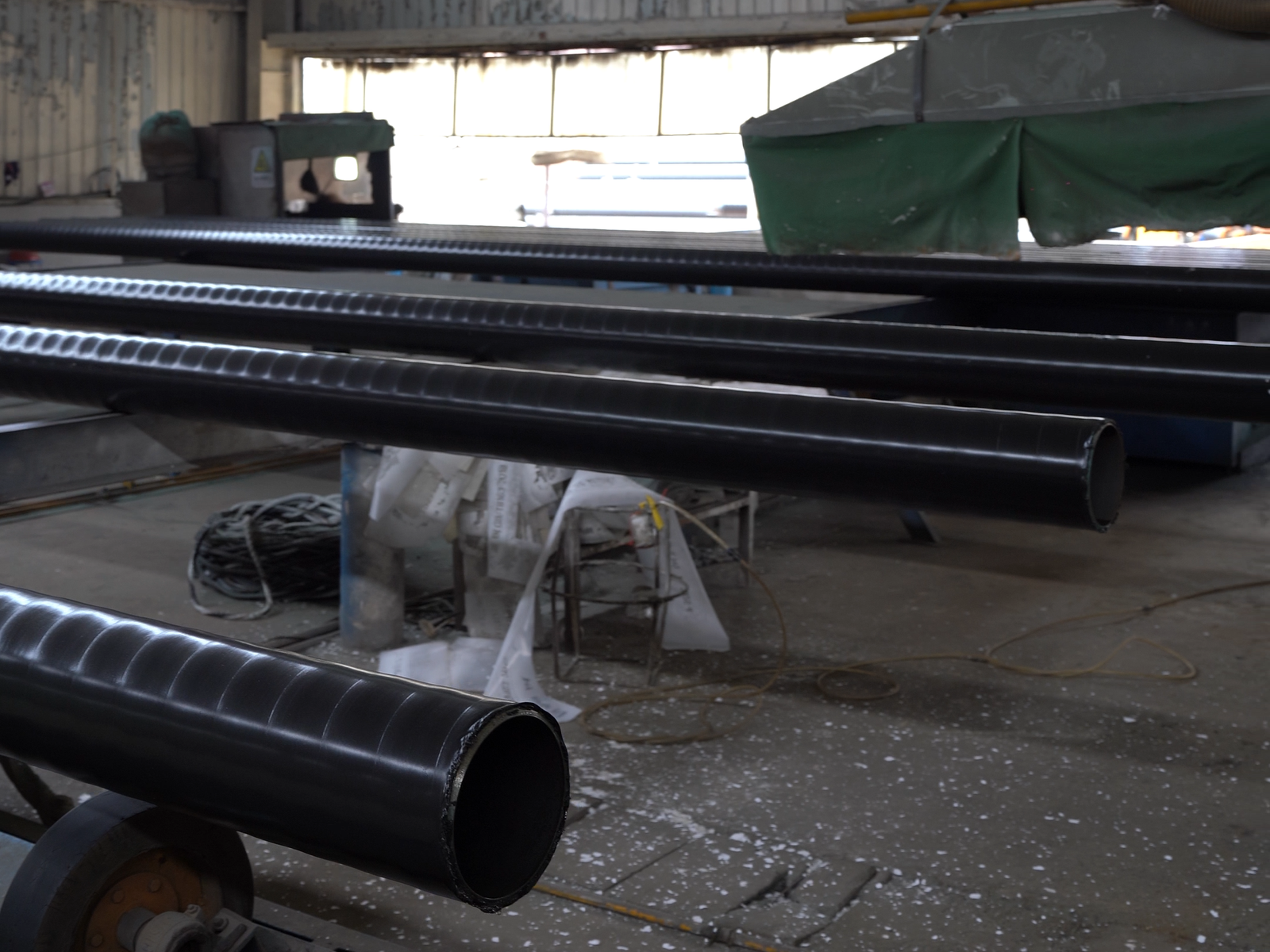
Welcome to ALLLAND Steel Pipe Manufacturing. The DIN 30678 polypropylene coating system (3LPP Coating System) is capable of long-term, stable operation even in high-temperature and highly corrosive environments. Based on proven coating technologies and rigorous quality control processes, ALLLAND provides high-quality 3LPP-coated steel pipes that meet DIN 30678 requirements to customers worldwide. To address diverse project requirements, ALLLAND also offers customization services with a variety of coating options available.
Alllandsteel is a steel pipe manufacturer based in China with 25 years of experience.
The facility spans 22,000 square meters, represents a RMB 700 million investment, and operates four production lines (JCOE, ERW, SMLS, SSAW) alongside five coating lines.
With an annual production capacity of 250,000 tons, the factory covers specifications ranging from Ø406 to Ø1524 and holds multiple international certifications (API/ASTM/EN/ISO/JIS). Focused on steel pipes, creating value for you!
HOT PRODUCTS
POPULAR ARTICLES
O.D.:
114.3 mm – 1422 mm (mainstream)
W.T.:
3.0 mm – 40 mm (standard)
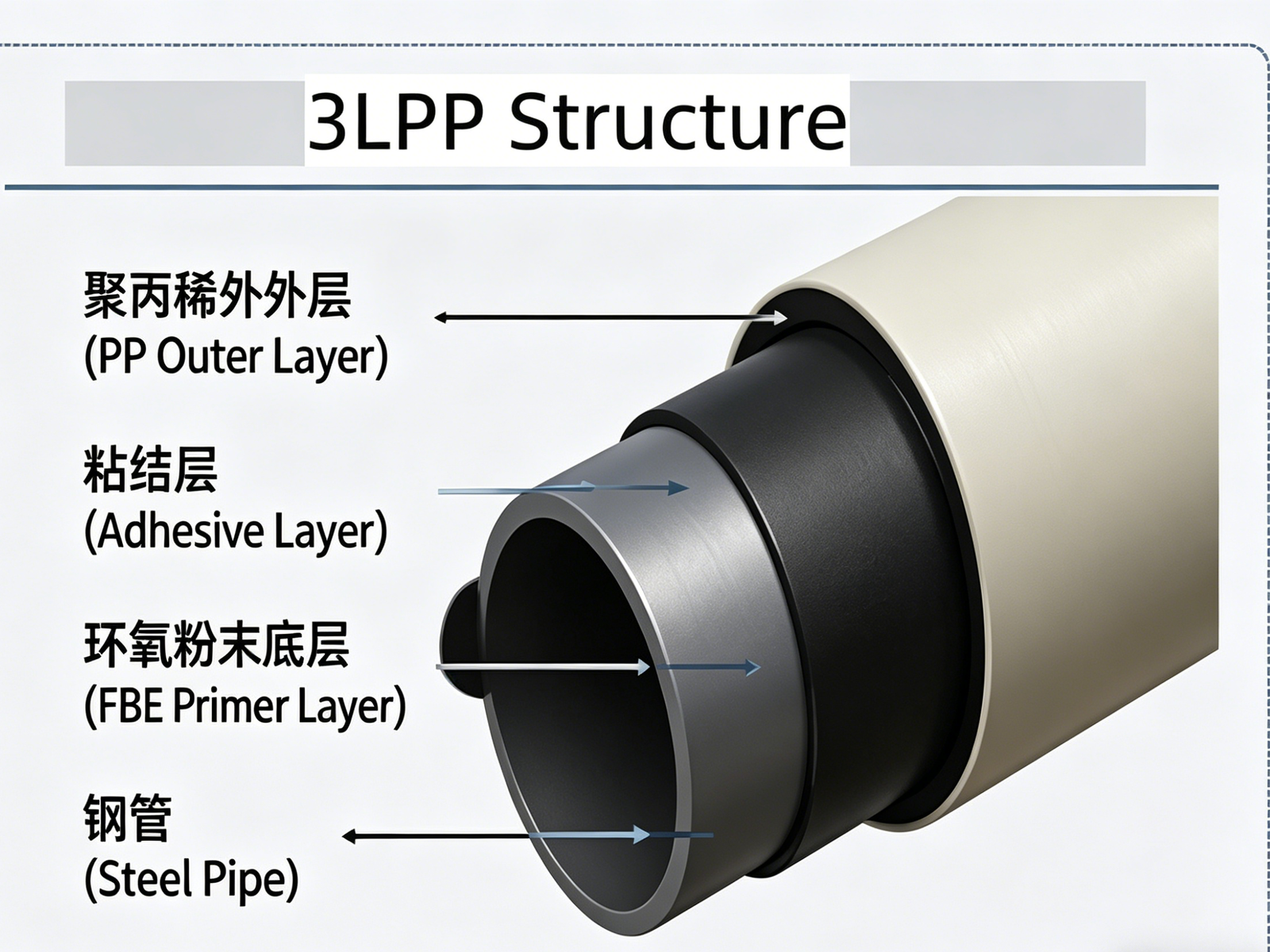
DIN 30678 typically specifies a 3-layer system:
First Layer: Epoxy Primer (FBE Layer)
Fusion-Bonded Epoxy (FBE): This layer serves as the primary corrosion barrier for the steel pipe and provides adhesion to the pipe.
The thickness is typically approximately 100–250 μm.
Second Layer: Adhesive Layer
Copolymer Adhesive: This layer bonds the FBE to the PP outer protective layer, providing interfacial adhesion.
Third Layer: Polypropylene Top Coat (PP Top Coat)
Polypropylene (PP Top Coat): Provides mechanical protection and impact resistance. This layer has higher temperature resistance than PE, with a thickness typically ranging from 1.5 mm to 4.0 mm (depending on pipe diameter and grade).
| Pipe Diameter Range | PP Thickness |
| Small-diameter (≤219mm) | 1.5 – 2.0 mm |
| Medium-diameter(219–610mm) | 2.0 – 3.0 mm |
| Large-diameter (≥610mm) | 3.0 – 4.0+ mm |
When installed underground or in high-temperature environments, DIN 30678 requires that the coating must not crack, peel, or fail.
DIN 30678 emphasizes that performance depends not only on the materials but also on construction control.
The surface preparation of the substrate—sandblasted to Sa 2.5 grade—must meet the standard requirements. Surface roughness must be controlled within the optimal adhesion range.
The PP layer must be applied uniformly, and any localized thin spots must not compromise the corrosion protection system.
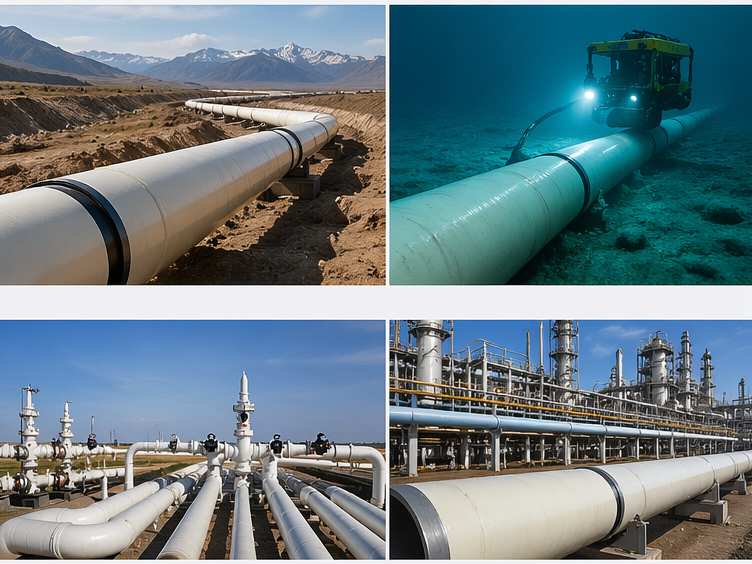
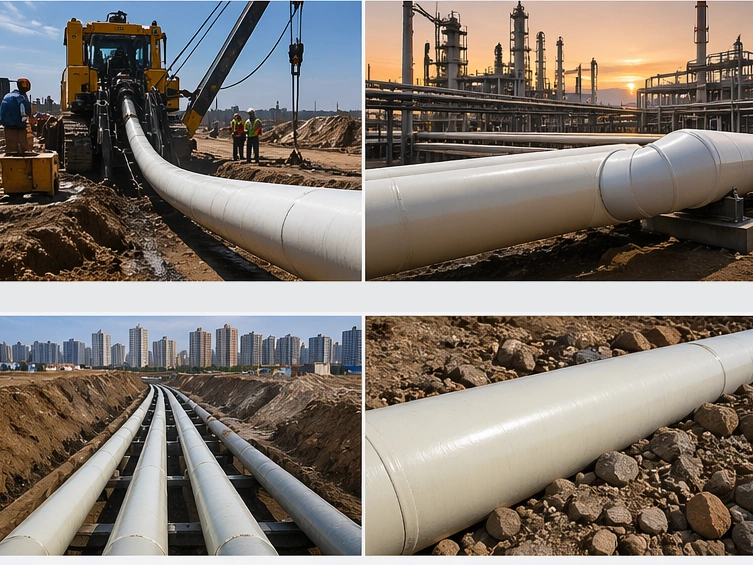
Oil & Gas Transmission Pipelines
· Hot crude oil pipelines: The PP outer coating compliant with DIN 30678 offers superior thermal resistance compared to PE, effectively preventing coating softening and creep.
· Natural Gas Transmission Pipelines: The DIN 30678 standard offers strong resistance to cathodic disbonding and a long service life, thereby reducing maintenance costs.
· Oilfield Gathering Systems: These systems must meet the dual requirements of resistance to chemical corrosion and mechanical damage.
Offshore / Subsea Pipelines
The PP layer provides high mechanical protection and excellent impact and compression resistance.
· Subsea oil and gas pipelines
· Subsea transmission systems
High-Temperature Industrial Pipelines
DIN 30678 is capable of withstanding long-term elevated-temperature service in these environments and prevents the PE coating from softening and failing.
· Chemical process pipelines
· Thermal/heating pipelines
Crossing Applications
This is a typical “high-stress scenario” as defined by DIN 30678. The PP layer offers excellent scratch resistance, outperforming PE systems.
· Horizontal Directional Drilling (HDD) pipeline installation
· Microtunneling / Pipe jacking
DIN 30678 is not a standard for general-purpose corrosion-resistant pipelines; rather, it is a specification designed for applications under severe operating conditions.
Essentially, it addresses the corrosion protection requirements for steel pipelines operating in environments characterized by high temperatures, high mechanical stress, and long-term burial or submersion.
| Item | DIN 30670 | DIN 30678 |
| Outer layer | PE (Polyethylene) | PP (Polypropylene) |
| Temperature resistance | Moderate (≤80°C) | High (≤110°C+) |
| Mechanical strength | Good | Higher |
| Cost | Lower | Higher |
| Application | General pipeline applications | High-temperature / harsh environments |
DIN 30678 is a German standard that specifies a three-layer polypropylene (3LPP) coating system for the external corrosion protection of steel pipelines, designed for high-temperature and harsh underground/subsea pipeline applications.
The standard design temperature range is typically 50°C – 110°C, though higher temperatures are possible with special designs.
3-layer polypropylene coating system (3LPP).
Fill in the form below and our team will be happy to assist you