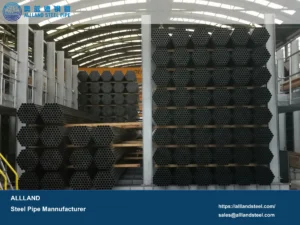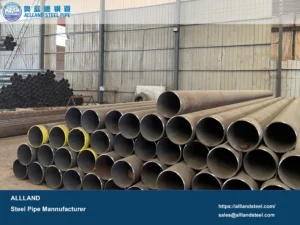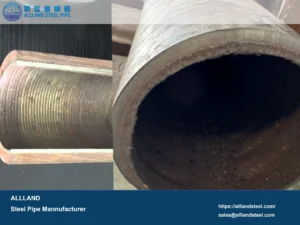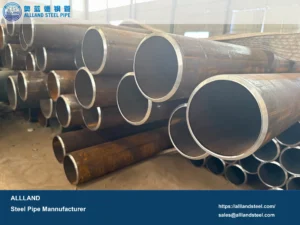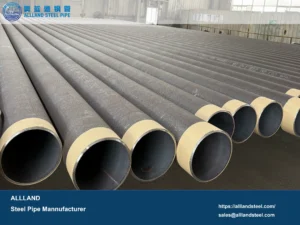

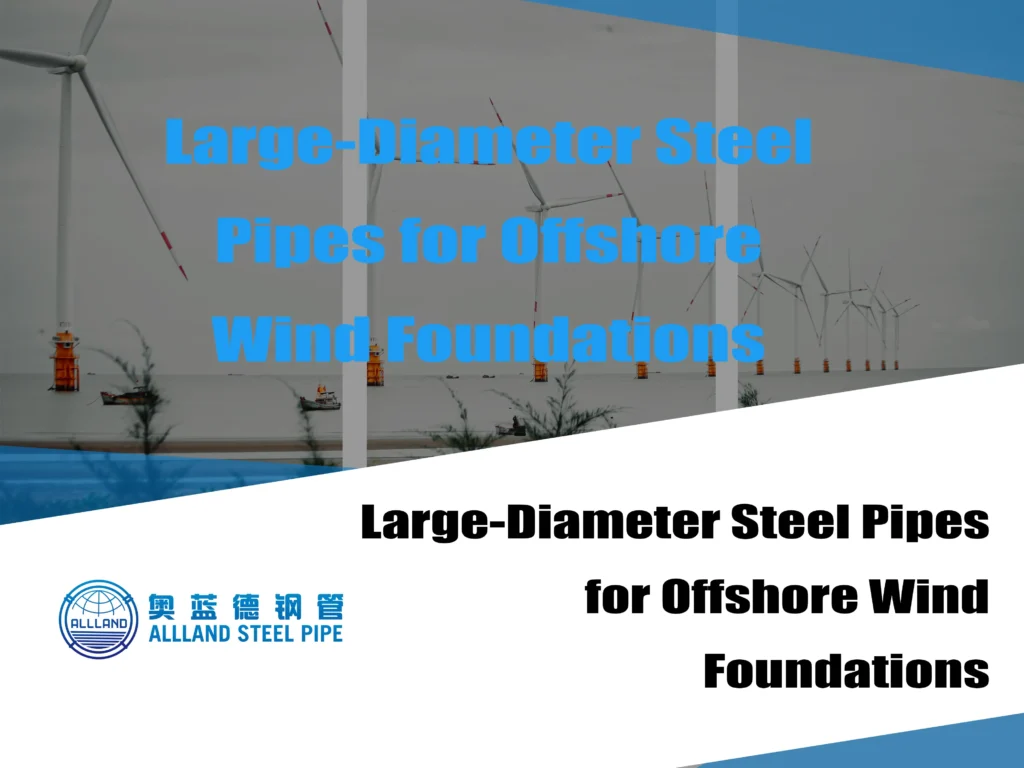
Large-diameter steel pipes are key structural components in offshore wind foundations, including monopiles, jacket foundations, transition pieces and piles. They provide the structural capacity, stiffness and durability required for long-term offshore service.
This article covers their applications, engineering requirements, LSAW/JCOE manufacturing, applicable standards, pipe specifications and corrosion protection.
Where Large-Diameter Steel Pipes Are Used in Offshore Wind
Large-diameter steel pipes are used across several offshore wind foundation systems. The required diameter, wall thickness, steel grade and fabrication requirements depend on the foundation design, turbine size, water depth and seabed conditions.
Monopiles are one of the main applications. Large tubular sections transfer turbine loads into the seabed and require controlled dimensions, heavy wall thickness and reliable welded joints.
Transition pieces connect the foundation to the turbine tower, where dimensional accuracy and fabrication quality are important.
Jacket foundations use multiple tubular members and piles to transfer loads to the seabed. Large-diameter welded steel pipes can be used for jacket legs, piles and other structural components according to the project design.
Offshore Wind Foundation Operating Conditions
Offshore wind foundations experience combined environmental and operational loading throughout their service life. Actual design conditions vary with turbine size, water depth and site characteristics.
| Reference condition | Reported value |
| Axial load, typical 5 MW monopile case | ~35 MN |
| Horizontal load | ~16 MN |
| Bending moment at seabed | ~562 MN·m |
These values represent a reference case rather than universal design loads.
Fatigue Loading
Wind, waves and turbine operation create repeated load cycles. Fatigue performance is therefore particularly important at welded joints and other areas subject to stress concentration.
Marine Corrosion and Scour
Seawater and splash-zone exposure create long-term corrosion risks, while seabed scour can reduce soil support around the foundation.
For unprotected steel, reported marine corrosion rates can range from approximately 0.1–0.4 mm/year, depending on the exposure environment.
Note: Corrosion allowance, coatings and cathodic protection may be combined according to the required service life and exposure conditions.
Why Large-Diameter Steel Pipes Are Used for Offshore Wind Foundations
The need for large-diameter steel pipe is closely related to foundation geometry and structural performance.
- Structural capacity
Larger diameters provide high axial capacity, bending resistance and lateral stiffness. - Foundation scale
As turbine capacity and water depth increase, foundation dimensions and stiffness requirements can also increase. Large-diameter sections allow monopiles and other tubular components to achieve the required geometry. - Heavy-wall construction
Wall thickness contributes to load capacity, buckling resistance and local stability, particularly in large structural sections. - Fatigue performance
Large foundation pipes are welded structures, making consistent forming, welding and inspection important for long-term structural integrity.
LSAW and JCOE Steel Pipes for Offshore Wind
LSAW and JCOE steel pipes are suitable for large-diameter and heavy-wall offshore wind foundation components. In the JCOE process, steel plate is progressively formed into the required pipe shape before longitudinal submerged arc welding.
The basic production sequence is:
Plate preparation → J forming → C forming → O forming → Longitudinal SAW → Expansion → Inspection
The process allows control of pipe diameter, roundness, straightness and dimensional consistency across large sections.
Depending on the project specification, finished pipes may undergo NDT, hydrostatic testing, dimensional inspection and mechanical testing.
Standards for Offshore Wind Steel Pipes
Offshore wind foundation pipe requirements may involve different standards for materials, structural design, fabrication, welding, fatigue and corrosion protection.
Commonly referenced documents include:
- EN 10225 series– weldable structural steels for fixed offshore structures
- API Spec 2B– fabrication of structural steel pipe
- ASTM A252– welded and seamless steel pipe piles
- DNV-ST-0126– support structures for wind turbines
- DNV-RP-C203– fatigue design of offshore steel structures
- DNV-RP-0416– corrosion protection for wind turbines
The applicable requirements depend on the foundation type, design basis, material specification, project location and certification requirements. A project may use different standards for different stages of design and fabrication.
Corrosion Protection for Offshore Wind Steel Pipes
Corrosion protection varies by exposure zone and required design life.
Atmospheric and splash zones generally require protective coating systems to limit external corrosion.
Submerged and seabed zones may use coatings together with cathodic protection and, where specified, corrosion allowance.
Common coating systems include 3LPE, 3LPP and FBE. The final corrosion protection system depends on the exposure environment, design life and project requirements.
Large-Diameter Steel Pipe Specifications for Offshore Wind
Offshore wind foundation pipe specifications are determined by the structural design and fabrication requirements. The main parameters include:
- Outside diameter
- Wall thickness
- Pipe length
- Steel grade
- Weld requirements
- Dimensional tolerances
- Inspection and testing requirements
- Corrosion protection
For large monopile and tubular foundation sections, control of diameter, roundness, straightness and wall thickness is particularly important because these parameters affect fabrication, fit-up and installation.
Large-Diameter Steel Pipes Manufactured by ALLLAND
ALLLAND manufactures large-diameter welded steel pipes for offshore wind foundations and other heavy structural applications. Its main large-diameter production capabilities include JCOE/LSAW and SSAW.
JCOE / LSAW Steel Pipe
406–1,524 mm OD | 6–60 mm WT | approximately 3–12.5 m length
- JCOE forming
- Longitudinal submerged arc welding
- LSAW / SAWL / DSAW
- Customized dimensions available
- Applicable standards according to project requirements
The combination of large diameter and heavy wall capability makes JCOE/LSAW suitable for demanding tubular structural applications.
SSAW Steel Pipee
219–3,500 mm OD | 5–25 mm WT | 6–12 m or customized
Typical grades include API 5L Grade B, X42, X52, X60, X65 and X70.
SSAW provides a wider diameter range for large tubular applications. Its suitability for offshore wind depends on the foundation design, material requirements and applicable project specification.
FAQ
What are large-diameter steel pipes used for in offshore wind?
They are mainly used for monopiles, jacket piles, transition pieces and other tubular foundation components.
Why are LSAW and JCOE pipes suitable for offshore wind foundations?
They can produce large-diameter, heavy-wall steel pipes with controlled geometry and consistent longitudinal weld quality.
What standards are used for offshore wind foundation pipes?
Requirements may include EN 10225 series, API Spec 2B, ASTM A252 and applicable DNV standards, depending on the foundation design and project specification.