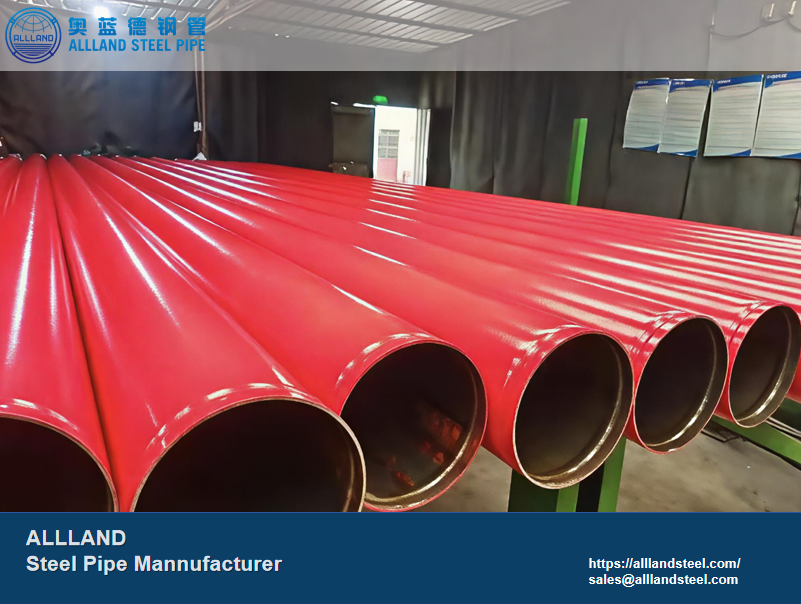
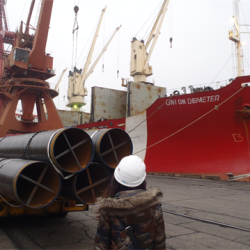
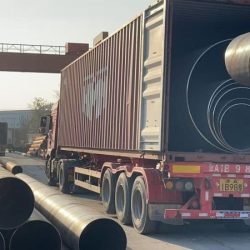
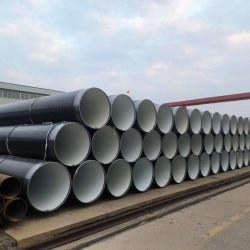
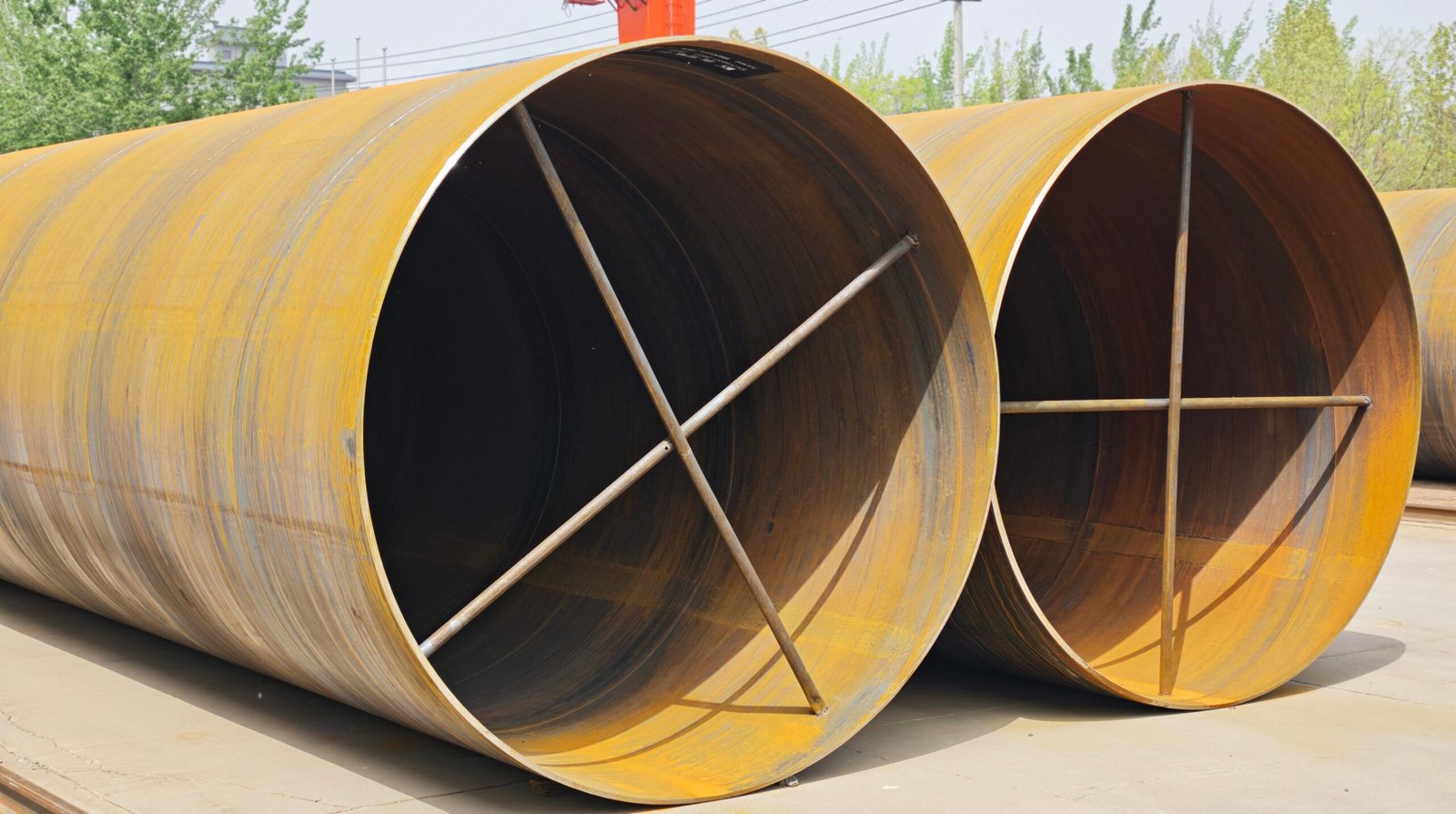
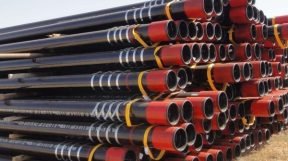
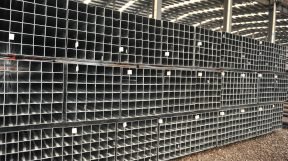
ASTM A795 is a standard specification published by the American Society for Testing and Materials (ASTM). ASTM A795 is a standard specifically for steel pipes used in fire protection systems; these pipes ensure the rapid and safe delivery of water or other fire extinguishing agents in the event of a fire. The ASTM A795 standard clearly specifies that the scope of application covers nominal pipe sizes (NPS) ranging from 1/2 inch to 10 inches. Meeting these stringent requirements, ALLLAND, as a professional steel pipe manufacturer, specializes in producing fire protection steel pipes that comply with the ASTM A795 standard.
ASTM A795 Specifications
O.D.:
1/2“ (12.7 mm) to 8” (203.2 mm)
W.T.:
Schedule 10, 40, 80, and Schedule 160
Length:
6 meters (20 feet) or 12 meters (40 feet)
Tests:
Hydrostatic pressure test, non-destructive electrical testing, flattening test, tensile test, bending test.
Tube Ends:
Plain ends, beveled ends, threaded ends, grooved
Surface Treatment:
black steel pipes, galvanized steel pipes, painted steel pipes
Advantages of ALLLAND’s ASTM A795 Pipes
Authoritative Certification
The products have obtained UL (Underwriters Laboratories) and FM (Factory Mutual) certifications. ALLLAND’s A795 pipes can be used directly in international engineering projects with the most stringent requirements without the need for secondary testing, significantly shortening the project procurement cycle.
We can simultaneously produce steel pipes that comply with both ASTM A795 and ASTM A53 standards. ALLLAND can adapt to the specific requirements of different projects, providing specialized A795 pipes for large-scale commercial projects as well as standard A53 pipes for residential projects, thereby reducing management costs and inventory pressure.
We offer two standard surface treatment options: red epoxy resin coating and hot-dip galvanizing. ALLLAND provides on-demand corrosion protection solutions that avoid cost wastage caused by excessive protection for indoor pipes while ensuring the long-term reliability of outdoor pipes.
ALLLAND not only manufactures pipes but also produces matching grooved fittings (elbows, tees, etc.), ensuring dimensional compatibility and reliable connections between pipes and fittings. ALLLAND’s ASTM A795 steel pipes offer a one-stop solution, from UL/FM certification to matching grooved fittings. For fire protection projects, please contact our technical team directly.
ASTM A795 Size Charts
| NPS |
OD (mm) |
SCH 10(mm) |
SCH 40 (mm) |
SCH 10 (kg/m) |
SCH 40 (kg/m) |
| 1/2″ |
21.3 |
2.11 |
2.77 |
0.98 |
1.27 |
| 3/4″ |
26.7 |
2.11 |
2.87 |
1.26 |
1.69 |
| 1″ |
33.4 |
2.77 |
3.38 |
2 |
2.5 |
| 1-1/4″ |
42.2 |
2.77 |
3.56 |
2.64 |
3.38 |
| 1-1/2″ |
48.3 |
2.77 |
3.68 |
3.08 |
4.05 |
| 2″ |
60.3 |
2.77 |
3.91 |
3.89 |
5.44 |
| 2-1/2″ |
73 |
3.05 |
5.16 |
5.44 |
8.63 |
| 3″ |
88.9 |
3.05 |
5.49 |
6.62 |
11.29 |
| 4″ |
114.3 |
3.05 |
6.02 |
8.36 |
16.07 |
| 5″ |
141.3 |
3.4 |
6.55 |
11.84 |
21.77 |
| 6″ |
168.3 |
3.4 |
7.11 |
14.25 |
28.26 |
| 8″ |
219.1 |
3.76 |
8.18 |
21.24 |
42.55 |
| 10″ |
273 |
4.19 |
9.27 |
30.45 |
60.32 |
| 12″ |
323.9 |
4.57 |
10.31 |
38.75 |
73.81 |
Chemical Composition of ASTM A795
The content of each element specified in the ASTM A795 standard is strictly controlled, as it directly determines the safety, workability, and service life of the steel pipes. The significance of the chemical composition can be summarized as follows: carbon and manganese ensure strength, while phosphorus and sulfur ensure safe
| Elements | Range |
| Carbon (C) | ≤0.26% |
| Manganese (Mn) | 0.30% to 1.06% |
| Silicon (Si) | 0.10% to 0.60% |
| Sulfur (S) | ≤0.05% |
| Phosphorus (P) | ≤0.05% |
| Nickel (Ni) | ≤0.50% |
| Copper (Cu) | 0.20% to 0.50% |
| Chromium (Cr) | ≤0.30% |
Note: Although A795 Grade B has good weldability due to its carbon content (≤0.30%), preheating is still required when welding in cold winter conditions.
Carbon (C) and manganese (Mn) are positively designed elements: carbon provides the base strength, while manganese further enhances this strength and improves microstructural properties. Phosphorus (P) and sulfur (S) are negatively limited elements. Phosphorus is strictly limited to ensure the safe use of the pipeline in low-temperature environments and prevent brittle fracture; sulfur is strictly limited to ensure process safety during welding and prevent cracking.
Mechanical Properties of ASTM A795
The mechanical properties of ASTM A795 steel pipes are a key factor in ensuring their reliable use in fire protection piping systems. These properties include tensile strength, yield strength, and elongation; they must be balanced within reasonable limits to ensure the normal and stable operation of the fire protection system when subjected to pressure or environmental changes.
| Performance Specifications |
Required values |
Engineering Significance |
| Tensile Strength |
≥415 MPa |
Measures the maximum stress a steel pipe can withstand before breaking. |
| Yield Strength |
≥240 MPa |
Refers to the stress at which the steel pipe begins to undergo permanent plastic deformation. |
| Elongation |
≥19% |
Indicates the steel pipe’s capacity for plastic deformation prior to tensile fracture. The higher the elongation, the better the material’s toughness and the greater its ability to absorb energy. |
In practice, it is important to note that higher tensile strength is not necessarily better; excessively high strength implies an increase in carbon equivalent, which leads to reduced weldability and increased low-temperature brittleness.
Primary Applications of ASTM A795
Building Fire Protection Piping Systems
Fire protection piping systems represent the core application and the most widespread use of ASTM A795. Within fire protection piping networks in various civil and public buildings, ASTM A795 steel pipes ensure timely and effective water supply during a fire. When a fire occurs, rising temperatures trigger the sprinkler heads, and water from the piping network is sprayed directly onto the fire source through ASTM A795 pipes to extinguish the fire.
In industrial settings, fire risks are typically higher, and the reliability requirements for fire protection systems are more stringent. In industrial environments such as chemical plants, oil refineries, natural gas stations, and metallurgical plants, ASTM A795 steel pipes are used in various high-pressure water fire suppression systems and sprinkler systems, including sprinkler systems that protect large-area facilities and fire hydrant supply networks covering the entire plant.
If you have specific project requirements, please contact us with details on the application scenario and pipe diameter specifications. ALLLAND can assist you in further confirming the product configuration plan.
FAQ