
Welcome to ALLLAND Steel Pipe Co., Ltd.
ALLLAND Steel Pipe Supply
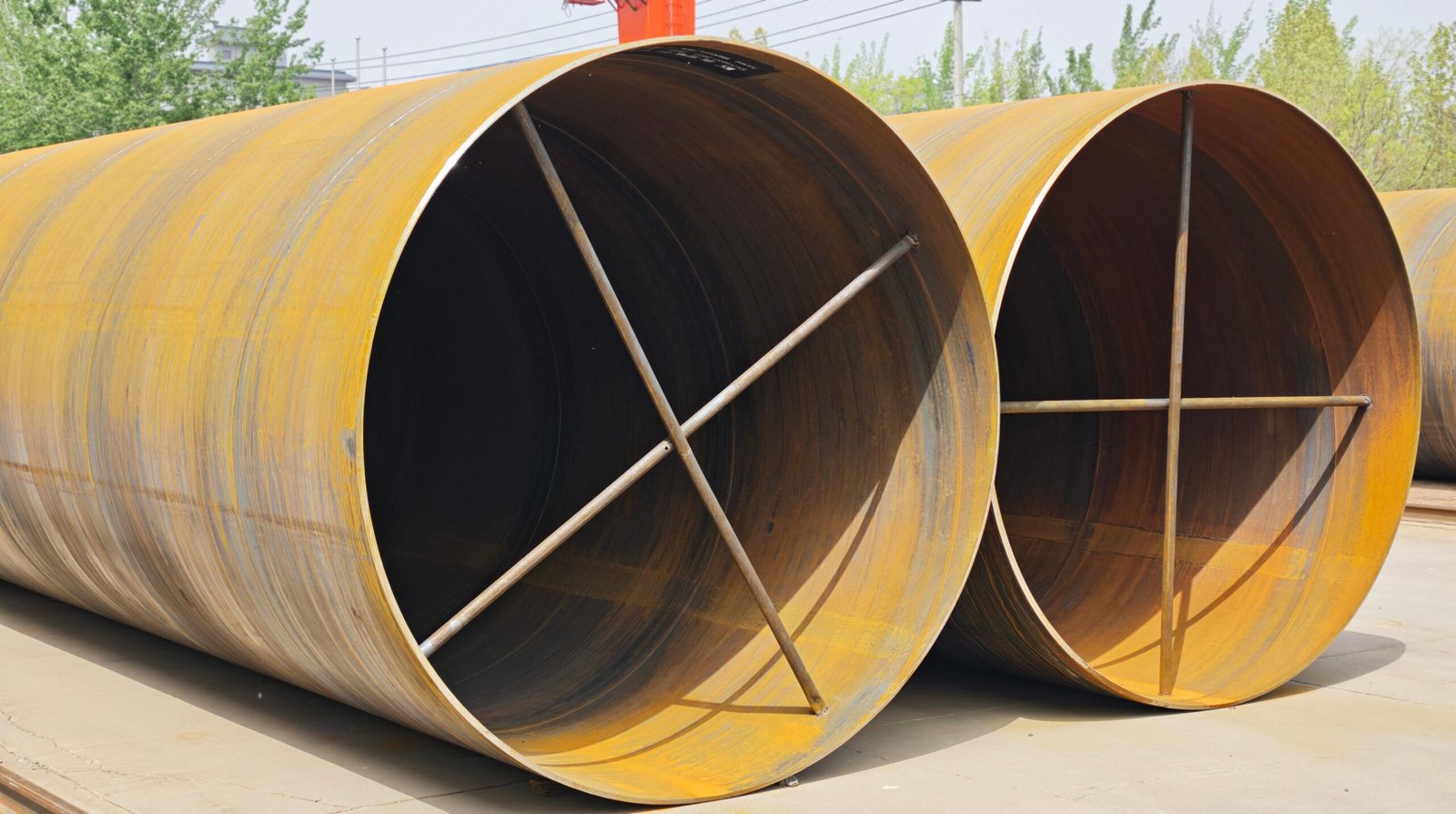
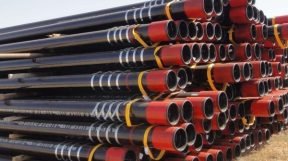
Welcome to ALLLAND Steel Pipe Manufacturing. EN 10219 S235 steel tubes are cold-formed welded structural sections widely used in construction, steel structures, infrastructure projects, and mechanical engineering. Manufactured in accordance with the EN 10219 standard, S235-grade steel offers excellent weldability, reliable strength, and cost-effectiveness, making it suitable for a wide range of structural applications. Whether used in building frames, support columns, bridges, or industrial structures, EN 10219 S235 hollow sections provide consistent mechanical properties and reliable structural integrity for projects both domestically and internationally.
Alllandsteel is a steel pipe manufacturer based in China with 25 years of experience.
The facility spans 22,000 square meters, represents a RMB 700 million investment, and operates four production lines (JCOE, ERW, SMLS, SSAW) alongside five coating lines.
With an annual production capacity of 250,000 tons, the factory covers specifications ranging from Ø406 to Ø1524 and holds multiple international certifications (API/ASTM/EN/ISO/JIS). Focused on steel pipes, creating value for you!
HOT PRODUCTS
POPULAR ARTICLES
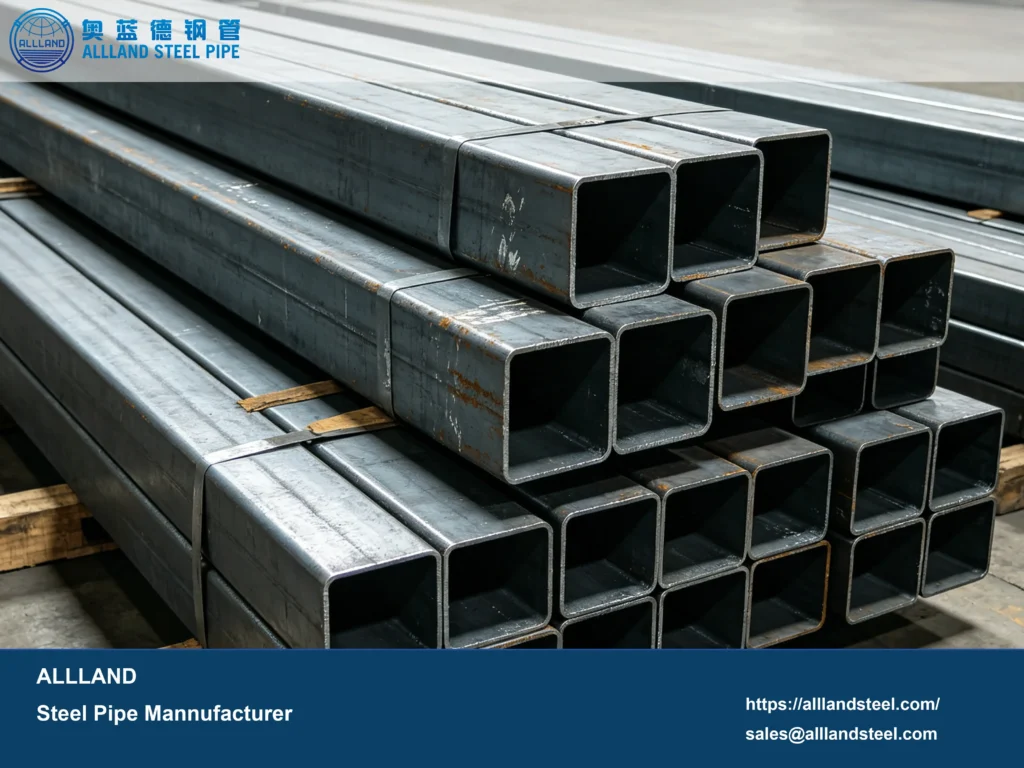
EN 10219 S235 (S235JRH) is a material grade of cold-formed welded structural steel tubes with a yield strength of 235 MPa, as defined by the EN 10219 standard. It belongs to the low-carbon general-purpose structural steel grade and is widely used in building structures, bridges, guardrails, and general mechanical engineering.
O.D.:
21.3 mm – 1219 mm
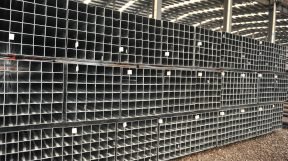
Square tube: 20×20 – 400×400 mm
Rectangular tube: 40×20 – 600×300 mm
W.T.:
2.0 – 40 mm
Length:
5.8 – 12 m, available in fixed or multiple lengths; custom lengths per project requirements.
Manufacturing Process:
Cold-formed
Standards:
EN 10219-1 / EN 10219-2
Steel Grade:
· S = Structural Steel
· 235 = Minimum yield strength of 235 MPa
Surface Treatment:
Product Type:
EN 10219 S235 is a commonly used hollow section steel for cold-formed welded structures. It is available in a wide range of sizes to meet the diverse requirements of building structures, mechanical supports, municipal engineering, and general industrial structures. Its specifications are typically classified based on cross-sectional shape, wall thickness, and length.
| CHS — Circular Hollow Section | ||
| Outside Diameter OD (mm) | Wall Thickness WT (mm) | Theoretical Weight (kg/m) |
| 21.3 | 2.0 | 0.98 |
| 26.9 | 2.3 | 1.38 |
| 33.7 | 2.6 | 2.02 |
| 42.4 | 2.6 | 2.64 |
| 48.3 | 3.2 | 3.56 |
| 60.3 | 3.6 | 5.03 |
| 76.1 | 4.0 | 7.11 |
| 88.9 | 4.0 | 8.37 |
| 114.3 | 5.0 | 13.44 |
| 168.3 | 6.0 | 24.10 |
| 219.1 | 8.0 | 41.63 |
| SHS — Square Hollow Section | ||
| Size (mm) | Wall Thickness WT (mm) | Theoretical Weight (kg/m) |
| 20 × 20 | 2.0 | 1.13 |
| 25 × 25 | 2.0 | 1.47 |
| 40 × 40 | 2.5 | 2.94 |
| 50 × 50 | 3.0 | 4.43 |
| 60 × 60 | 3.0 | 5.39 |
| 80 × 80 | 4.0 | 9.63 |
| 100 × 100 | 4.0 | 12.19 |
| 120 × 120 | 5.0 | 17.77 |
| 150 × 150 | 6.0 | 26.42 |
| 200 × 200 | 8.0 | 47.40 |
| RHS — Rectangular Hollow Section | ||
| Size (mm) | Wall Thickness WT (mm) | Theoretical Weight (kg/m) |
| 40 × 20 | 2.0 | 1.76 |
| 50 × 30 | 2.5 | 2.93 |
| 60 × 40 | 3.0 | 4.52 |
| 80 × 40 | 3.0 | 5.65 |
| 100 × 50 | 4.0 | 8.96 |
| 120 × 60 | 4.0 | 10.86 |
| 150 × 100 | 5.0 | 17.10 |
| 200 × 100 | 6.0 | 27.17 |
| 250 × 150 | 6.0 | 36.90 |
| 300 × 200 | 8.0 | 56.20 |
| Item | Tolerance Requirement |
|---|---|
| Outside Diameter OD ≤ 219.1 mm | ±1%, minimum ±0.5 mm |
| Outside Diameter OD > 219.1 mm | ±0.75% |
| Wall Thickness WT ≤ 5 mm | ±10% |
| Wall Thickness WT > 5 mm | ±0.5 mm |
| Out-of-roundness | ≤ 2% |
| Straightness | ≤ 0.15% of total length |
| Length | ±10 mm (fixed length) |
| Item | Tolerance Requirement |
|---|---|
| Dimension ≤ 100 mm | ±1%, minimum ±0.5 mm |
| Dimension > 100 mm | ±0.8% |
| Wall Thickness WT ≤ 5 mm | ±10% |
| Wall Thickness WT > 5 mm | ±0.5 mm |
| Diagonal Difference | ≤ 1% |
| Squareness | ±1° |
| Straightness | ≤ 0.15% |
| Length | ±10 mm |
| Item | Tolerance Requirement |
|---|---|
| Long Side / Short Side Dimensions | ±1%, minimum ±0.5 mm |
| Wall Thickness WT ≤ 5 mm | ±10% |
| Wall Thickness WT > 5 mm | ±0.5 mm |
| Diagonal Difference | ≤ 1% |
| Twist | ≤ 2 mm + 0.5 mm/m |
| Straightness | ≤ 0.15% |
| Length Tolerance | ±10 mm |
EN 10219 S235 is classified as a mild structural steel with low yield strength under the European structural steel system (EN 10025 / EN 10219). It offers good weldability and ductility and is widely used in light- to medium-duty steel structures, where cost-effectiveness is prioritized over high strength.
| Item | Value |
|---|---|
| Yield Strength | ≥ 235 MPa |
| Tensile Strength | 360 – 510 MPa |
| Elongation | ≥ 24% (depending on thickness) |
In EN 10219, the yield strength of S235 varies with wall thickness:
t ≤ 16 mm: Yield Strength ReH ≥ 235 MPa
16 < t ≤ 40 mm: Yield Strength ReH ≥ 225 MPa
t > 40 mm: Yield Strength ReH ≥ 215 MPa
The main difference between the various grades of S235 (JR / J0 / J2) lies in the impact test temperature, which ranges from room temperature to -20°C, to meet the low-temperature toughness requirements of different climates and engineering environments.
| Steel Grade | Test Temperature | Charpy V-Notch Impact Energy | Standard Application |
|---|---|---|---|
| S235JR | +20°C | ≥ 27 J | General structural applications |
| S235J0 | 0°C | ≥ 27 J | Outdoor structures |
| S235J2 | -20°C | ≥ 27 J | Low-temperature / cold-region applications |
S235 is a low-carbon non-alloy structural steel. The primary objective of its chemical composition is not to achieve high strength, but rather to strike a balance between strength, weldability, and formability.
Standardized chemical composition ranges (EN 10025 / EN 10219)
| Element | Content (Typical Max) | Engineering Function |
|---|---|---|
| C (Carbon) | 0.17 | Determines strength and weldability |
| Mn (Manganese) | ≤ 1.40 | Improves strength and toughness |
| P (Phosphorus) | 0.040 | Impurity element; excessive content may cause brittleness |
| S (Sulfur) | 0.040 | Impurity element; affects toughness |
| N (Nitrogen) | 0.09a | Affects aging and brittleness |
a The maximum value for nitrogen does not apply if the chemical composition shows a minimum total Al content of 0.020 %with a minimum Al/N ratio of 2:1, or if sufficient other N-binding elements are present. The N-binding elements shall be recorded in the inspection Document.
The EN 10219 CEV calculation formula is:
CEV = C + Mn/6 + (Cr + Mo + V)/5 + (Ni + Cu)/15
EN 10219 S235 is primarily used in:
1. Cold Forming
This is the foundational process for the entire product.
· The steel strip is gradually bent into a tubular shape at room temperature through multiple rolling passes.
· No overall heating is performed.
· This is classified as “plastic deformation forming.”
2. High-Frequency Electric Resistance Welding (HF-ERW)
The edges of the cold-formed steel strip are heated by high-frequency current and welded by pressure.
Full name: High Frequency Electric Resistance Welding
This process forms a longitudinal seam weld.
EN 10219 S235 is widely used in building structures, infrastructure, mechanical manufacturing, and general industrial engineering due to its excellent weldability, consistent structural strength, and high cost-effectiveness.
As a typical cold-formed structural steel hollow section, it is particularly suitable for structures subjected to medium to low loads and conventional engineering environments.
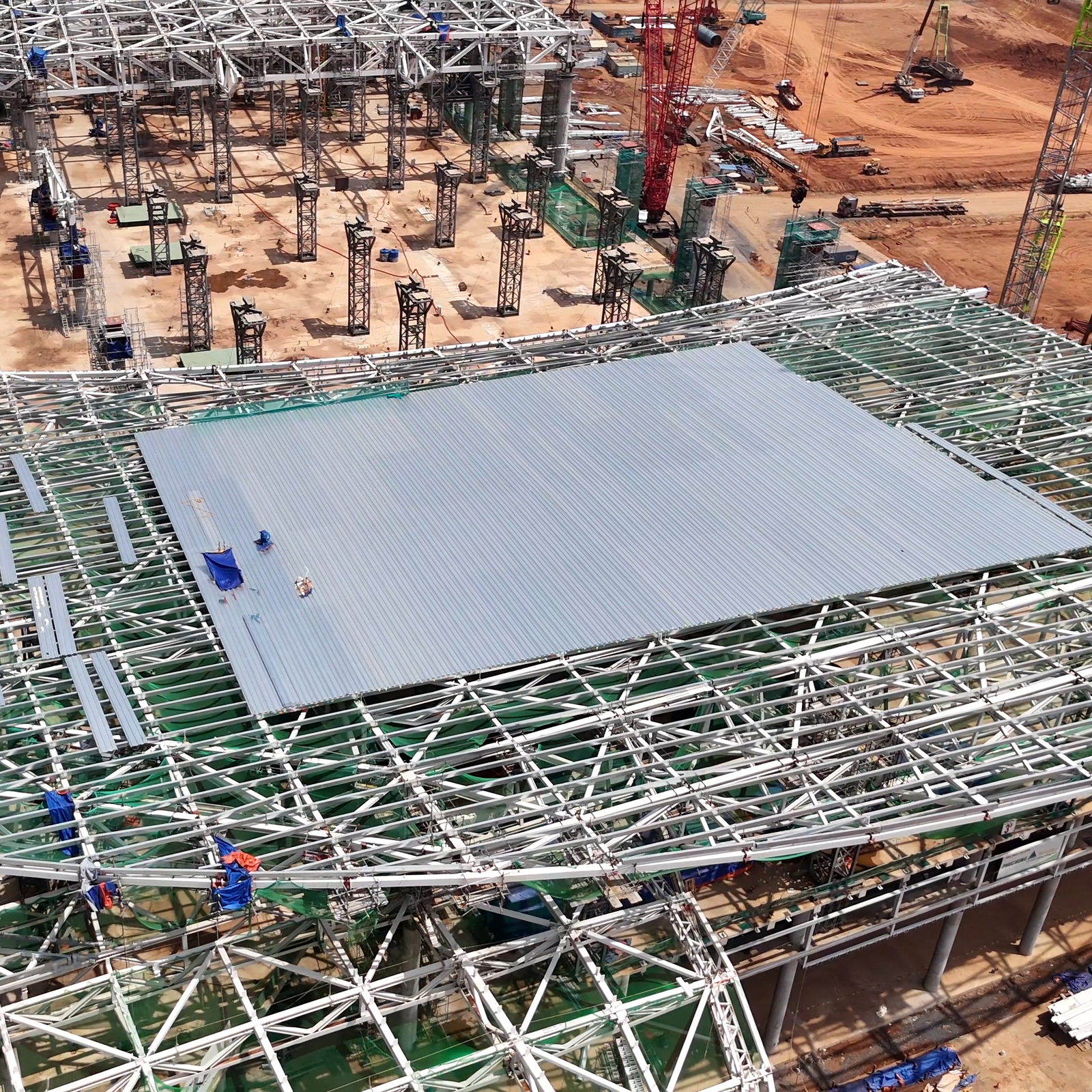
One of the most common applications of EN 10219 S235 is in structural steel construction. Its excellent formability and weldability make it ideal for:
In light- or medium-duty steel structure projects, spans typically range from 6–30 m or 30–60 m.
EN 10219 S235 is generally suitable for light-duty steel structures with design loads ranging from 0.5 to 5 kN/m² and medium-duty steel structures with design loads ranging from 5 to 15 kN/m².
| Structure Type | Typical Load Level |
|---|---|
| Roof Structures | 0.5 – 2.5 kN/m² |
| Floor Structures | 2 – 5 kN/m² |
| Industrial Platforms | 5 – 10 kN/m² |
| General Equipment Supports | 5 – 15 kN/m² |
S235 typically offers a good balance between cost and structural performance, making it widely used in commercial buildings and industrial facilities.
In municipal and infrastructure projects, EN 10219 S235 is commonly used for various auxiliary structures and support systems:
Due to its excellent processing performance, the steel pipe can be easily cut, drilled, and welded, making it especially suitable for large-scale infrastructure manufacturing.
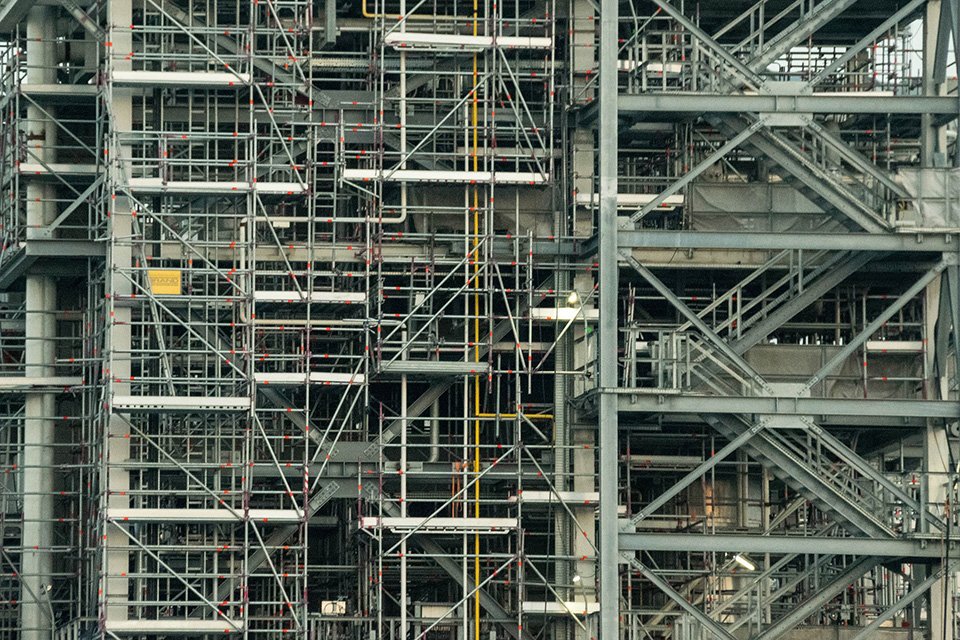
EN 10219 S235 is also widely used for structural support components in the machinery manufacturing industry.:
Because EN 10219 S235 offers good machinability and structural stability, it is also commonly used in the agricultural facilities sector, including:
Such projects typically employ hot-dip galvanizing as a surface treatment to enhance corrosion resistance and extend outdoor service life.
Leveraging its mature ERW cold-forming production lines, reliable dimensional control capabilities, and comprehensive quality inspection system, ALLLAND Steel Pipe is able to provide a wide range of products—including round tubes (CHS), square tubes (SHS), and rectangular tubes (RHS)—to meet diverse engineering requirements.
We also offer customized services such as cut-to-length processing, hot-dip galvanizing, and anti-corrosion treatments to satisfy the structural design needs of various projects.
| Item | S235 | S355 |
|---|---|---|
| Steel Type | Mild Structural Steel | High Strength Structural Steel |
| Minimum Yield Strength | ≥ 235 MPa | ≥ 355 MPa |
| Tensile Strength | 360 – 510 MPa | 470 – 630 MPa |
| Elongation | ≥ 24% | ≥ 22% |
| Strength Level | Medium-low strength | Medium-high strength |
| Weldability | Excellent | Good |
| Formability | Excellent | Good |
| Fatigue Performance | Standard | Better |
| Low-Temperature Performance | Standard | Superior |
| Structural Load Capacity | Moderate | Higher |
| Common Impact Grades | JR / J0 / J2 | JR / J0 / J2 / K2 |
| Applicable Load Conditions | Light-duty / medium-duty structures | Medium-duty / heavy-duty structures |
| Common Span Range | 6 – 30 m | 30 – 80 m |
| Material Cost | Lower | Higher |
| Steel Consumption | Higher | Lower |
| Structural Self-Weight | Heavier | Lighter |
| Processing Difficulty | Lower | Slightly higher |
| Common Product Forms | CHS / SHS / RHS | CHS / SHS / RHS |
| Common Standards | EN 10219 / EN 10025 | EN 10219 / EN 10025 |
| Typical Applications | Warehouses, fences, support structures | Industrial plants, bridges, heavy-duty platforms |
Fill in the form below and our team will be happy to assist you