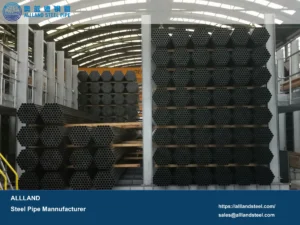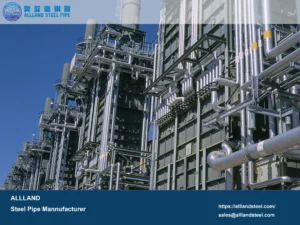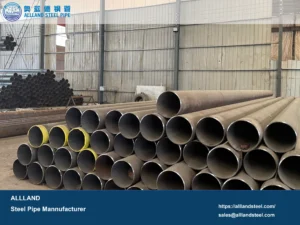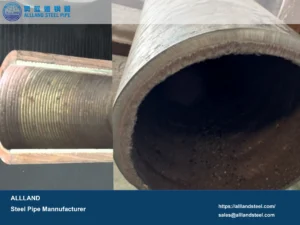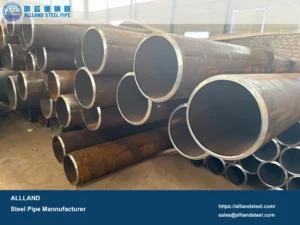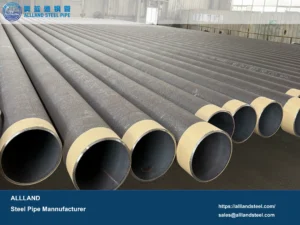

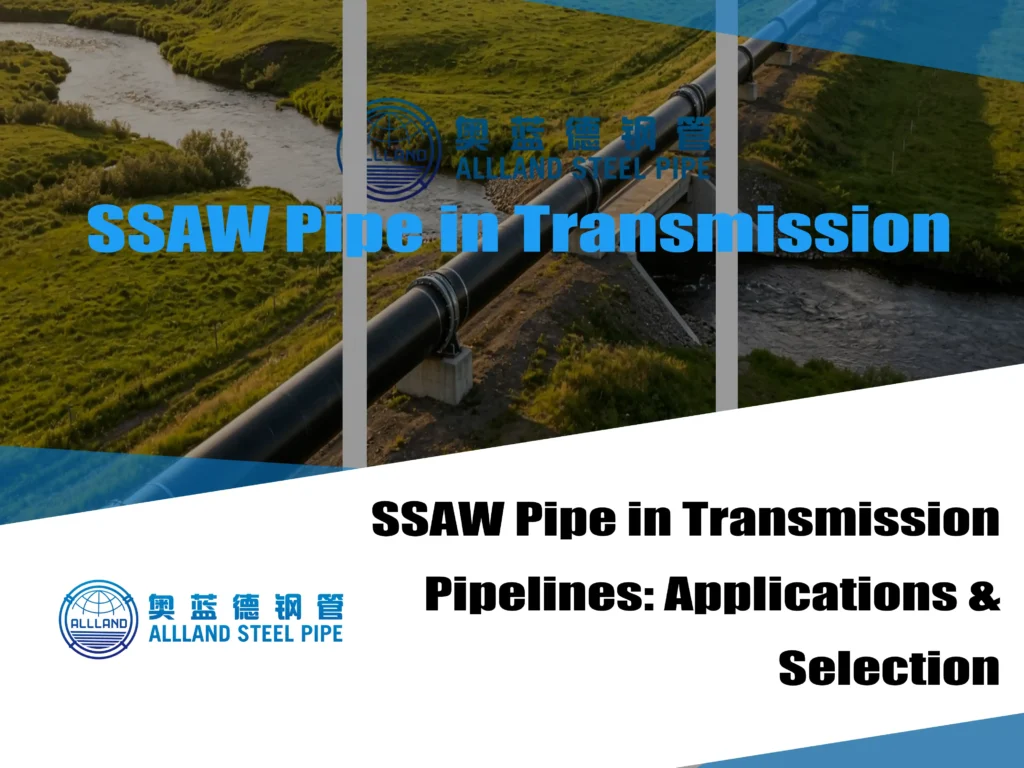
SSAW pipe is used in selected large-diameter transmission pipeline projects where pipe dimensions, material properties, weld quality, and corrosion protection must meet defined engineering requirements. Manufactured through spiral forming and submerged arc welding,
SSAW steel pipe can be specified for water transmission, oil and gas transportation, and other industrial fluid systems, subject to project requirements.
What Is SSAW Pipe in Transmission Pipelines?
SSAW (Spiral Submerged Arc Welded) pipe, also known as spiral welded steel pipe, is manufactured by spirally forming steel strip or coil and joining the edges through submerged arc welding. Unlike LSAW and ERW pipes, SSAW pipe features a helical weld seam along its length.
For transmission pipelines, SSAW pipe offers large-diameter options for water, oil and gas, and industrial fluid transportation, provided its dimensions, material properties, and manufacturing quality meet the applicable standards and project requirements.
How SSAW Pipe Is Manufactured
SSAW pipe is manufactured by spirally forming steel coil and welding the seam using submerged arc welding. The production process typically includes coil preparation, forming, welding, cutting, dimensional inspection, and specified non-destructive testing.
Learn more about the SSAW steel pipe manufacturing process.
SSAW Pipe Specifications for Transmission Projects
| Specification | Typical Range / Options |
| Outside Diameter | 219–3,500 mm |
| Wall Thickness | 5–25 mm |
| Pipe Length | Project-specific; commonly 6–12 m |
| Steel Grade | API 5L Gr. B, X42, X52, X60, X65, X70, subject to availability |
| Product Specification Level | PSL1 / PSL2, where applicable |
| Pipe Ends | Plain end / Bevelled end |
| External Coating | 3LPE / 3LPP / FBE |
| Inspection | UT / RT / Hydrostatic testing, as specified |
Actual availability depends on diameter, wall thickness, steel grade, applicable standards, manufacturing capability, and project specifications. Pipe length, coating system, and inspection requirements should be confirmed before ordering.
For detailed dimensions and wall thickness options, refer to our [SSAW Steel Pipe Size Chart] to identify suitable configurations for your transmission pipeline project.
Applications of SSAW Pipe in Transmission Systems
SSAW pipe can be considered for transmission projects requiring large diameters and specified mechanical and quality requirements. Its suitability depends on the transported medium, operating conditions, and applicable standards.
Oil and Gas Transmission
SSAW pipe may be specified for oil and gas pipelines when its steel grade, wall thickness, weld quality, and manufacturing qualifications meet project requirements.
Buyers should verify API 5L compliance where specified, including the required product specification level, inspection scope, and any service-specific requirements.
Water Transmission
For large-volume water transmission, SSAW pipe offers a range of diameter options. Selection should account for design and surge pressure, internal lining, external corrosion protection, and compliance with the applicable water-pipe standard.
Industrial Fluid Transmission
SSAW pipe may also be considered for industrial water and utility pipelines. Material compatibility, operating temperature, corrosion risks, and maintenance requirements should be evaluated before selection.
Why Is SSAW Pipe Used for Transmission Pipelines?
- Large-diameter capability: Suitable for projects requiring large-diameter pipe, subject to the manufacturer’s production range.
- Flexible dimensions: Available diameter and wall-thickness combinations can be specified according to manufacturing capabilities.
- Production efficiency: Spiral forming can be an efficient manufacturing route for certain large-diameter pipe specifications.
These characteristics do not make SSAW the best option for every project. Buyers should compare manufacturing capabilities, inspection requirements, applicable standards, and total project costs before selecting a pipe type.
SSAW vs. LSAW vs. ERW for Transmission Pipelines
SSAW, LSAW, and ERW pipes differ in welding process, dimensional capabilities, and manufacturing characteristics. The appropriate option depends on the required dimensions, operating conditions, applicable standards, and inspection requirements.
| Comparison Factor | SSAW Pipe | LSAW Pipe | ERW Pipe |
| Welding seam | Spiral | Longitudinal | Longitudinal |
| Manufacturing process | Spiral forming and submerged arc welding | Steel plate forming and submerged arc welding | Steel strip forming and electric resistance welding |
| Typical dimensional focus | Large-diameter pipes | Medium- to large-diameter pipes | Small- to medium-diameter pipes |
| Key consideration | Diameter availability and spiral weld inspection | Plate quality, wall thickness, dimensional control, and weld inspection | Qualified dimensional range and resistance weld quality |
| Potential applications | Water and qualifying oil and gas pipelines | Oil, gas, and water transmission, subject to specifications | Suitable smaller-diameter transmission and utility pipelines |
Actual dimensional ranges overlap and vary by manufacturer, steel grade, wall thickness, and applicable product standard. Pipe type alone does not determine pressure suitability.
How to Choose Between SSAW, LSAW and ERW
- SSAW:Consider when large diameters are required and the manufacturing process is permitted by the project specification.
- LSAW:Consider when the project requires specific combinations of diameter, wall thickness, dimensional control, and inspection.
- ERW:Consider for smaller-diameter pipelines when the available dimensions, steel grade, weld qualification, and applicable standard meet the design requirements.
Before placing an order, confirm the required steel grade, design pressure, applicable standard, weld inspection scope, hydrostatic testing requirements, and corrosion-protection system. The final selection should follow engineering requirements and qualified manufacturing capabilities rather than pipe type alone.
FAQ
Is SSAW pipe suitable for transmission pipelines?
SSAW pipe can be used in suitable water, oil and gas, and industrial fluid transmission projects. Its suitability depends on the required steel grade, diameter, wall thickness, operating pressure, applicable standards, and project-specific inspection requirements.
Does SSAW transmission pipe require external coating?
External coating is often specified to control external corrosion, depending on the pipeline environment and design. Options may include 3LPE, 3LPP, and FBE. The coating system should be selected according to operating conditions, installation requirements, and the applicable project specification.
How does SSAW pipe compare with LSAW pipe for transmission projects?
SSAW pipe uses a spiral weld seam, while LSAW pipe has a longitudinal weld seam. Both may be suitable for certain large-diameter transmission applications. The choice depends on project specifications, dimensional requirements, manufacturing qualifications, inspection requirements, and overall project cost.