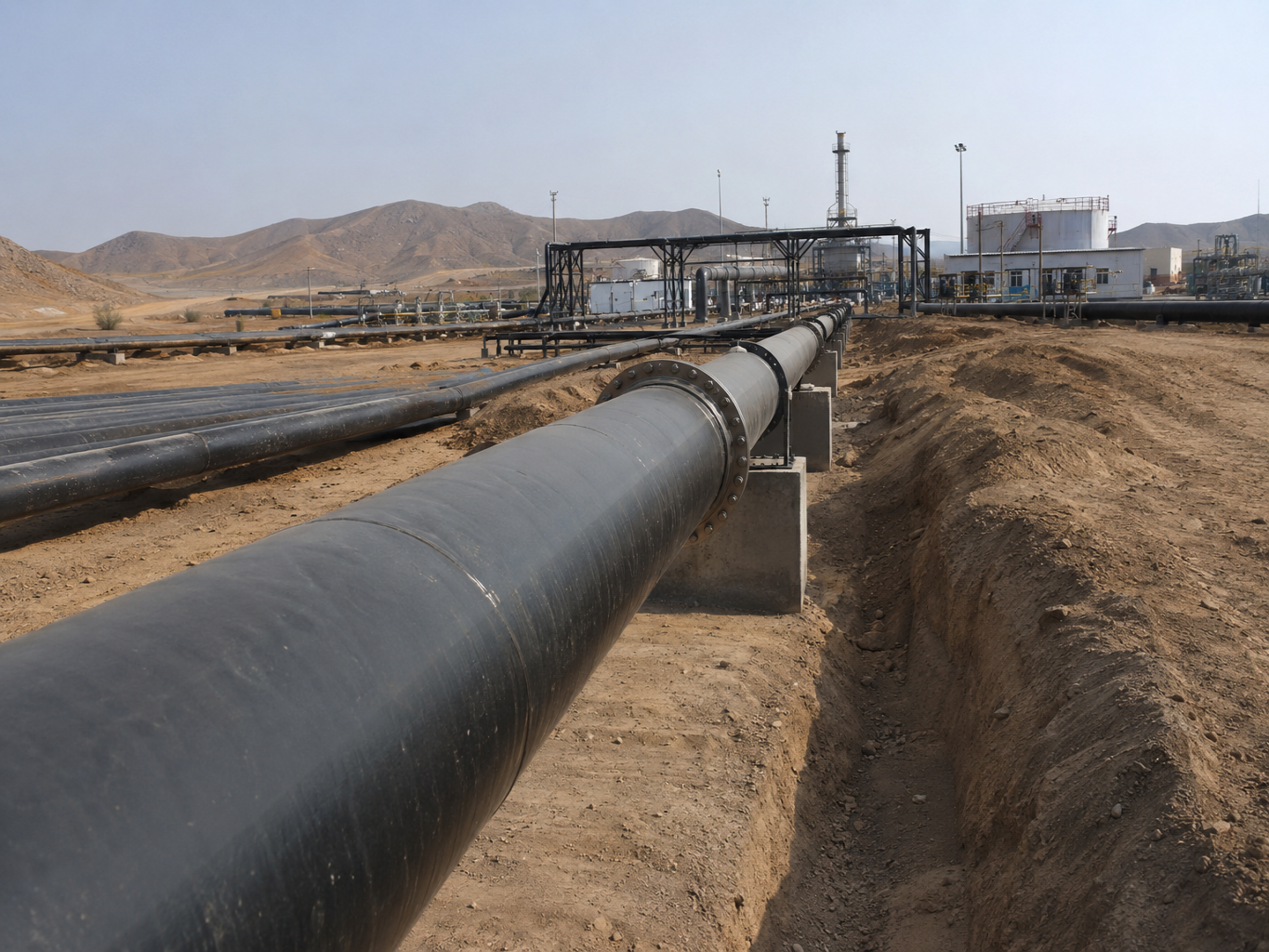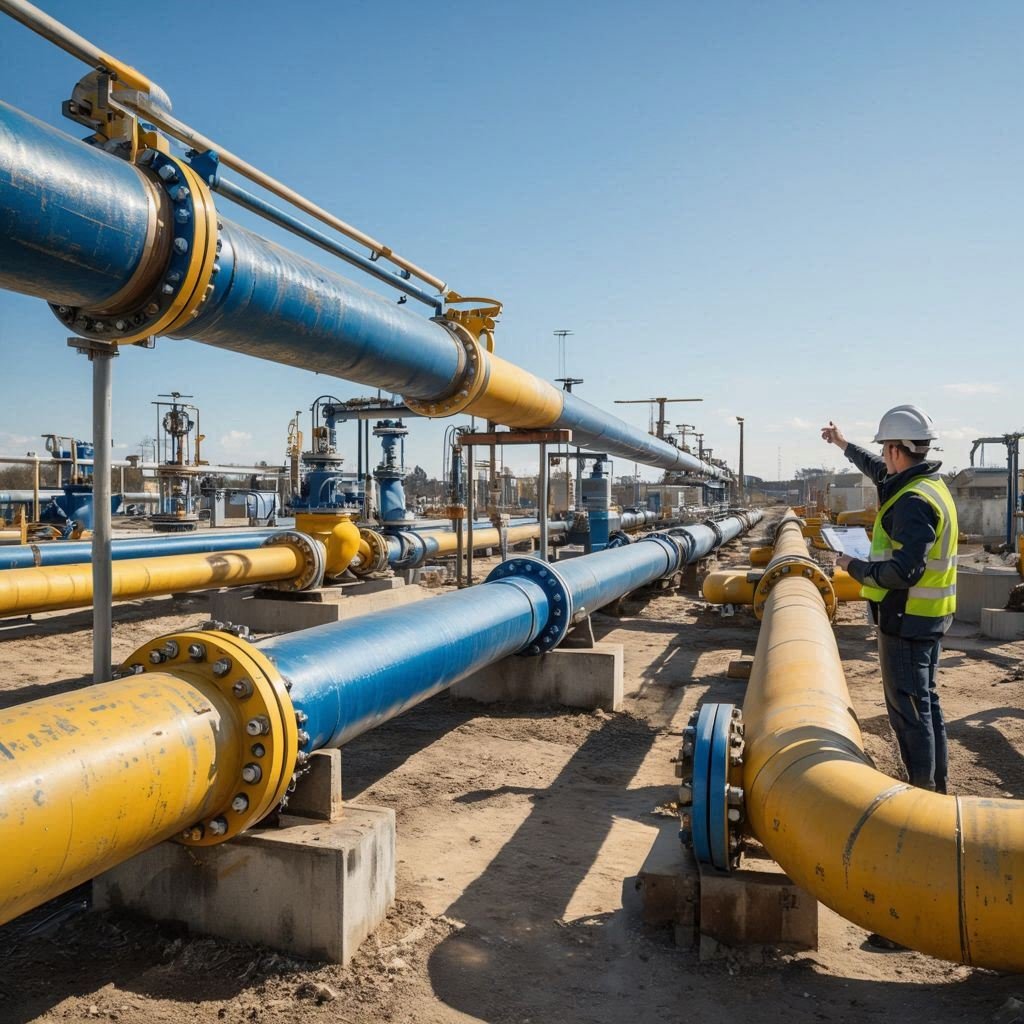



In modern oil and gas, refinery, LNG, and power plant projects, industrial piping systems often involve extensive complex welding, on-site installation, and high-precision construction requirements.
As large-scale projects increasingly shift toward modular construction and prefabrication, more and more piping components are being manufactured and assembled in advance at factories to reduce on-site construction time and improve welding quality.Against this engineering backdrop, pipe spools have become one of the most critical prefabricated units in industrial piping systems.
What is a Pipe Spool?
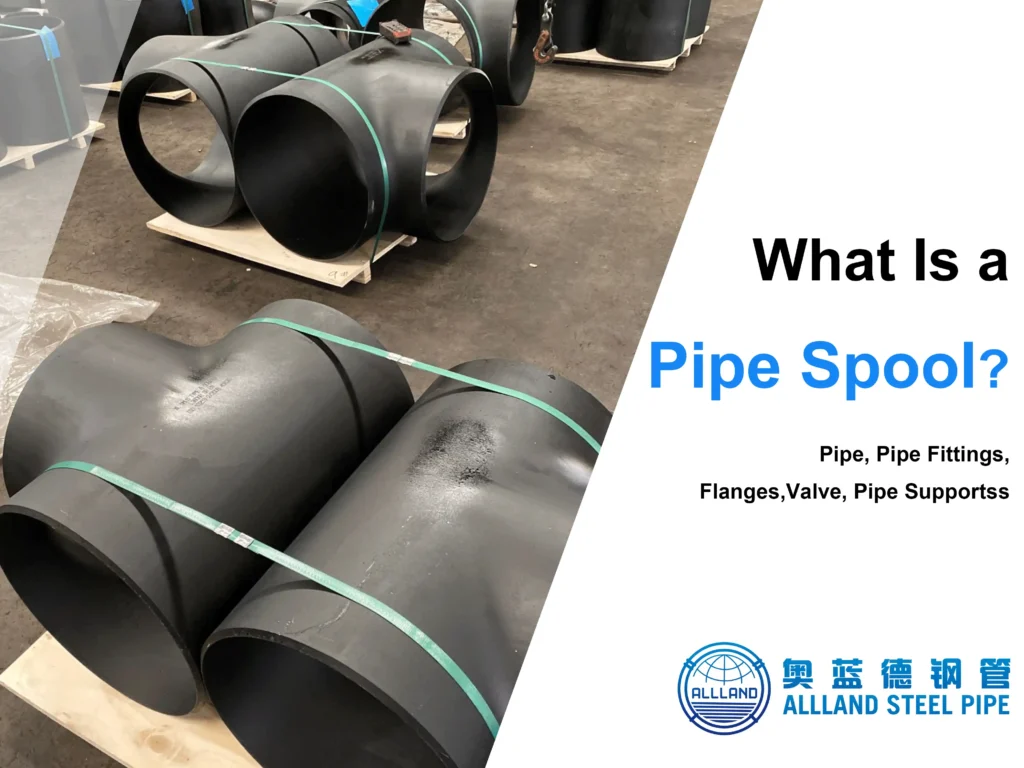
A pipe spool refers to an independent piping assembly (Prefabricated Piping Assembly) produced in a factory or prefabrication workshop in accordance with engineering drawings, following the cutting, assembly, welding, and inspection of components such as steel pipes, pipe fittings, flanges, and valves.
In the industry, a “pipe spool” is also referred to as a “pipe spool piece.”
Main Components of a Pipe Spool
A pipe spool typically consists of multiple prefabricated pipe sections that are assembled and welded in advance at a factory or fabrication shop, and then transported to the project site for installation.
A typical pipe spool mainly consists of the following components:
1. Pipe (Steel Pipe)
Steel pipes form the main body of a pipe spool and are used to transport fluid media.Common types include:
- Seamless Pipe
- ERW Pipe
- LSAW Pipe
- Stainless Steel Pipe
In actual industrial projects, the material grade, wall thickness, and pipe size of steel pipes typically require comprehensive selection based on specific operating conditions. This not only affects the pressure-bearing capacity of the piping system but also directly impacts its service life and operational safety.
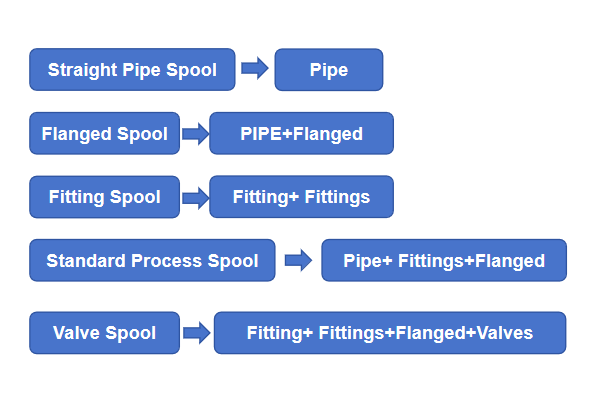
2. Fittings Pipe Spool : Pipe+ Fittings
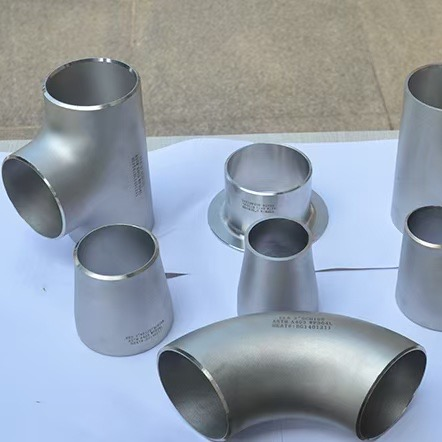
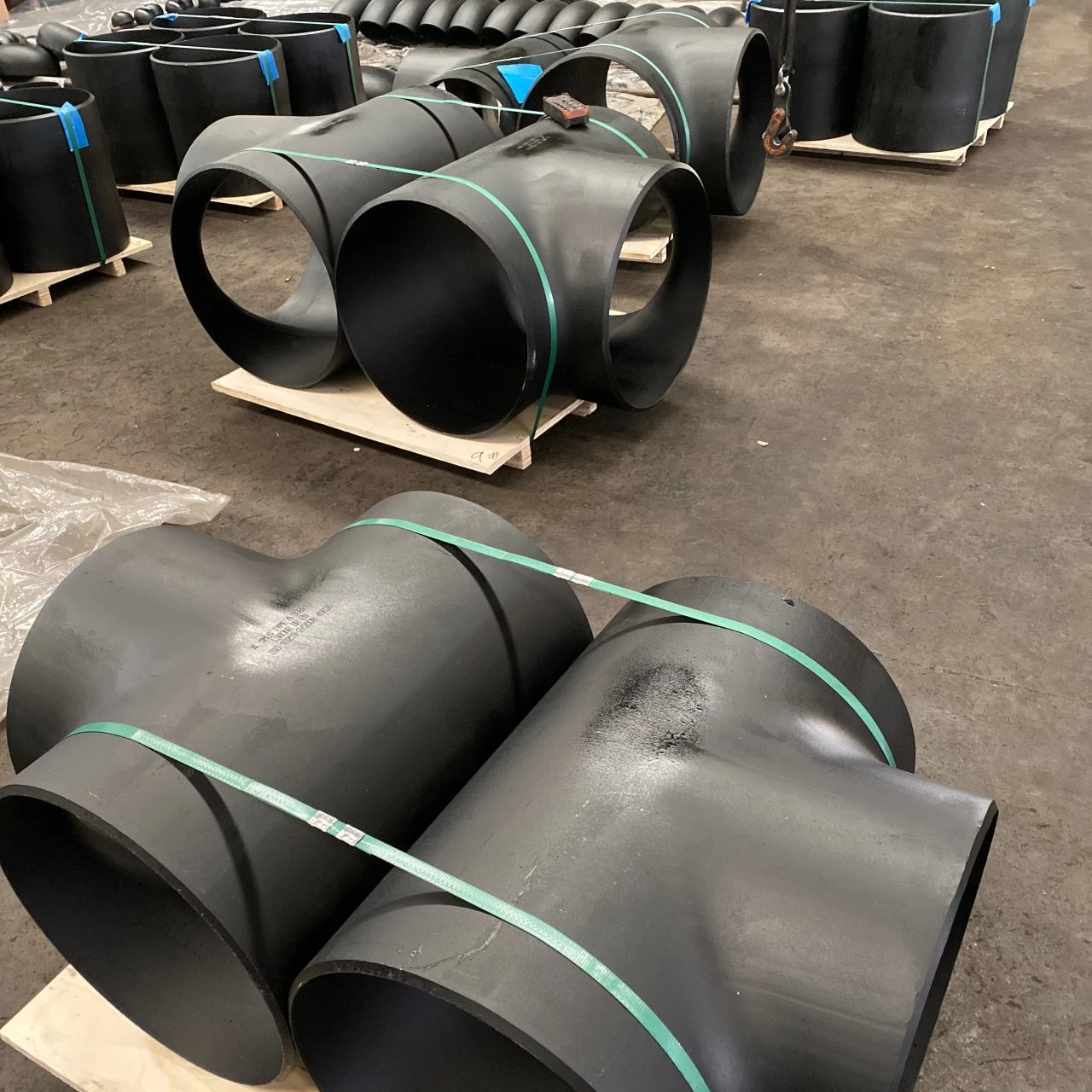
Pipe fittings are used to change the direction of flow, create branch connections, or adjust pipe diameters.
| Fitting Type | Function |
|---|---|
| Elbow | Changes the flow direction of the pipeline |
| Tee | Divides or combines fluid flow |
| Reducer | Connects pipes of different diameters and changes pipe size |
| Cap | Closes and seals the end of a pipe |
3. Flanges Pipe Spool: Pipe+ Flange
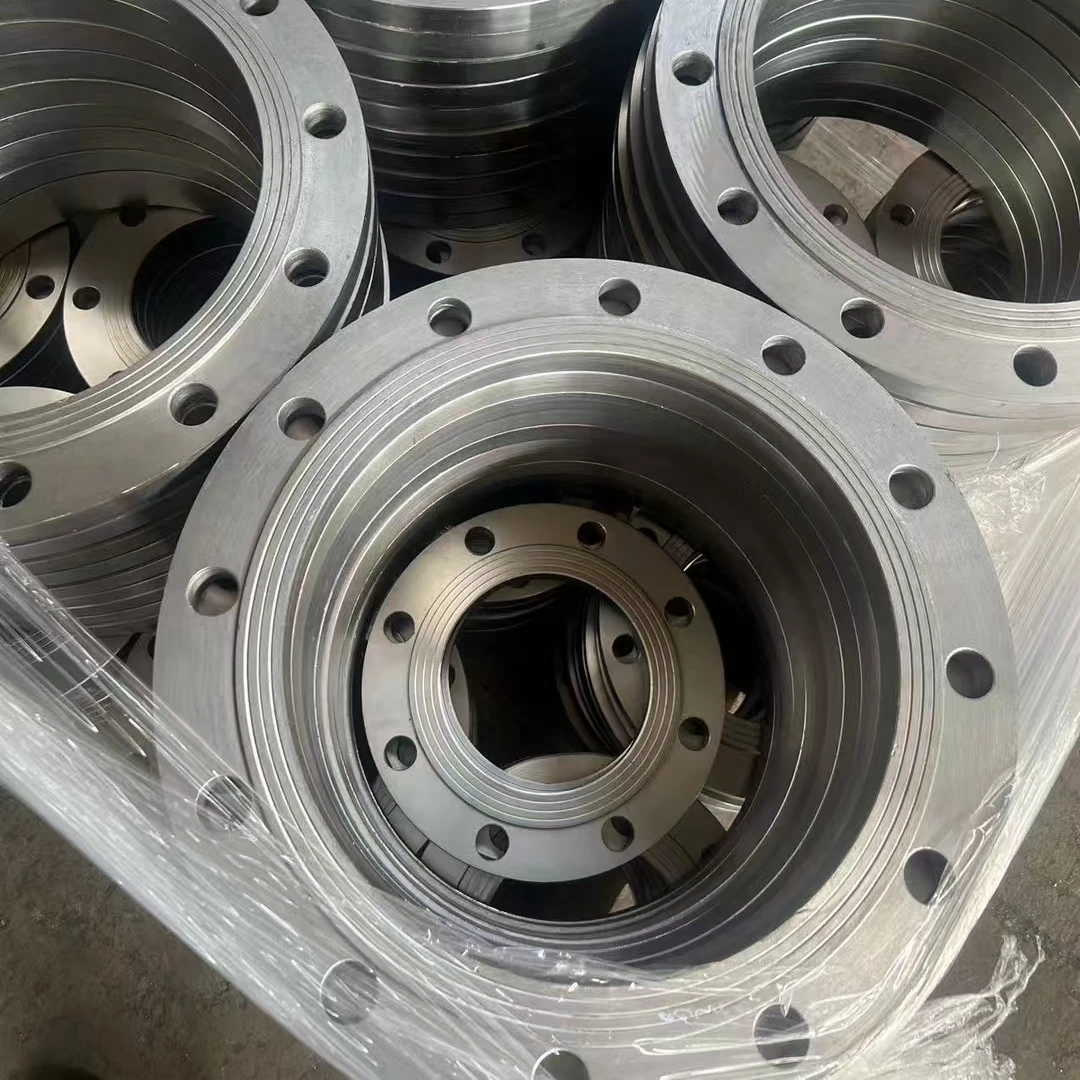
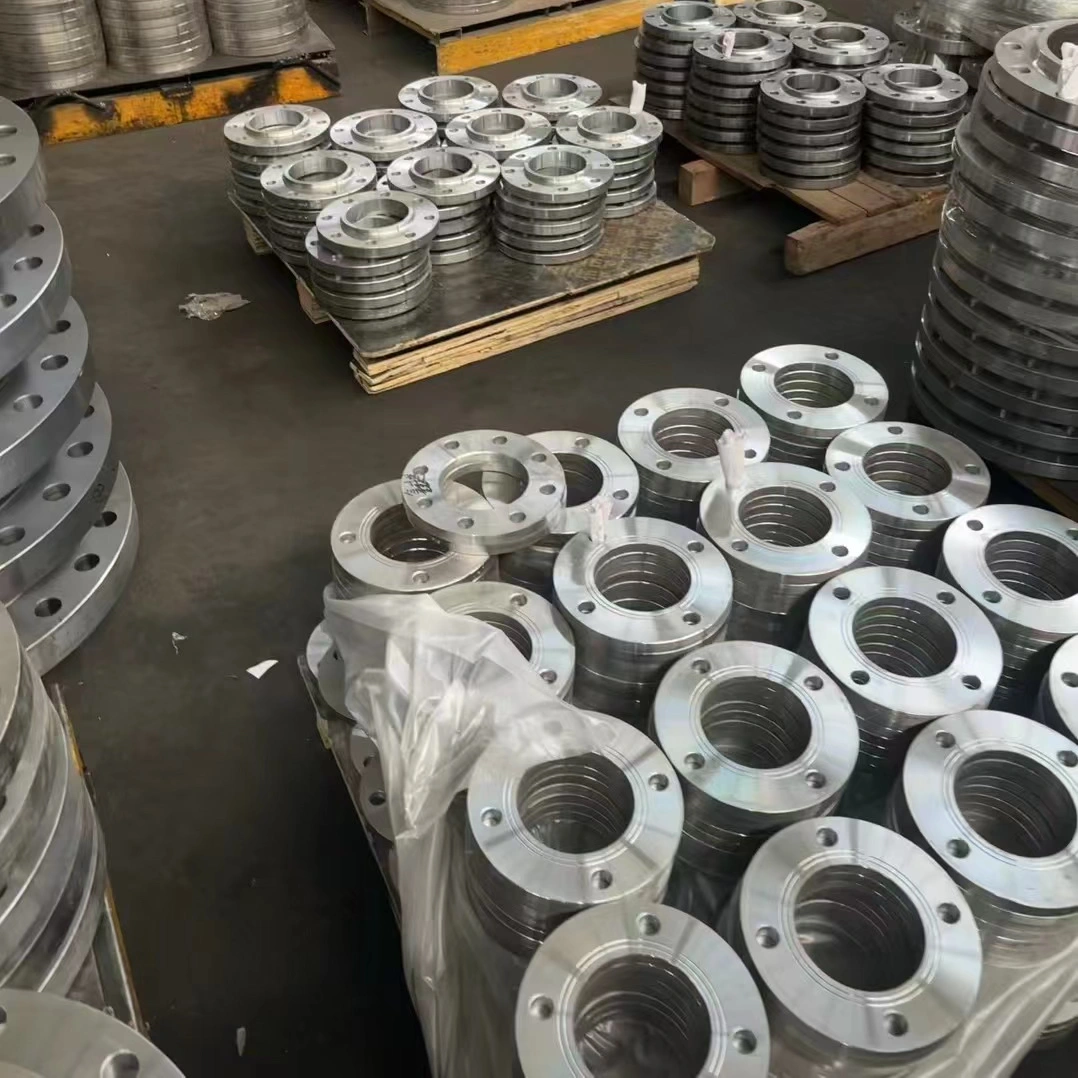
Flanges are used to create a removable connection between pipes and equipment.
Main functions:
- Easy to install
- Easy to maintain
- Improves maintenance efficiency
Common standards: ASME B16.5、ASME B16.47
4. Valves Pipe Spool: Pipe+ Fitting+ Flanges+ Valves
Valves are used to control the flow of media within pipelines.Common types:
- Gate Valve
- Ball Valve
- Globe Valve
- Check Valve
Many large pipe spools have their valves pre-installed to reduce the amount of work required on-site.
5. Pipe Supports
Supports are used to secure and stabilize pipe spools.
Common types of supports include pipe shoes, clamps, hangers, and guides.
Among these, pipe shoes are primarily used to support the weight of the pipe, clamps are used to secure the pipe in place, hangers are suitable for suspending pipe systems, and guides are used to control the direction of pipe movement and relieve thermal expansion stress.
Pipe Spool Fabrication Process
Pipe spool fabrication is typically carried out in a factory setting, with the primary objective of improving the manufacturing precision, weld quality, and on-site installation efficiency of piping systems through standardized, modular production. The complete manufacturing process generally includes several key stages, such as cutting, alignment, welding, inspection, corrosion protection, and pre-assembly.
Before manufacturing begins, the factory must prepare raw materials based on the isometric drawings and the bill of materials (BOM). This typically includes:
- Steel Pipe
- Elbow
- Tee
- Reducer
- Flange
- Valve
Technicians will cut the steel pipes and fittings according to the dimensions specified in the drawings and perform the necessary beveling to prepare them for the subsequent welding process. The accuracy of the cutting directly affects the quality of the pipe spool assembly and its overall dimensional accuracy.
Position and assemble all components according to the drawings.
Welding is one of the most critical processes in the entire pipe spool fabrication process.
Depending on the material, wall thickness, and project standards, common welding processes include GTAW (TIG), SMAW, and SAW. The welding process typically requires strict adherence to WPS (Welding Procedure Specification) requirements to ensure the strength, leak-tightness, and long-term operational reliability of the weld.
After welding is completed, non-destructive testing (NDT) must be performed on the weld to ensure that the weld quality meets project specifications. Common testing methods include RT (Radiographic Testing), UT (Ultrasonic Testing), and PT/MT, which are used to detect welding defects such as cracks, porosity, and lack of fusion.This is a critical step in ensuring the safe operation of industrial piping systems.
After passing quality inspection, pipe spools typically undergo surface treatment to enhance their corrosion resistance and service life.
- Sand Blasting
- Painting
- Galvanizing
- Anti-corrosion coating
The specific treatment method is typically selected based on the project environment, the conveyed medium, and the operating conditions.
Prior to final shipment, the factory typically performs a trial assembly of the pipe spool to verify overall dimensions, flange connection orientations, and installation compatibility, thereby preventing installation errors on-site.
After inspection, the pipe spool is numbered, packaged, and shipped in separate shipments according to project requirements, and ultimately delivered to the construction site for installation.
Material of Pipe Spools
| Spool Type | Common Materials |
|---|---|
| Carbon Steel Spool | ASTM A106 / API 5L |
| Stainless Steel Spool | 304 / 316L |
| Alloy Steel Spool | P11 / P22 / P91 |
| Duplex Steel Spool | Duplex 2205 |
| Nickel Alloy Spool | Inconel / Monel |
Advantages of Pipe Spool Fabrication
In modern industrial piping engineering, pipe spool fabrication has become the mainstream construction method for projects in the oil and gas, refinery, petrochemical, LNG, power plant, and offshore engineering sectors.
Compared to traditional on-site fabrication, the pipe spool prefabrication model can significantly improve construction efficiency, welding quality, and overall project management capabilities.
Higher Installation Efficiency
Shorten the construction schedule, increase installation speed, and reduce on-site downtime.
Better Welding Quality
Factory-based pipe spool fabrication allows welding operations to be performed in a stable, controlled environment, thereby effectively improving weld consistency, dimensional accuracy, and overall manufacturing quality.
Reduced Site Risk
On-site construction is typically one of the highest-risk aspects of industrial projects. Pipe
spool fabrication allows a significant portion of high-risk work to be shifted to the factory, thereby reducing on-site welding, minimizing work at height, and improving overall HSE management. This is particularly important for offshore engineering projects.
Lower Overall Project Cost
Although the manufacturing costs of factory prefabrication may be higher, pipe spools often reduce overall costs when viewed across the entire project lifecycle. For large-scale projects, the overall economic benefits are significant.
Higher Installation Efficiency
Shorten the construction schedule, increase installation speed, and reduce on-site downtime.
Higher Dimensional Accuracy
Through advanced manufacturing technologies such as CNC cutting, automatic welding, and 3D modeling, pipe spools can achieve higher dimensional accuracy and better installation compatibility, thereby reducing on-site adjustments and improving overall construction efficiency.
Where Is Pipe Spool Used? Key Pipe Spool Applications Across Industries
Pipe spools are widely used in modern industrial piping systems and play a central role, particularly in large-scale engineering projects such as oil and gas, refining, petrochemicals, power generation, LNG, and offshore engineering.
Pipe Spool Applications in the Oil & Gas Industry
The oil and gas industry is the primary application area for pipe spools, where the requirements for welding quality and dimensional accuracy are extremely high. ALLLAND Steel Pipe meets military-grade quality control standards and fully satisfies the oil and gas industry’s stringent quality requirements.
Pipe Spool Applications in LNG Projects
In LNG module projects, pipe spools are widely used in cryogenic process areas such as liquefaction trains, cryogenic piping systems, and loading arm systems. Since LNG is typically transported at temperatures as low as -162°C, piping systems generally employ cryogenic materials such as 316L stainless steel, duplex stainless steel, or nickel alloys to ensure adequate strength and corrosion resistance even under extreme low-temperature conditions.
At the same time, the internal space within LNG modules is highly compact, often requiring complex piping layouts that must be integrated with equipment and steel structures with high precision. To minimize weld distortion, installation deviations, and schedule delays caused by low-temperature welding on-site, most projects complete pipe spool assembly, orbital welding, dimensional inspection, and 3D trial assembly in advance at the factory, thereby improving the overall installation accuracy of the module and on-site construction efficiency.
Power Plant Pipe Spool Applications
| System | Typical Application |
| Steam System | Steam Transportation |
| Boiler Piping | Boiler Connection |
| Cooling Water System | Cooling Water Circulation |
| Condensate System | Condensate Recovery |
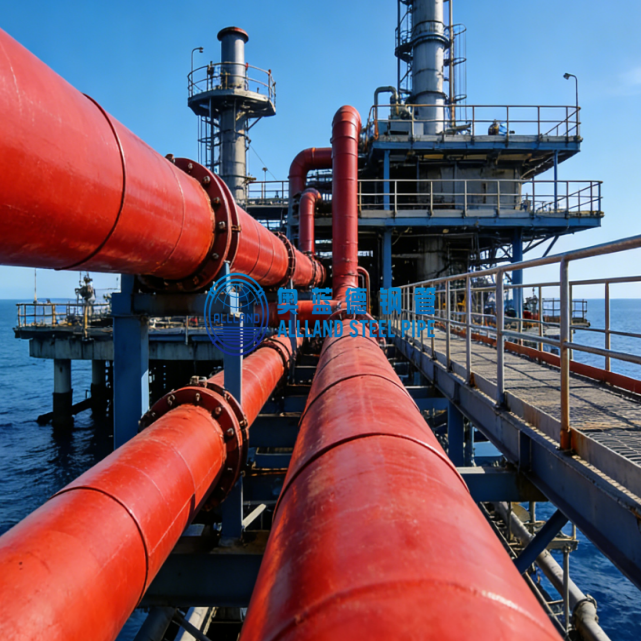
Pipe Spool Applications in Offshore Engineering Projects
Offshore projects typically require a high degree of prefabrication and minimal offshore welding; consequently, a large number of pipe spools undergo the following processes in advance at onshore yards:
- Shop Welding
- NDT Inspection
- Hydro Test
- Painting
The components are then transported as a single integrated unit with the topside module, thereby reducing the scope of offshore installation work and enhancing construction safety and project efficiency.
ALLLAND Steel Pipe provides high-precision prefabrication services tailored to the complex operating conditions of offshore projects, including the processing of duplex and super duplex materials, strict dimensional control, welding process management, and comprehensive QA/QC documentation support.
Pipe Spool vs Field Fabrication
| Comparison Item | Pipe Spool Fabrication | Field Fabrication |
| Fabrication Location | Factory or prefabrication workshop | Construction site |
| Construction Method | Prefabricated before site installation | Fabricated directly on-site |
| Welding Environment | Stable and controlled | Affected by weather and site conditions |
| Welding Quality | Higher weld consistency and lower repair rate | Quality may vary depending on site conditions |
| Dimensional Accuracy | Higher precision and better fit-up accuracy | More dependent on field adjustment |
| Installation Efficiency | Faster on-site installation | Longer construction time |
| On-site Welding Work | Minimal | Large amount of field welding |
| Safety Performance | Reduced high-altitude and hot work risks | Higher construction safety risks |
| Automation Level | Supports CNC cutting and automatic welding | Mainly manual fabrication |
| Schedule Control | Easier to control project schedule | More vulnerable to delays |
| Cost Control | Better overall project cost efficiency | Higher labor and rework costs |
| Suitability for Modular Construction | Highly suitable | Limited suitability |
| Typical Applications | LNG, Offshore, Refinery, Power Plant | Maintenance and small modification projects |
| Transportation Requirement | Requires transportation planning | No long-distance transport required |
| Flexibility | Later modification is more difficult | Easier on-site adjustment |
Conclusion
With the growing popularity of modular construction and prefabrication in industrial engineering, pipe spools have gradually become one of the most critical prefabricated components in modern piping systems. Compared to traditional on-site fabrication methods, pipe spool fabrication effectively improves welding quality, installation efficiency, and overall construction precision, while reducing on-site construction risks and project timelines.
Today, pipe spools are widely used in large-scale industrial projects such as oil and gas, LNG, refineries, power plants, and offshore engineering, playing an increasingly vital role in modern industrial piping systems.
FAQ
What is the difference between Pipe Spool and Pipe?
A “pipe” refers to a single steel pipe product, whereas a “pipe spool” is a complete prefabricated piping assembly consisting of multiple components, including steel pipes, flanges, fittings, and valves.
What is the difference between pipe spools and on-site fabrication?
Pipe spool fabrication is primarily carried out in a factory, resulting in more consistent quality and higher efficiency; on-site fabrication, however, is performed directly at the construction site and is more susceptible to weather, space, and construction conditions.
What components typically make up a pipe spool?
Generally, they include steel pipes, pipe fittings, flanges, valves, and pipe supports.