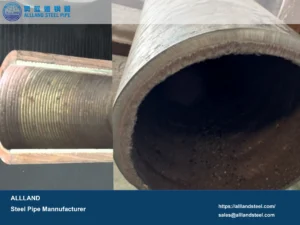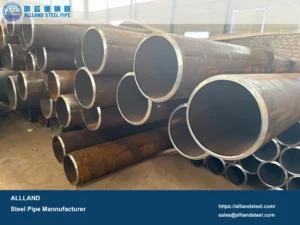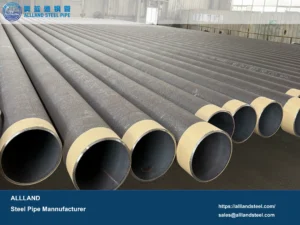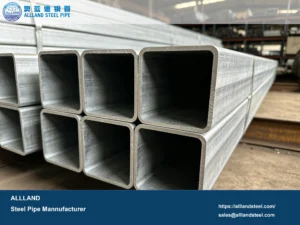


Crude oil pipelines require steel pipes that meet project-specific requirements for strength, pressure, dimensions, and corrosion protection. Pipe selection depends on operating conditions, pipeline design, and the transported fluid.
API 5L X52 is one option for crude oil transportation. This guide covers material selection, wall thickness, manufacturing methods, corrosion protection, and inspection requirements.
Material Selection for Crude Oil Pipelines
Steel grade selection should start with the pipeline’s design conditions and operating environment. Design pressure, outside diameter, required wall thickness, temperature, fluid composition, and installation method all influence the material specification.
API 5L covers line pipe used in pipeline transportation systems in the petroleum and natural gas industries. Grades such as X42, X52, X60, and X65 provide different specified strength levels. A higher-strength grade may support particular design requirements, but it does not automatically provide better performance in every application.
Key Specifications of API 5L X52 Pipe
API 5L X52, also designated L360, is one possible grade for crude oil transmission projects. Its key specifications should be confirmed against the applicable API 5L edition, product form, PSL, and purchase requirements.
| Parameter | Specification |
| Standard | API 5L |
| Steel grade | X52 / L360 |
| Minimum yield strength | 360 MPa (52,200 psi) |
| Minimum tensile strength | 460 MPa (66,700 psi) for commonly referenced API 5L requirements; verify the applicable edition and PSL |
| Product Specification Level | PSL1 or PSL2 |
| Manufacturing method | Seamless or welded, including ERW, LSAW, and SSAW where applicable |
| Outside diameter | Selected according to pipeline design and manufacturing capability |
| Wall thickness | Determined by pressure design, diameter, applicable code, and project requirements |
| Inspection | Mechanical testing, hydrostatic testing, and NDT as required by the applicable specification |
| Documentation | Material test certificate, inspection records, and traceability as specified in the purchase order |
The grade designation alone does not define a complete pipeline specification. Buyers should confirm the required PSL, dimensions, pipe ends, testing scope, and documentation before placing an order.
Why Is API 5L X52 Used in Crude Oil Pipelines?
API 5L X52 steel pipe is used in crude oil transmission projects that require defined strength, weldability, and dimensional performance. Its suitability depends on pipeline design conditions, transported fluid characteristics, and project specifications.
Strength Requirements for Crude Oil Transmission
Minimum yield strength: 360 MPa (52 ksi class)
X52 provides a defined strength level for pipeline design. However, its allowable operating pressure depends on pipe diameter, wall thickness, design factor, and the applicable pipeline code—not steel grade alone.
Weldability and Pipeline Construction
X52 can be supplied as ERW, LSAW, or SSAW pipe, subject to dimensional availability and project requirements. For welded pipelines, material chemistry, qualified welding procedures, and weld inspection are essential to achieving reliable joints and meeting project acceptance criteria.
Suitability for Onshore and Offshore Projects
| Project environment | Key considerations |
| Onshore pipelines | Soil conditions, buried-pipe loads, and external corrosion protection |
| Offshore pipelines | Seawater corrosion, installation stresses, and marine operating conditions |
| Sour-service pipelines | Potential H₂S-related cracking risks and additional material qualification |
API 5L X52 is suitable only when its material properties and the specified pipe configuration meet the project’s design and service requirements. Additional corrosion or sour-service controls may be necessary depending on operating conditions.
Pressure Design for API 5L X52 Crude Oil Pipelines
The pressure capacity of an API 5L X52 crude oil pipeline depends on pipe diameter, wall thickness, material strength, and the applicable design code. For liquid transportation pipelines, ASME B31.4 provides a reference framework for determining pressure-design wall thickness.
Key Factors in Pressure Design
- Minimum yield strength:API 5L X52 has a specified minimum yield strength of 360 MPa.
- Outside diameter and wall thickness:Larger diameters generally require greater wall thickness to withstand the same internal pressure, all else being equal.
- Design factor:The applicable factor depends on the governing code and project requirements.
- Additional allowances:Corrosion, erosion, and other applicable allowances must be considered when determining the required nominal wall thickness.
The final wall thickness must be verified against the governing code and project specifications. X52 steel grade alone does not determine the pipeline’s allowable operating pressure.
How ALLLAND API 5L X52 Pipe Supports Crude Oil Pipeline Efficiency
Crude oil pipeline efficiency depends on material strength, pipe dimensions, flow conditions, and manufacturing quality. ALLLAND API 5L X52 line pipe, with a specified minimum yield strength of 360 MPa, can support crude oil pipeline projects requiring a balance of mechanical performance and pipeline design requirements.
| Key Factor | API 5L X52 Specification or Selection Point | Benefit for Crude Oil Pipelines |
| Material strength | Minimum yield strength: 360 MPa | Provides a defined strength basis for pipeline pressure design. |
| Pipe dimensions | Outside diameter and wall thickness selected according to project requirements | Helps balance pressure resistance, internal flow area, and required throughput. |
| Manufacturing method | Seamless or applicable welded pipe options, subject to specification and available dimensions | Allows pipe selection to match project design, dimensions, and manufacturing requirements. |
| Quality inspection | Mechanical testing, hydrostatic testing, and NDT as required by the order and applicable specification | Helps verify specified material properties and pipe integrity before delivery. |
For example, a pipe with a 600 mm internal diameter and an average flow velocity of 1.5 m/s has a theoretical flow rate of approximately 2,545 m³/h. Actual throughput depends on crude oil viscosity, pipeline pressure loss, pump capacity, and operating conditions—not steel grade alone.
ALLLAND API 5L X52 pipe selection should therefore combine the required material grade with suitable dimensions, manufacturing controls, and inspection requirements to support reliable crude oil transportation.
Corrosion Protection for API 5L X52 Crude Oil Pipelines
Corrosion protection for crude oil pipelines must address both external corrosion and internal corrosion. ALLLAND can support project-specific pipe selection and coating requirements based on installation conditions and service environments.
| Protection Method | Main Purpose | Key Consideration |
| 3LPE coating | External corrosion protection | Commonly used for buried pipelines. |
| 3LPP coating | External corrosion protection | Considered for applications requiring higher temperature resistance. |
| FBE coating | External corrosion protection | Performance depends on surface preparation and application quality. |
| Cathodic protection | Controls external electrochemical corrosion | Often combined with external coatings for buried or submerged pipelines. |
| Internal corrosion management | Controls corrosion caused by the transported fluid | May require corrosion monitoring, inhibitors, and fluid analysis. |
For crude oil containing water, CO₂, or H₂S, internal corrosion and cracking risks must be evaluated separately. Sour-service applications may require additional material selection and testing. External coatings alone cannot prevent all internal corrosion mechanisms.
FAQ
Is API 5L X52 suitable for crude oil pipelines?
API 5L X52 can be used for crude oil pipelines when its specified material properties meet the design and project requirements. Suitability depends on pressure, diameter, wall thickness, fluid composition, installation conditions, and applicable standards. Sour service or other demanding conditions may require additional material qualification.
How do I select wall thickness for a crude oil pipeline?
Wall thickness should be calculated using the applicable pipeline design code and project design conditions. Key inputs include design pressure, outside diameter, material strength, design factors, and any required allowances. The final nominal thickness must also account for applicable manufacturing tolerances and acceptance requirements.
What is the difference between API 5L PSL1 and PSL2?
PSL2 includes additional or more restrictive requirements in specified areas, which may include chemical composition, mechanical properties, testing, and acceptance criteria. The required level should be determined from the project specification and applicable API 5L edition.