

Natural Gas Transmission Pipes: Applications and Requirements
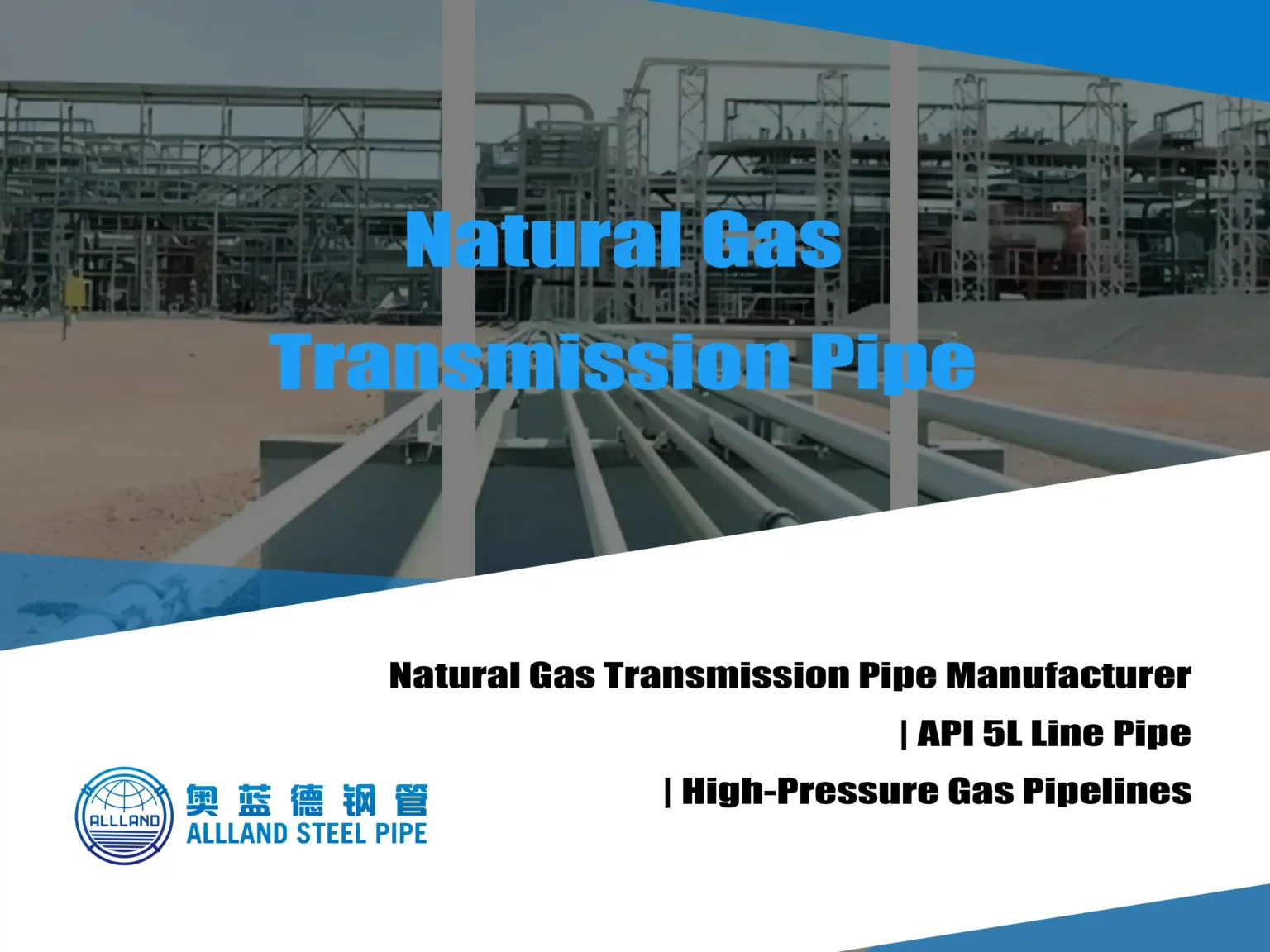
Natural gas transmission pipes are used to transport natural gas over long distances from production fields and processing facilities to distribution networks, storage terminals, and industrial users. These pipelines typically operate under specific pressure and environmental conditions, requiring steel pipes with suitable strength, toughness, weldability, and dimensional accuracy.
Common applications of natural gas transmission pipes include:
- Long-Distance Gas Transmission Pipelines: Transport natural gas across regions and countries, connecting gas production areas with major consumption markets.
- High-Pressure Gas Pipeline Networks: Carry natural gas between processing plants, compressor stations, and main transmission systems.
- Underground Gas Pipelines: Provide continuous gas transportation through buried pipeline networks, where external corrosion protection is essential.
- Offshore Gas Transmission Pipelines: Transport natural gas from offshore production facilities to onshore processing and distribution infrastructure.
Key Requirements for Natural Gas Transmission Pipes
Natural gas transmission pipelines require steel pipes that meet project-specific design conditions and applicable standards, particularly API 5L. Key requirements include:
- Mechanical Strength:Appropriate yield strength and tensile strength to withstand the specified operating pressure.
- Toughness: Adequate impact toughness and fracture resistance, particularly in low-temperature environments.
- Weldability:Suitable chemical composition and carbon equivalent to support field girth welding.
- Dimensional Accuracy:Controlled outside diameter, wall thickness, ovality, and straightness to facilitate pipeline installation.
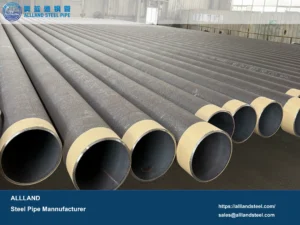
- Corrosion Protection: Suitable external coatings, such as 3LPE, 3LPP, or FBE, depending on the pipeline environment.
API 5L Steel Grades for Natural Gas Transmission
Applicable Standards for Natural Gas Transmission Pipes
Natural gas transmission pipes are manufactured and specified according to internationally recognized pipeline standards. The applicable standards define requirements for pipe materials, manufacturing processes, mechanical properties, testing, and quality control.
| Standard | Scope and Application |
| API 5L | Product specification for seamless and welded steel line pipes used in petroleum and natural gas pipeline transportation systems. |
| ISO 3183 | International standard specifying requirements for steel pipes used in petroleum and natural gas pipeline transportation systems, including PSL1 and PSL2. |
| ASME B31.8 | Code covering the design, materials, construction, testing, operation, and maintenance of gas transmission and distribution piping systems. |
| EN 10208 | European standard series for steel pipes used in combustible fluid pipeline transportation, where specified by the project. |
API 5L and ISO 3183 focus on steel pipe product requirements, while ASME B31.8 addresses the broader requirements of gas pipeline systems. EN 10208 may also apply to projects specifying its European requirements.
Common API 5L Steel Grades for Natural Gas Transmission
API 5L steel grades are selected according to pipeline design pressure, pipe diameter, wall thickness, operating temperature, and project requirements. Higher-grade materials provide higher specified minimum yield strength, allowing engineers to optimize pipe wall thickness and structural performance within the design limits.
Common grades used in natural gas transmission projects include:
| API 5L Grade | ISO 3183 Grade | Minimum Yield Strength |
| X42 | L290 | 290 MPa |
| X52 | L360 | 360 MPa |
| X60 | L415 | 415 MPa |
| X65 | L450 | 450 MPa |
| X70 | L485 | 485 MPa |
| X80 | L555 | 555 MPa |
Grade selection considerations:
- X42–X52: Used in pipeline projects with moderate strength requirements.
- X60–X65: Common choices for higher-strength transmission pipeline applications.
- X70–X80: Used in projects requiring higher-strength line pipe, subject to additional material qualification and project specifications.
The appropriate grade depends on the pipeline design and operating conditions rather than strength alone.
Manufacturing Processes for Natural Gas Transmission Pipes
Natural gas transmission pipes are manufactured using different processes, including LSAW, SSAW, and ERW. Each process offers specific advantages in terms of pipe diameter, wall thickness, and production characteristics. The appropriate type is selected according to pipeline design and project specifications.
LSAW (Longitudinal Submerged Arc Welded) steel pipes are commonly used in large-diameter natural gas transmission pipelines. Their longitudinal weld structure and suitability for heavy-wall production make them an option for projects requiring high-strength line pipes and strict dimensional control.
SSAW (Spiral Submerged Arc Welded) steel pipes are produced with a helical weld seam and offer flexibility in large-diameter production. They can be used in natural gas transmission projects when their material properties, weld quality, and dimensions meet the applicable pipeline requirements.
ERW (Electric Resistance Welded) steel pipes are manufactured using high-frequency resistance welding. They are commonly used for smaller-diameter pipeline applications, including natural gas transmission and distribution systems where the specified grades and dimensions are suitable.
Comparison of Manufacturing Processes
| Pipe Type | Manufacturing Characteristics | Typical Applications |
| LSAW | Longitudinal submerged arc welding; suitable for large diameters and heavy walls | Large-diameter gas transmission pipelines |
| SSAW | Spiral submerged arc welding; flexible diameter production | Gas transmission pipelines with project-specific requirements |
| ERW | High-frequency resistance welding; continuous production | Smaller-diameter gas pipelines and distribution networks |
The selection of LSAW, SSAW, or ERW pipes depends on the required dimensions, steel grade, operating conditions, applicable standards, and project specifications. Manufacturing process alone does not determine pipeline suitability.
Natural Gas Transmission Pipe Specifications
Natural gas transmission pipe specifications are determined by pipeline design conditions, operating pressure, transportation requirements, and applicable standards. API 5L line pipes are typically specified by steel grade, Product Specification Level (PSL), outside diameter, wall thickness, pipe length, and end preparation.
Standard Specifications and Dimensions
| Parameter | Typical Specifications |
| Product Standard | API 5L / ISO 3183 |
| Steel Grade | X42, X52, X60, X65, X70, X80 |
| PSL | PSL1 / PSL2 |
| Outside Diameter (OD) | Project-dependent |
| Wall Thickness (WT) | Project-dependent |
| Pipe Length | R1: 4.88–7.62 m; R2: 7.62–12.19 m; R3: 12.19 m and longer |
| Manufacturing Process | LSAW / SSAW / ERW |
| Pipe Ends | Plain End / Beveled End |
| Delivery Condition | As specified by API 5L grade and purchase order |
Note: R1, R2, and R3 are API 5L pipe length range designations. Actual length requirements and tolerances should be confirmed against the applicable standard edition and purchase specification.
Key Factors in Pipe Specification Selection
When selecting natural gas transmission pipes, buyers and pipeline engineers should consider the following factors:
- Outside Diameter and Wall Thickness: Determined by pipeline capacity, design pressure, and engineering calculations.
For natural gas pipeline projects, pipe diameter should be determined by gas flow rate, operating pressure, pipeline length, and allowable pressure drop. For a more detailed explanation of these sizing factors, see our guide to natural gas pipe sizing.
- Steel Grade: Selected according to required strength, toughness, and operating conditions.
- Pipe Length: Specified according to transportation, handling, installation, and welding requirements.
- Pipe End Preparation: Plain or beveled ends are selected according to connection and field welding requirements.
- Delivery Condition: Normalized, quenched and tempered, thermomechanically processed, or other applicable conditions are specified according to the API 5L grade and purchase requirements.
The final pipe specification should be confirmed through the project technical specification, applicable pipeline design code, and purchase order. For large-diameter natural gas transmission projects, LSAW and SSAW pipes are commonly evaluated based on their dimensional and mechanical requirements.
FAQ
What Type of Steel Pipe Is Used for Natural Gas Transmission?
Natural gas transmission pipelines commonly use API 5L carbon steel line pipes, including LSAW, SSAW, and ERW pipes. The selection depends on pipeline diameter, wall thickness, operating pressure, steel grade, and project specifications.
Which API 5L Grades Are Commonly Used for Natural Gas Pipelines?
Common API 5L grades include X52, X60, X65, X70, and X80. Higher-strength grades are often specified for transmission projects requiring higher material strength, subject to pipeline design and project requirements.
What Is the Difference Between API 5L PSL1 and PSL2?
PSL1 and PSL2 are two product specification levels under API 5L. PSL2 generally has stricter requirements for chemical composition, mechanical properties, carbon equivalent, and testing. The required level depends on the pipeline design and purchaser’s specifications.