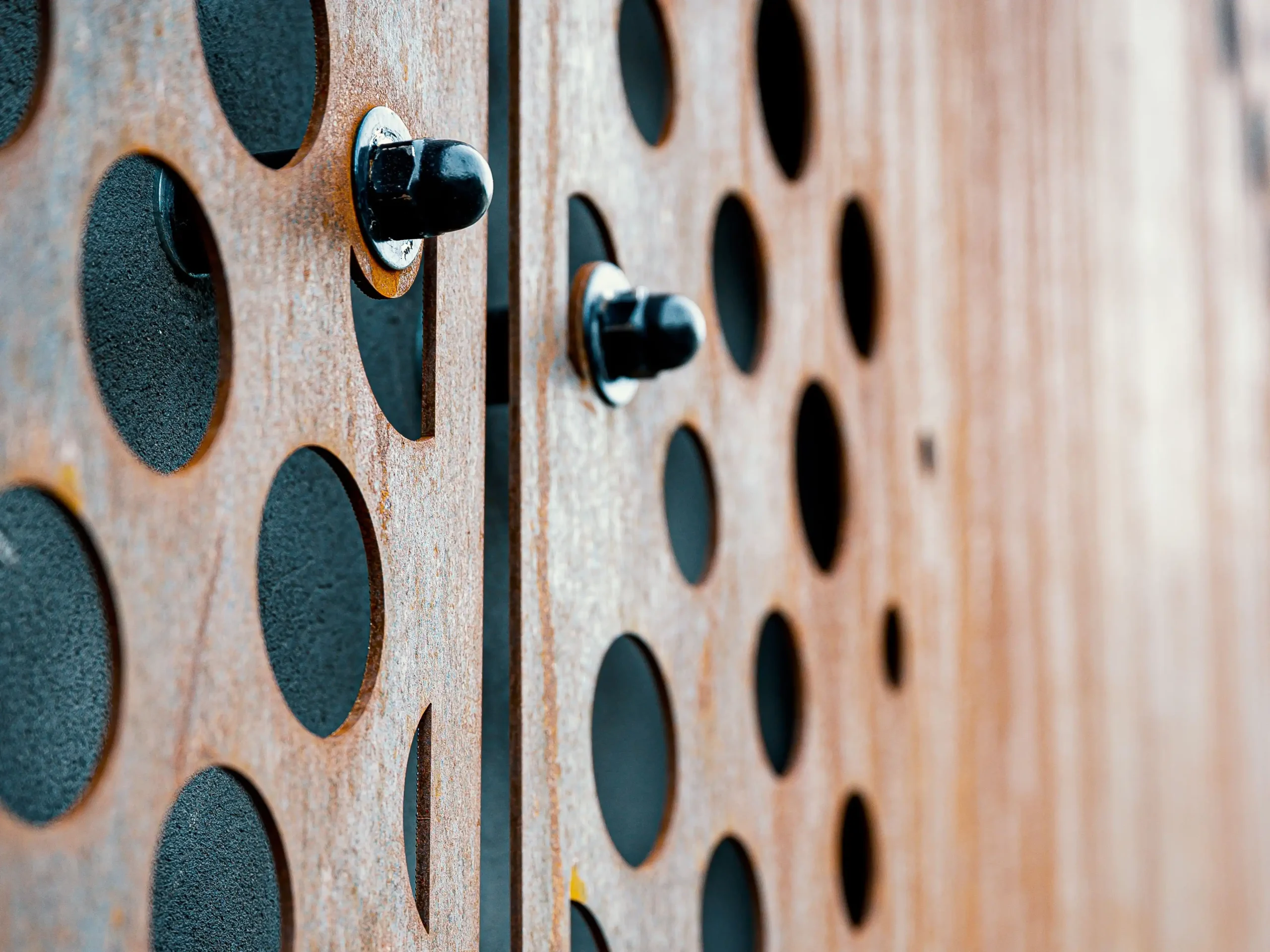


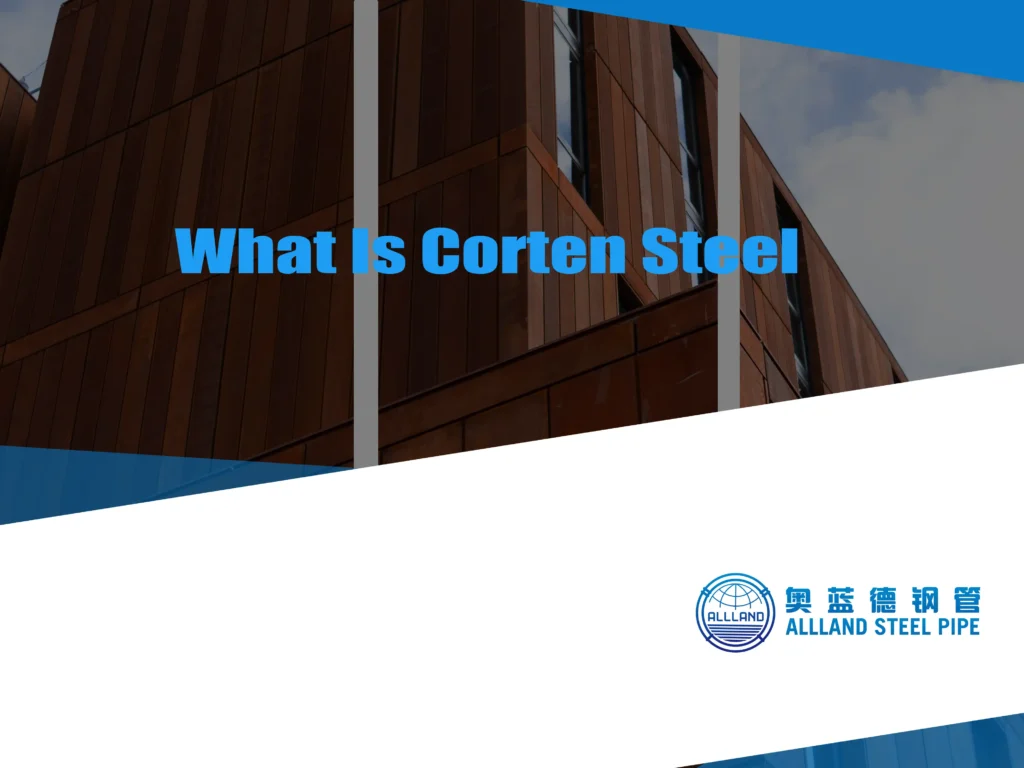
Corten steel is a type of weathering steel designed to develop a stable, protective rust-like surface when exposed to atmospheric conditions. Unlike ordinary carbon steel, which continues to corrode when exposed to moisture and oxygen, Corten steel forms a dense oxide layer called a patina that slows further corrosion.
It is widely used in outdoor structures, bridges, buildings, industrial equipment, and architectural applications.
What Is Corten Steel Made Of?
Corten steel is a low-alloy steel containing small amounts of alloying elements that improve its atmospheric corrosion resistance.
Typical alloying elements include:
- Copper (Cu):Helps improve atmospheric corrosion resistance.
- Chromium (Cr):Supports the formation of a protective oxide layer.
- Nickel (Ni):Improves corrosion resistance and toughness.
- Phosphorus (P):Can contribute to weathering performance.
- Manganese (Mn):Helps improve mechanical properties.
These elements work together to form a relatively stable patina under suitable environmental conditions.
How Does Corten Steel Work?
Corten steel develops a protective patina through exposure to oxygen, moisture, and repeated wet-dry cycles. This layer is generally denser and more adherent than ordinary rust, slowing further atmospheric corrosion.
The process involves three stages:
- Initial Oxidation:The steel reacts with oxygen and moisture, forming an initial rust layer.
- Patina Development:Alloying elements contribute to the formation of a denser oxide layer.
- Patina Stabilization:Repeated wet-dry cycles help the patina become more stable, reducing further corrosion.
Patina formation depends on atmospheric conditions, alloy composition, surface drainage, and exposure to moisture and chlorides.
Important: Corten steel is not completely rust-proof. It performs best in environments where the surface can dry periodically. Continuous moisture and high chloride concentrations may prevent stable patina formation.
Common Grades and Standards of Corten Steel
Corten steel is available in different grades and standards depending on its chemical composition, mechanical properties, product form, and intended application.
Commonly referenced specifications include ASTM A242, ASTM A588, ASTM A606, ASTM A709, ASTM A847, EN 10025-5, JIS G 3125, and GB/T 4171.
Common Corten Steel Grades
The following table summarizes commonly specified weathering steel grades:
| Standard | Common Grades | Typical Applications |
| ASTM A242/A242M | Type 1 | Architectural structures and exposed steel components |
| ASTM A588/A588M | Grade A, B, C, K | Bridges and structural applications |
| ASTM A606/A606M | Type 4 | Weathering steel sheets, strips, and coils |
| ASTM A709/A709M | Grade 50W | Bridge construction |
| ASTM A847/A847M | Weathering steel tubing | Welded and seamless structural tubing |
| EN 10025-5 | S235J0W, S355J0W, S355J2W | European structural applications |
| JIS G 3125 | SPA-H, SPA-C | Weathering steel sheets and plates |
| GB/T 4171 | Q355NH, Q235NH, Q355GNH | Structural and architectural applications |
These standards cover different product forms and technical requirements. For example, ASTM A606 Type 4 covers sheet and strip products, while ASTM A847/A847M specifically covers cold-formed welded and seamless weathering steel structural tubing.
Corten A vs. Corten B
Corten A and Corten B are two widely recognized weathering steel designations. They differ mainly in chemical composition, strength requirements, and typical applications.
| Comparison | Corten A | Corten B |
| Main characteristics | Generally higher phosphorus content | Generally lower phosphorus content |
| Typical applications | Architectural panels and exposed components | Bridges and structural components |
| Commonly associated standard | ASTM A242 Type 1 | ASTM A588 |
| European grade references | S355J0WP | S355J0W / S355J2W |
Corten A is commonly associated with architectural and sheet applications, while Corten B is widely used in structural applications.
These are approximate industry associations, not automatic one-to-one equivalents. Buyers should verify chemical composition, mechanical properties, thickness, and impact-test requirements against the applicable standard.
Corten Steel vs. Mild Carbon Steel
Corten steel and mild carbon steel are both iron-based materials widely used in construction and industrial manufacturing. However, they differ in chemical composition, atmospheric corrosion resistance, maintenance requirements, and typical applications.
The main difference is that Corten steel contains specific alloying elements that promote the formation of a protective surface patina, while mild carbon steel generally requires additional protection to prevent atmospheric corrosion.
Key Differences Between Corten Steel and Mild Carbon Steel
| Comparison | Corten Steel | Mild Carbon Steel |
| Chemical composition | Low-alloy steel with Cu, Cr, Ni, and other elements | Primarily iron and carbon |
| Corrosion resistance | Improved atmospheric corrosion resistance | More susceptible to atmospheric corrosion |
| Surface appearance | Develops a reddish-brown patina | Develops ordinary rust |
| Protective coating | May be used unpainted in suitable environments | Often requires painting or galvanizing |
| Maintenance | Relatively low under suitable conditions | Often requires periodic coating maintenance |
| Initial material cost | Generally higher | Generally lower |
Common Applications of Corten Steel
Corten steel is widely used in construction, infrastructure, transportation, and architecture because of its atmospheric corrosion resistance, structural properties, and distinctive appearance.
Bridge Construction and Infrastructure
ASTM A588 and ASTM A709 Grade 50W are commonly specified weathering steel materials for bridge-related applications.
Their improved atmospheric corrosion resistance can reduce the need for conventional painting systems when environmental conditions are suitable.
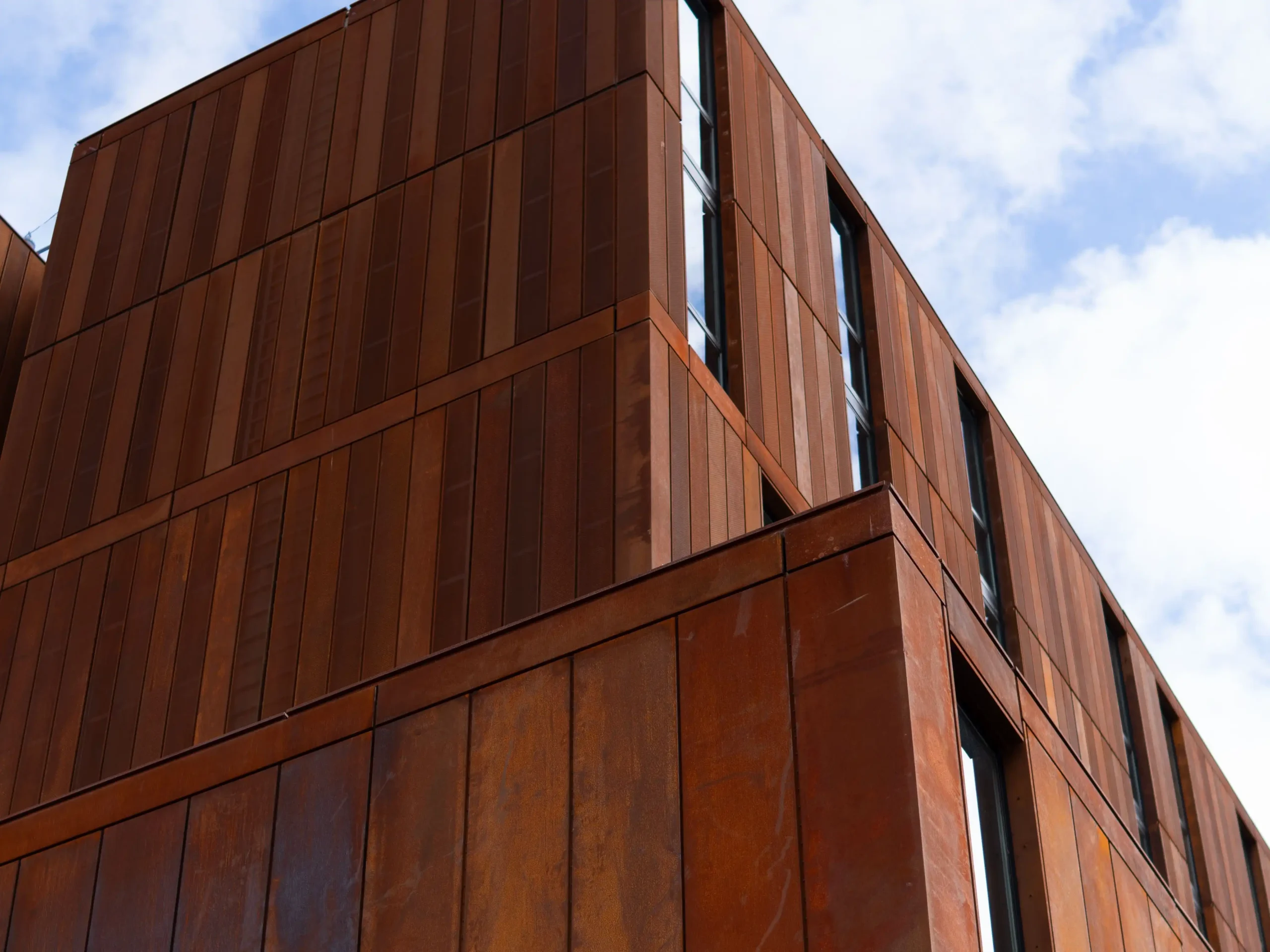
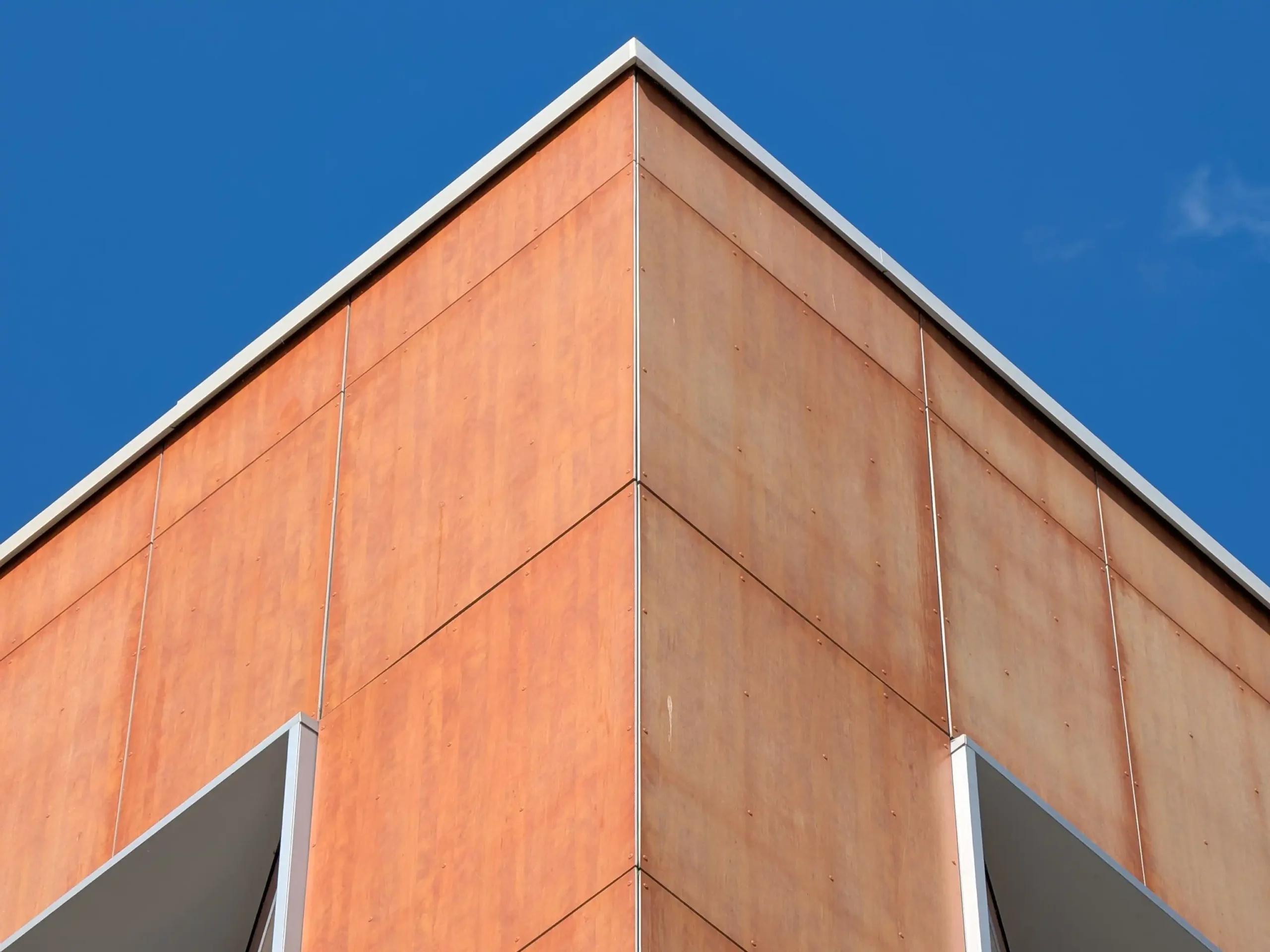
Architectural Facades and Building Structures
Corten steel is popular in modern architecture because its natural patina provides a distinctive industrial appearance.
Industrial and Transportation Applications
Weathering steel is used in selected industrial structures and transportation equipment exposed to atmospheric conditions.
Examples include outdoor support frames, equipment housings, railway freight wagon bodies, and railway infrastructure.
However, continuously wet or chemically aggressive environments may require additional corrosion protection.
Landscaping and Decorative Applications
Corten steel is also widely used in landscape architecture and public spaces.
Typical applications include retaining walls, planter boxes, outdoor sculptures, garden edging, and decorative partitions.
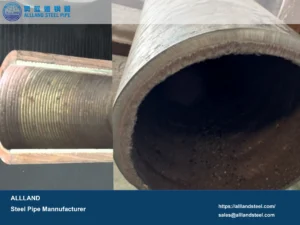
Structural Steel Pipes and Tubular Applications
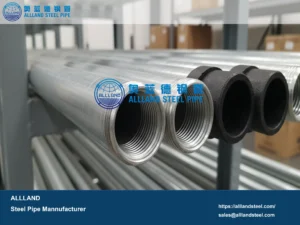
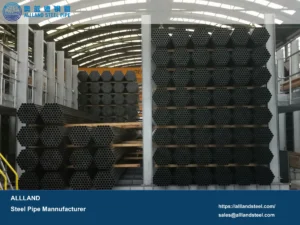
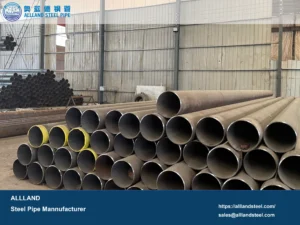
Corten steel can be manufactured into structural tubular products for applications requiring improved atmospheric corrosion resistance.
For example, ASTM A847/A847M specifically covers cold-formed welded and seamless high-strength, low-alloy structural tubing with improved atmospheric corrosion resistance.
At ALLLAND, steel pipe selection is based on project-specific requirements, including pipe dimensions, material grades, manufacturing standards, and surface protection specifications.
Advantages and Limitations of Corten Steel
Corten steel offers several benefits for outdoor structural applications, but its performance depends on environmental conditions and proper material selection.
Advantages
- Improved Atmospheric Corrosion Resistance:Develops a protective patina that slows further corrosion.
- Reduced Maintenance:Can reduce the need for regular painting in suitable environments.
- Good Structural Strength:Suitable for bridges, buildings, and outdoor structures.
- Distinctive Appearance:Provides a natural reddish-brown architectural finish.
Limitations
- Environmental Restrictions:Requires suitable wet-dry cycles for stable patina formation.
- Marine Exposure:High chloride concentrations can accelerate corrosion.
- Rust Runoff:Initial oxidation may stain surrounding surfaces.
- Higher Initial Cost:Generally more expensive than conventional mild carbon steel.
Conclusion
Corten steel is a weathering steel that develops a protective patina to improve atmospheric corrosion resistance. Its combination of structural strength, distinctive appearance, and reduced coating requirements makes it suitable for bridges, architectural facades, industrial structures, and structural steel tubing.
However, its performance depends on environmental exposure and proper material selection. For steel pipe applications, buyers should verify the applicable standard, material grade, dimensions, and corrosion protection requirements before placing an order.