

Introduction
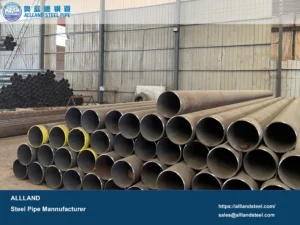
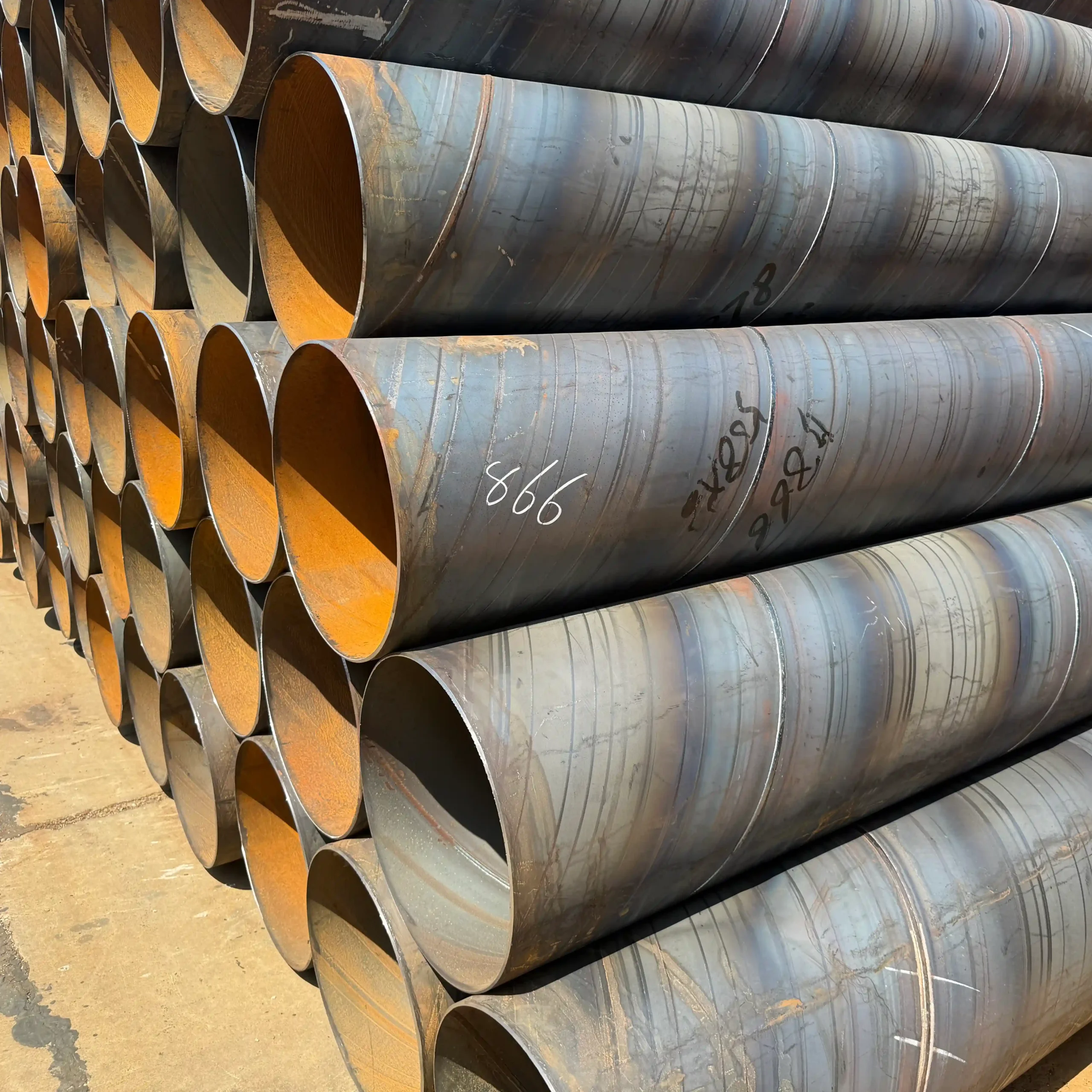
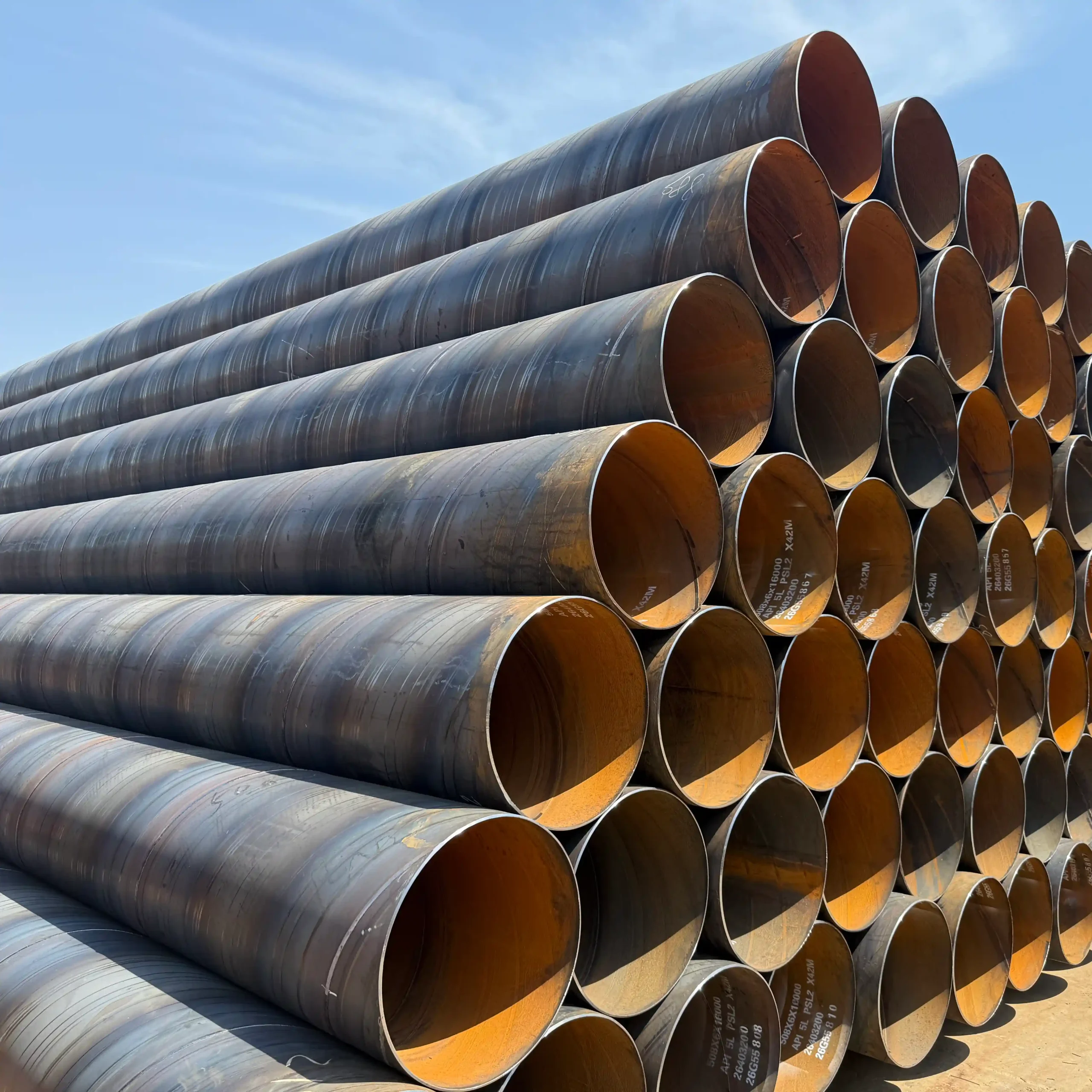
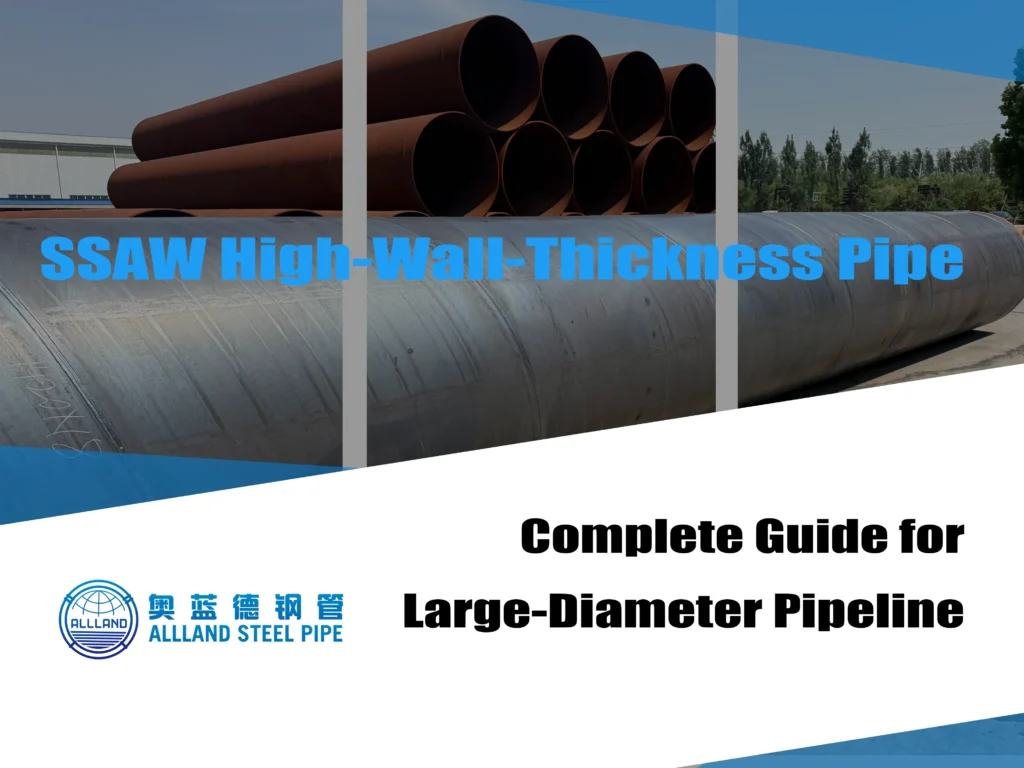
SSAW High-Wall-Thickness Pipe, also known as thick wall spiral welded steel pipe, is designed for large-diameter pipeline projects requiring high strength, pressure resistance, and structural stability.
Compared with standard SSAW pipes, thick-wall SSAW pipes provide better mechanical performance and load-bearing capacity, making them widely used in oil & gas transmission, water pipelines, and infrastructure projects.
ALLLAND supplies customized SSAW pipes with various diameters, wall thicknesses, steel grades, and coating solutions according to API 5L, ISO 3183, and EN standards.
What Is SSAW High-Wall-Thickness Pipe?
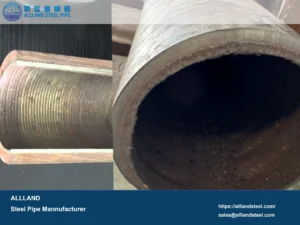
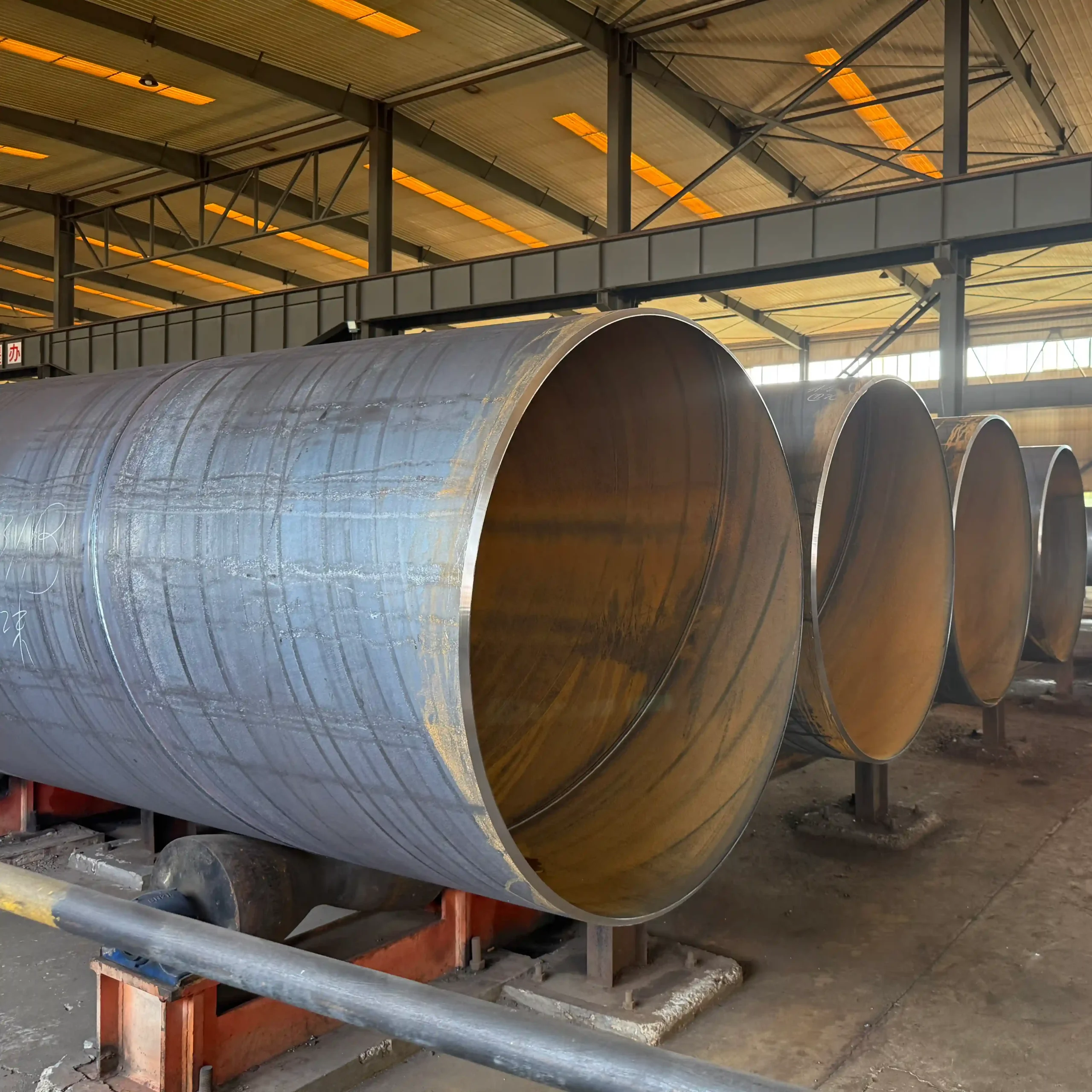
SSAW High-Wall-Thickness Pipe is a spiral welded steel pipe manufactured using Spiral Submerged Arc Welding (SSAW) technology with increased wall thickness. It is designed for pipeline systems requiring enhanced strength, pressure resistance, and long-term service reliability.
Unlike seamless pipes that are produced from solid billets, SSAW pipes are manufactured from steel coils. The coil is continuously formed into a spiral shape, and the spiral seam is welded using submerged arc welding technology.
What Is SSAW High-Wall-Thickness Pipe?
Increasing wall thickness improves the overall performance of SSAW pipes.
Higher Collapse Resistance
Better Mechanical Strength
Improved Load-Bearing Capacity
SSAW High-Wall-Thickness Pipe Specifications
SSAW high-wall-thickness pipes are available in a wide range of dimensions depending on project requirements.
| Item | Typical Range |
| Pipe Type | SSAW / Spiral Welded Steel Pipe |
| Diameter | 219mm–3500mm+ |
| Wall Thickness | 10mm–40mm+ |
| Length | 6m–12m |
| Material | API 5L X42-X80, Q235, Q355 |
| Standard | API 5L, ISO 3183, EN 10217 |
Customized dimensions are available according to project requirements.
Why Choose Thick Wall SSAW Pipe for Pipeline Projects?
One of the main advantages of thick-wall SSAW pipes is their improved pressure resistance.
The increased wall thickness provides:
1. Higher Pressure Containment Capability
Thicker walls allow the pipe to withstand higher internal pressure, making them suitable for:
- Oil pipelines
- Gas transmission pipelines
- Water pressure pipelines
2. Improved Structural Stability
One major advantage of SSAW technology is its flexibility in producing large-diameter pipes.
Because SSAW pipes are manufactured from steel coils, the production process allows relatively flexible diameter adjustment compared with plate-based forming methods.
| Pipe Type | Production Feature |
| SSAW | Flexible diameter adjustment using steel coil |
| LSAW | Plate-based forming with fixed width limitation |
| Seamless | Limited availability for large diameter production |
For long-distance pipeline projects requiring thousands of meters of large-diameter pipe, SSAW provides an efficient manufacturing solution.
For large pipeline projects, cost control is an important consideration.
Quality Inspection for SSAW High-Wall-Thickness Pipe
Quality control is essential for thick-wall SSAW pipes because they are often used in critical pipeline systems.
Raw Material Inspection
- Chemical composition
- Mechanical properties
Weld Inspection
The spiral weld is one of the most important quality control points.
Common inspection methods include:
Ultrasonic Testing (UT)
UT is used to detect internal weld defects such as:
- Cracks
- Lack of fusion
- Internal discontinuities
Radiographic Testing (RT)
RT provides detailed examination of weld quality and helps verify welding integrity.
Pressure Testing
Hydrostatic Test
Hydrostatic testing verifies that the pipe can withstand required pressure without leakage or failure.
Dimensional Inspection
- OD
- Wall Thickness
- Straightness
Applications of SSAW High-Wall-Thickness Pipe
Oil & Gas Transmission
- Crude oil pipeline
- Natural gas pipeline
Water Transmission
Municipal water
- Irrigation systems
Infrastructure Engineering
- Bridge piling
- Structural foundation
SSAW vs LSAW Thick Wall Pipe: Which One Is Better?
Both SSAW and LSAW pipes are widely used for large-diameter pipeline projects, but they have different manufacturing characteristics.
| Comparison | SSAW | LSAW |
| Welding Direction | Spiral | Longitudinal |
| Raw Material | Steel Coil | Steel Plate |
| Diameter Flexibility | Higher | Fixed range |
| Production Efficiency | Higher | Lower |
| Typical Application | Water/Oil pipelines | High-pressure pipelines |
When to Choose SSAW?
When to Choose LSAW?
SSAW is generally suitable for:
- Large diameter pipelines
- Long-distance transportation projects
- Water transmission systems
- Oil pipeline projects
Large diameter + long distance → SSAW
LSAW is often preferred for:
- Higher pressure requirements
- More strict dimensional tolerance
- Offshore and critical pipeline applications
Extreme pressure requirement → LSAW
FAQ
What wall thickness can SSAW pipes reach?
The achievable wall thickness depends on:
- Pipe diameter
- Steel grade
- Manufacturing equipment
- Project specifications
For large-diameter SSAW pipes, wall thickness can commonly reach 10mm–40mm+, with customized solutions available according to customer requirements.
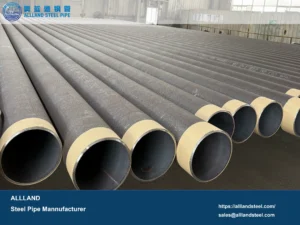
Can SSAW pipes be coated for underground pipelines?
Yes. SSAW pipes can be supplied with various anti-corrosion coating systems, including:
- 3PE coating
- 3LPE coating
- FBE coating
- Epoxy coating
These coatings improve corrosion resistance and extend underground pipeline service life.
What is the difference between SSAW and LSAW pipe?
The main difference is the welding direction and manufacturing method.
- SSAW uses spiral welding from steel coils.
- LSAW uses longitudinal welding from steel plates.
SSAW offers higher production flexibility for large diameters, while LSAW is often selected for applications requiring higher pressure performance and tighter dimensional control.