



Introduction
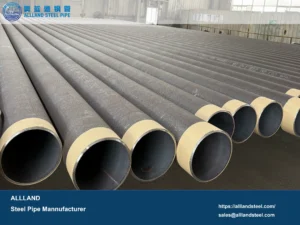
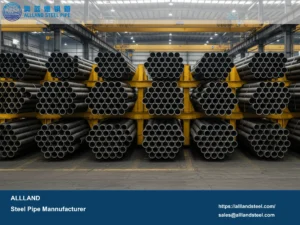
ASME B36.10M Schedule 60 Pipe is a medium-to-heavy wall carbon steel pipe specification manufactured according to ASME B36.10M – Welded and Seamless Wrought Steel Pipe. This standard defines the pipe dimensions, including outside diameter (OD), wall thickness (WT), weight and dimensional tolerances.
ASME B36.10M Schedule 60 Pipe is commonly used in oil and gas pipelines, industrial piping systems, water transmission projects, pressure piping and heavy-duty engineering applications where higher strength is required than standard Schedule 40 pipes.
ASME B36.10M Schedule 60 Pipe Basic Information
| Item | Description |
|---|---|
| Standard | ASME B36.10M |
| Pipe Type | Welded Steel Pipe / Seamless Steel Pipe |
| Schedule | SCH 60 |
| Material | Carbon Steel / Low Alloy Steel |
| Manufacturing Process | ERW, LSAW, SSAW, Seamless |
| Applications | Pressure Piping, Oil & Gas, Water Transmission, Industrial Systems |
| Size Range | NPS 1/8–36 inch (Some sizes can be customized) |
| Wall Thickness | Thickness generally falls between SCH 40 and SCH 80 (for most sizes) |
Unlike ordinary pipe size classifications, Schedule 60 does not represent a fixed thickness value. Instead, it indicates a specific wall thickness series based on the pipe size. A higher Schedule number generally means a thicker pipe wall and higher pressure resistance.
Understanding NPS, OD and Wall Thickness of Schedule 60 Pipe
NPS refers to the nominal size designation of the pipe.
NPS is not the actual outside diameter.
Example:
A 6-inch pipe:
- NPS: 6″
- OD: 168.3 mm
- Different schedules have different wall thicknesses.
2. Outside Diameter (OD)
Outside Diameter is the actual measurement of the pipe outside surface.
ASME B36.10M defines OD values according to NPS sizes.
3. Wall Thickness (WT)
Wall thickness determines:
Pressure capacity
Mechanical strength
Service life
Schedule 60 Pipe has thicker walls than SCH 40 in most sizes, providing better resistance against internal pressure and external impact.
ASME B36.10M Schedule 60 Pipe Dimension Chart
The dimensions of Schedule 60 Pipe are specified by ASME B36.10M.
| NPS | Outside Diameter (OD) | Wall Thickness (WT) | Inside Diameter (ID) | Weight (kg/m) |
| 1/2″ | 21.3 mm | 2.77 mm | 15.8 mm | 1.27 |
| 3/4″ | 26.7 mm | 2.87 mm | 21.0 mm | 1.68 |
| 1″ | 33.4 mm | 3.38 mm | 26.6 mm | 2.50 |
| 1-1/4″ | 42.2 mm | 3.56 mm | 35.1 mm | 3.39 |
| 1-1/2″ | 48.3 mm | 3.68 mm | 40.9 mm | 4.05 |
| 2″ | 60.3 mm | 5.54 mm | 49.2 mm | 7.48 |
| 2-1/2″ | 73.0 mm | 7.01 mm | 59.0 mm | 11.42 |
| 3″ | 88.9 mm | 7.62 mm | 73.7 mm | 15.25 |
| 3-1/2″ | 101.6 mm | 8.08 mm | 85.4 mm | 18.70 |
| 4″ | 114.3 mm | 8.56 mm | 97.2 mm | 22.77 |
| 5″ | 141.3 mm | 9.53 mm | 122.2 mm | 32.10 |
| 6″ | 168.3 mm | 10.97 mm | 146.4 mm | 43.56 |
| 8″ | 219.1 mm | 12.70 mm | 193.7 mm | 66.42 |
| 10″ | 273.0 mm | 15.09 mm | 242.8 mm | 97.73 |
| 12″ | 323.9 mm | 17.48 mm | 288.9 mm | 135.40 |
| 14″ | 355.6 mm | 19.05 mm | 317.5 mm | 161.20 |
| 16″ | 406.4 mm | 21.44 mm | 363.5 mm | 208.00 |
| 18″ | 457.2 mm | 23.83 mm | 409.5 mm | 263.00 |
| 20″ | 508.0 mm | 26.19 mm | 455.6 mm | 315.80 |
| 22″ | 559.0 mm | 28.58 mm | 501.8 mm | 385.00 |
| 24″ | 610.0 mm | 30.96 mm | 548.1 mm | 456.00 |
| 26″ | 660.0 mm | 33.32 mm | 593.4 mm | 530.00 |
| 28″ | 711.0 mm | 35.71 mm | 639.6 mm | 610.00 |
| 30″ | 762.0 mm | 38.10 mm | 685.8 mm | 693.00 |
| 32″ | 813.0 mm | 40.49 mm | 732.0 mm | 780.00 |
| 34″ | 864.0 mm | 42.88 mm | 778.2 mm | 870.00 |
| 36″ | 914.0 mm | 45.26 mm | 823.5 mm | 960.00 |
Note: Not all NPS sizes have corresponding specifications under ASME B36.10M Schedule 60; commonly used sizes are listed below. Actual supply is subject to confirmation based on project requirements.
Why Does Schedule 60 Pipe Have Different Wall Thicknesses?
Schedule 60 Pipe does not have one fixed wall thickness because pipe requirements vary depending on operating conditions.
- Pressure Requirements
- Temperature Requirements
- Medium Type
The transported medium also influences pipe selection.
| Medium | Consideration |
| Water | General pressure requirement |
| Oil & Gas | Strength and corrosion resistance |
| Chemical Fluid | Material compatibility |
| Steam | High temperature resistance |
- Safety Factor
SCH 60 Pipe Common Materials
ASME B36.10M only specifies pipe dimensions and does not define steel grades.
Schedule 60 Pipe can be manufactured using different materials depending on application requirements.
| Standard | Common Grades | Application |
| ASTM A53 | Grade A / B | General industrial piping |
| ASTM A106 | Grade B / C | High-temperature pressure piping |
| API 5L | Grade B, X42, X52, X60 | Oil and gas pipelines |
| ASTM A333 | Grade 6 | Low-temperature service |
| ASTM A335 | P11, P22 | Alloy steel high-temperature applications |
How to Calculate Schedule 60 Pipe Weight?
The theoretical weight formula is:
W=0.02466×(D−t)×t
- W = Steel pipe weight (kg/m)
- D = Outside diameter (mm)
- t = Wall thickness (mm)
For a quick calculation, please visit:
Pipe Weight Calculator
SCH 60 Pipe Main Applications and Size Selection Guide
ASME B36.10M Schedule 60 Pipe is commonly selected for projects requiring higher wall thickness and pressure resistance than standard Schedule 40 pipe. However, choosing the correct Schedule 60 pipe size requires consideration of several factors, including operating pressure, flow requirements, temperature, material grade and installation conditions.
1. Oil and Gas Pipeline Applications
2. Industrial Piping System Applications
How to Select the Right SCH 60 Pipe Size for Industrial Piping?
Selection depends on:
Operating Pressure
Higher pressure requires:
- Higher Schedule rating
- Increased wall thickness
Fluid Characteristics
The transported medium affects pipe selection:
| Medium | Main Consideration |
| Steam | Temperature resistance |
| Chemical fluid | Corrosion resistance |
| Water | Flow efficiency |
| Gas | Pressure control |
Temperature Conditions
High-temperature services usually require materials such as:
- ASTM A106 Grade B
- ASTM A106 Grade C
- ASTM A335 alloy steel grades
3. Water Transmission Applications
4. Heavy-Duty Engineering and Structural Applications
How to Choose the Right Size of ASME B36.10M Schedule 60 Pipe?
When selecting SCH 60 Pipe size, engineers should evaluate the following factors:
1. Determine Required Flow Capacity
2. Calculate Design Pressure
3. Consider Operating Temperature
4. Select Proper Material Grade
Common combinations:
| Application | Recommended Material |
| General industrial piping | ASTM A53 Grade B |
| High-temperature piping | ASTM A106 Grade B |
| Oil & gas transmission | API 5L Grade B/X grades |
| Low-temperature service | ASTM A333 Grade 6 |
5. Consider Corrosion Allowance and Coating
SCH 60 Pipe vs SCH 40 and SCH 80
| Feature | SCH 40 | SCH 60 | SCH 80 |
| Wall Thickness | Standard | Medium-heavy | Heavy |
| Pressure Resistance | Medium | Higher | Highest |
| Weight | Lower | Medium | Higher |
| Material Cost | Lower | Medium | Higher |
| Application | General piping | Industrial pressure systems | High-pressure service |
FAQ
What does Schedule 60 mean in steel pipe?
Schedule 60 indicates a specific wall thickness series defined by ASME B36.10M. It does not mean the pipe wall thickness is 60 mm.
Is SCH 60 Pipe thicker than SCH 40?
Yes. SCH 60 Pipe generally has a thicker wall and higher pressure resistance than SCH 40 Pipe.
What is the difference between ASME B36.10M and B36.19M?
ASME B36.10M applies mainly to carbon steel and alloy steel pipes, while ASME B36.19M is mainly used for stainless steel pipe dimensions.
For a detailed comparison of ASME B36.10M vs ASME B36.19M, please refer to our guide: ASME B36.10M vs ASME B36.19M: Key Differences and Pipe Schedule Comparison.