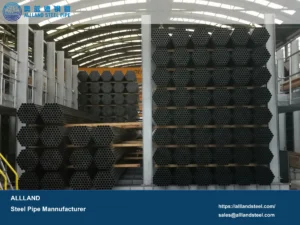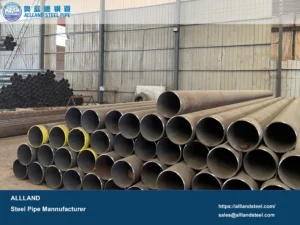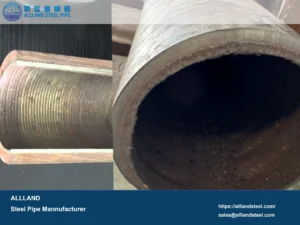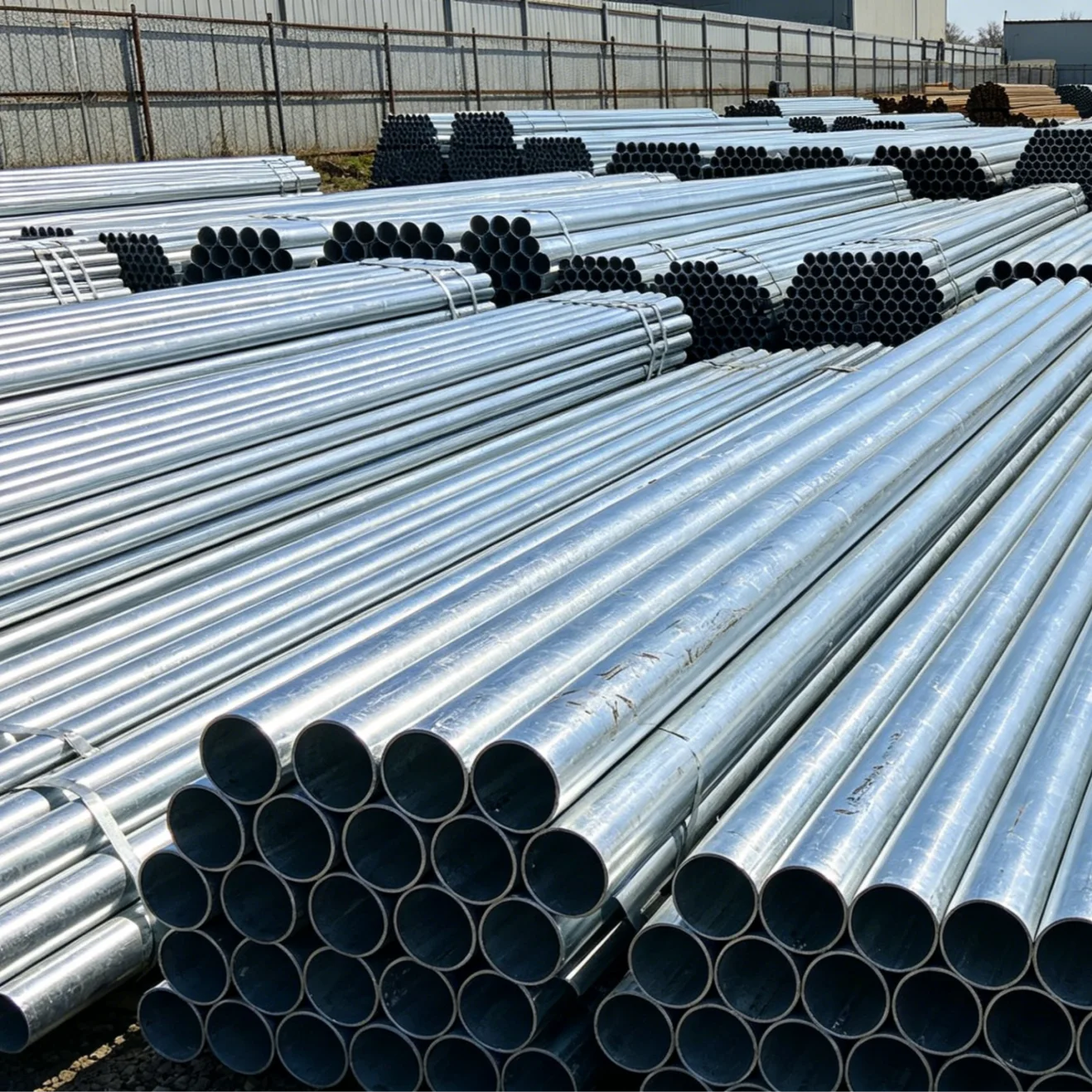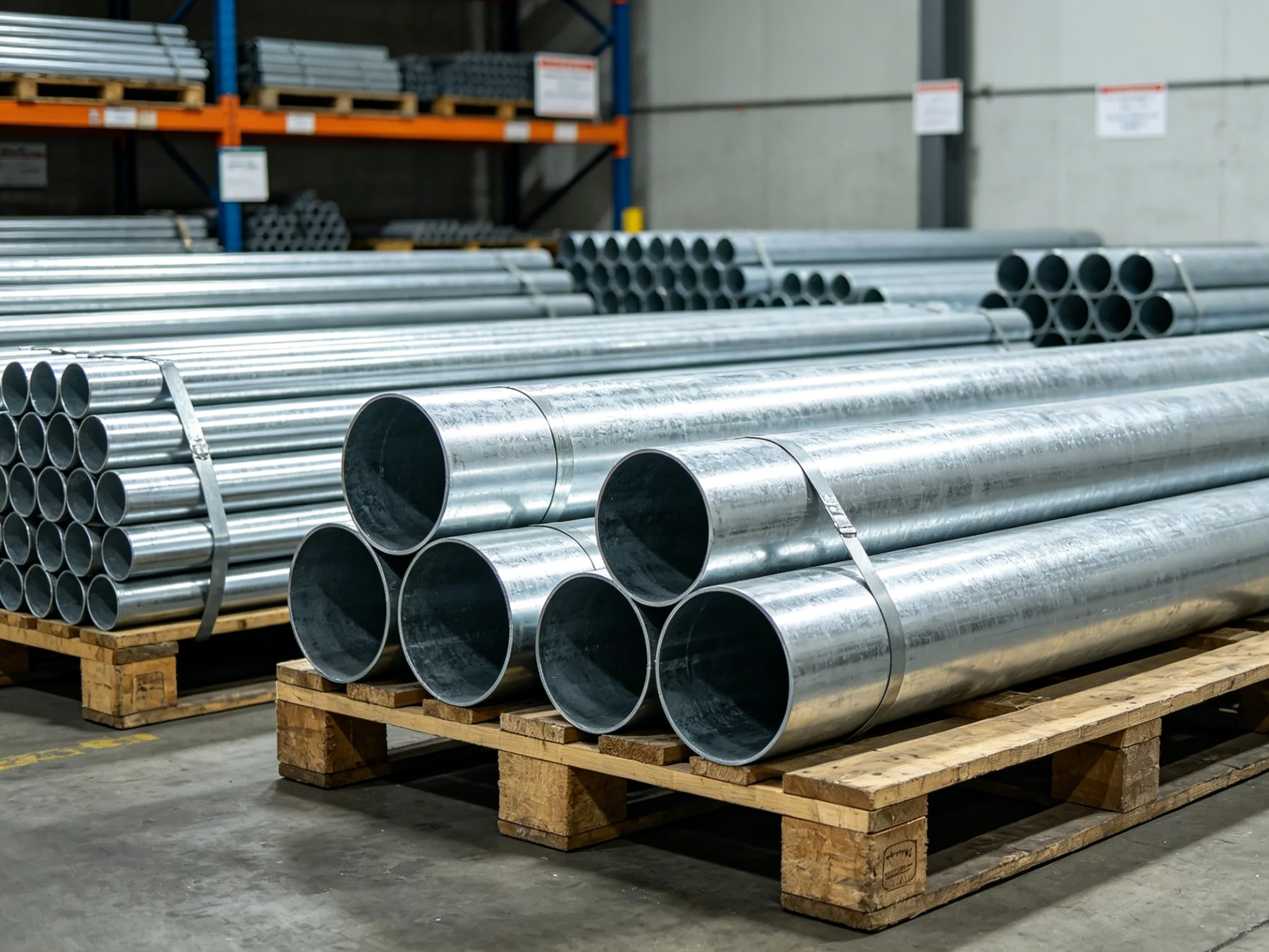

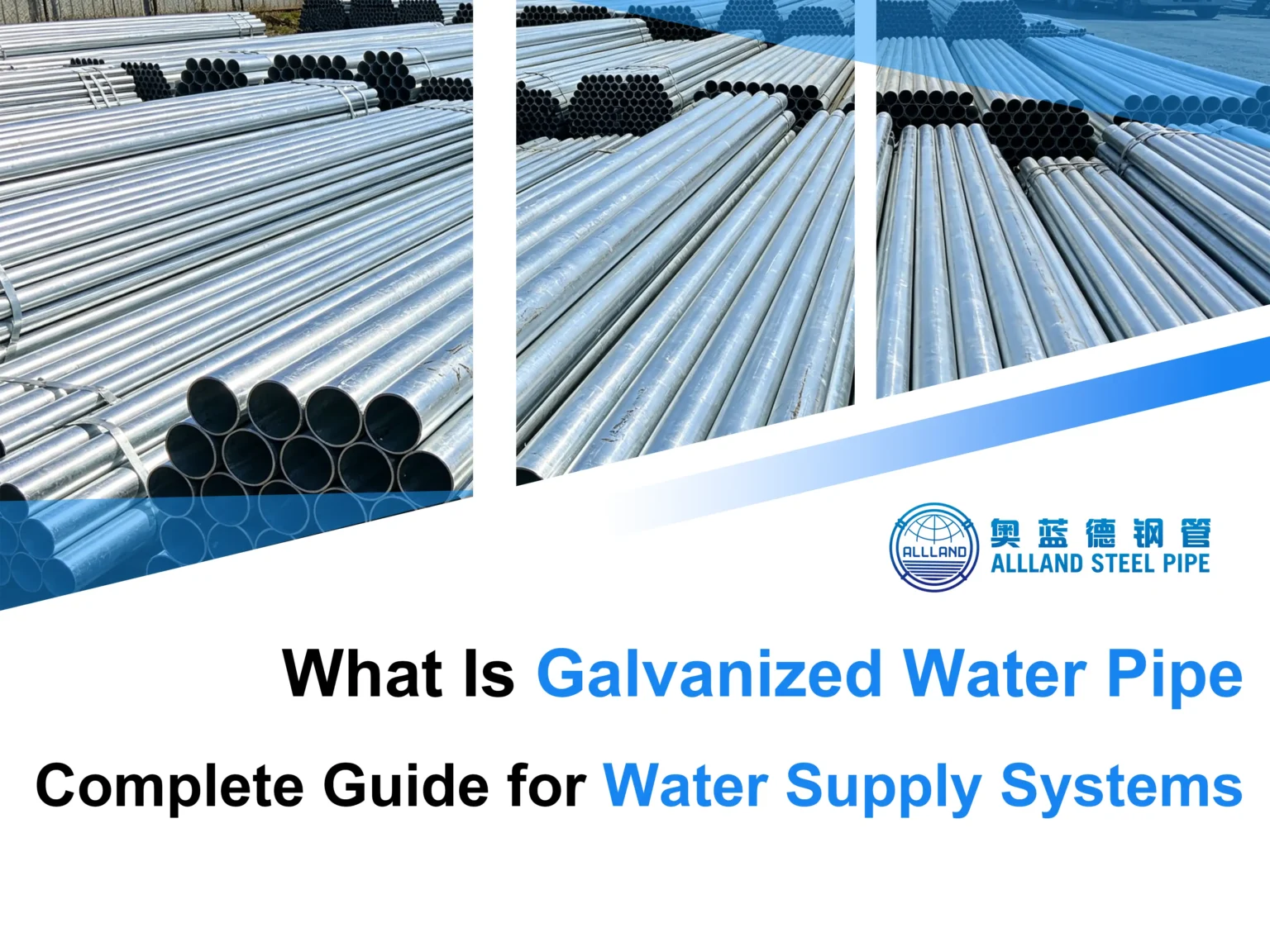
Galvanized water pipes are water supply pipes manufactured using carbon steel pipes as the base material, with a zinc coating applied to the surface through hot-dip galvanizing or electro-galvanizing processes.
The zinc coating isolates the steel from contact with air and moisture, thereby significantly improving the pipe’s corrosion resistance and service life.
At ALLLAND Steel Pipe, galvanized water pipes are manufactured using high-quality carbon steel and advanced galvanizing processes to ensure long-term corrosion resistance in water distribution applications.
Specifications of Galvanized Water Pipe
Galvanized Water Pipe Standards
In water supply and drainage projects, building piping systems, municipal water supply systems, and industrial fluid conveyance projects, the quality and performance of galvanized water pipes depend not only on the raw materials and galvanizing process but are also strictly governed by relevant international standards and specifications. Common standards used in international projects include:
- ASTM A53
- ASTM A795
- EN 10255
- BS 1387
- ISO 65
Galvanized Water Pipe Sizes Charts
Galvanized water pipes typically use the NPS (Nominal Pipe Size) sizing system.
| NPS (Inch) | DN (mm) | Outside Diameter (OD) mm | Wall Thickness (mm) | Weight (kg/m) | Typical Applications |
| 1/2″ | DN15 | 21.3 | 2.77 | 1.27 | Residential plumbing |
| 3/4″ | DN20 | 26.7 | 2.87 | 1.69 | Building water supply |
| 1″ | DN25 | 33.4 | 3.38 | 2.50 | Commercial water systems |
| 1-1/4″ | DN32 | 42.2 | 3.56 | 3.38 | Water distribution lines |
| 1-1/2″ | DN40 | 48.3 | 3.68 | 4.05 | Industrial water piping |
| 2″ | DN50 | 60.3 | 3.91 | 5.44 | Municipal water supply |
| 2-1/2″ | DN65 | 73.0 | 5.16 | 8.63 | Irrigation systems |
| 3″ | DN80 | 88.9 | 5.49 | 11.29 | Fire protection systems |
| 4″ | DN100 | 114.3 | 6.02 | 16.07 | Main distribution pipelines |
| 6″ | DN150 | 168.3 | 7.11 | 28.26 | Municipal infrastructure |
| 8″ | DN200 | 219.1 | 8.18 | 42.55 | Large-scale water transmission |
Standard Lengths of Galvanized Water Pipe
| Length Type | Standard Length |
| Random Length | 4–7 m |
| Single Random Length | 5.8 m |
| Double Random Length | 11.8–12 m |
| Fixed Length | Customized |
Zinc Coating of Galvanized Water Pipes
The quality of the zinc coating directly affects the service life and corrosion resistance of galvanized water pipes.International standards typically require testing for: Zinc Coating Thickness.
Typical range:
- 40–85 μm
- Special projects may exceed 100 μm
Zinc Coating Weight
Hot-dip galvanized steel pipes typically require:
- ≥ 400 g/m²
- ≥ 500 g/m²
Some projects in highly corrosive environments even require:
- ≥ 600 g/m²
Contact ALLLAND Steel Pipe for the latest galvanized water pipe quotation.
How Is Galvanized Water Pipe Manufactured?
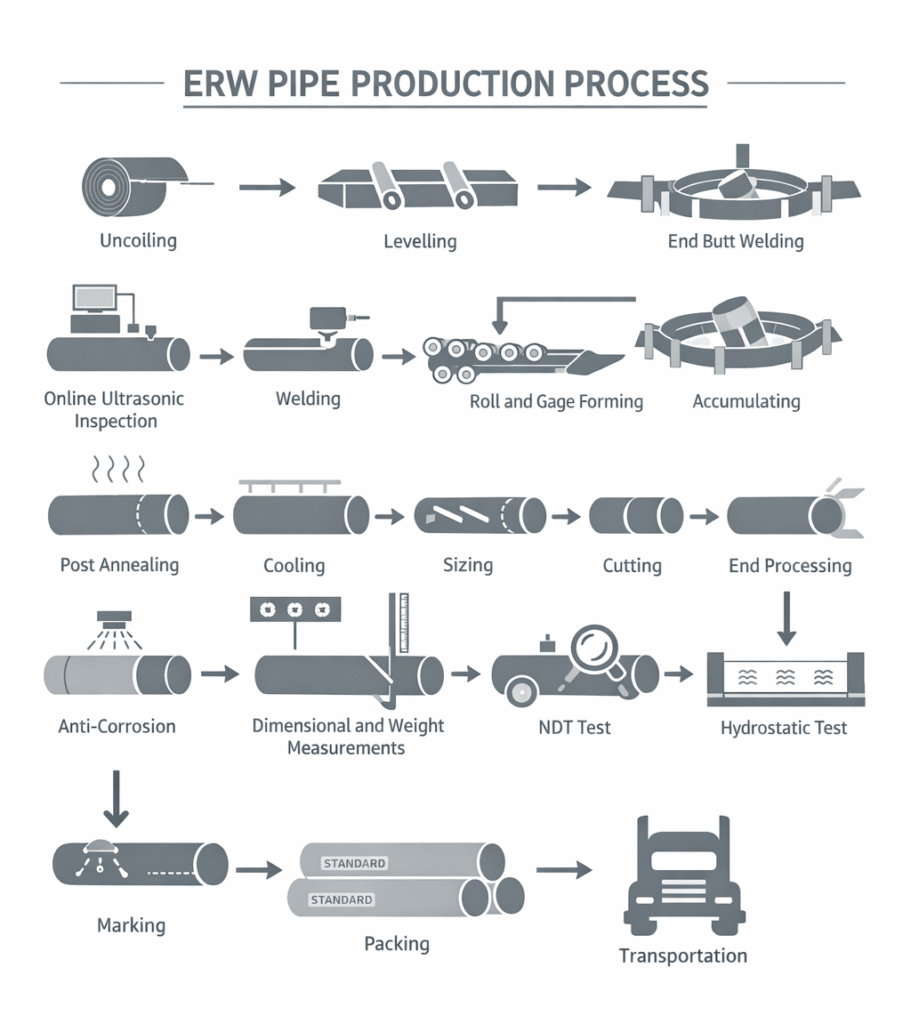
The manufacture of galvanized water pipes involves more than simply applying a layer of zinc to the surface of steel pipes; it is a comprehensive production process that encompasses multiple stages, including raw material selection, pipe forming, surface treatment, hot-dip galvanizing, quality inspection, and packaging and shipping.
In accordance with product specifications and standard requirements, manufacturers typically select high-quality carbon steel as the base material. Common steel grades include:
| Standard | Grade | Characteristics |
|---|---|---|
| ASTM A53 | Grade A | Moderate strength with good weldability |
| ASTM A53 | Grade B | Higher strength and the most widely used grade |
| EN 10255 | S195T | Commonly used for water supply piping systems in Europe |
| GB/T 3091 | Q195 | Cost-effective grade for water supply applications |
| GB/T 3091 | Q235B | Excellent overall mechanical and processing performance |
Prior to production, steel coils or strips typically undergo a series of tests, including chemical composition analysis, tensile strength testing, and yield strength testing. Only raw materials that meet the required standards are allowed to proceed to the production stage.
Steel Pipe Forming
Surface Preparation Before Galvanizing
If the surface of the steel pipe is contaminated with scale, oil, or rust, the zinc coating will not adhere properly. Therefore, thorough cleaning is essential.
Hot-Dip Galvanizing Process
Prepared Pipe
→
Molten Zinc Bath
(450°C–460°C)
→
Zinc-Iron Alloy Layer Formation
→
Cooling
→
Air Cooling/Water Cooling
→
Inspection
Quality Inspection
| Coating Grade | Zinc Coating Thickness |
|---|---|
| Standard | 40–60 μm |
| Heavy Duty | 60–85 μm |
| Extra Heavy Duty | > 85 μm |
*For water supply projects, a minimum of 60 μm is typically required.
Types of Galvanized Water Pipe
Hot-Dip Galvanized Water Pipe
Hot-dip galvanized water pipes are currently the most widely used type of galvanized water pipe.
They are manufactured by immersing the formed steel pipe entirely in molten zinc at approximately 450°C, which forms a layer of zinc and a zinc-iron alloy on the pipe’s surface.
| Feature | Description |
|---|---|
| Corrosion Resistance | Excellent resistance to corrosion |
| Zinc Coating Thickness | Thick zinc coating for enhanced protection |
| Service Life | Long service life |
| Mechanical Protection | Strong resistance to mechanical damage |
| Outdoor Suitability | Highly suitable for outdoor environments |
Typical Industry Range
For most hot-dip galvanized water pipe projects, the typical zinc coating thickness ranges are:
- 55–85 μm (most common)
- ≥60 μm (minimum requirement for many water supply projects)
- 85–100 μm (coastal, high-humidity, or industrial corrosion environments)
- >100 μm (special corrosion protection projects)
Pre-Galvanized Water Pipe
Pre-galvanized water pipes are steel pipes formed and welded directly from pre-galvanized steel strips.
Unlike hot-dip galvanizing:
The galvanizing process is completed at the steel strip stage, rather than applying a galvanized coating to the entire pipe after it has been formed.
| Feature | Description |
|---|---|
| Production Speed | High production efficiency |
| Cost | Lower cost |
| Surface Appearance | Smooth and bright surface finish |
| Zinc Coating | Relatively thin zinc coating |
| Corrosion Resistance | Moderate corrosion resistance |
Common Zinc Coating Thicknesses
Typically 20–40 μm, which is thinner than that of hot-dip galvanized steel pipes.
Seamless Galvanized Water Pipe
Seamless Galvanized Water Pipe is a product made by hot-dip galvanizing seamless steel pipe, resulting in a seamless structure.
| Feature | Description |
|---|---|
| Pressure Resistance | High pressure-bearing capacity |
| Structural Strength | High structural strength |
| Reliability | High reliability and operational safety |
| Service Life | Long service life |
Threaded Galvanized Water Pipe
Threaded Galvanized Water Pipe refers to galvanized steel pipes with threads machined at the ends. They are easy to install and do not require on-site welding.
Common thread standards
| Standard | Region |
|---|---|
| NPT (National Pipe Thread) | North America |
| BSPT (British Standard Pipe Taper) | United Kingdom and Middle East |
| BSPP (British Standard Pipe Parallel) | Europe |
| ISO 7-1 | International Engineering Projects |
ALLLAND Steel Pipe supplies hot-dip galvanized, pre-galvanized, threaded, ERW, and seamless galvanized water pipes in various sizes and coating specifications for residential, municipal, and industrial applications worldwide.
Key Benefits of Galvanized Water Pipe
Excellent Corrosion Resistance
Corrosion resistance is one of the most notable advantages of galvanized steel pipes.
The galvanizing process forms a dense layer of zinc on the surface of the steel pipe, isolating the steel from air, moisture, and other corrosive agents, thereby effectively slowing down the oxidation and rusting of the steel.
In addition, the zinc layer provides sacrificial anode protection. When the coating is scratched or damaged in certain areas, the zinc corrodes first, thereby protecting the steel substrate from corrosion.
Long Service Life
Thanks to the long-lasting protective properties of the zinc coating, galvanized water pipes typically have a long service life.
Under normal operating conditions, the service life of hot-dip galvanized water pipes generally ranges from:
- 30 to 50 years;
- The exact service life depends on environmental conditions and maintenance practices.
| Pipe Type | Relative Cost | Corrosion Resistance |
|---|---|---|
| Galvanized Steel Pipe | Medium | Good |
| Stainless Steel Pipe | High | Excellent |
| Copper Pipe | High | Excellent |
| Black Steel Pipe | Low | Poor |
For projects with budget constraints that still require reliable corrosion protection, galvanized water pipes are an economical and practical choice.
Cost-Effective Solution
As a piping product manufactured from carbon steel, galvanized water pipes inherit the excellent mechanical properties inherent to steel. Compared to plastic pipes such as PVC and PE, galvanized water pipes offer superior resistance to pressure and impact, as well as greater load-bearing capacity.
High Mechanical Strength
Prior to production, steel coils or strips typically undergo a series of tests, including chemical composition analysis, tensile strength testing, and yield strength testing. Only raw materials that meet the required standards are allowed to proceed to the production stage.
Common Applications of Galvanized Water Pipe
Residential Water Supply Systems
Water supply pipes in residential buildings typically operate in humid environments over long periods.
If the pipes lack sufficient corrosion resistance, the following issues are likely to arise:
- Pipe corrosion;
- Water contamination;
- Frequent repairs due to leaks;
- Shortened service life.
For developers and homeowners, long-term maintenance costs often far exceed the initial purchase cost.Galvanized steel pipes are protected by a zinc coating on their surface, effectively reducing the risk of corrosion caused by the steel’s contact with water and air.In typical residential settings, hot-dip galvanized steel pipes generally maintain a stable service life of several decades and offer good impact resistance, making them less susceptible to damage from construction or daily use.
ALLLAND Steel Pipe offers galvanized steel pipes compliant with standards such as ASTM A53 and EN 10255, suitable for water supply and drainage systems in residential, apartment, and commercial buildings, and provides threading and cut-to-length production services.
Agricultural Irrigation Systems
Agricultural irrigation pipe networks are typically exposed to the following complex conditions over long periods:
- sunlight;
- rain erosion;
- soil environments;
- temperature fluctuations;
- and other factors.
Ordinary steel pipes are prone to rust, while plastic pipes may suffer from aging, deformation, or cracking.Compared to ordinary carbon steel pipes, the galvanized coating effectively reduces the rate of corrosion; compared to plastic pipes, steel pipes offer better resistance to impact and external forces.
ALLLAND can provide galvanized steel pipes in various specifications and coating thicknesses to meet the needs of agricultural projects, making them suitable for sprinkler irrigation systems, drip irrigation main networks, and large-scale farmland water conveyance projects.
Fire Protection Systems
Many fire protection projects use hot-dip galvanized steel pipes as the primary material for water supply lines.
Although fire protection piping systems remain on standby during normal operations, they must be able to function reliably and immediately in the event of a fire. Therefore, fire protection projects place extremely high demands on the reliability and safety of piping systems.
Long-term static water storage can easily lead to internal corrosion in ordinary steel pipes. If the pipe walls gradually thin or rust deposits form inside the pipes, this will not only affect water flow efficiency but may also compromise the normal operation of the sprinkler system at a critical moment.
Galvanized steel pipes, with their high pressure-bearing capacity and stable mechanical properties, can meet the safety and durability requirements of fire protection systems.
Industrial Water Transportation
Industrial enterprises typically need to transport:
- Cooling water;
- Circulating water;
- Process water;
- General industrial fluids.
These piping systems often operate continuously and are subject to high pressure and flow rate requirements. Steel pipes offer excellent pressure-bearing capacity, while the zinc coating reduces the risk of corrosion caused by long-term exposure to water, thereby minimizing downtime, maintenance, and replacement costs.
ALLLAND Steel Pipe has extensive experience supplying industrial projects. We offer steel pipe products in various standards, sizes, and galvanizing specifications to meet customer needs, along with complementary services such as cutting, drilling, welding, and anti-corrosion treatment, providing a one-stop solution for industrial water conveyance systems.
Galvanized Water Pipe vs Other Pipe Materials
| Property | Galvanized Pipe | Stainless Steel Pipe | PVC Pipe | HDPE Pipe |
| Strength | High | Very High | Low | Medium |
| Corrosion Resistance | Good | Excellent | Excellent | Excellent |
| Cost | Medium | High | Low | Medium |
| Pressure Capacity | High | High | Medium | Medium |
| Service Life | 20–50 Years | 50+ Years | 20–40 Years | 30–50 Years |
How to Choose the Right Galvanized Water Pipe
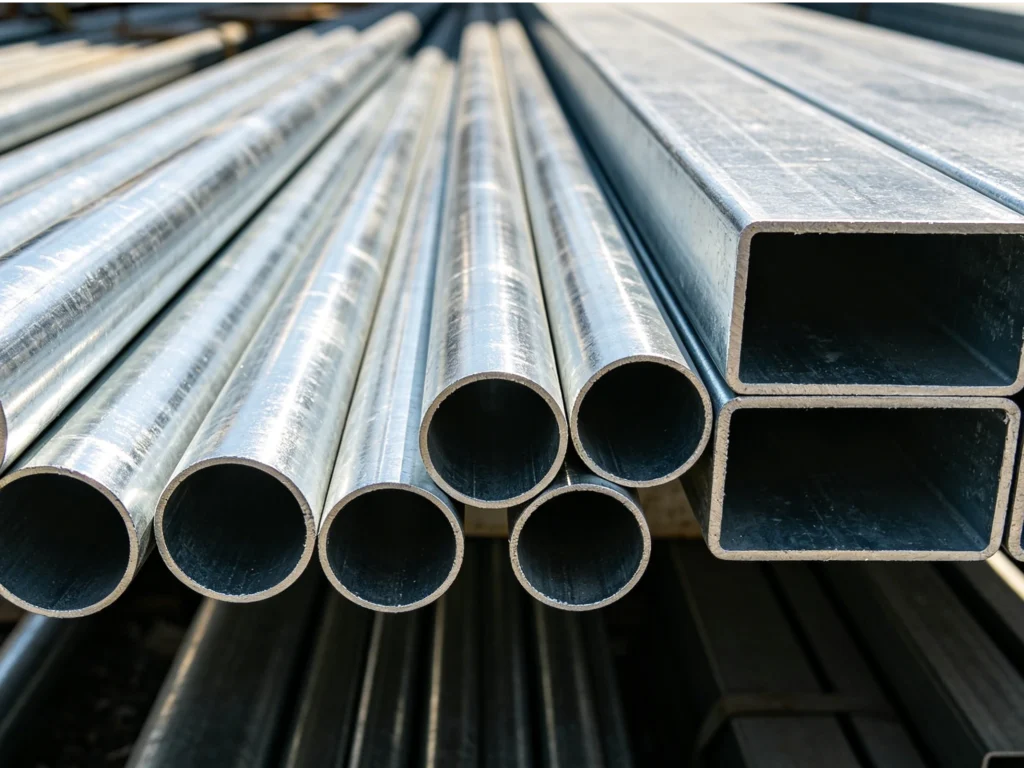
Selecting the right galvanized steel pipes is not only critical to a project’s safety and service life but also directly impacts installation costs, maintenance costs, and long-term operational efficiency. When purchasing galvanized steel pipes, buyers, contractors, and project owners should not focus solely on price; instead, they should comprehensively consider multiple factors, including working pressure, pipe diameter specifications, coating quality, applicable standards, and supplier capabilities.
The following key considerations can help you select galvanized steel pipe products that best meet your project’s requirements.
Determine Water Pressure Requirements
Requirements for pipe pressure capacity vary significantly depending on the project; therefore, the system’s operating pressure and environmental conditions should be confirmed before selecting a model.
| Application | Pressure Requirement |
| Residential Water Supply Systems | Low to Medium Pressure |
| Commercial Building Water Supply | Medium Pressure |
| Municipal Water Distribution Networks | Medium to High Pressure |
| Fire Protection Systems | High Pressure |
| Industrial Water Transportation Systems | Medium to High Pressure |
When purchasing, select the appropriate wall thickness and pipe grade based on project requirements—such as common specifications like Sch 40 and Sch 80—to ensure the system’s long-term, stable operation.
Select Appropriate Pipe Size
The selection of pipe diameter directly affects water conveyance capacity, flow efficiency, and project costs.
Common reference specifications are as follows:
| Application | Recommended Size |
| Household Water Supply | DN15–DN25 |
| Apartment Buildings | DN25–DN50 |
| Commercial Buildings | DN50–DN100 |
| Fire Sprinkler Systems | DN65–DN150 |
| Agricultural Irrigation | DN50–DN200 |
| Municipal Water Networks | DN100–DN400+ |
| Industrial Water Pipelines | DN80–DN300 |
Consider Coating Thickness
The thickness of the galvanized coating is one of the key factors affecting the corrosion resistance and service life of steel pipes.
Many buyers focus solely on the dimensions of the steel pipes while neglecting the quality of the coating, which often affects the long-term performance of the project.
| Coating Grade | Zinc Coating Thickness | Recommended Environment |
|---|---|---|
| Standard | 40–60 μm | Indoor environments |
| Heavy Duty | 60–85 μm | Outdoor environments |
| Extra Heavy Duty | > 85 μm | Coastal and highly corrosive environments |
From a long-term investment perspective, higher-quality coatings typically help reduce the frequency of future maintenance and replacements.
Choose a Reliable Manufacturer
For many projects, a supplier’s production capacity and quality management standards are often more important than price alone.
Selecting an experienced manufacturer can effectively reduce procurement risks and ensure consistent product quality and reliable delivery.
As a professional steel pipe manufacturer, ALLLAND Steel Pipe operates mature ERW steel pipe production lines and a hot-dip galvanizing system, enabling us to produce galvanized steel pipes in accordance with international standards such as ASTM A53, EN 10255, and BS 1387. In addition to consistent product quality, we offer cutting, threading, custom packaging, and third-party inspection services to help customers efficiently manage the entire process from procurement to project delivery.
Conclusion
Galvanized water pipes are widely used in residential water supply, municipal pipeline networks, agricultural irrigation, fire protection systems, and industrial water conveyance due to their excellent corrosion resistance, long service life, high mechanical strength, and cost-effectiveness.
When purchasing galvanized water pipes, it is recommended to focus on factors such as pipe specifications, working pressure, galvanized coating thickness, and applicable standards to ensure the products meet the long-term operational requirements of the project.
ALLLAND Steel Pipe specializes in the manufacturing and supply of galvanized water pipes for residential, municipal, agricultural, fire protection, and industrial applications. With flexible customization capabilities and reliable global delivery, we help customers achieve long-term project performance and cost efficiency.
FAQ
1. What Is Galvanized Water Pipe?
Galvanized water pipe refers to steel pipe that has undergone a galvanizing process on its surface. The zinc coating effectively prevents rust and corrosion, making it widely used in water supply systems, fire protection systems, and industrial water conveyance projects.
2. How Long Does Galvanized Water Pipe Last?
Under normal operating conditions, the service life of hot-dip galvanized water pipes typically ranges from 30 to 50 years. Actual lifespan depends on factors such as water quality, environmental conditions, and the thickness of the zinc coating.
3. Is Galvanized Water Pipe Suitable for Drinking Water?
Yes. Galvanized water pipes have long been used in water supply systems, but specific applications must comply with local regulations and project standards. For drinking water projects, it is recommended to select products certified to meet relevant standards.
4.What Is the Difference Between Galvanized Pipe and Black Steel Pipe?
Galvanized steel pipes have a protective zinc coating on their surface, providing better corrosion resistance; black steel pipes, on the other hand, lack a coating and are more prone to rust. For water supply projects, galvanized steel pipes are generally the more suitable choice.
5.What Standards Are Used for Galvanized Water Pipe?
Common international standards include ASTM A53, ASTM A795, EN 10255, BS 1387, and ISO 65. The specific standard should be selected based on the project location and technical specifications.
6.How to Choose the Right Galvanized Water Pipe?
When selecting galvanized water pipes, key considerations include working pressure, pipe diameter specifications, galvanized coating thickness, and applicable standards. It is also crucial to choose a manufacturer with consistent quality control and project experience.