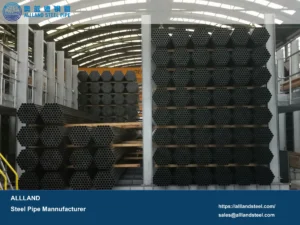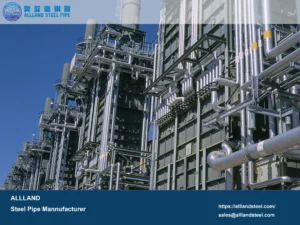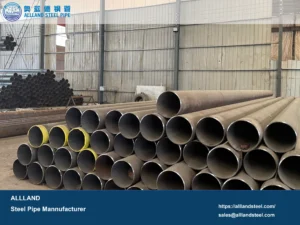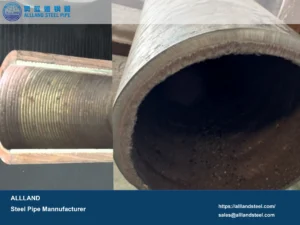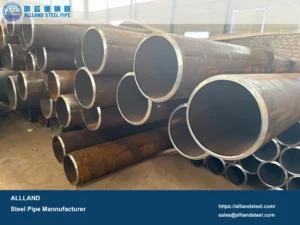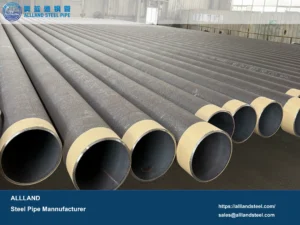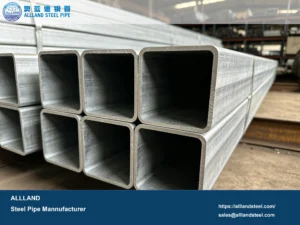


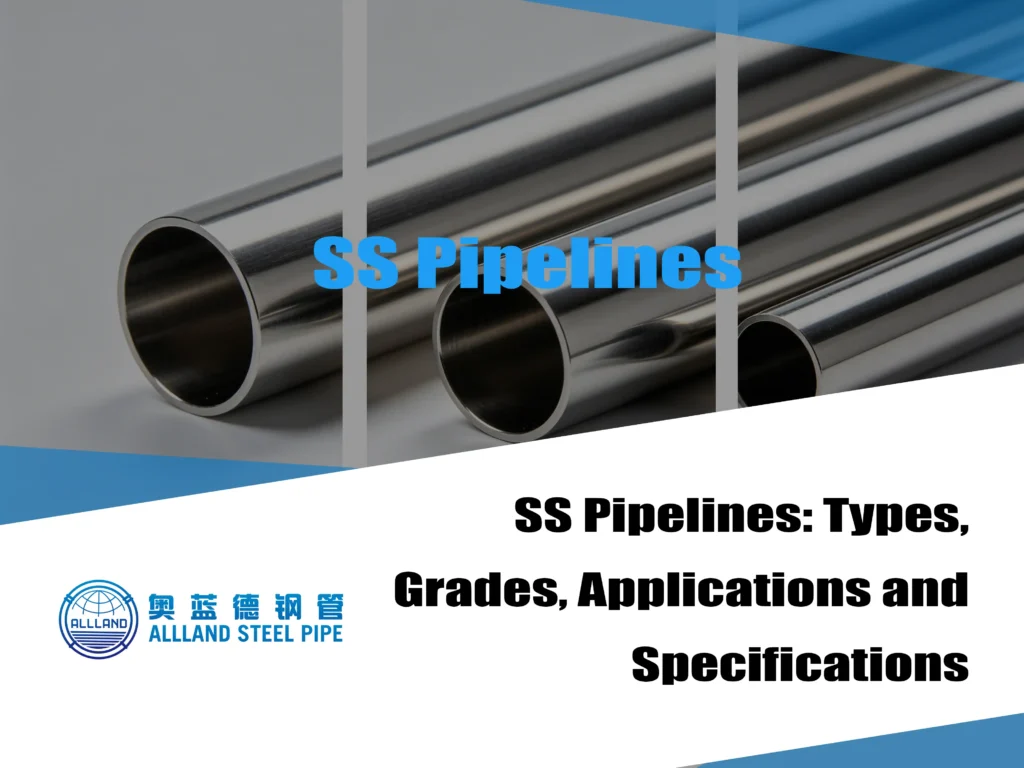
SS pipelines, short for stainless steel pipelines, are piping systems made from stainless steel pipes and related components to transport liquids, gases, and industrial process fluids. They are widely used in chemical processing, food and beverage production, pharmaceuticals, water treatment, and other industrial applications where corrosion resistance and material durability are important.
Choosing the right SS pipeline requires evaluating material grade, manufacturing method, pipe dimensions, operating conditions, and applicable standards.
Key Characteristics of Stainless Steel Pipes
Stainless steel pipes offer several properties that make them suitable for industrial piping systems:
- Corrosion Resistance:Chromium forms a protective passive layer that helps stainless steel resist corrosion in suitable environments.
- Strength and Durability:Appropriate grades and wall thicknesses provide the mechanical performance required for different operating conditions.
- Hygienic Properties:Suitable surface finishes and cleaning procedures support applications requiring strict hygiene.
- Temperature Resistance:Different stainless steel grades can accommodate a range of operating temperatures, subject to their material properties and design requirements.
Types of SS Pipelines
Stainless steel pipes are classified into two main types: seamless and welded pipes. The choice depends on project specifications, operating conditions, and budget.
Seamless Stainless Steel Pipes
Manufactured without a weld seam, seamless stainless steel pipes are used in pressure piping, chemical processing, and other demanding industrial applications.
Seamless pipe manufacturing is also widely used in carbon steel applications for oil and gas, energy, and industrial projects. For projects involving carbon steel piping, explore ALLLAND’s Seamless Steel Pipe products to learn more about available specifications and industrial applications.
Welded Stainless Steel Pipes
Made by forming stainless steel strip or plate and welding the seam, welded pipes offer flexible dimensions and cost-effective solutions for water treatment, food processing, and general industrial applications.
Common Stainless Steel Grades for Pipelines
Stainless steel grade selection affects corrosion resistance, mechanical performance, and service life. The most suitable grade depends on the transported medium, chloride concentration, operating temperature, and project requirements.
304 Stainless Steel Pipelines
Grade 304 is one of the most widely used austenitic stainless steels. Its chromium content provides corrosion resistance by forming a thin, passive oxide film on the steel surface. Nickel helps stabilize its austenitic structure and contributes to its formability and toughness.
304 stainless steel is commonly used in general industrial piping, food processing equipment, water systems, and architectural applications where moderate corrosion resistance is sufficient.
Typical 304 stainless steel contains approximately 18%–20% chromium and 8%–10.5% nickel. Exact composition limits depend on the applicable material specification.
316 Stainless Steel Pipelines
Grade 316 is another common austenitic stainless steel. Its principal advantage over 304 is the addition of molybdenum, which improves resistance to pitting and crevice corrosion in many chloride-containing environments.
For this reason, 316 stainless steel is frequently considered for chemical processing, marine-related equipment, industrial fluid systems, and applications where 304 may not provide sufficient corrosion resistance.
Typical Chemical Composition of 316 Stainless Steel
| Element | Typical Specification Range |
| Chromium (Cr) | 16%–18% |
| Nickel (Ni) | 10%–14% |
| Molybdenum (Mo) | 2%–3% |
| Carbon (C) | Maximum 0.08% |
321 Stainless Steel Pipe
Grade 321 is a titanium-stabilized austenitic stainless steel. Due to the addition of titanium, it has a wide temperature tolerance and is suitable for high-temperature environments, such as heat exhaust and heat dissipation systems.
Important Characteristics of SS 321
- Titanium stabilization: Helps reduce the risk of sensitization under appropriate conditions.
- Elevated-temperature service: May be suitable for applications where temperature-related material behavior is important.
- Weldability: Can be welded using appropriate procedures and compatible filler materials.
Duplex Stainless Steel Pipelines: Grade 2205
| Element | Typical Composition Range |
| Chromium (Cr) | Approximately 21%–23% |
| Nickel (Ni) | Approximately 4.5%–6.5% |
| Molybdenum (Mo) | Approximately 2.5%–3.5% |
| Nitrogen (N) | Approximately 0.14%–0.20% |
Comparison of Common SS Pipeline Grades
| Stainless Steel Grade | Key Characteristics | Typical Applications |
| 304 / 304L | Good general corrosion resistance and weldability | Food processing, general industrial piping |
| 316 / 316L | Molybdenum improves resistance to pitting and crevice corrosion in many chloride-containing environments | Chemical processing, selected marine applications |
| 321 / 347 | Stabilized grades suitable for certain elevated-temperature conditions | High-temperature process piping |
| 2205 | High strength and improved resistance to localized corrosion | Chemical processing, offshore applications |
| 2507 | High strength and enhanced corrosion resistance for demanding environments | Seawater systems, offshore engineering |
SS 304 vs. SS 316/316L
Stainless 304 is widely used for general-purpose piping where corrosion conditions are relatively mild.
Stainless 316 contains molybdenum, which generally improves resistance to chloride-related pitting and crevice corrosion compared with 304. It may be preferred for certain chemical and marine applications.
Stainless 316L has a lower carbon content than 316, helping reduce the risk of sensitization during welding. However, neither 304 nor 316 is suitable for every corrosive environment. Fluid composition, chloride concentration, temperature, and cleaning chemicals must be considered before selecting a grade.
SS Pipeline Standards
Stainless steel pipeline procurement involves more than selecting a material grade. Buyers must also identify the applicable product specification, manufacturing method, dimensions, inspection requirements, and piping design code.
| Standard | Main Scope | Typical Material or Product | Primary Purpose |
|---|---|---|---|
| ASTM A312/A312M | Austenitic stainless steel pipe | TP304, TP304L, TP316, TP316L and other covered grades | Material and product requirements for seamless and specified welded pipe |
| ASTM A358/A358M | Electric-fusion-welded austenitic stainless steel pipe | Austenitic stainless steel welded pipe | Product requirements for electric-fusion-welded pipe |
| ASTM A790/A790M | Ferritic/austenitic stainless steel pipe | Duplex grades such as S31803 and S32205, where covered | Product requirements for duplex stainless steel pipe |
| ASME B36.19M | Stainless steel pipe dimensions | Stainless steel pipe in standardized NPS sizes | Outside diameter and nominal wall-thickness dimensions |
| ASME B31.3 | Process piping systems | Complete piping systems using permitted materials | Design, fabrication, examination, inspection, and testing requirements |
ASTM A312/A312M covers seamless, straight-seam welded, and heavily cold-worked welded austenitic stainless steel pipe intended for high-temperature and general corrosive service. ASTM A790/A790M covers seamless and straight-seam welded ferritic/austenitic stainless steel pipe, including duplex grades, intended for general corrosive service.
SS Pipeline Applications
SS pipelines serve various industries, with material grades selected according to the transported medium, corrosion risks, and operating conditions.
Chemical Processing
Used to transport chemicals, solvents, and process fluids. Grade selection depends on chemical composition, concentration, and temperature.
- Recommended Grades: 316/316L for many general chemical services; duplex 2205 for selected more demanding corrosive environments.
Used in milk, beverage, and food production lines, where hygienic surfaces and easy cleaning are essential.
- Recommended Grades: 304/304L for many general food applications; 316/316L where additional corrosion resistance is required.
Pharmaceutical Manufacturing
Used in process fluid and purified water systems, with requirements for surface finish, material traceability, weld quality, and cleaning.
- Recommended Grades: 316L is commonly specified for hygienic process piping; 304/304L may suit selected utility applications.
Water Treatment and Desalination
Used in filtration, water treatment, and seawater systems. Chloride concentration and water chemistry are critical to material selection.
- Recommended Grades: 316L for suitable freshwater and lower-chloride conditions; duplex 2205 or super duplex 2507 for selected higher-chloride services, subject to design conditions.
Oil, Gas and Industrial Applications
Used in selected process lines, chemical injection systems, and industrial fluid transport. Pipe grade, wall thickness, and pressure requirements must match the operating conditions.
- Recommended Grades:304/304L for suitable general services; 316/316L for selected corrosive process fluids; duplex grades for certain demanding environments.
For carbon steel pipeline requirements, explore our API 5L steel pipes for oil and gas transportation projects.
How to Choose an SS Pipeline Supplier
When sourcing SS pipelines, buyers should verify material grades, dimensional compliance, quality documentation, product traceability, and delivery capabilities. The supplier should also be able to meet the project’s applicable standards and inspection requirements.
ALLLAND specializes in carbon steel pipe manufacturing and can also supply stainless steel pipe products subject to project specifications and availability. Buyers can submit their required grade, dimensions, standard, and order quantity to inquire about supply options.
FAQ
What are SS pipelines used for?
SS pipelines are used to transport liquids, gases, and process fluids in chemical processing, food and beverage production, pharmaceuticals, water treatment, and other industrial applications.
What is the difference between SS 304 and SS 316 pipes?
SS 304 is commonly used for general-purpose applications, while SS 316 contains molybdenum, which generally improves resistance to chloride-related pitting and crevice corrosion. The appropriate grade depends on the service environment.
Are seamless or welded stainless steel pipes better?
Neither type is universally better. Seamless pipes may be specified for certain demanding pressure applications, while welded pipes can offer cost-effective solutions for many industrial and large-diameter requirements. Selection should follow the applicable design code and project specification.
What information is needed to order SS pipelines?
Buyers should provide the material grade, outside diameter, wall thickness, pipe length, manufacturing method, applicable standards, operating conditions, quantity, and required inspection documents.