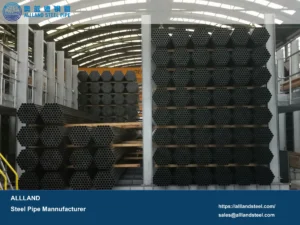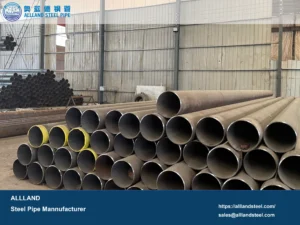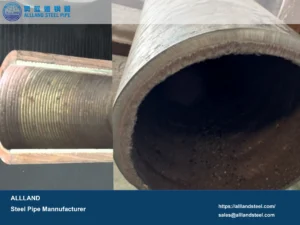

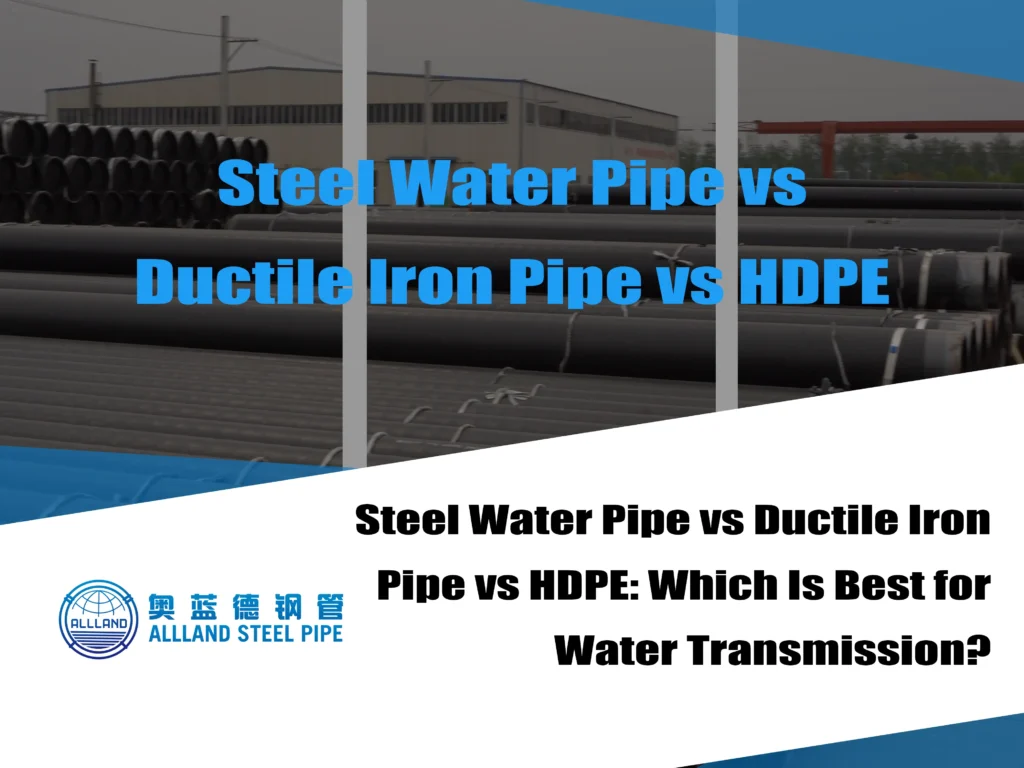
Steel water pipe, ductile iron pipe, and high-density polyethylene (HDPE) pipe are widely used in water transmission and distribution. Each offers different advantages in structural strength, corrosion resistance, jointing methods, and installation.
Steel pipe is often considered for large-diameter transmission mains and demanding structural applications. Ductile iron is widely used in municipal water networks, while HDPE is suitable for applications requiring flexibility and resistance to electrochemical corrosion.
The right choice depends on operating pressure, pipeline dimensions, site conditions, applicable standards, and total lifecycle cost.
Steel Water Pipe vs Ductile Iron Pipe vs HDPE: At a Glance
| Comparison Factor | Steel Water Pipe | Ductile Iron Pipe | HDPE Pipe |
| Material | Carbon steel | Ductile cast iron | High-density polyethylene |
| Main Advantages | High strength, stiffness, customizable dimensions | Strength, toughness, established joint systems | Flexibility, low weight, corrosion resistance |
| Pressure Rating | Depends on grade, diameter, wall thickness, and design | Depends on pressure class, dimensions, and joint design | Depends on PE grade, SDR, and operating temperature |
| Corrosion Protection | Internal linings and external coatings; cathodic protection where required | Internal linings and external protection | Generally resistant to electrochemical corrosion |
| Common Joints | Welded, flanged, or mechanical | Push-on, mechanical, or flanged | Butt fusion, electrofusion, or mechanical fittings |
| Installation Considerations | Lifting, welding, inspection, and field-joint coating | Handling, alignment, and gasket assembly | Fusion procedures, bedding, and backfill |
| Typical Applications | Large-diameter transmission mains and industrial water systems | Municipal water mains and distribution networks | Water distribution, buried pipelines, and suitable trenchless installations |
What Is the Difference Between Steel, Ductile Iron, and HDPE Pipes?
The main differences begin with material composition and manufacturing, which influence each pipe’s mechanical properties and suitability for specific operating conditions.
Material Composition and Manufacturing
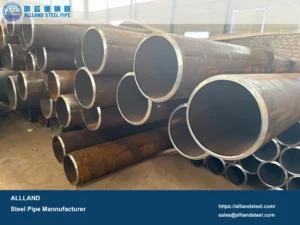
- Steel water pipe is manufactured from carbon steel plate or strip using processes such as electric resistance welding (ERW), longitudinal submerged arc welding (LSAW), or spiral submerged arc welding (SSAW). Steel grade and wall thickness can be selected to meet project requirements.
- Ductile iron pipe is made from iron containing spheroidal graphite, which improves ductility and toughness compared with conventional gray cast iron. Centrifugal casting is commonly used in its production.
- HDPE pipe is manufactured by extruding high-density polyethylene resin. Its flexibility and resistance to electrochemical corrosion make it useful in many buried water pipeline applications.
Strength, Pressure Rating, and Large-Diameter Performance
A pipe’s pressure capacity depends on its material properties, diameter, wall thickness, joint design, and operating conditions. Material strength alone does not determine whether a pipe is suitable for a particular pipeline.
- Steel pipe: High strength and stiffness make steel suitable for many large-diameter transmission projects. Pressure design considers steel grade, wall thickness, weld quality, and operating conditions.
- Ductile iron pipe: Pressure performance depends on pipe dimensions, pressure class, joint design, and applicable design requirements. It is widely used in municipal water systems.
- HDPE pipe: Pressure rating depends on the material grade, standard dimension ratio (SDR), and operating temperature. Long-term creep and external loading must also be considered.
Key Design Considerations
- Water hammer: Sudden changes in flow can produce pressure surges. Engineers should assess transient pressures and provide surge protection where necessary.
- External loads: Burial depth, soil pressure, traffic loads, and ground conditions affect pipeline design. Proper bedding and backfill are particularly important for flexible HDPE pipes.
For large-diameter or high-pressure water transmission, steel pipe can offer useful structural strength and flexibility in dimensions and wall thickness. Final selection should be based on engineering calculations and project requirements.
Corrosion Resistance and Service Life
Corrosion protection affects pipeline durability, maintenance, and lifecycle costs. Steel and ductile iron generally require appropriate protective systems, while HDPE is inherently resistant to rust and electrochemical corrosion.
Steel Pipe Corrosion Protection
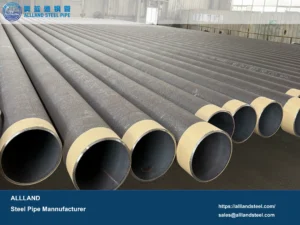
Protected by internal epoxy linings and external coatings such as FBE or 3PE/3LPE. Field-welded joints require additional protection.
Ductile Iron Pipe Corrosion Protection
Commonly uses cement-mortar linings, external coatings, or polyethylene encasement, depending on soil and water conditions.
HDPE Pipe Corrosion Resistance
Naturally resistant to rust and electrochemical corrosion. UV exposure, high temperatures, and mechanical damage may affect long-term performance.
For all three materials, service life depends on design, material quality, installation, operating conditions, and maintenance. No material guarantees a specific service life without considering these factors.
Installation, Jointing, and Maintenance
Each pipe material requires different joining procedures and construction controls.
| Pipe Type | Common Jointing Methods | Key Installation Considerations |
| Steel Pipe | Welding, flanges, mechanical couplings | Weld quality, nondestructive testing where required, field-joint corrosion protection, and lifting equipment |
| Ductile Iron Pipe | Push-on joints, mechanical joints, flanges | Gasket installation, pipe alignment, and allowable joint deflection |
| HDPE Pipe | Butt fusion, electrofusion, mechanical fittings | Surface preparation, fusion parameters, equipment condition, and proper bedding and backfill |
Installation cost depends on pipe weight, equipment availability, labor skills, site access, and joining requirements. Buyers should compare these factors alongside the initial pipe price and expected maintenance costs.
Which Pipe Is Best for Different Water Infrastructure Projects?
The most suitable material depends on the pipeline’s technical requirements and installation environment.
Large-diameter water transmission: Steel pipe is often a strong candidate where high structural strength, customized dimensions, and welded connections are required.
Municipal water distribution: Ductile iron is widely used for underground water mains because of its mechanical properties and established jointing systems.
Flexible or corrosion-resistant installations: HDPE can be suitable where flexibility, low weight, and resistance to electrochemical corrosion are priorities, provided its pressure and temperature limits are met.
Industrial water systems: Any of the three materials may be appropriate, depending on operating pressure, temperature, fluid characteristics, external loads, and project specifications.
The best choice is not necessarily the pipe with the lowest purchase price. A lifecycle assessment should consider material costs, installation, corrosion protection, maintenance, and expected operating conditions.
Applicable Standards for Water Pipes
Applicable standards define material requirements, dimensions, pressure performance, and other technical criteria. The following AWWA standards are commonly referenced for water infrastructure projects.
| Pipe Type | Commonly Referenced Standard | Scope |
| Steel Water Pipe | AWWA C200 | Steel water pipe 6 in. (150 mm) and larger |
| Ductile Iron Pipe | AWWA C151/A21.51 | Ductile iron pipe, centrifugally cast |
| HDPE Pipe | AWWA C906 | Polyethylene pressure pipe and fittings for waterworks |
Project specifications may also require additional standards for coatings, linings, joints, testing, and installation. Buyers should confirm the applicable standard edition and any local regulatory requirements.
For steel water pipe procurement, specifications should clearly define the required material grade, outside diameter, wall thickness, pipe length, welding and testing requirements, and corrosion protection system.
FAQ
Is steel pipe better than ductile iron pipe for water transmission?
Steel pipe is often suitable for large-diameter transmission mains and projects requiring customized dimensions or high structural strength. Ductile iron is widely used in municipal water networks. The better option depends on design pressure, diameter, installation conditions, and project specifications.
Is HDPE pipe cheaper than steel pipe?
HDPE may reduce transportation and handling costs because it is lightweight. However, total project costs also depend on pipe dimensions, pressure requirements, joining methods, installation conditions, and maintenance needs. A project-specific cost comparison is necessary.
Which pipe is best for large-diameter water transmission?
Steel pipe is often a strong candidate for large-diameter water transmission because of its structural strength and customizable dimensions. Engineers should evaluate pressure requirements, wall thickness, external loads, corrosion protection, and lifecycle costs before making a final selection.