
What Are Galvanized Greenhouse Frames?
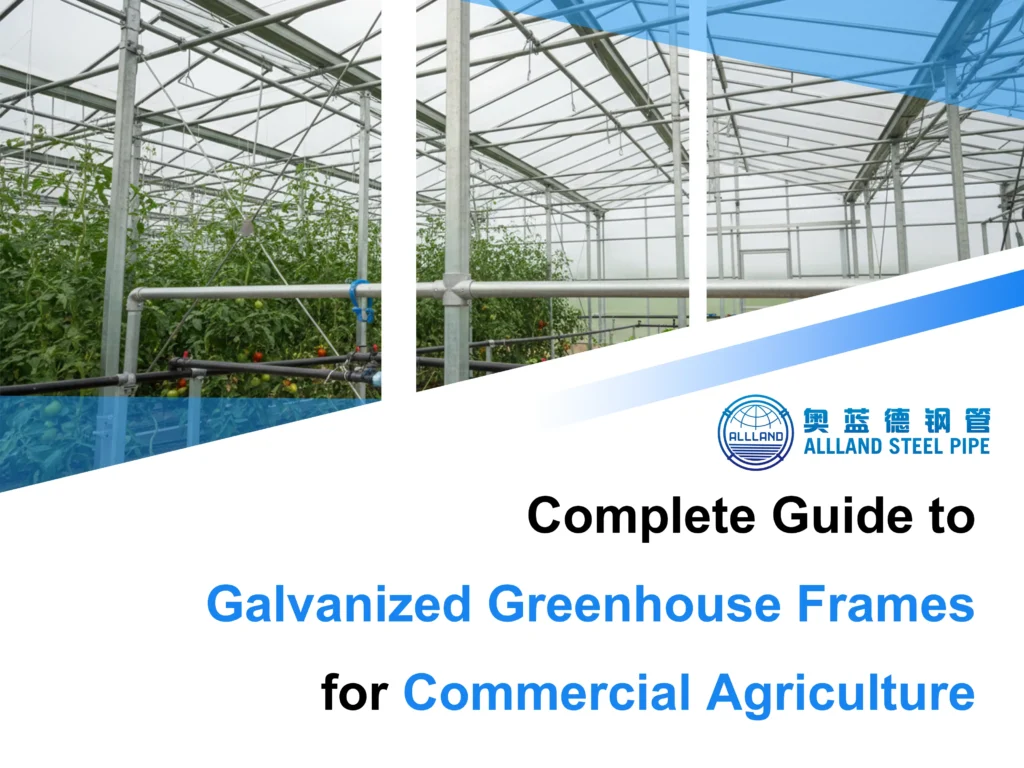
Galvanized greenhouse frames refer to the main supporting structures of greenhouses manufactured from galvanized steel, primarily used in modern agricultural greenhouses and commercial cultivation projects. The core materials typically include galvanized steel pipes, square and rectangular tubes, and various connectors.
In modern commercial agriculture, greenhouses are constantly exposed to high humidity, high temperatures, and frequent irrigation, making ordinary steel prone to corrosion and rust. Consequently, hot-dip galvanized steel, with its corrosion-resistant properties, has gradually become the mainstream material for greenhouse steel structures.
Galvanized greenhouse frames not only extend the structural lifespan but also reduce long-term maintenance costs, making them widely used in large-scale agricultural projects, smart greenhouses, and modern agricultural parks.
Main Components of Greenhouse Structure
A complete greenhouse steel structure typically consists of the following components:
- Main Arches
- Support Columns
- Purlins & Cross Beams
- Bracing Systems
- Connectors & Clamps Ventilation and Shading Support Structures
- Foundation Anchors
These agricultural steel systems collectively determine the greenhouse’s stability, wind resistance, and overall service life.
Among these, galvanized steel pipes are the most critical structural material; their wall thickness, zinc coating thickness, and weld quality all directly impact the safety and durability of the greenhouse structure.
Types of Galvanized Greenhouse Frames
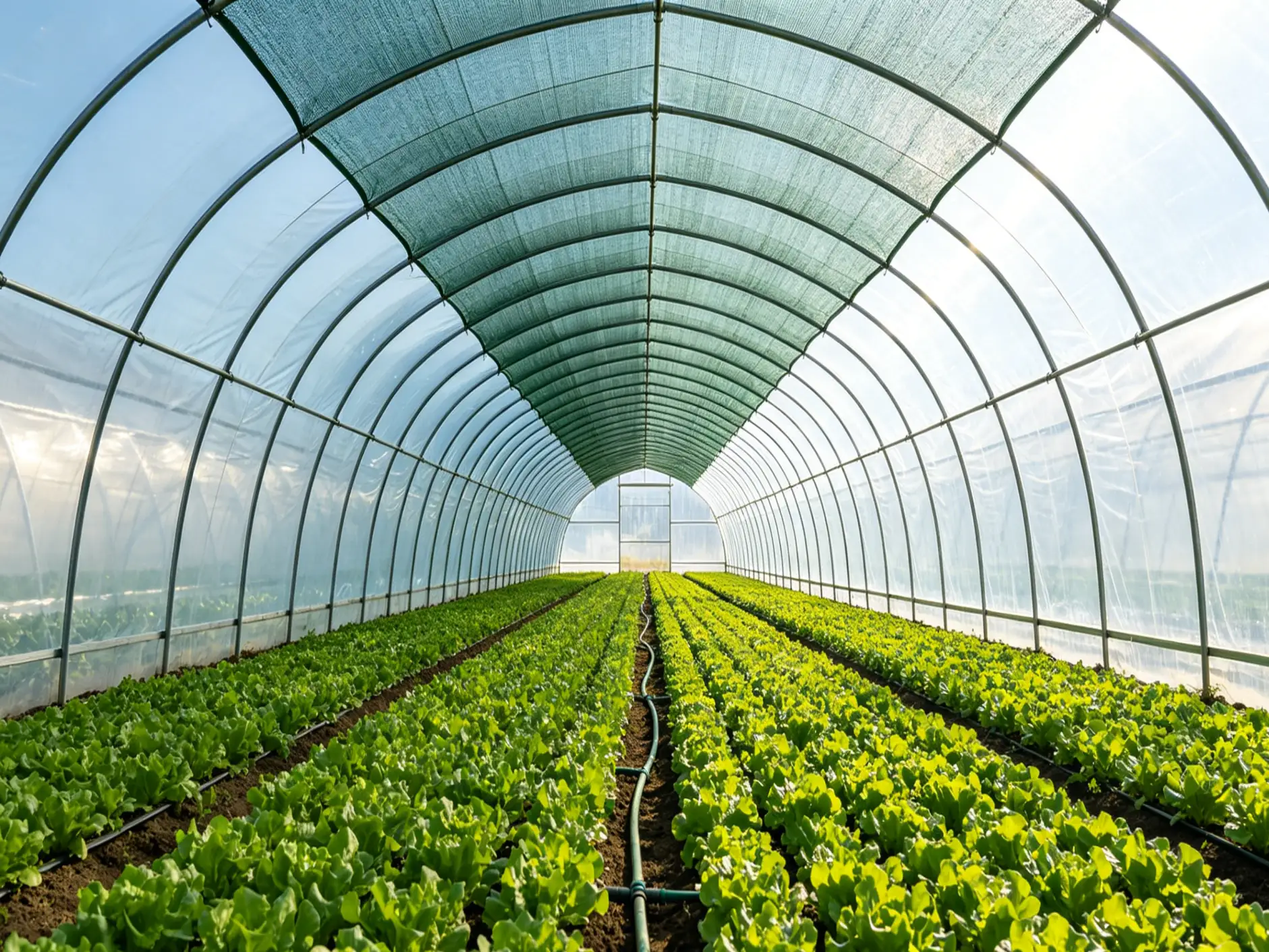
Tunnel Greenhouse Frames
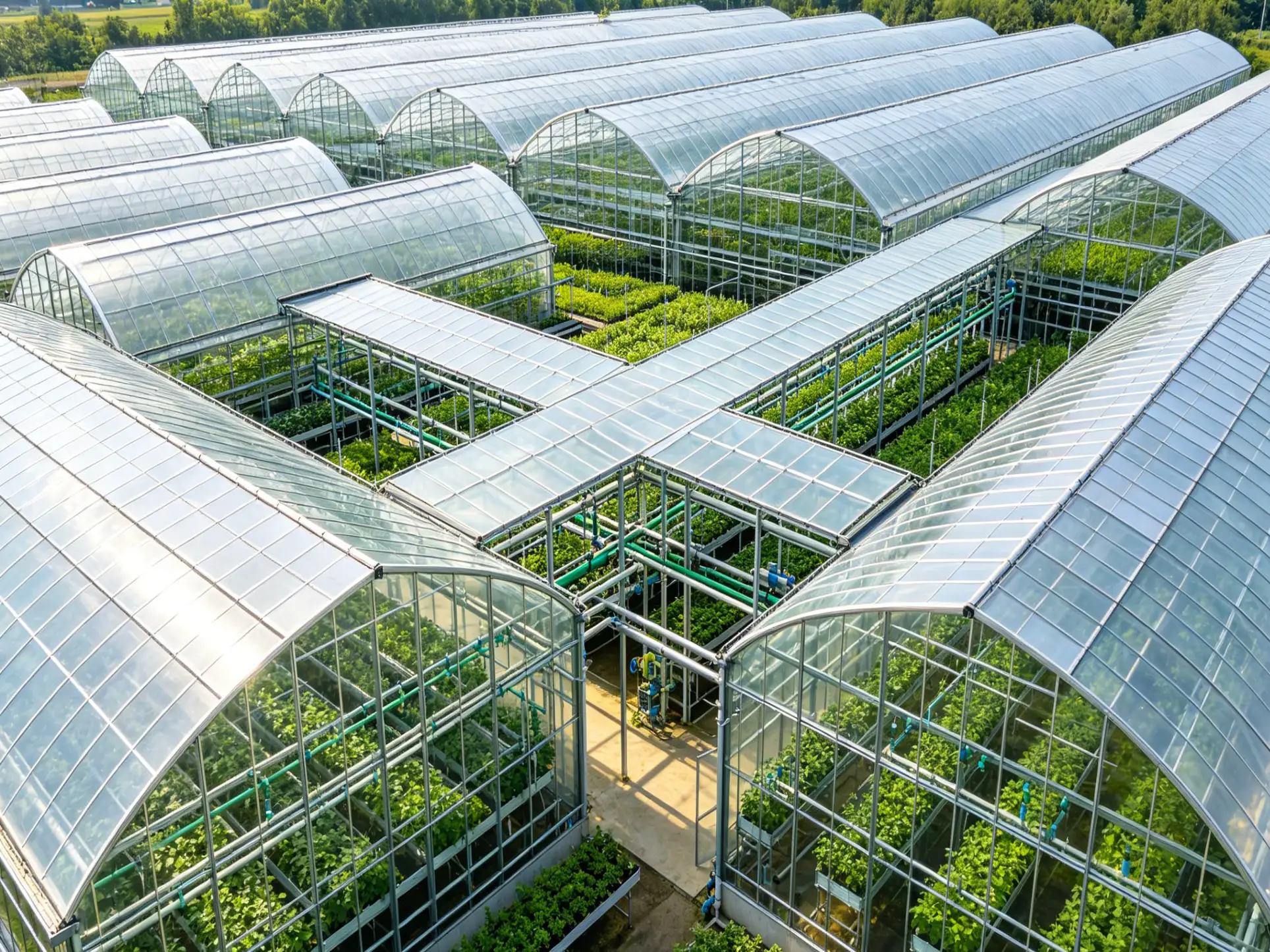
A multi-span greenhouse consists of multiple greenhouse units connected to form a large-scale growing space.
Its advantages include:
- Higher land utilization
- Better environmental control
- Higher agricultural productivity
- Greater suitability for automated farming
They typically use round galvanized steel pipes as the main structural framework.
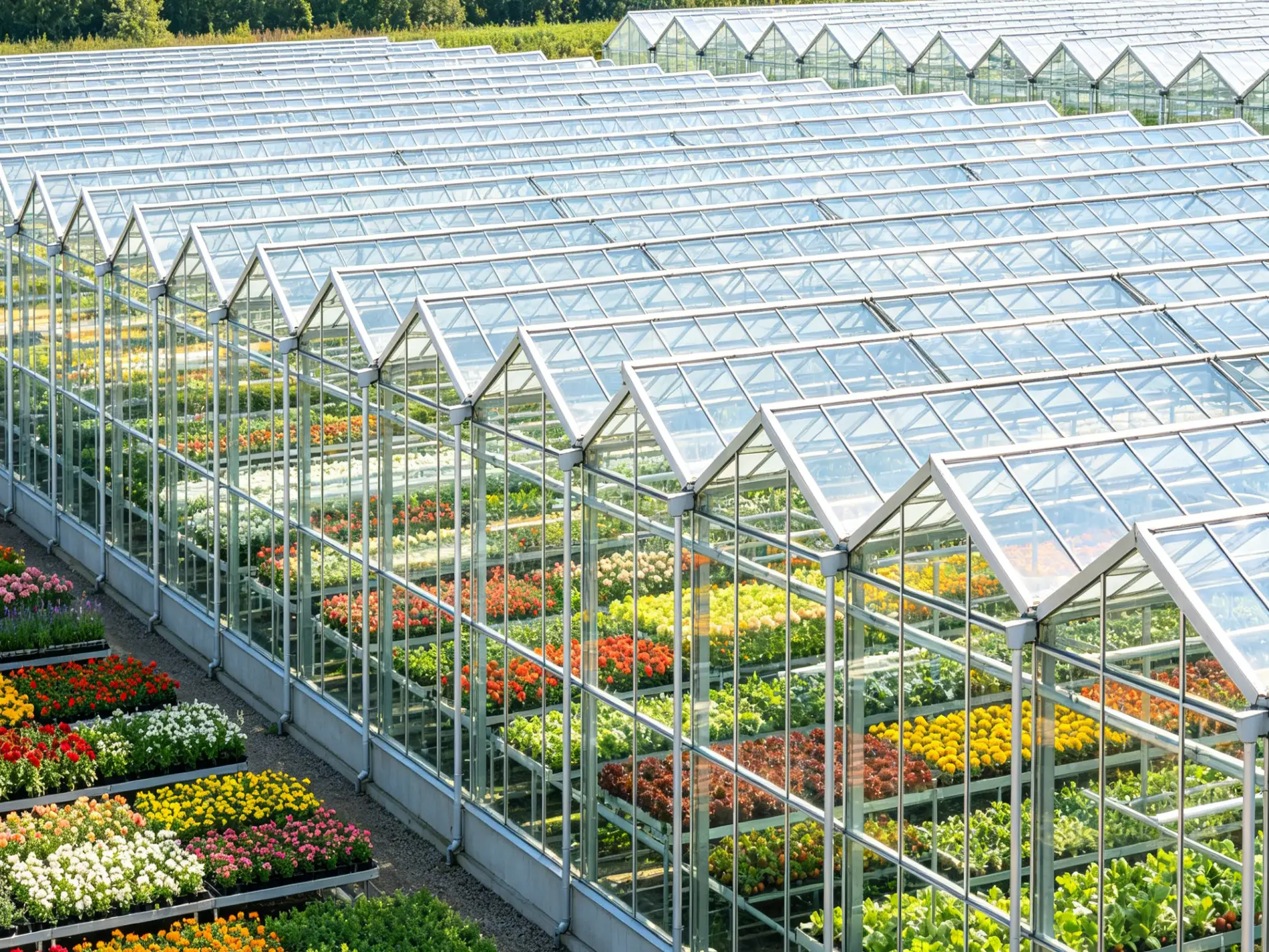
Venlo Greenhouse Frames
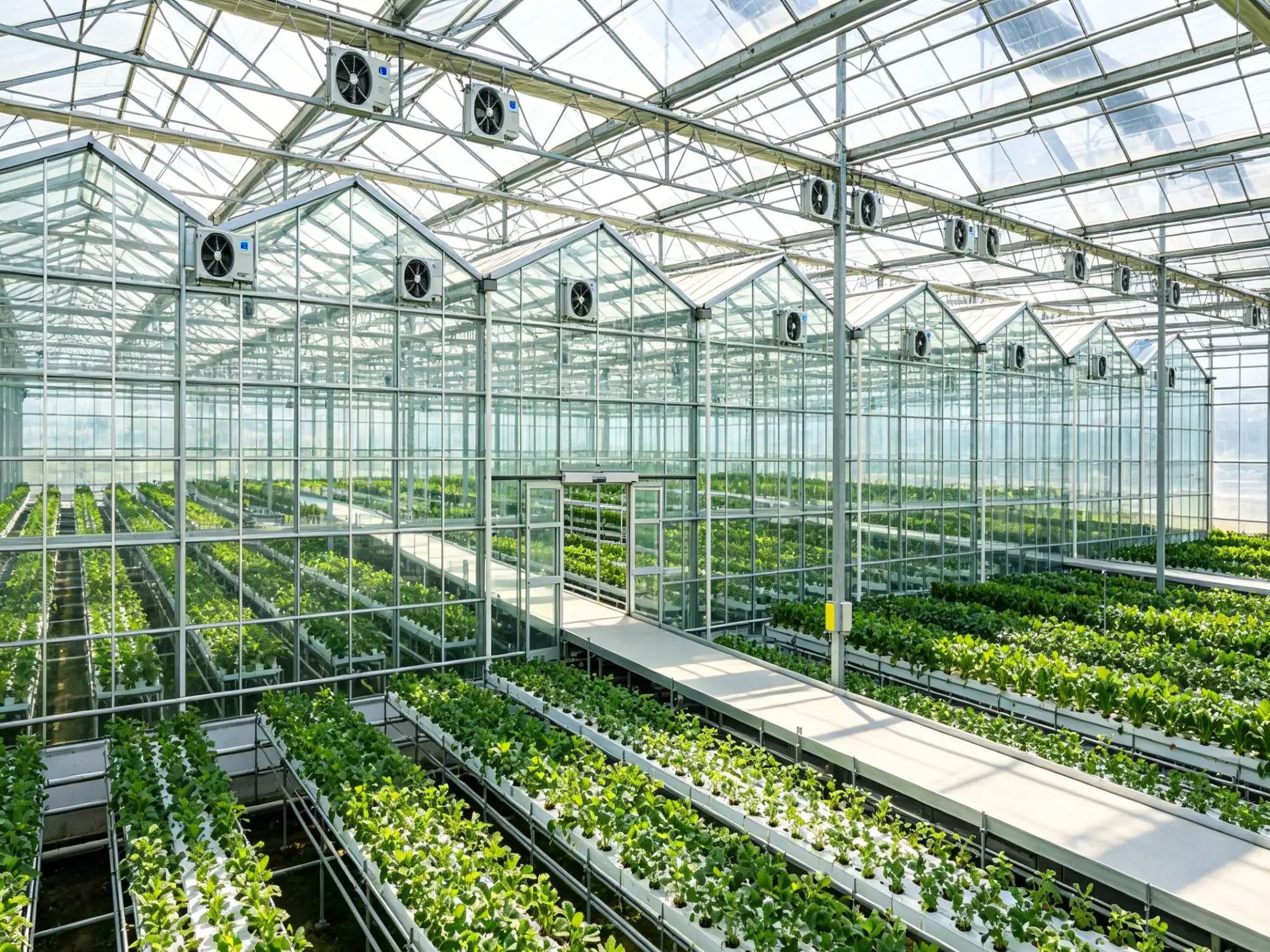
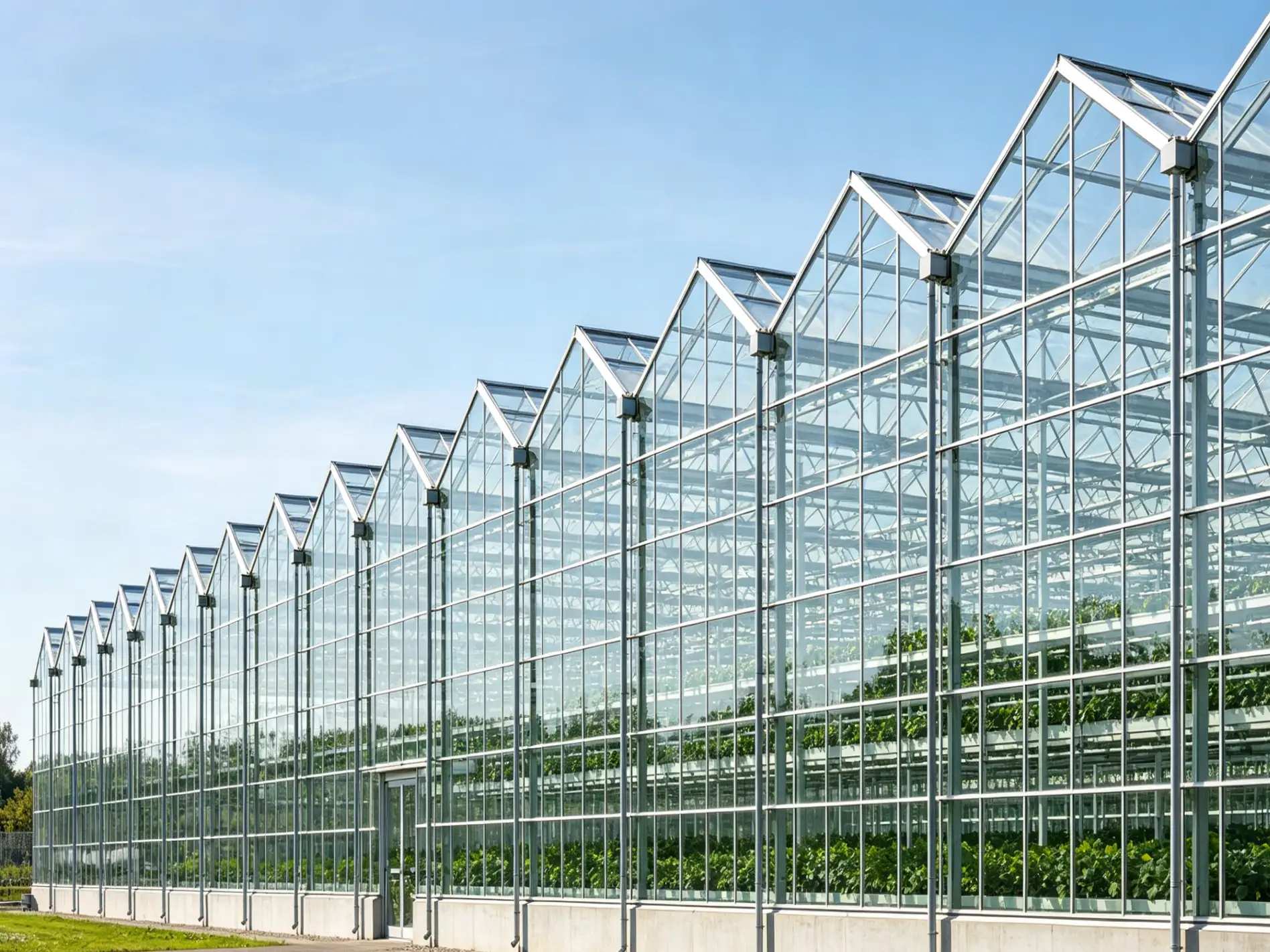
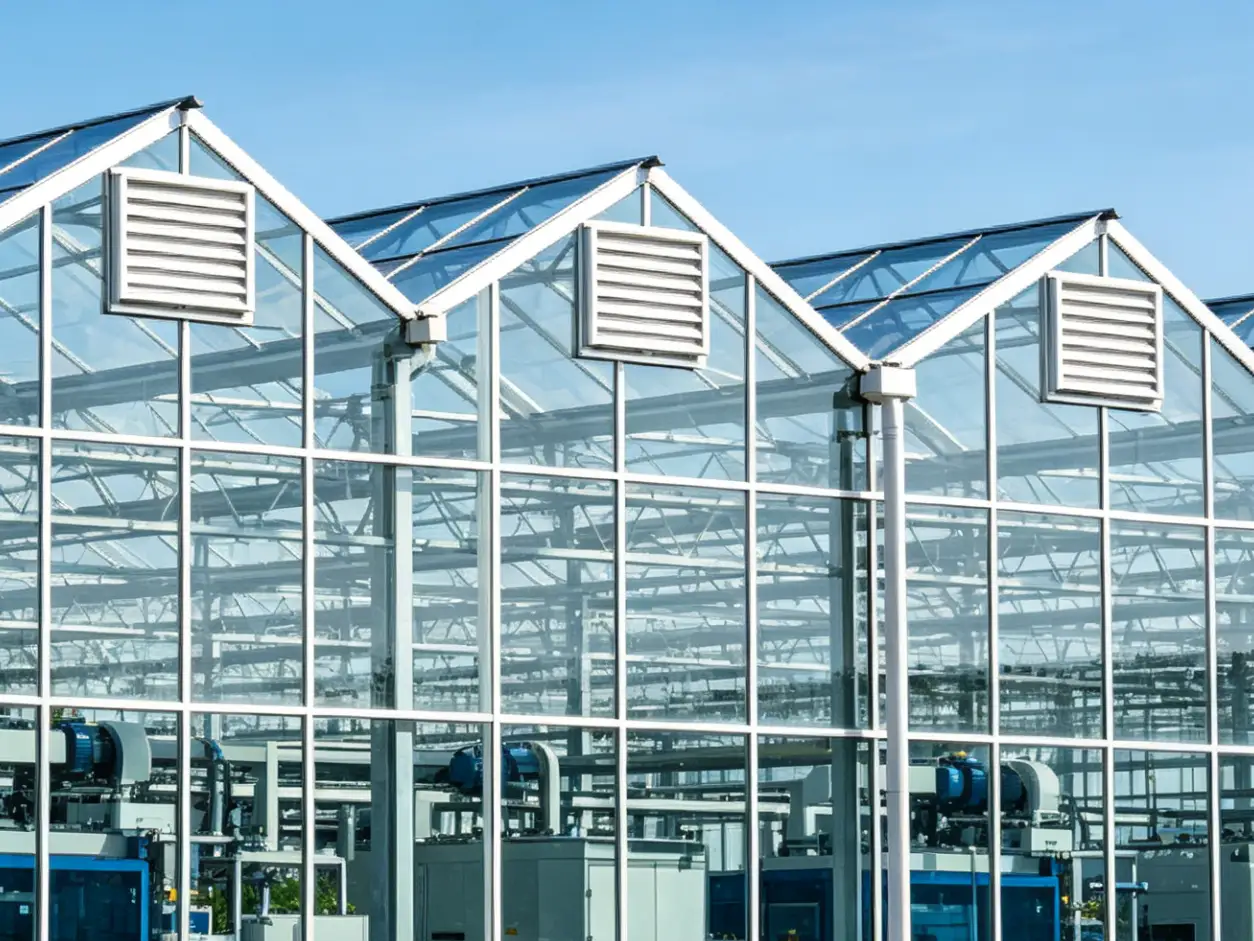
Venlo Greenhouse, which originated in Europe, is a leading example of modern high-end agricultural greenhouses.
Its features include:
- Excellent natural lighting
- High ventilation efficiency
- High snow load resistance
- Suitable for smart agricultural systems
Therefore, galvanized steel structures must meet high standards for machining precision and corrosion resistance.
Commercial Agricultural Greenhouses
Large-scale commercial agricultural greenhouses are typically used for:
- Large-scale vegetable farms
- Floral industrial parks
- Hydroponic farming
- Smart agriculture projects
Projects of this type typically require customized greenhouse steel structures, featuring high-strength hot-dip galvanized steel pipes.
Multi-Span Greenhouse Structures
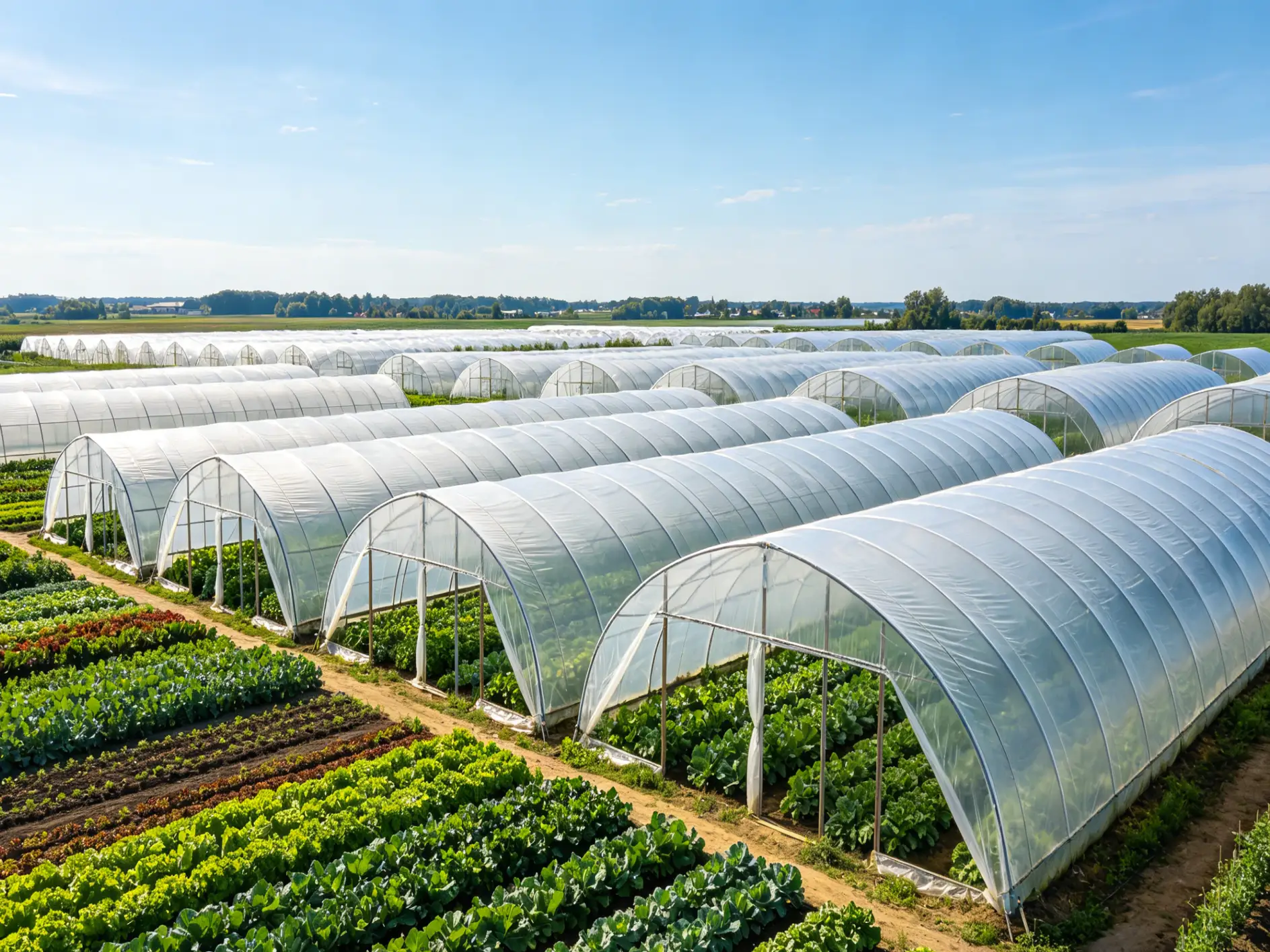
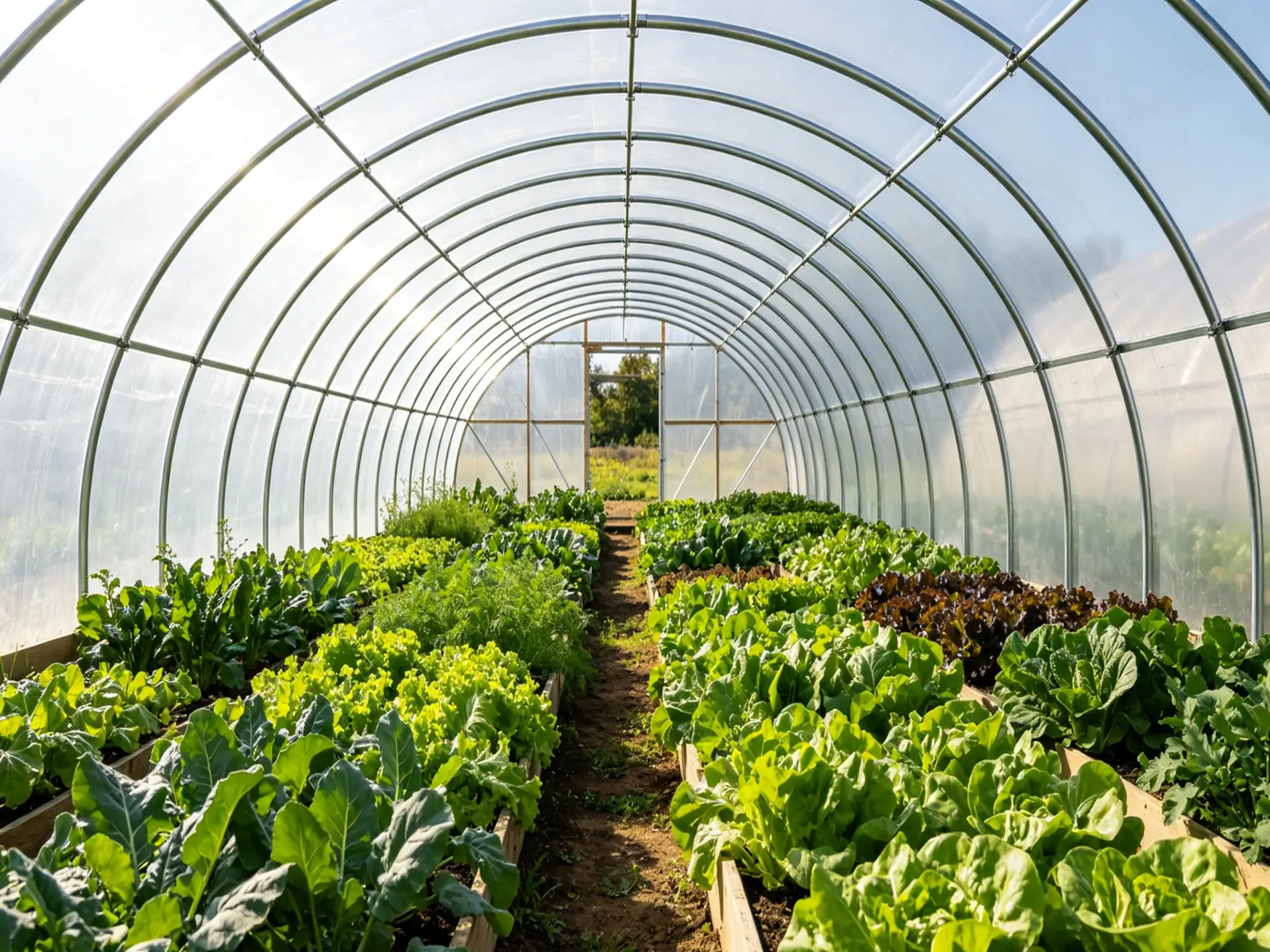
Tunnel greenhouses are one of the most common types of agricultural greenhouse structures.
Their features include:
- Lower cost
- Simple installation
- Suitable for vegetable cultivation
- Suitable for small- to medium-sized agricultural projects
They typically use round galvanized steel pipes as the main structural framework.
Advantage of Galvanized Greenhouse Frames
Excellent Corrosion Resistance in Humid Environments
The interior of a greenhouse is constantly exposed to high humidity, along with corrosive factors such as irrigation, water vapor, fertilizers, and pesticides, causing ordinary steel to rust rapidly.
The zinc coating on the surface of hot-dip galvanized steel effectively blocks air and moisture, forming a stable protective layer against corrosion.
Even if the surface is slightly scratched, the zinc coating continues to prevent corrosion of the steel through “sacrificial anode protection.”
Therefore, hot-dip galvanized greenhouse structures are highly suitable for outdoor agricultural applications.
Long Service Life and Low Maintenance
Compared to standard painted steel structures, galvanized greenhouse frames have a longer service life.
High-quality hot-dip galvanized greenhouse structures typically last 15–30 years or more under normal agricultural conditions.
Key benefits include:
- Reduced rust recurrence
- Lower maintenance frequency
- Lower long-term repair costs
- Extended overall structural lifespan
For large-scale agricultural projects, this translates to lower long-term operating costs.
High Strength-to-Weight Ratio
Galvanized steel pipes have a high strength-to-weight ratio.This means that the overall weight of the steel can be reduced while maintaining structural strength.
- Improve installation efficiency
- Reduce transportation costs
- Support designs with larger spans
- Enhance overall structural stability
Therefore, galvanized steel pipes are ideal for multi-span greenhouses and large-scale agricultural greenhouse projects.
Cost Efficiency for Large Agricultural Projects
When it comes to commercial greenhouse projects, many buyers focus not only on initial construction costs but also on long-term operating costs.
Compared to standard painted steel structures, hot-dip galvanized steel involves a relatively higher initial investment but often offers greater cost advantages over the long term. Because the galvanized coating effectively enhances the steel’s corrosion resistance, greenhouse structures are less prone to widespread rusting, paint peeling, or structural deterioration in high-humidity agricultural environments, resulting in significantly reduced maintenance requirements.
At the same time, hot-dip galvanized greenhouse structures typically have a longer service life, ensuring long-term, stable performance under normal agricultural conditions and reducing the costs and construction disruptions associated with replacing steel structures down the line.
For large-scale agricultural projects, frequent shutdowns for maintenance not only increase labor and material costs but may also disrupt planting cycles and impact overall production capacity. As a result, an increasing number of commercial agriculture projects are opting for galvanized greenhouse steel structures to mitigate long-term operational risks and improve overall return on investment.
Steel Pipes Used for Greenhouse Frames
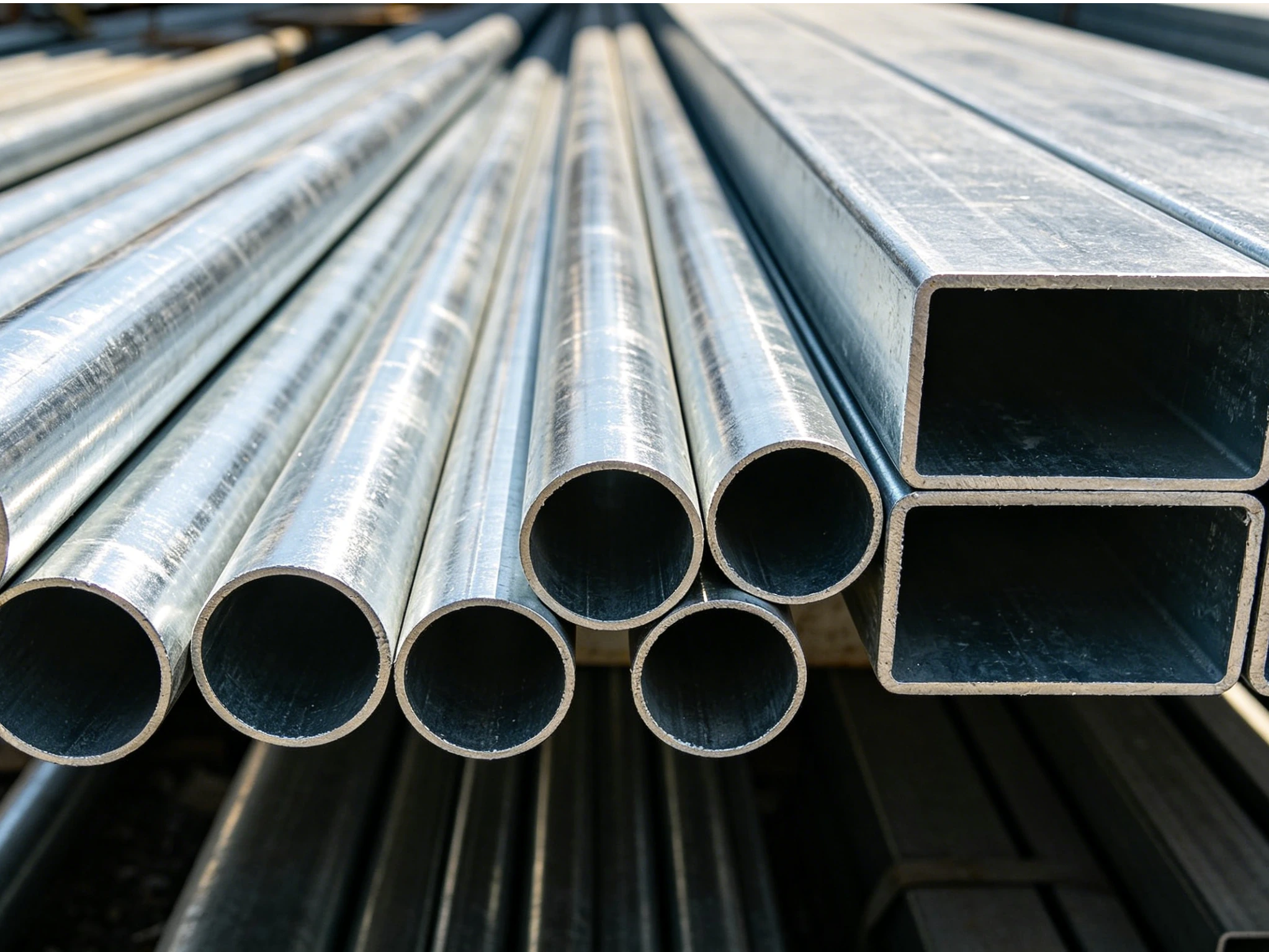
Round Galvanized Steel Pipe
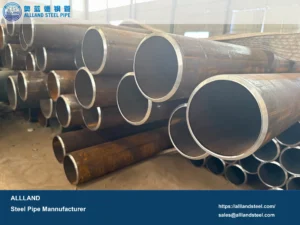
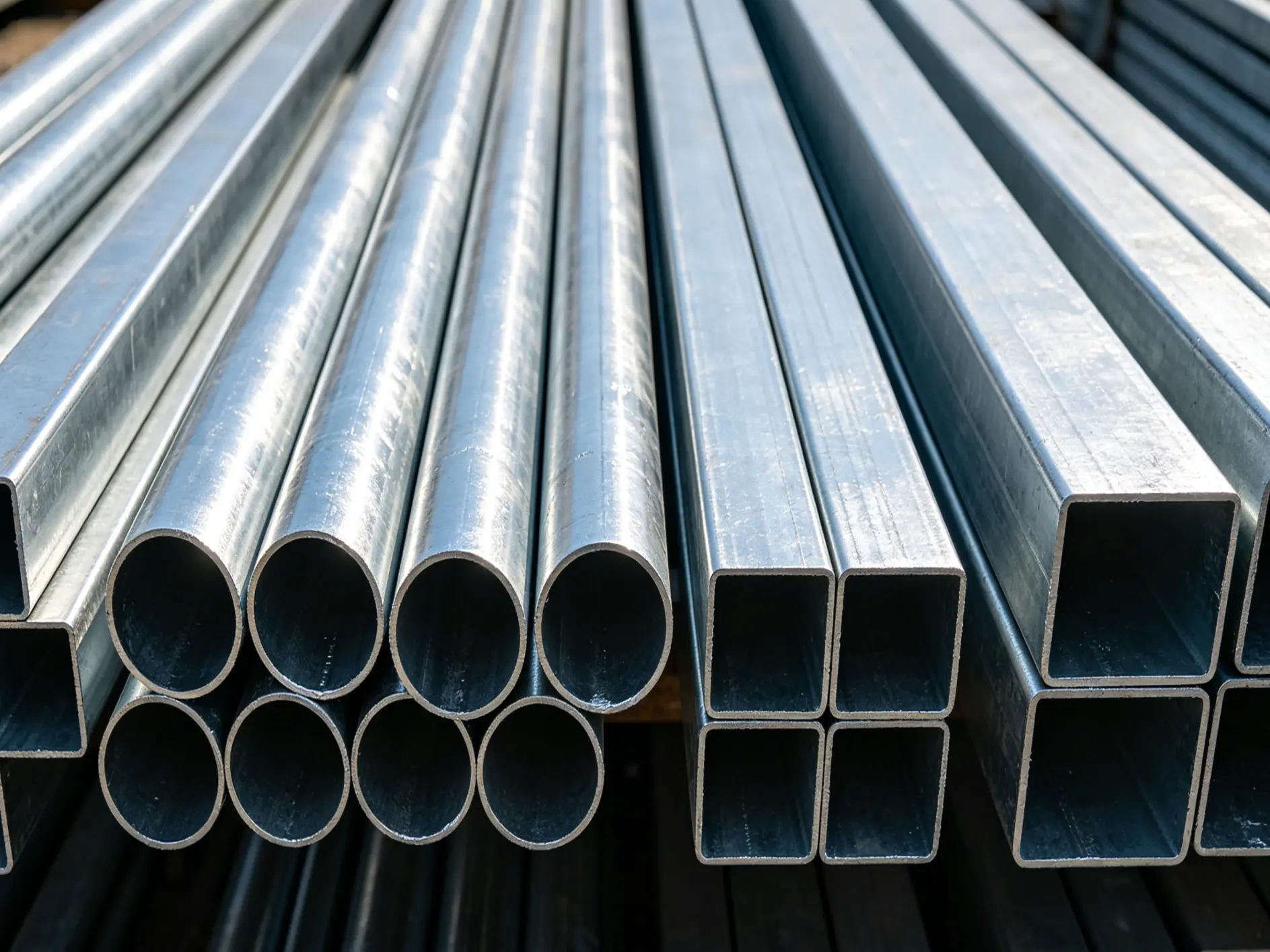
Round galvanized steel pipe is one of the most widely used structural materials in agricultural greenhouses, particularly in tunnel greenhouses and various agricultural support systems.
Square and Rectangular Tubes
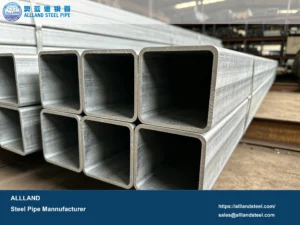
Square tubes and rectangular tubes are typically used in greenhouse sections that require higher load-bearing capacity, such as:
- Main columns
- Truss systems
- Long-span connecting structures
- Equipment support areas
Compared to round tubes, square and rectangular tubes offer superior bending resistance and load-bearing capacity, making them more suitable for heavy-duty greenhouse structures and large-scale commercial greenhouse projects.
In some multi-span greenhouses and smart agricultural greenhouses, square and rectangular tubes provide more stable structural support.
Pre-Galvanized vs Hot-Dip Galvanized Pipe
Currently, the galvanized steel pipes commonly used in agricultural greenhouses are primarily divided into two types: Pre-Galvanized Pipe and Hot-Dip Galvanized Pipe.
Pre-galvanized pipes are manufactured by galvanizing steel sheets before forming them into tubes, resulting in a smoother surface and relatively lower production costs. These pipes are typically suitable for lightweight greenhouse structures or agricultural projects with limited budgets.
However, because the zinc coating on pre-galvanized products is relatively thin, their long-term corrosion resistance is limited, and their service life is relatively short in high-humidity environments.
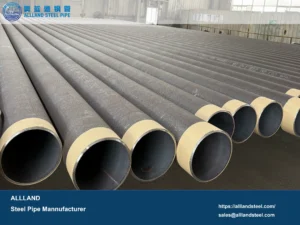
In contrast, hot-dip galvanized pipes are fully immersed in molten zinc after the steel pipe is formed, resulting in a thicker protective zinc coating.
For greenhouse steel structures and commercial agriculture projects intended for long-term outdoor use, hot-dip galvanized steel pipes are generally a more stable and reliable choice.
Common Sizes and Thickness
Requirements for steel pipe specifications vary among different greenhouse projects and are typically selected based on the greenhouse span, local climate, and structural loads.
The most common specifications for galvanized steel pipes currently used in agricultural greenhouses include:
- Φ25 mm
- Φ32 mm
- Φ42 mm
- Φ48 mm
- Φ60 mm
Common wall thicknesses are primarily:
- 1.2 mm
- 1.5 mm
- 2.0 mm
- 2.5 mm
Small-diameter steel pipes are typically used in lightweight agricultural greenhouses, while larger-diameter and thicker-walled products are more commonly used in large multi-span greenhouses and commercial greenhouse structures.
As a professional steel pipe manufacturer, ALLLAND Steel Pipe can provide customized galvanized greenhouse pipes tailored to the specific needs of various agricultural projects, including custom dimensions, wall thicknesses, and zinc coating ranges, as well as OEM fabrication services, to meet the engineering requirements of different greenhouse steel structures.
Structural Requirements for Commercial Greenhouses
1.Wind Load Resistance: A well-designed steel structure can effectively enhance the stability and safety of greenhouses in high-wind environments.
2.Snow Load Capacity: High-strength galvanized steel structures can withstand heavy snow loads, making them suitable for cold regions.
3.Corrosion Resistance: Hot-dip galvanized steel offers excellent corrosion protection, significantly extending the service life of greenhouses.
4.Structural Stability for Large-Span Greenhouses:
Large-scale multi-span greenhouses utilize high-strength steel structures to ensure the long-term stability of the entire structure.
5.Importance of Engineering Design: Professional design enhances greenhouse safety, reduces maintenance costs, and improves operational efficiency. Therefore, commercial greenhouse projects typically require an experienced greenhouse steel structure manufacturer to provide comprehensive solutions.
How to Choose a Reliable Galvanized Greenhouse Frame Manufacturer
Production Capacity and Equipment
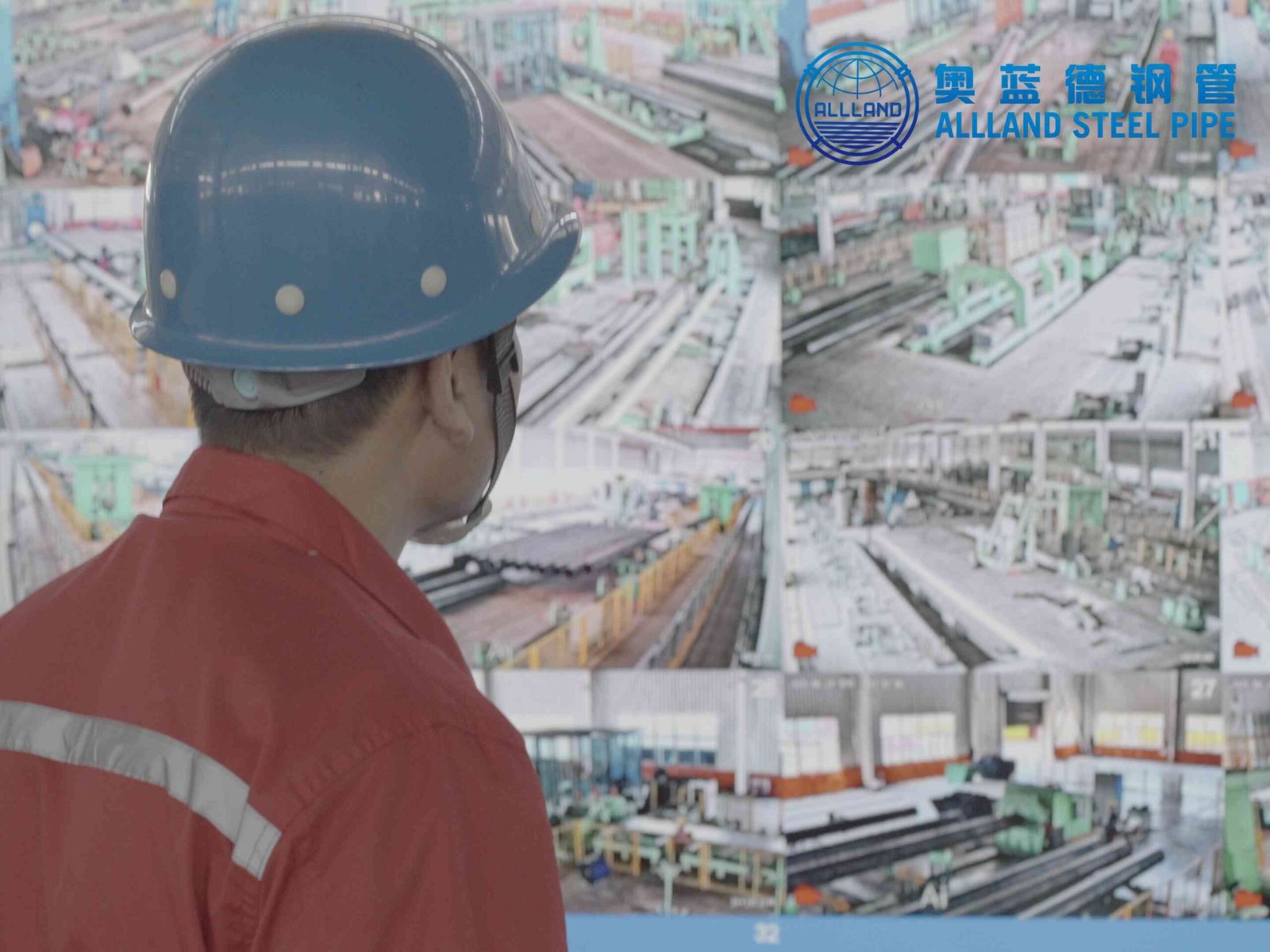
When selecting a reliable galvanized greenhouse frame manufacturer, the first consideration should be the factory’s production capacity and equipment capabilities.
Advanced equipment not only enhances production efficiency but also ensures the dimensional accuracy and structural stability of greenhouse steel pipes.
For large-scale commercial agriculture projects, a stable capacity for bulk supply is particularly important.
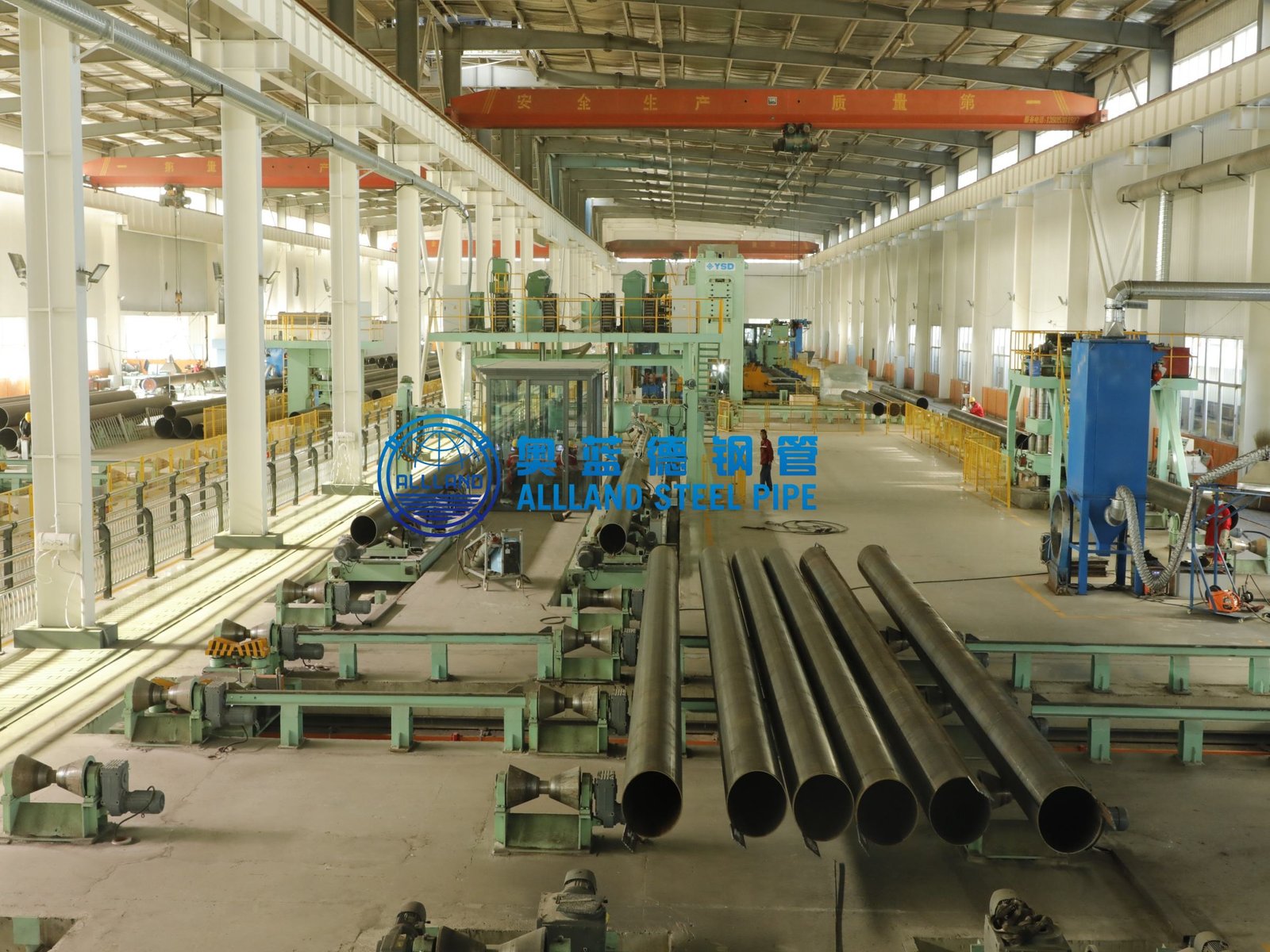
As a professional steel pipe manufacturer, ALLLAND offers one-stop services ranging from steel pipe production and galvanizing to customized greenhouse structures, meeting the needs of various agricultural engineering projects.
Galvanizing Quality Standards
The quality of the galvanized coating directly determines the corrosion resistance and service life of greenhouse frames. Commercial greenhouse structures generally require high standards for zinc coating to ensure reliable performance in long-term outdoor agricultural applications.
ALLLAND manufactures and tests its products in accordance with international standards such as:
- ASTM
- EN standards
- ISO standards
which can significantly reduce long-term maintenance costs.
Customization Capabilities
Requirements for greenhouse structure design vary significantly across different agricultural projects.
Therefore, a reputable greenhouse frame supplier should possess strong customization capabilities.ALLLAND can provide customized greenhouse steel structure solutions based on customer drawings, project specifications, and local climate conditions.
Export and Project Experience
Large-scale agricultural engineering projects typically involve:
- Large-volume supply
- Products in multiple specifications
- Long-term delivery schedules
Manufacturers with global export experience are better able to ensure consistent control over delivery times and product quality.
ALLLAND has exported galvanized steel pipes and greenhouse steel structures to numerous countries and regions, and possesses extensive experience in international project services.
Conclusion
With the development of modern commercial agriculture, galvanized greenhouse frames have become an essential structural material for agricultural greenhouses. Compared to ordinary steel structures, hot-dip galvanized greenhouse steel structures offer superior corrosion resistance, a longer service life, and lower maintenance costs.
Leveraging advanced manufacturing capabilities and extensive export experience, ALLLAND Steel Pipe provides high-quality galvanized steel pipes and customized greenhouse structure solutions for agricultural projects worldwide.
FAQ
What is the lifespan of galvanized greenhouse frames?
High-quality hot-dip galvanized greenhouse frames typically have a lifespan of 15–30 years, depending on the thickness of the zinc coating, environmental humidity, and maintenance conditions.
Why is hot-dip galvanized steel better for greenhouses?
Because greenhouse environments are consistently humid, hot-dip galvanized steel offers superior rust protection and corrosion resistance, making it more suitable for long-term outdoor agricultural applications.
What steel pipes are commonly used for greenhouse structures?
Common greenhouse steel pipes include:
- Round galvanized steel pipe
- Square steel tube
- Rectangular steel tube
Among these, hot-dip galvanized steel pipes are the most widely used.