
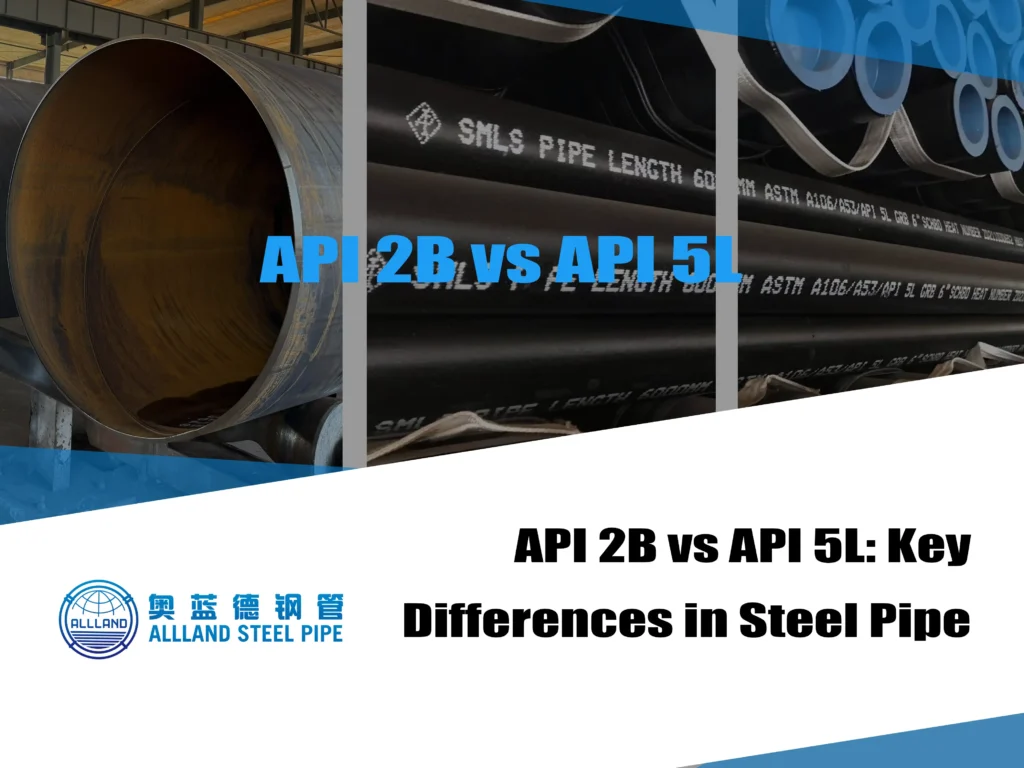
API 2B and API 5L serve different purposes in steel pipe engineering. API 2B covers the fabrication of structural steel pipe, mainly for offshore structures.
API 5L specifies requirements for seamless and welded line pipe used in oil and gas transportation. The right standard depends on the pipe’s application, design requirements, manufacturing process, and project specifications.
What Is API 2B Steel Pipe?
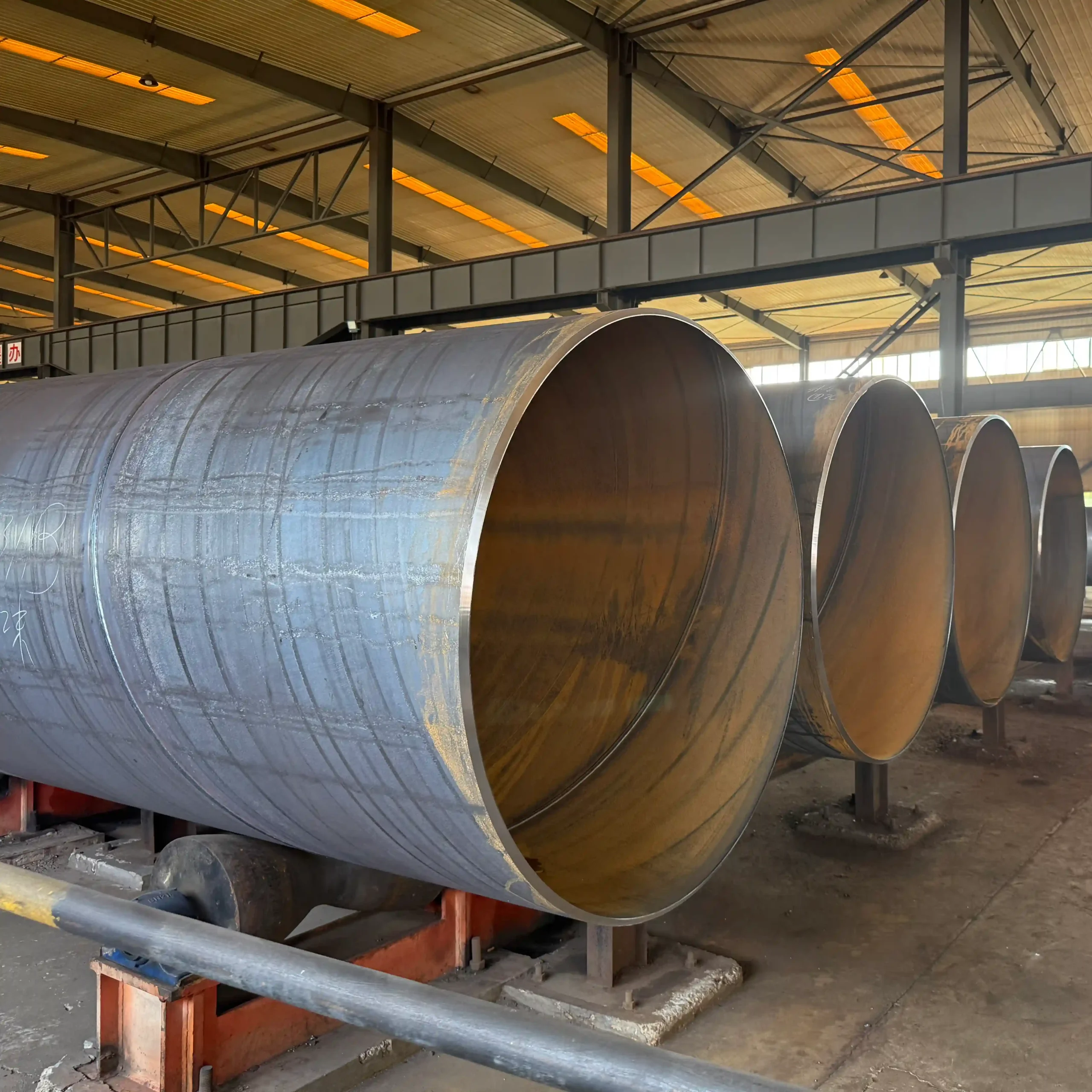
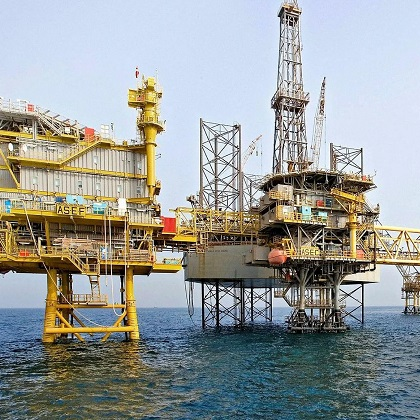
API Specification 2B, Specification for the Fabrication of Structural Steel Pipe, covers structural pipe fabricated from steel plate with longitudinal and circumferential butt-welded seams. It is primarily associated with welded offshore structures, including piling and main structural members.
API 2B focuses on fabrication requirements for structural steel pipe. These include applicable material requirements, forming and welding practices, and fabrication quality controls.
Typical applications include:
- Offshore platform piles and tubular structural members
- Structural components for marine and energy infrastructure
- Large-diameter fabricated steel pipe used in load-bearing structures
API 2B should not be treated as a general line pipe specification. Its applicability must be confirmed against the project’s structural design and fabrication requirements.
What Is API 5L Line Pipe?
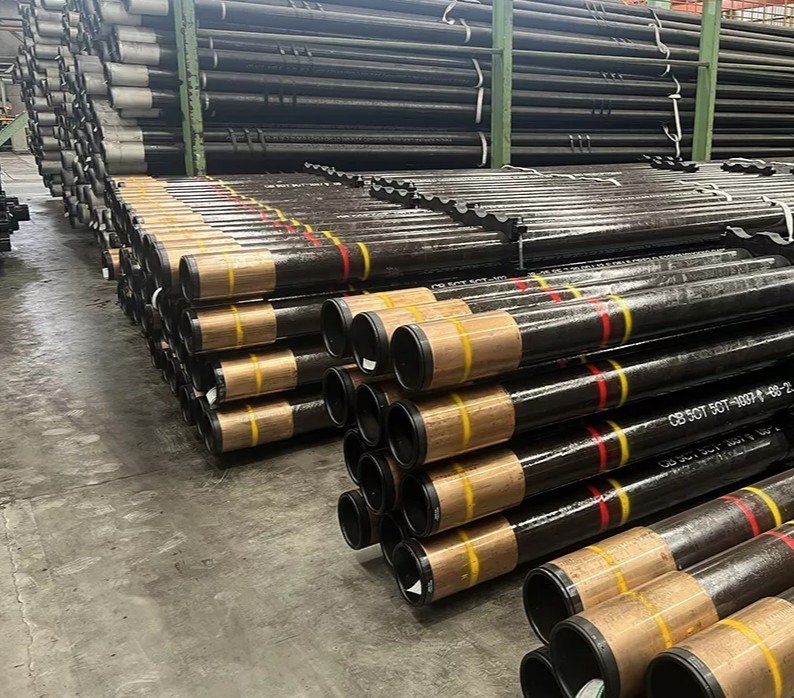
API Specification 5L, Line Pipe, establishes requirements for the manufacture of seamless and welded steel pipe used in pipeline transportation systems in the petroleum and natural gas industries.
The standard addresses material requirements, manufacturing processes, inspection, testing, marking, and traceability. It also defines two product specification levels: PSL 1 and PSL 2.
Key considerations when specifying API 5L pipe include:
- Steel grade:Common grades include Grade B, X42, X52, X60, X65, and other grades permitted by the applicable edition.
- Product specification level:PSL 1 and PSL 2 have different requirements. PSL 2 generally includes more stringent controls in specified areas.
- Manufacturing route:Available options depend on the specified grade, dimensions, and applicable requirements.
- Service conditions:Pressure, temperature, corrosion, sour service, and other operating conditions may require additional controls.
API 2B vs API 5L: Key Differences
The main difference is their intended engineering application.
API 2B addresses structural pipe fabrication, whereas API 5L addresses line pipe manufacturing for transportation systems.
| Comparison | API 2B | API 5L |
| Standard focus | Structural steel pipe fabrication | Line pipe manufacturing |
| Primary application | Load-bearing structures | Pipeline transportation |
| Typical projects | Offshore structures and piling | Oil and gas transmission pipelines |
| Product specification | Fabrication requirements for structural pipe | Requirements for seamless and welded line pipe |
| Key engineering considerations | Structural loads, fabrication, weld quality | Pressure containment, material grade, testing and service conditions |
| Selection basis | Structural design and project specifications | Pipeline design and transportation requirements |
These standards are not interchangeable simply because both apply to steel pipe. Their scope, material requirements, manufacturing provisions, and acceptance criteria must be evaluated separately.
Dimensions and Size Comparison
API 2B and API 5L differ in their approach to pipe dimensions because they cover different product types. API 2B applies to fabricated structural steel pipe, while API 5L covers seamless and welded line pipe for pipeline transportation.
| Dimension | API 2B Structural Pipe | API 5L Line Pipe |
| Outside diameter (OD) | Typically 14 in. (355.6 mm) and larger; 40 in. (1,016 mm) and larger for LWDS | Depends on the specified product, manufacturing process and applicable requirements |
| Wall thickness | Typically 3/8 in. (9.53 mm) and greater | Specified according to pipe size, grade, manufacturing route and project requirements |
| Pipe length | Up to a nominal 40 ft (12.2 m) under the cited API 2B scope | Specified according to the applicable standard and purchase order |
| Main sizing consideration | Structural loads, fabrication feasibility and connection design | Operating pressure, flow requirements, material grade and pipeline design |
Note: The API 2B dimensions above reflect the published scope description for fabricated structural steel pipe. Confirm the applicable edition and project requirements before ordering. API 5L does not have one universal outside-diameter and wall-thickness range that applies to every product.
For detailed size information, see API 2B steel pipe dimensions and specifications and API 5L steel pipe dimensions and specifications for more information on available outside diameters, wall thicknesses, and dimensional requirements.
API 2B vs API 5L: Manufacturing and Inspection Requirements
API 2B and API 5L have different manufacturing and inspection requirements. The main points to check are:
1. Material Selection for API 2B and API 5L
API 2B: Materials must meet structural design and fabrication requirements.
API 5L: Materials must meet the specified steel grade and applicable standard requirements.
2. Forming and Welding
API 2B: Focuses on plate forming and structural pipe fabrication, including longitudinal and circumferential butt welds.
API 5L: Requirements depend on the manufacturing process, such as seamless or welded pipe.
3. Inspection and Testing
Check dimensions, weld quality, and mechanical properties.
Apply the inspection methods and acceptance criteria specified by the relevant standard and project requirements.
4. Documentation and Traceability
Verify materia test certificates (MTCs).
Review inspection records, product marking, and traceability information.
Before production, confirm the applicable standard edition, required tests, acceptance criteria, and any additional project specifications.
API 2B vs API 5L: Which Standard Should You Choose?
The correct choice depends on the pipe’s function rather than diameter or wall thickness alone.
Choose API 2B for Structural Applications
- The pipe is intended for structural applications.
- The project requires fabricated structural steel pipe for piling or main structural members.
- The design and fabrication specifications identify API 2B as an applicable standard.
Choose API 5L for Pipeline Transportation
- The pipe will be used in a petroleum or natural gas pipeline transportation system.
- The project specifies a suitable API 5L grade and product specification level.
- Material, testing, and service requirements can be verified against the applicable edition.
API 2B vs API 5L for Offshore Projects
For offshore projects: Distinguish between structural members and fluid-carrying pipelines. An offshore platform may use structural pipe and line pipe within the same project, but each product must meet the standards applicable to its specific function.
Before ordering, confirm the standard edition, pipe dimensions, material grade, manufacturing process, inspection requirements, and any supplementary project specifications.
FAQ
Is API 2B the same as API 5L?
No. API 2B covers the fabrication of structural steel pipe, primarily for welded offshore structures. API 5L specifies requirements for seamless and welded line pipe used in pipeline transportation systems in the petroleum and natural gas industries.
Can API 2B pipe be used for oil and gas pipelines?
Not automatically. Structural pipe fabricated to API 2B should not be assumed to meet API 5L requirements. Any proposed use in a transportation pipeline must be evaluated against the pipeline design, governing standards, service conditions, and project acceptance criteria.
Does API 5L apply to offshore projects?
Yes, API 5L may apply to offshore pipelines when specified by the project. However, offshore design conditions and additional requirements for materials, corrosion protection, installation, and service may also apply.
Conclusion
API 2B and API 5L serve different roles in steel pipe engineering. API 2B is primarily associated with fabricated structural steel pipe, while API 5L covers line pipe for pipeline transportation. Selecting the correct standard requires consideration of the pipe’s intended function, design conditions, manufacturing requirements, and project specifications.