
What Is API 2B Standards?
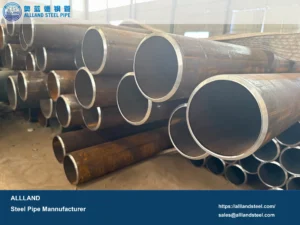
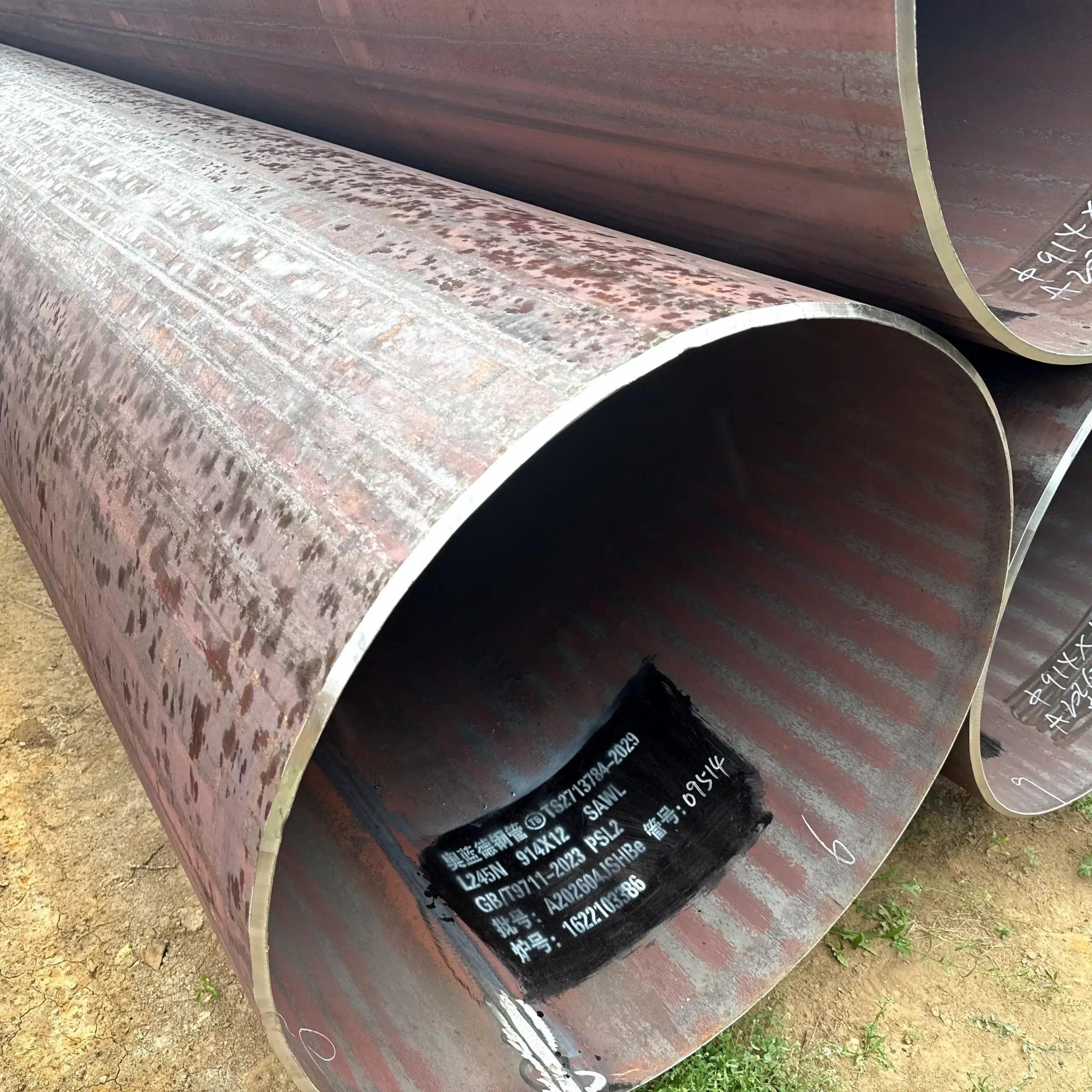
API 2B (Specification for the Fabrication of Structural Steel Pipe) is a standard established by the American Petroleum Institute for the manufacture of structural steel pipe, primarily intended for use in offshore structures. The standard specifies the manufacturing requirements for structural steel pipes formed from steel plates using longitudinal and circumferential butt welds.
API 2B ≠ Pipeline Standard
API 2B = Standard for large-diameter welded steel pipes for offshore platforms, pile foundations, and load-bearing steel structures
API 2B Specification
| Item | Specification |
| Standard | API Specification 2B (Specification for the Fabrication of Structural Steel Pipe) |
| Pipe Type | Longitudinally Welded Structural Steel Pipe / Circumferentially Welded Structural Steel Pipe |
| Manufacturing Process | Plate Edge Milling → JCOE/UOE Forming → Submerged Arc Welding (SAW) → Expansion → Inspection |
| Welding Method | Longitudinal Submerged Arc Welding (LSAW) / Double Submerged Arc Welding (DSAW) |
| Application | Offshore Platforms, Steel Pipe Piles, Marine Structures, Heavy-Duty Tubular Structures |
| Pipe Shape | Round Structural Steel Pipe |
| Outer Diameter (OD) | Typically ≥ 14 in (355.6 mm) |
| Wall Thickness (WT) | Typically ≥ 3/8 in (9.5 mm) |
| Pipe Length | Commonly up to 40 ft (12.2 m), customizable |
| Steel Material | Carbon Steel / Low Alloy Structural Steel |
| Common Steel Grades | ASTM A572 Gr.50, ASTM A709, S355, EH36, DH36 (project specified) |
| Pipe End | Beveled Ends / Plain Ends / Customized End Preparation |
| Heat Treatment | According to material grade and project requirements |
| Welding Requirement | Full penetration welds with qualified welding procedures (WPS/PQR) |
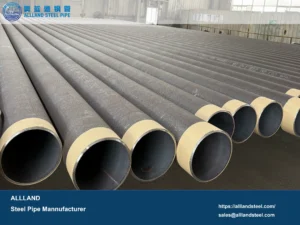
| Surface Treatment | Shot Blasting, Painting, FBE / 3PE / Other Coatings (project requirements) |
| Main Markets | Offshore Oil & Gas, Marine Engineering, Offshore Wind, Infrastructure Projects |
API 2B Steel Pipe Dimensions and Size Range
API 2B primarily covers large-diameter structural steel pipe.
| Parameter | Range |
| OD | ≥14 in (355.6 mm) |
| Wall Thickness | ≥3/8 in (9.5 mm) |
| Length | Up to 40 ft |
Large Diameter Offshore Applications
- OD: 1000 mm+
- WT: 30-100 mm
- Length: 12 m+
How to Select Offshore Platform API 2B Pipe
API 2B steel pipe dimensions are not selected from a fixed range directly prescribed by the API 2B standard. Unlike API 5L line pipe, API 2B primarily specifies fabrication requirements for structural steel pipe, while the final outside diameter (OD), wall thickness (WT), and length are typically determined by project engineering design requirements.
1. Outside Diameter (OD)
API 2B steel pipes are typically used in large-diameter structural applications; therefore:
Typical minimum size: Outside Diameter ≥ 14 inches (355.6 mm)
However, in actual offshore projects, the dimensions are usually far larger than this range.
| Application Area | Common OD Range |
|---|---|
| Offshore Platform Structural Members | 500 mm – 2000 mm+ |
| Offshore Wind Foundation Structures | 1000 mm – 3000 mm+ |
| Marine Steel Pipe Piles | 600 mm – 2500 mm+ |
| Application Area | Common OD Range |
|---|---|
| Offshore Platform Structural Members | 500 mm – 2000 mm+ |
| Offshore Wind Foundation Structures | 1000 mm – 3000 mm+ |
| Marine Steel Pipe Piles | 600 mm – 2500 mm+ |
2. Wall Thickness (WT)
Wall Thickness ≥ 3/8 in
| Application Area | Typical Wall Thickness Range |
|---|---|
| General Structural Applications | 10–25 mm |
| Offshore Platform Structural Components | 25–60 mm |
| Heavy-Duty Offshore Pipe Piles | 50–100 mm+ |
Materials Used for API 2B Structural Steel Pipe
API 2B does not define a specific steel grade. Material selection depends on project design requirements, structural loading conditions, and environmental conditions.
ASTM Materials:
- ASTM A572 Grade 50
- ASTM A709
- ASTM A516 (selected structural applications)
Commonly used in offshore engineering:
- EH36
- DH36
- S355
- S420
- Actual projects are typically specified by engineering standards.
| Grade | Application |
| ASTM A572 Gr.50 | Heavy Structural Applications |
| ASTM A709 | Bridge Structures |
| S355 | Offshore Structures |
| EH36/DH36 | Marine Engineering |
What Are API 2B Steel Pipes Used For?
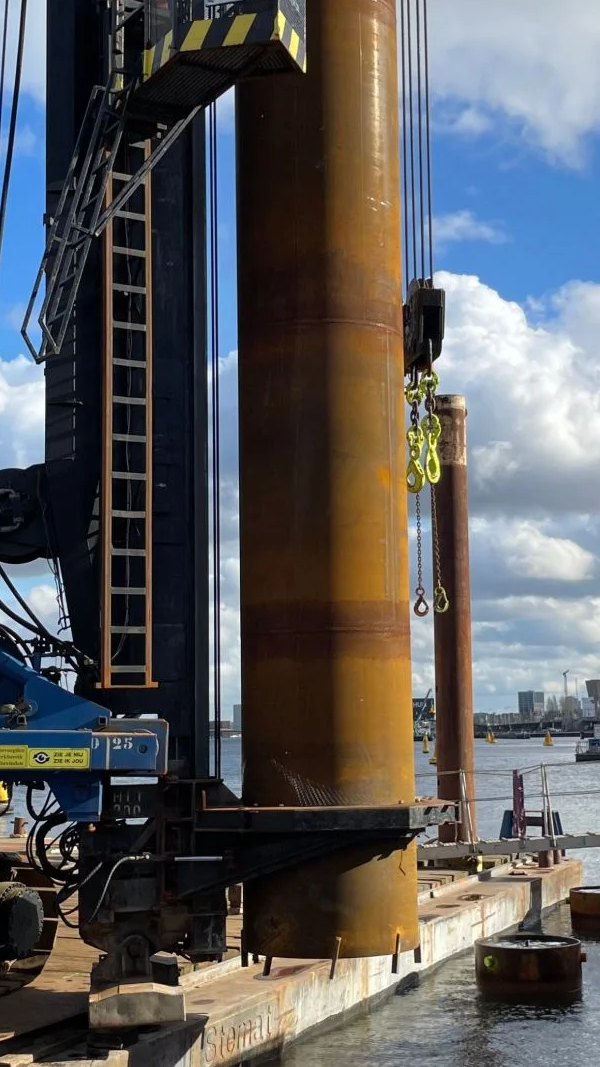
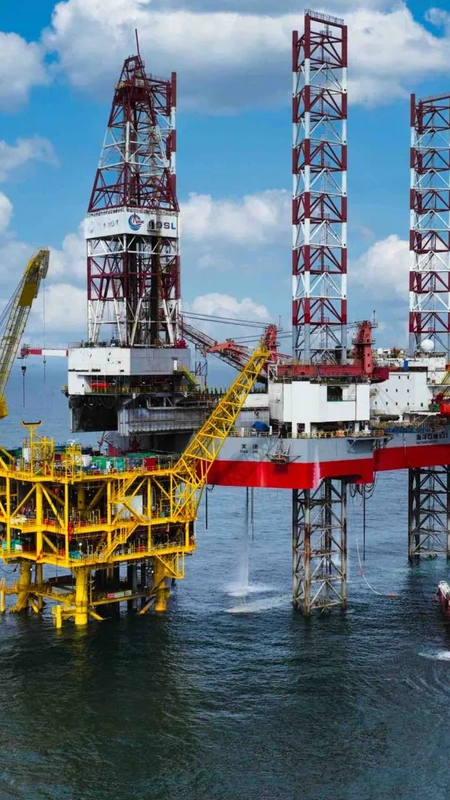
Offshore Platforms and Marine Structures
- API 2B Jacket Structures – tubular members supporting offshore platforms
- Production Platforms – structural components for offshore oil and gas facilities
- Marine Support
One of the biggest differences between this scenario and ordinary structural pipes is that the steel pipes may need to withstand the impact loads during piling, as well as long-term axial and bending loads. Therefore, projects typically pay special attention to: Wall Thickness + Yield Strength + Weld Quality + Dimensional Accuracy.
Offshore Wind Foundation Structures
- Jacket Foundations
- Offshore Wind Support Structures
- Large-Diameter Tubular Components
Steel Pipe Piles for Marine and Infrastructure Projects
- Marine Pipe Piles
- Port and Harbor Structures
- Bridge Foundations
- Heavy-Duty Building Foundations
The biggest difference between this and ordinary terrestrial structures is seawater corrosion. Therefore, the project may require:
- Corrosion Allowance
- FBE/3LPE anti-corrosion coatings
- Cathodic Protection
- More stringent surface treatments
Tubular Structural Members
- Main Load-Bearing Members
- Tubular Truss Connections
- Structural Bracing Components
- Support Members
Although API 2B covers structural steel pipe fabrication, the actual pipe requirements may vary depending on the application. Offshore platforms focus on structural strength and fatigue resistance, platform piles emphasize impact and load-bearing capacity, while jacket structures and marine structures place greater emphasis on fatigue performance and corrosion protection.
API 2B Steel Pipe Manufacturing Process
API 2B steel pipes are typically manufactured by rolling and welding steel plates.
Typical production process:
Steel Plate
↓
Plate Edge Milling
↓
JCOE / UOE Forming
↓
Longitudinal Submerged Arc Welding
↓
Circumferential Welding
↓
Expansion & Calibration
↓
NDT Inspection
↓
Dimension Inspection
↓
API 2B Pipe
For large-diameter, thick-walled structural pipes:
The following are commonly used:
API 2B specifically covers structural steel pipe formed from steel plate with longitudinal and circumferential butt welds; it generally excludes ERW and spiral-welded pipe.
API 2B structural steel pipes can be supplied with supplementary requirements including SR1 plate rolling direction control, SR2 Charpy impact testing, SR3 100% radiographic weld inspection, and SR4 weld metal toughness requirements for demanding offshore and marine applications.
API 2B vs API 5L
API 2B vs API 5L
| API 2B | API 5L | |
| Purpose | Structural | Pipeline |
| Application | Offshore structures | Oil/Gas transportation |
| Main Requirement | Strength & fabrication | Pressure & transportation |
FAQ
What tests are required for API 2B steel pipes?
Typical inspections include UT, RT, dimensional inspection and mechanical testing.
Is API 2B the same as API 5L?
No. API 2B is for structural steel pipe fabrication, while API 5L is for oil and gas transmission pipelines.
Is API 2B pipe suitable for offshore wind projects?
Yes. API 2B structural steel pipe is suitable for offshore wind applications where high-strength tubular structures are required.
It can be used for:
- Jacket foundations
- Offshore support structures
- Marine tubular components
The final specification depends on project design, environmental loads, and engineering requirements.