

In the steel pipe industry, a shoulder pipe refers to a steel pipe with a shoulder structure. It differs from standard steel pipe specifications and needs to be distinguished based on the specific application.
Scenario 1: In OCTG oil and gas pipelines, a shoulder pipe typically refers to casing, tubing, drill pipe, etc., with a shouldered connection. The shoulder provides axial load-bearing capacity and metal-sealing capability.
Scenario 2: In structural pipes, a shoulder tube is used when the pipeline has structural changes or diameter variations. Its main functions are positioning, connection, and load-bearing capacity.
Scenario 3: In piping, a shoulder tube is primarily used for connection.
The shoulder pipe provides additional mechanical support, improves load transfer capability, and enhances connection reliability.
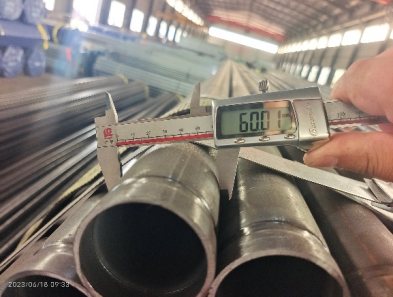
Shoulder Pipe Dimensions
| Pipe Size (inch) | Outside Diameter (OD) inch | Outside Diameter (OD) mm | Typical Application |
| 1 1/2″ | 1.900″ | 48.3 mm | Small tubing applications |
| 2″ | 2.375″ | 60.3 mm | Tubing / Well service |
| 2 3/8″ | 2.375″ | 60.3 mm | Oil & gas tubing |
| 2 7/8″ | 2.875″ | 73.0 mm | Production tubing |
| 3 1/2″ | 3.500″ | 88.9 mm | Tubing / Drill pipe |
| 4″ | 4.000″ | 101.6 mm | Special tubing applications |
| 4 1/2″ | 4.500″ | 114.3 mm | Casing / Tubing |
| 5″ | 5.000″ | 127.0 mm | Casing applications |
| 5 1/2″ | 5.500″ | 139.7 mm | Intermediate casing |
| 6 5/8″ | 6.625″ | 168.3 mm | Casing |
| 7″ | 7.000″ | 177.8 mm | Production casing |
| 7 5/8″ | 7.625″ | 193.7 mm | Casing |
| 8 5/8″ | 8.625″ | 219.1 mm | Surface casing |
| 9 5/8″ | 9.625″ | 244.5 mm | Intermediate casing |
| 10 3/4″ | 10.750″ | 273.1 mm | Casing |
| 11 3/4″ | 11.750″ | 298.5 mm | Large casing |
| 13 3/8″ | 13.375″ | 339.7 mm | Surface casing |
| 16″ | 16.000″ | 406.4 mm | Large diameter casing |
| 18 5/8″ | 18.625″ | 473.1 mm | Large casing |
| 20″ | 20.000″ | 508.0 mm | Conductor casing |
Notes:
OD tolerance normally follows applicable standards such as API 5CT, API 5DP, or customer specifications.
For OCTG shoulder pipe, the most commonly used OD range is:
- Tubing:1.9″ – 4 1/2″ (48.3 – 114.3 mm)
- Casing:4 1/2″ – 20″ (114.3 – 508 mm)
Shoulder Connection Types
Unlike ordinary threaded connections, shoulder connections transmit axial loads through specially machined shoulder contact surfaces, improving the load-bearing capacity, torque, sealing performance, and fatigue resistance of the connection. Types of shoulder pipes include: API Regular Connection, Premium Shoulder Connection, and Double Shoulder Connection. These will be detailed below.
API Regular Connection
API Regular Connection is a traditional threaded connection designed according to API standards and widely used in conventional oil and gas well operations. Reference standards include API 5CT and API 5B. It is primarily used in ordinary oil wells, low- and medium-pressure oil wells, and conventional casing.
Advantages: High degree of standardization, simple field operation, and lower cost.
Premium Shoulder Pipe
Premium Shoulder Connection is a high-performance connection type primarily used in complex oil and gas environments where standard API connections cannot meet requirements. This type of shoulder pipe is optimized to improve the piping system’s sealing performance, axial load capacity, torque capacity, and fatigue resistance. The table below shows the specific performance improvements.
| Project | Typical Range |
| Airtightness | Excellent |
| Pressure Capacity | ≥ Body Pressure Rating |
| Torque Capacity | Approximately 20%-50% higher than API Connections |
| Tensive Efficiency | 80%-100% of Body Strength |
| Compression Resistance | High |
| Reusability | Superior to Standard API Connections |
Advantages: Improved high-pressure airtightness, reduced risk of gas leakage, and greater suitability for deep well environments.
Double Shoulder Connection
A double-shoulder connection is an enhanced connection structure that uses two load-bearing shoulder surfaces to share axial forces and torques across both contact surfaces.
Compared to a single-shoulder structure: it offers a larger contact area, more uniform stress distribution, and higher torque capacity.
| Project | Typical performance |
| Torque Capacity | Approximately 50%-100% improvement over API |
| Fatigue Performance | Excellent |
| Clip Torque | High |
| Connection Stability | Very High |
| Bending Resistance | Enhanced |
| Service Life | Longer |
Main applications: Drill pipe, horizontal drilling, extended reach drilling, and high-torque drilling environments.
Materials of Shoulder Pipe
The following section describes the physical properties of shoulder pipes according to the API 5CT standard. Strict adherence to the standard requirements is ensured, and all Allland steel grades are available. The mechanical properties of the shoulder pipe determine its load-bearing capability, pressure resistance, connection reliability, and service life under demanding operating conditions.
| Grade | Minimum Yield Strength | Maximum Yield Strength |
| H40 | 276 MPa | 552 MPa |
| J55 | 379 MPa | 552 MPa |
| K55 | 379 MPa | 552 MPa |
| N80 | 552 MPa | 758 MPa |
| L80 | 552 MPa | 655 MPa |
| C90 | 621 MPa | 724 MPa |
| T95 | 655 MPa | 758 MPa |
| P110 | 758 MPa | 965 MPa |
| Q125 | 862 MPa | 1034 MPa |
Tensile Strength of Shoulder Pipe
Tensive strength represents the maximum tensile stress that a steel pipe can withstand before it breaks.
| Grade | Minimum Tensile Strength |
| J55 | 517 MPa |
| K55 | 655 MPa |
| N80 | 689 MPa |
| L80 | 655 MPa |
| C90 | 689 MPa |
| T95 | 724 MPa |
| P110 | 862 MPa |
| Q125 | 931 MPa |
Shoulder Pipe Basic Structure
The biggest difference between a shoulder pipe and a plain end pipe is that the connection end of a shoulder pipe is specially designed to include a shoulder (load-bearing structure).
| Component | Description |
| Pipe Body | Main tubular section carrying pressure and load |
| Pin End | Male threaded connection |
| Box End | Female threaded connection |
| Shoulder Face | Load-bearing contact surface |
| Seal Surface | Prevents fluid leakage |
| Thread Profile | Provides mechanical locking |
| Shoulder Angle | 45°-90° |
| Thread Taper | 1:16 (common API taper) |
| Connection Length | 80-250 mm |
| Seal Length | 20-80 mm |
| Make-up Torque | 5,000-80,000 ft·lbs |
How to Select Shoulder Pipe?
Selecting the correct shoulder pipe requires a comprehensive evaluation of operating conditions, including well depth, pressure, temperature, corrosion environment, mechanical load, and connection requirements.
Example Case: Selecting Shoulder Pipe for a Deep Oil Well
Project Requirements:
- Application: Oil Production Well
- Well Depth: 4,500 m
- Operating Pressure: 70 MPa
- Temperature: 120℃
- Medium: Crude Oil + Natural Gas
- Environment: High Pressure / High Temperature
- Service Life Requirement: 20 years
Customer Selection: Premium Shoulder Tubing Pipe
Dimensions: 5 1/2″ × 9.17 mm × P110
Why was this option chosen?
P110 Steel Grade Meets:
- High tensile load requirements
- High pressure environments
- Deep well requirements
Premium Shoulder Connection Provides:
- Superior gas tightness
- Higher connection strength
- Lower leakage risk
5 1/2″ Tubing Size Meets:
- Oil and gas flow requirements
- Wellbore space requirements
- Economic requirements