
Introduction
In oil and gas, chemical, power, and industrial pipeline engineering, ASME B36.10M and ASME B36.19M are among the most commonly used standards for steel pipe dimensions. Engineers and procurement personnel often encounter a question when selecting pipe specifications: What is the difference between these two standards, and can they be used interchangeably?
Although both standards specify systems for steel pipe outer diameter and wall thickness dimensions, there are significant differences in terms of applicable materials, wall thickness grades (Schedule), and application areas.
Selecting the wrong standard may affect design compatibility, procurement costs, and even the outcome of project acceptance. Therefore, it is crucial to understand the core differences between ASME B36.10M and ASME B36.19M.
This article will provide a systematic analysis covering scope of application, sizing systems, a comparison of schedules, and application scenarios.
ASME B36.10M vs ASME B36.19M
| Comparison Item | ASME B36.10M | ASME B36.19M |
| Process | Welded and Seamless Wrought Steel Pipe | Stainless Steel Pipe |
| Primary Material | Carbon Steel and Alloy Steel | Stainless Steel |
| Typical Pipe Grades | ASTM A53, ASTM A106, API 5L, ASTM A333 | ASTM A312, ASTM A358, ASTM A790 |
| Pipe Types | Seamless and Welded Steel Pipe | Seamless and Welded Stainless Steel Pipe |
| Dimension System | NPS & Schedule | NPS & Schedule |
| Common Schedules | Sch 10, 20, 30, 40, 60, 80, 100, 120, 140, 160, STD, XS, XXS | Sch 5S, 10S, 40S, 80S |
| Wall Thickness | Generally thicker options available | Optimized for stainless steel applications |
| Weight | Usually heavier | Usually lighter |
| Pressure Capability | Suitable for high-pressure applications | Depends on stainless steel grade and schedule |
| Corrosion Resistance | Requires coating or alloying for corrosion protection | Excellent natural corrosion resistance |
| Main Industries | Oil & Gas, Power Generation, Petrochemical, Water Transmission | Food Processing, Pharmaceutical, Chemical, Water Treatment |
| Material Cost | Lower | Higher |
| Fabrication Cost | Lower | Higher due to stainless steel processing |
| Typical Standards Used Together | API 5L, ASTM A53, ASTM A106 | ASTM A312, ASTM A358, ASTM A790 |
| Interchangeable? | Not generally interchangeable with B36.19M | Not generally interchangeable with B36.10M |
Typical Pipe Sizes Covered by Both Standards
In actual engineering projects, the biggest difference does not lie in the outside diameter (OD), as both standards use the same NPS (Nominal Pipe Size) system. What really matters are the applicable materials and wall thickness series (Schedule).
Typically, ASME B36.10M is used for carbon steel and alloy steel pipes, while ASME B36.19M is primarily used for stainless steel pipes.
| NPS (in.) | Outside Diameter (OD) mm | Outside Diameter (OD) in. |
| 1/8 | 10.3 | 0.405 |
| 1/4 | 13.7 | 0.540 |
| 3/8 | 17.1 | 0.675 |
| 1/2 | 21.3 | 0.840 |
| 3/4 | 26.7 | 1.050 |
| 1 | 33.4 | 1.315 |
| 1-1/4 | 42.2 | 1.660 |
| 1-1/2 | 48.3 | 1.900 |
| 2 | 60.3 | 2.375 |
| 2-1/2 | 73.0 | 2.875 |
| 3 | 88.9 | 3.500 |
| 4 | 114.3 | 4.500 |
| 5 | 141.3 | 5.563 |
| 6 | 168.3 | 6.625 |
| 8 | 219.1 | 8.625 |
| 10 | 273.1 | 10.750 |
| 12 | 323.9 | 12.750 |
| 14 | 355.6 | 14.000 |
| 16 | 406.4 | 16.000 |
| 18 | 457.2 | 18.000 |
| 20 | 508.0 | 20.000 |
| 24 | 609.6 | 24.000 |
What Is ASME B36.10M?
ASME B36.10M – Welded and Seamless Wrought Steel Pipe
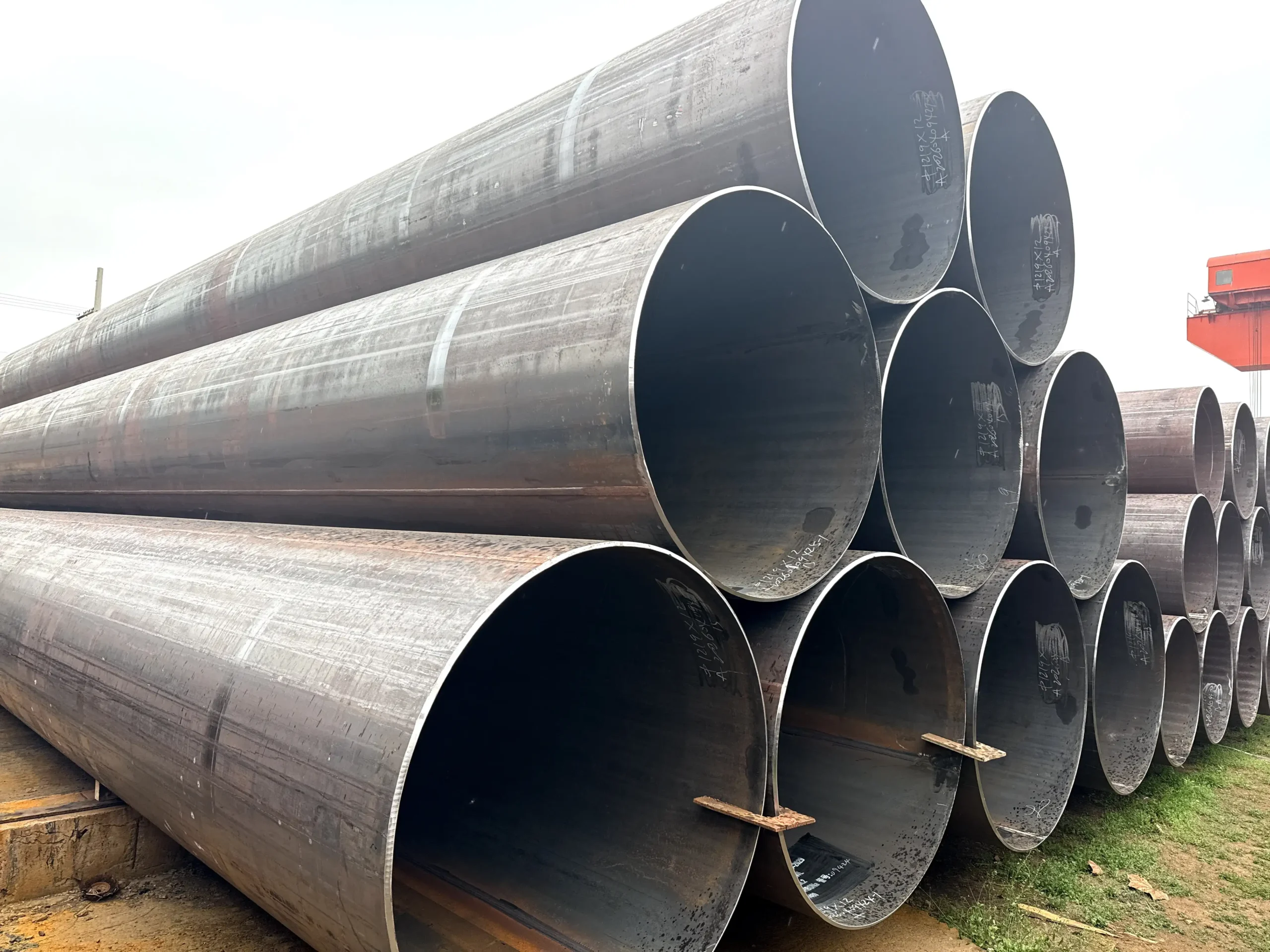
ASME B36.10M is a dimensional standard for welded and seamless steel pipes, primarily specifying dimensional parameters such as outer diameter (OD), wall thickness, and schedule. This standard applies mainly to carbon steel and alloy steel pipes and is one of the most commonly used pipe dimensional standards in the petroleum, natural gas, chemical, and power industries.
ASME B36.10M is widely used in industrial piping systems that must withstand pressure, temperature, or structural loads, including:
- Oil & Gas Pipelines
- Petrochemical Plants
- Refineries
- Power Plants
- Structural Projects
What Is ASME B36.19M?
ASME B36.19M – Stainless Steel Pipe
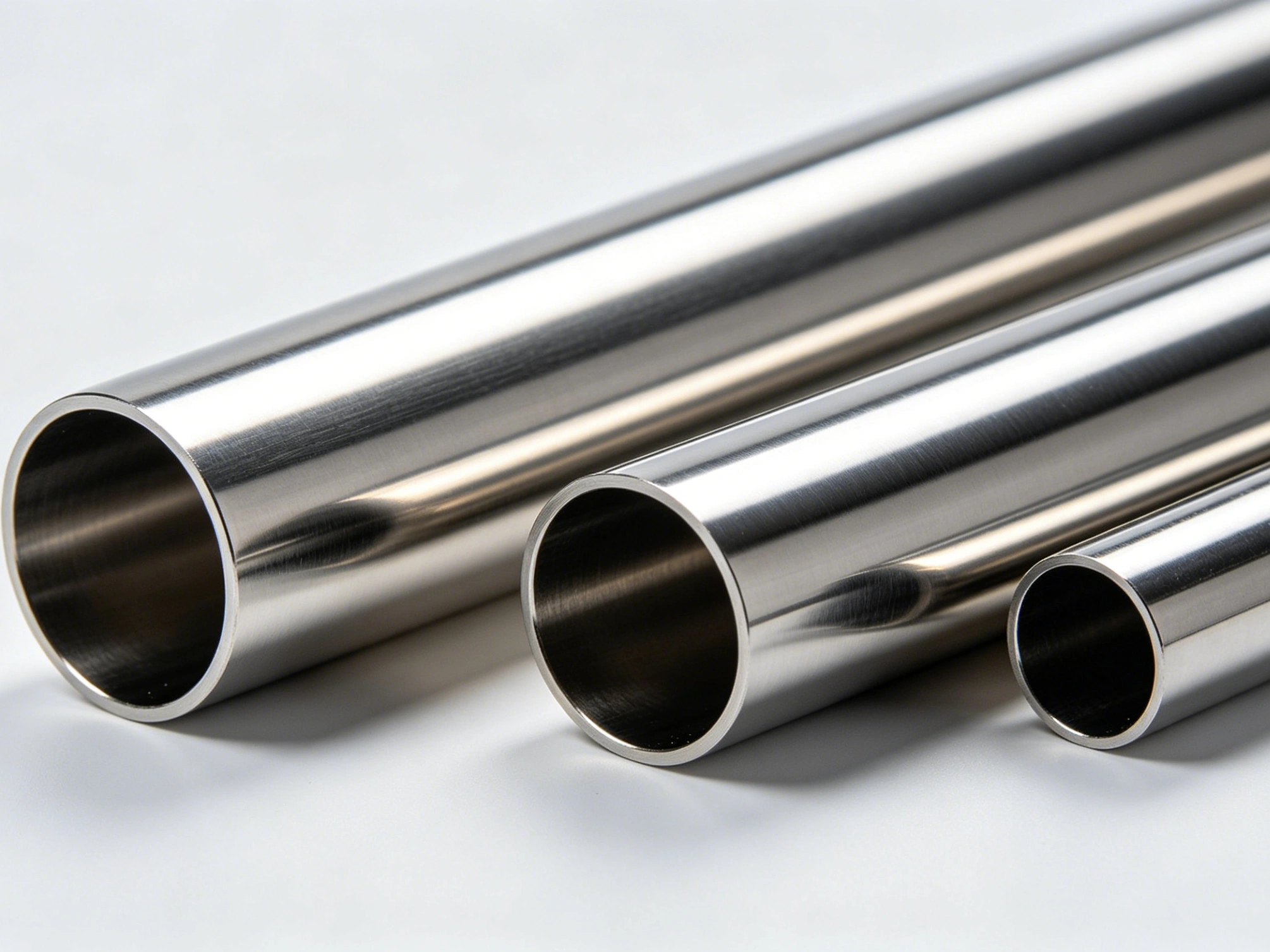
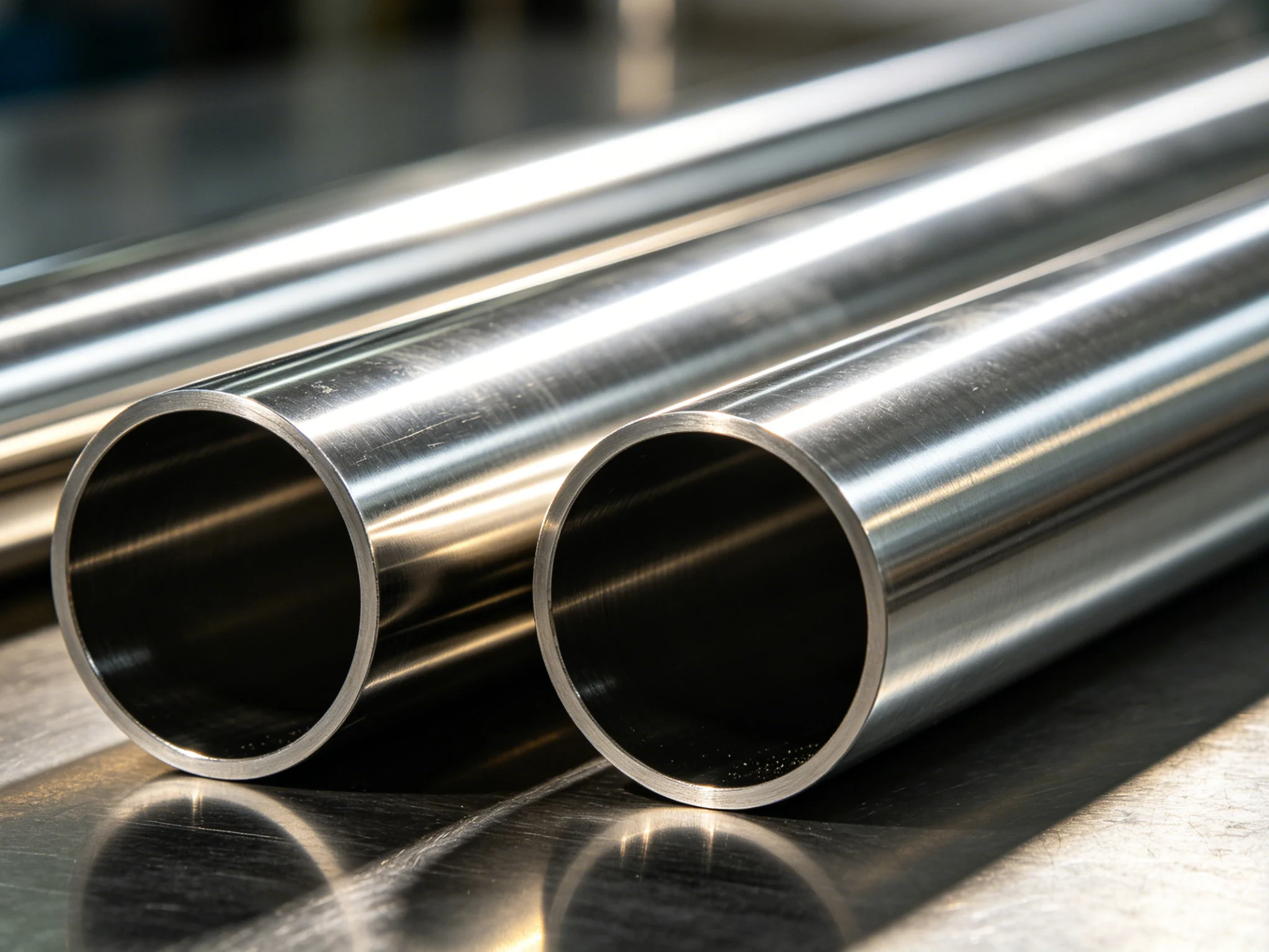
ASME B36.19M is a dimensional standard specifically developed for stainless steel pipes; it also specifies the outer diameter, wall thickness, and Schedule series of these pipes.
Compared to ASME B36.10M, B36.19M is primarily intended for stainless steel piping systems and introduces wall thickness grades such as Sch 5S, Sch 10S, Sch 40S, and Sch 80S, which are specific to stainless steel pipes.
Suitable for:
- Austenitic Stainless Steel
- Duplex Stainless Steel
- Ferritic Stainless Steel
Due to its excellent corrosion resistance, ASME B36.19M is widely used in industries with high requirements for hygiene and corrosion resistance, such as:
- Food Processing
- Water Treatment
- Chemical Plants
- Pharmaceutical Industry
- Offshore Projects
Common Schedules in B36.10M
- Sch 10
- Sch 20
- Sch 30
- Sch 40
- Sch 60
- Sch 80
- Sch 100
- Sch 120
- Sch 140
- Sch 160
- Traditional Wall Thickness Codes (These codes are still widely used in many older projects and engineering drawings.) :
STD (Standard Weight)
XS (Extra Strong)
XXS (Double Extra Strong)
Among these, Sch 40 and Sch 80 are the most common specifications in industrial projects. As the Schedule grade increases, the wall thickness of the steel pipes gradually increases, enabling them to withstand higher operating pressures and more severe operating conditions.
Common Schedules in B36.19M
- Sch 5S
- Sch 10S
- Sch 40S
- Sch 80S
Here, “S” stands for Stainless Steel and is used to distinguish these grades from the standard Schedule series in B36.10M.
In practical applications:
- Sch 5S and Sch 10S are commonly used for low-pressure fluid transport and in piping systems for the food and pharmaceutical industries;
- Sch 40S is one of the most common specifications for stainless steel industrial piping;
- Sch 80S is suitable for applications involving higher pressures or more severe corrosive environments.
It is important to note that although Sch 40 and Sch 40S, as well as Sch 80 and Sch 80S, have the same wall thickness for certain pipe diameters, the dimensions are not identical for all sizes. Therefore, when procuring materials or conducting engineering design, one should refer to the dimension tables in the corresponding standards rather than relying solely on the Schedule number.
Schedule 40 vs Schedule 40S
- Schedule 40 → ASME B36.10M (carbon steel and alloy steel pipes)
- Schedule 40S → ASME B36.19M (stainless steel pipes)
Although Sch 40 and Sch 40S use the same NPS (nominal pipe size) and outside diameter (OD) systems, B36.19M was optimized for stainless steel materials when it was developed.
| NPS | Outside Diameter (mm) | Sch 40 WT (mm) | Sch 40S WT (mm) | Same Thickness? |
| 1/2″ | 21.3 | 2.77 | 2.77 | Yes |
| 3/4″ | 26.7 | 2.87 | 2.87 | Yes |
| 1″ | 33.4 | 3.38 | 3.38 | Yes |
| 2″ | 60.3 | 3.91 | 3.91 | Yes |
| 4″ | 114.3 | 6.02 | 6.02 | Yes |
| 6″ | 168.3 | 7.11 | 7.11 | Yes |
| 8″ | 219.1 | 8.18 | 8.18 | Yes |
| 10″ | 273.1 | 9.27 | 9.27 | Yes |
| 12″ | 323.9 | 10.31 | 9.53 | No |
For many sizes:
Schedule 40 and Schedule 40S have the same wall thickness.
However, for certain sizes: Schedule 40S is specifically designed for stainless steel pipe, so the specifications may differ; be sure to check the standard tables when engineering or purchasing.
ASME B36.10M vs ASME B36.19M: Can They Be Used Interchangeably?
Although ASME B36.10M and ASME B36.19M may be identical for certain sizes and wall thickness specifications, the two are not entirely interchangeable.
Material Differences (Carbon Steel vs Stainless Steel)
- ASME B36.10M → carbon steel and alloy steel
- ASME B36.19M → stainless steel
Schedule and Wall Thickness Differences (Sch 40 vs Sch 40S)
Although both standards use the same outer diameter system, the wall thicknesses for some Schedule designations are not entirely consistent.
For example:
- Sch 40 ≠ Sch 40S (for some large-diameter sizes)
- Sch 80 ≠ Sch 80S (for some size ranges)
Particularly for larger pipe diameters, stainless steel pipes often feature an optimized wall thickness design to reduce material costs. Therefore, even for pipes of the same diameter, there may be a discrepancy between the actual wall thickness and the theoretical weight.
Relevant Design Codes and Standards in Practice
Many engineering projects explicitly specify the dimensional standards to be used in their technical specifications, design drawings, or procurement documents.
For example:
- API 5L line pipe typically follows ASME B36.10M;
- ASTM A312 stainless steel pipe typically follows ASME B36.19M;
- In ASME B31.3 process piping design, the appropriate standard is also selected based on the material type.
When Are B36.10M and B36.19M Considered Equivalent?
Within certain common size ranges, such as NPS 1/2“ to NPS 10”, the wall thicknesses of Sch 40 and Sch 40S, as well as Sch 80 and Sch 80S, may be exactly the same.
In such cases:
- The outer diameters are the same;
- the wall thickness is the same;
- the theoretical weight is the same;
From a dimensional standpoint, the two can be considered equivalent.
However, even so, the correct standards and material specifications should be selected in accordance with project requirements, rather than substituting one for the other based solely on dimensional consistency.
ASME B36.10M vs ASME B36.19M: Comparison Table and Selection Criteria
| Selection Criteria | ASME B36.10M | ASME B36.19M | Key Notes |
| Pipe Material | Carbon Steel / Alloy Steel | Stainless Steel | Material is the primary selection factor |
| Typical Grades | ASTM A53, A106, API 5L, A333 | ASTM A312, A358, A790 | Different ASTM material specifications |
| Corrosion Environment | Low to mild corrosion | High corrosion / aggressive media | Higher corrosion requires stainless steel |
| Fluid Type | Water, oil, gas, steam | Chemicals, acids, food, pharmaceutical fluids | Service medium determines material choice |
| Pressure Requirement | High pressure (via thicker schedules) | High pressure (via material strength) | Both can be used in high-pressure systems |
| Temperature Range | Suitable for high and low temperature service | Suitable for corrosive service across various temperatures | Depends on material grade |
| Cost Level | Lower cost | Higher cost | Stainless steel is significantly more expensive |
| Maintenance Requirement | Higher (requires coating/anti-corrosion protection) | Lower (inherent corrosion resistance) | Lifecycle cost differs |
| Schedule System | Sch 10 / 40 / 80 / 160 | Sch 5S / 10S / 40S / 80S | “S” indicates stainless steel system |
| Project Type | Oil & Gas, Power Plants, Structural Projects | Chemical, Food Processing, Offshore Projects | Different industry applications |
| Interchangeability | Not interchangeable with B36.19M | Not interchangeable with B36.10M | Standards cannot be directly substituted |
| Engineering Logic | Cost-driven selection | Performance-driven selection | Economic vs corrosion-resistant design approach |
ASME B36.10M and B36.19M Pipe Supply from ALLLAND Steel Pipe
- ASTM A53 / ASTM A106 / ASTM A333
- API 5L PSL1 / PSL2
- ASTM A312 / ASTM A358 / ASTM A790
- EN/ DIN
NPS 1/2″ – 80″, DN15 – DN2000+
Wall thickness: Sch 5S – Sch XXS
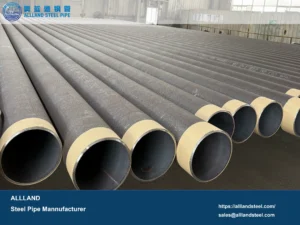
Processing: cutting, beveling, threading, coating (FBE / 3LPE / galvanizing)
Beyond supply, ALLLAND provides technical support for material selection, standard matching, and project specification confirmation.
For ASME B36.10M / B36.19M steel pipe projects, contact us for technical consultation and competitive quotation support.