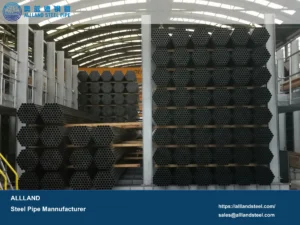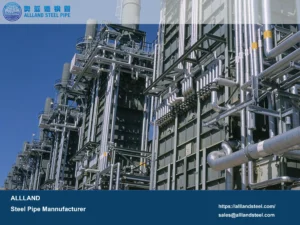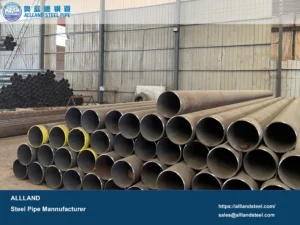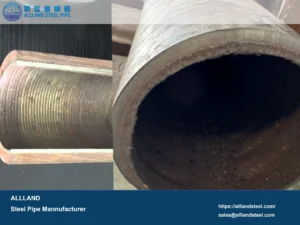




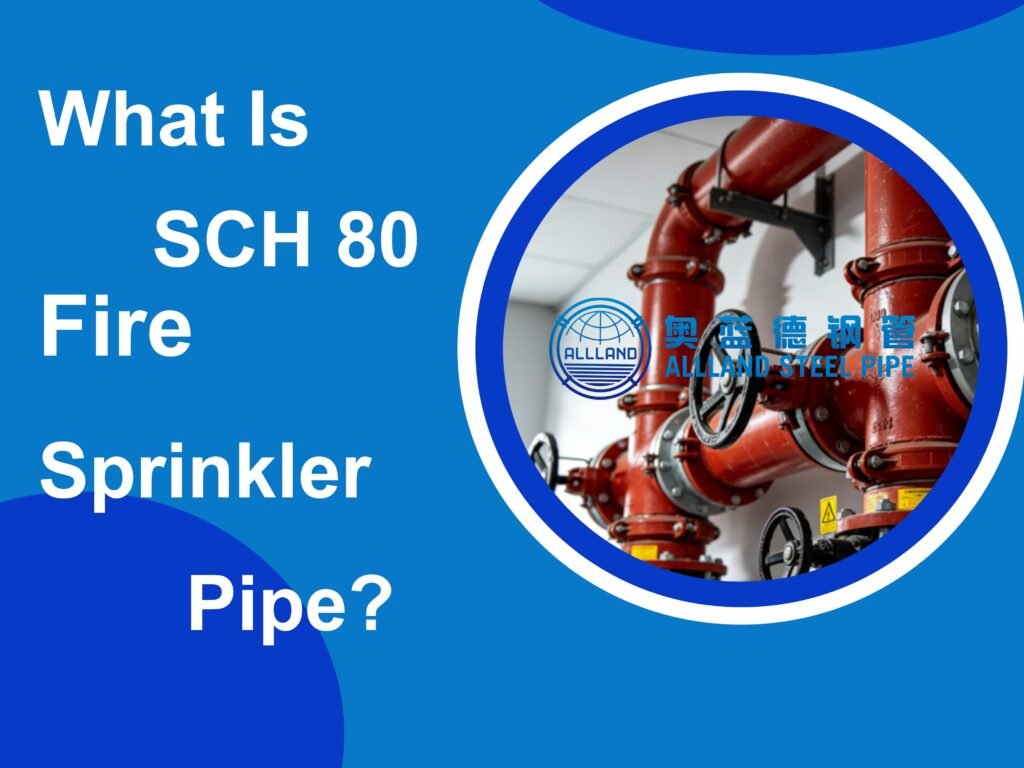
In modern fire sprinkler systems, the pressure-bearing capacity, durability, and safety and stability of steel pipes are of paramount importance.
Compared to standard fire sprinkler pipes, SCH 80 Fire Sprinkler Pipe is widely used in industrial fire protection, high-rise building fire protection, and high-pressure fire protection systems due to its thicker walls, higher pressure resistance, and greater mechanical strength.
This article provides a comprehensive analysis of the definition, specifications, wall thickness, manufacturing process, applications, standard requirements, and procurement considerations for SCH 80 fire sprinkler pipe, helping you gain a deeper understanding of this product.
SCH 80 Fire Sprinkler Pipe
SCH stands for “Schedule” and refers to the wall thickness grade of steel pipes.
SCH 80 is a thick-walled steel pipe that outperforms SCH 40 in terms of wall thickness, pressure resistance, impact resistance, and service life.
In fire protection systems, SCH 80 steel pipes are commonly used in high-pressure fire protection systems, industrial fire main lines, underground fire protection networks, and fire protection systems in high-rise buildings.
SCH 80 Fire Sprinkler Pipe Specifications
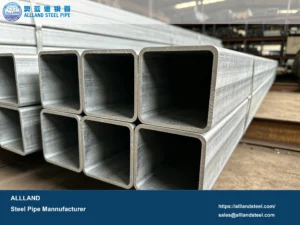
- Hot-dip Galvanized Pipe
- Pre-galvanized Pipe
| Standard | Grade | Features |
|---|---|---|
| ASTM A53 | Grade B | Most commonly used fire sprinkler steel pipe |
| ASTM A795 | Grade A/B | Specifically designed for fire protection systems |
| ASTM A106 | Grade B | Excellent performance under high pressure and high temperature |
| API 5L | X42/X52 | Designed for high-strength transmission applications |
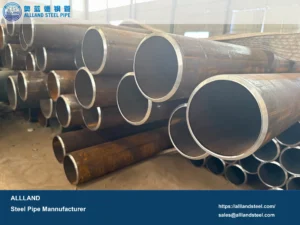
- Black Painted
- Bare Pipe
- Hot-dip Galvanized
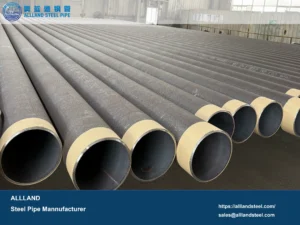
- Epoxy Coated
- 3PE Coated
- Plain End
- Beveled End
- Grooved End
- Threaded End
- 5.8 m
- 6 m
- 11.8 m
- 12 m
- Custom lengths can also be produced to meet project requirements.
Manufacturing Process of SCH 80 Fire Sprinkler Pipe
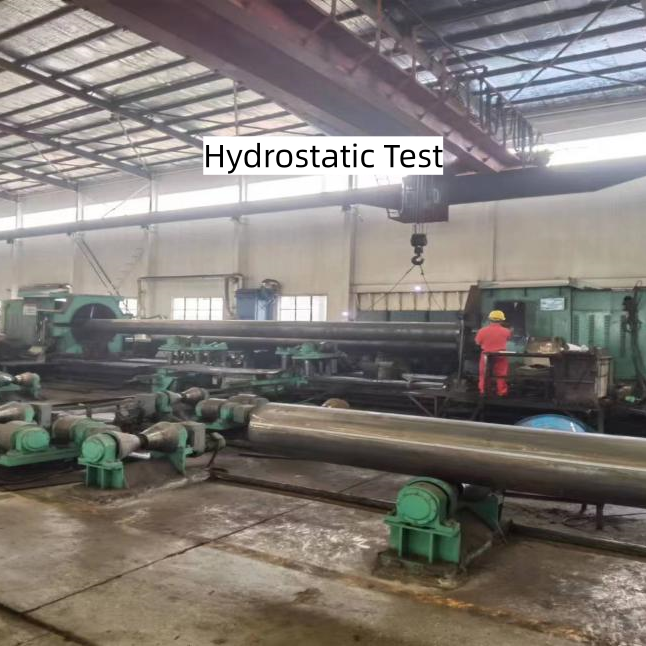
The manufacturing quality of SCH 80 fire sprinkler pipe directly affects the fire suppression system’s pressure resistance, safety, and service life. Because SCH 80 is a thick-walled fire sprinkler pipe, it imposes stricter requirements on weld quality, dimensional accuracy, and pressure testing.
ERW Pipe Production-SCH 80 Fire Sprinkler Pipe
Seamless Pipe Production-SCH 80 Fire Sprinkler Pipe
- Round Billet Heating
- Piercing Process
- Hot Rolling
- Sizing
- Heat Treatment
Quality Inspection-SCH 80 Fire Sprinkler Pipe
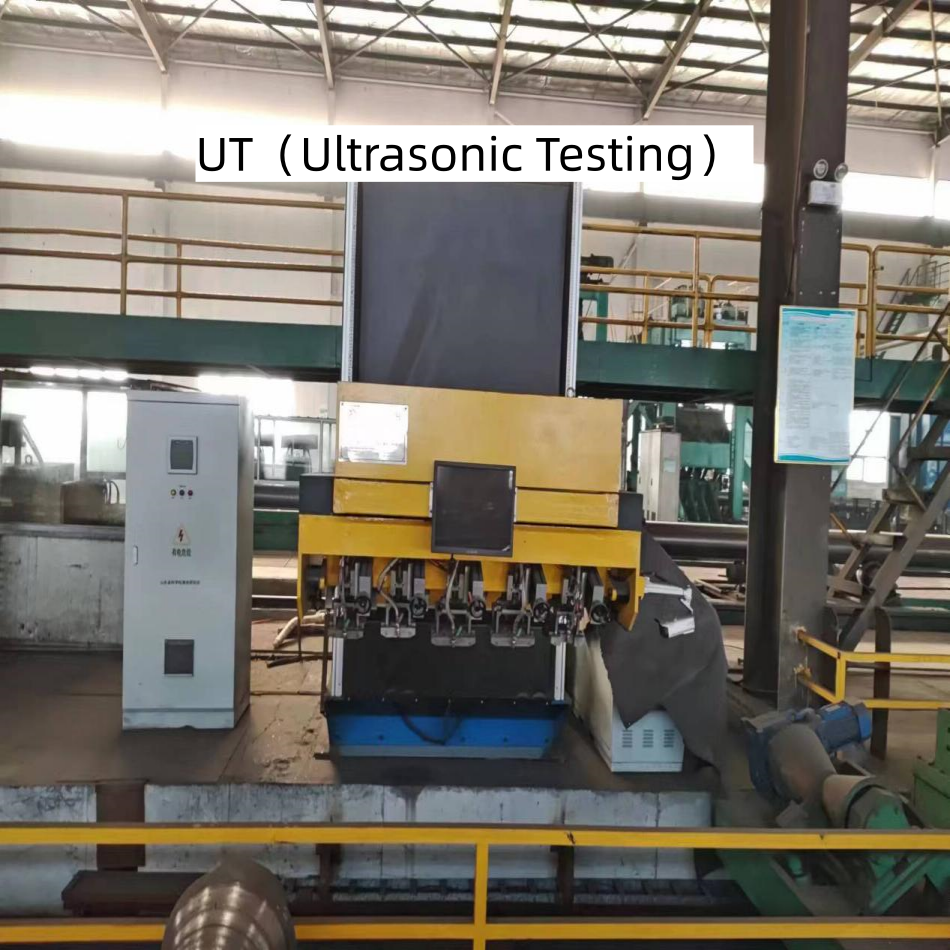
- Ultrasonic Testing
- Eddy Current Testing
- Zinc coating thickness
- Adhesion
- Coating uniformity
- Outside Diameter
- Wall Thickness
- Ovality
- Length Tolerance
SCH 80 Fire Sprinkler Pipe Wall Thickness
- P = Pressure
- S = Allowable Stress
- t = Wall Thickness
- D = Outside Diameter
SCH 80 Fire Sprinkler Pipe Sizes Charts
| NPS | OD (mm) | SCH 40 WT (mm) | SCH 80 WT (mm) | SCH 40 Weight (kg/m) | SCH 80 Weight (kg/m) |
| 1/2″ | 21.3 | 2.77 | 3.73 | 1.27 | 1.62 |
| 3/4″ | 26.7 | 2.87 | 3.91 | 1.69 | 2.20 |
| 1″ | 33.4 | 3.38 | 4.55 | 2.50 | 3.24 |
| 1-1/4″ | 42.2 | 3.56 | 4.85 | 3.39 | 4.47 |
| 1-1/2″ | 48.3 | 3.68 | 5.08 | 4.05 | 5.41 |
| 2″ | 60.3 | 3.91 | 5.54 | 5.44 | 7.48 |
| 2-1/2″ | 73.0 | 5.16 | 7.01 | 8.63 | 12.70 |
| 3″ | 88.9 | 5.49 | 7.62 | 11.29 | 17.11 |
| 4″ | 114.3 | 6.02 | 8.56 | 16.07 | 22.32 |
| 5″ | 141.3 | 6.55 | 9.53 | 21.77 | 32.64 |
| 6″ | 168.3 | 7.11 | 10.97 | 28.26 | 42.56 |
| 8″ | 219.1 | 8.18 | 12.70 | 42.55 | 65.74 |
| 10″ | 273.0 | 9.27 | 15.09 | 60.32 | 97.47 |
| 12″ | 323.9 | 10.31 | 17.48 | 79.72 | 128.30 |
| 14″ | 355.6 | 11.13 | 19.05 | 94.55 | 154.20 |
| 16″ | 406.4 | 12.70 | 21.44 | 123.29 | 202.40 |
Applications of SCH 80 Steel Fire Sprinkler Pipe
Industrial Fire Protection Systems
Petrochemical Plants
The petrochemical industry is considered a high-risk fire safety environment, so the following measures are typically implemented:
| Standard | Grade | Application Advantages |
|---|---|---|
| ASTM A106 | Grade B | Excellent high-temperature and high-pressure performance |
| ASTM A53 | Grade B | Stable overall performance |
| API 5L | X42/X52 | High-strength conveying capability |
- SCH 80 Seamless Fire Sprinkler Pipe
- Hot-dip Galvanized / Epoxy Coating
- Beveled End
Power Plants
| Standard | Grade | Features |
| ASTM A106 | Grade B | High Heat Resistance |
| ASTM A53 | Grade B | Balancing Cost and Performance |
High-rise Building Fire Systems
Fire Main Risers
| Standard | Grade | Application Features |
|---|---|---|
| ASTM A795 | Grade A/B | Specifically designed for fire protection systems |
| ASTM A53 | Grade B | Commonly used in commercial projects |
Mechanical Rooms
Pipes in fire pump rooms are subject to frequent vibrations and significant pressure fluctuations. SCH 80 fire sprinkler pipes offer strong vibration resistance and impact resistance, making them widely used in pump room applications.
Underground Fire Water Pipelines
SCH 80 fire sprinkler pipe is resistant to deformation under the various stresses encountered in underground environments, and its thicker walls provide greater corrosion allowance, resulting in a longer service life, making it particularly suitable for long-term underground projects.
| Standard | Grade | Common Methods of Corrosion Protection |
| ASTM A53 | Grade B | Hot-dip Galvanized |
| ASTM A795 | Grade B | Epoxy Coated |
| API 5L | X52 | 3PE Coating |
How to Choose SCH 80 Fire Pipe
Preferred options
Ensure compliance with fire safety project requirements.
In damp or underground environments, it is recommended to use hot-dip galvanized fire protection pipes or epoxy-coated fire protection pipes.
In fire sprinkler systems, the key difference between SCH 80 and SCH 40 lies not only in wall thickness but also in a critical factor: system pressure.
As shown in the dimensional specifications table above, SCH 80 typically has a wall thickness that is 30% to 60% greater than that of SCH 40, resulting in significantly higher pressure resistance.
The working pressure of residential sprinkler systems ranges from 100 to 175 psi. Based on calculations using the formula, SCH40 is entirely sufficient. Since this pressure range is stable and the pipe load is low, SCH40 offers lower costs and is therefore the most common choice.
For pressure ranges of 250–350 psi, typical applications include high-rise buildings, underground fire mains, and industrial sprinkler systems. In these applications, SCH80 is the primary choice.At this pressure, the risk of water hammer increases significantly.
Instantaneous pressure may far exceed the design value: ΔP = ρaΔV.SCH40 cannot meet the required safety margins or corrosion resistance requirements.
Systems operating at 300–350 psi include pump discharge lines, high-rise risers, and petrochemical plants, where SCH80 is the standard configuration.
Systems operating at 350+ psi fall under the category of High-Pressure Fire Protection Systems.
At this pressure level, the selection of fire protection piping is no longer limited to whether it can withstand the pressure, but focuses on long-term fatigue life, water hammer, safety margin, and system reliability. In many projects, SCH 80 is no longer sufficient, and the use of XXS pipe or seamless thick-wall pipe is required.
- a complete production line
- strict quality control
- extensive project experience
- and reliable delivery capabilities.
Conclusion
FAQ About SCH 80 Fire Sprinkler Pipe
What does SCH 80 mean in fire sprinkler pipe?
SCH 80 is a wall thickness grade for fire sprinkler steel pipes, where “SCH” stands for Schedule (wall thickness grade).
Is SCH 80 stronger than SCH 40?
| Pipe Size | SCH 40 WT | SCH 80 WT |
| 2″ | 3.91 mm | 5.54 mm |
| 4″ | 6.02 mm | 8.56 mm |
Can SCH 80 pipe be galvanized?
Yes. Galvanization is a very common surface treatment for SCH 80 fire-rated steel pipes.
Common galvanization methods include hot-dip galvanized pipe and pre-galvanized pipe.