Welcome to ALLLAND Steel Pipe Co., Ltd.
ALLLAND Boiler Steel Pipe Supply
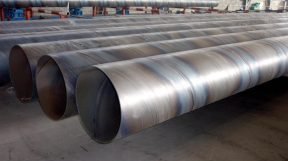
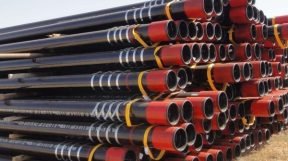
Welcome to ALLLAND. We specialize in the production of API 5L PSL1 standard steel pipes, which are widely used in oil and gas transmission, water conservancy projects, and various industrial piping systems. We offer a comprehensive range of pipe types, including seamless pipes, electric resistance welded (ERW) pipes, submerged arc welded (LSAW) pipes, and spiral welded (SSAW) pipes, with a complete range of specifications to meet different pressure ratings and engineering requirements. We strictly adhere to the API 5L standard for production and quality control, offering a variety of steel grades including Gr.A, Gr.B, and X42–X70 to ensure our pipes possess excellent strength, toughness, and weldability.
Alllandsteel is a steel pipe manufacturer based in China with 25 years of experience.
The facility spans 22,000 square meters, represents a RMB 700 million investment, and operates four production lines (JCOE, ERW, SMLS, SSAW) alongside five coating lines.
With an annual production capacity of 250,000 tons, the factory covers specifications ranging from Ø406 to Ø1524 and holds multiple international certifications (API/ASTM/EN/ISO/JIS). Focused on steel pipes, creating value for you!
HOT PRODUCTS
POPULAR ARTICLES
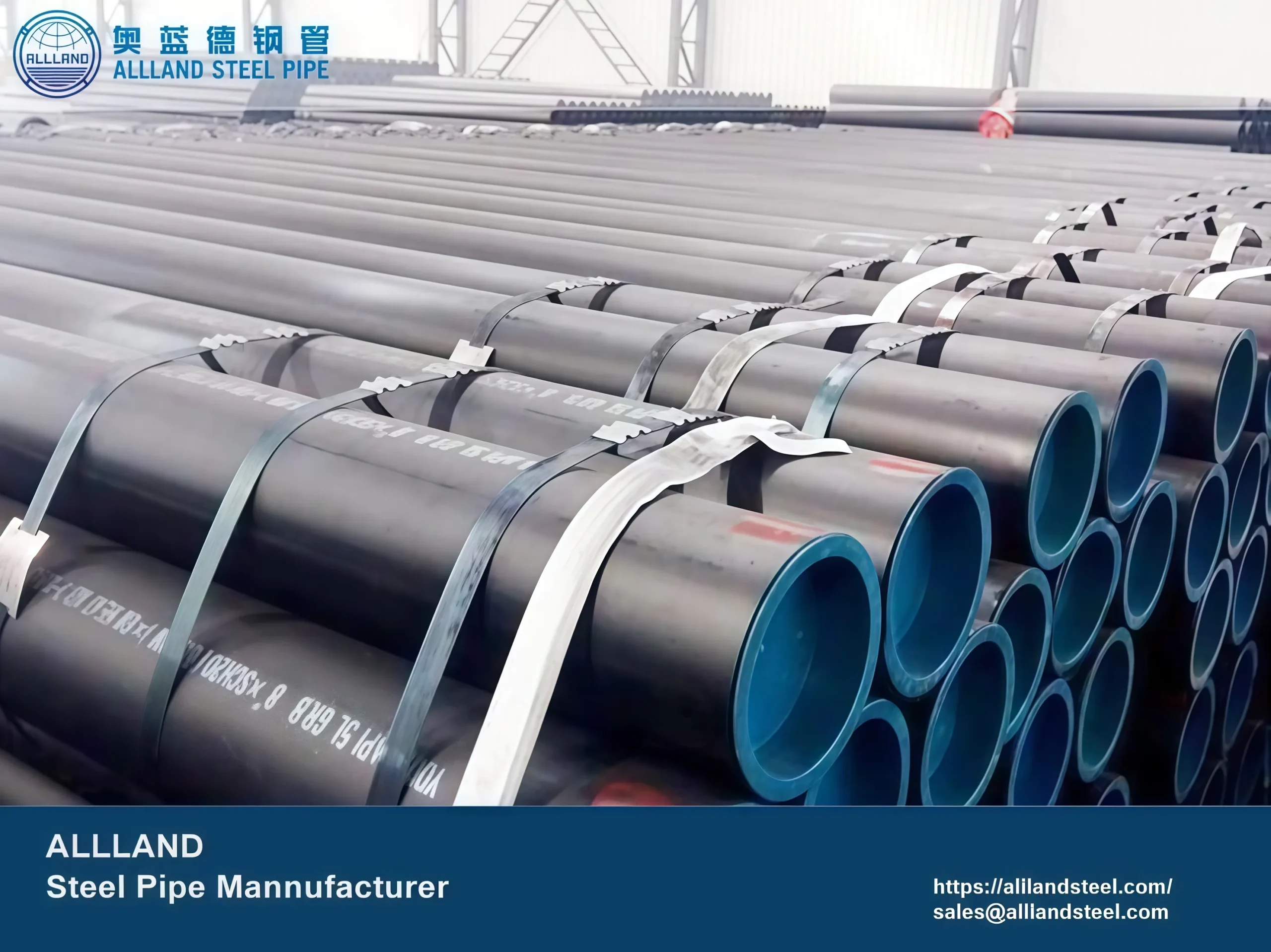
API 5L PSL1 is a specification established by the American Petroleum Institute (API) within the API 5L standard for steel pipes used in the oil and gas industry to transport oil, natural gas, and other fluids. In the API 5L standard, PSL (Product Specification Level) refers to the product specification level, which defines different quality grades for line pipe steel in terms of manufacturing requirements, chemical composition, mechanical properties, testing, and quality control.
The API 5L specification is divided into two product specification levels:
PSL1 → Basic Level
PSL2 → Enhanced Level
O.D.:
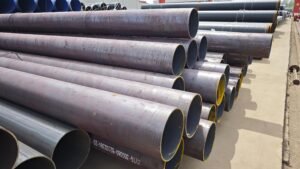
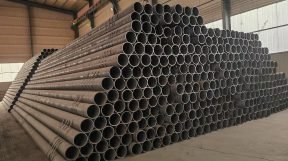
Seamless Steel Pipe (Seamless): 1/2“ – 24” (21.3 mm – 610 mm)
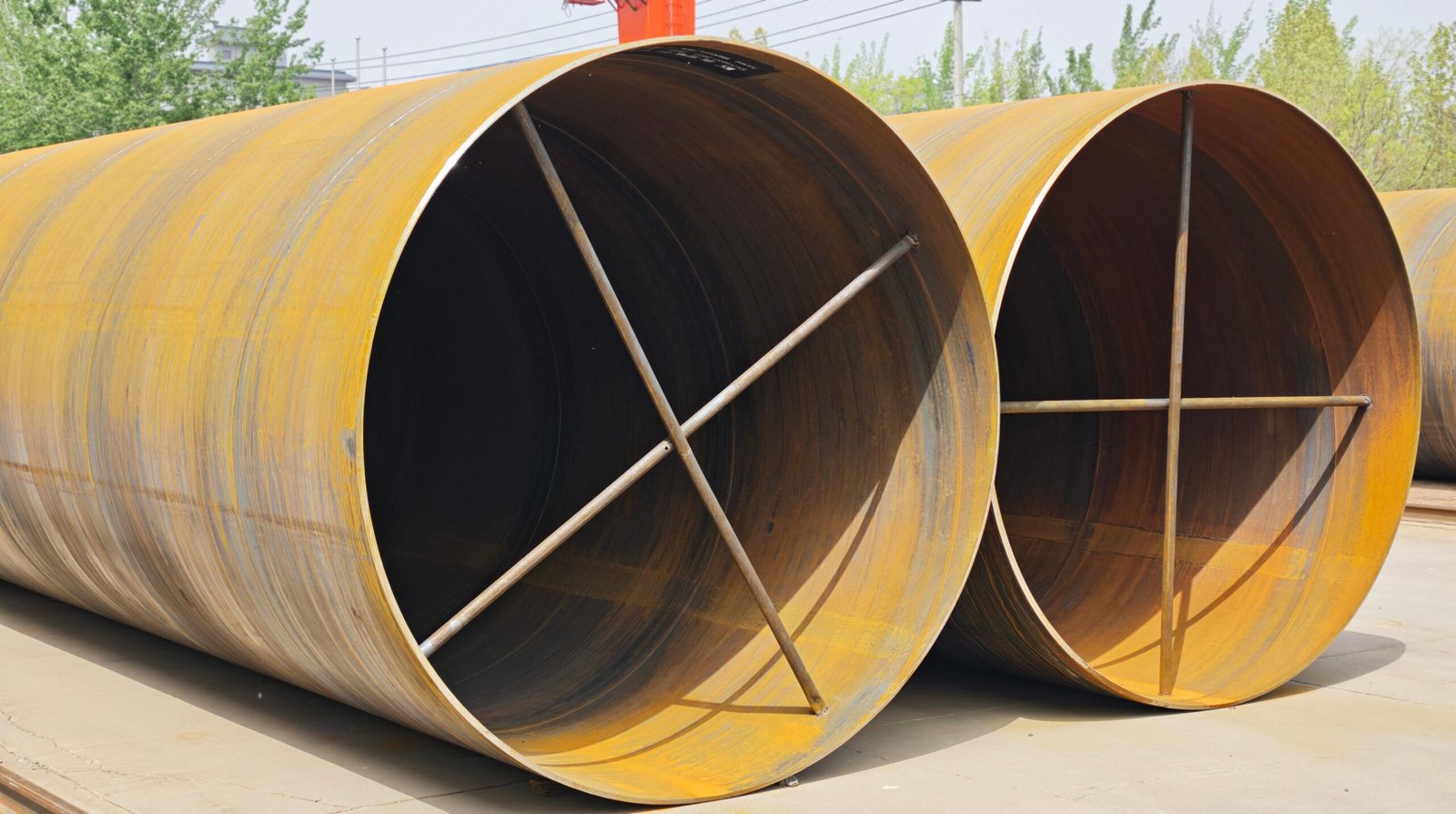
Welded Steel Pipe (ERW / LSAW / SSAW): 16“ – 80” (406 mm – 2032 mm)
W.T.:
Seamless pipes: 2 mm – 60 mm
Welded pipes: 5 mm – 40 mm (standard)
Length:
6-12 m, available in fixed or multiple lengths; custom lengths per project requirements.
Process:
Seamless Pipe / ERW (Electric Resistance Welded) / LSAW (Longitudinal Submerged Arc Welded) / SSAW (Spiral Submerged Arc Welded)
Steel Grades:
Carbon steel / Low-alloy high-strength steel
Surface Treatment:
Black Pipe / 3PE / 3LPE / FBE / Hot-dip Galvanizing
Delivery Conditions:
Grade, Specification, Furnace Number, Standard
| NPS (inch) | OD (mm) | SCH 10 | SCH 20 | SCH 40 | SCH 80 |
|---|---|---|---|---|---|
| 1/2″ | 21.3 | 2.11 | — | 2.77 | 3.73 |
| 3/4″ | 26.7 | 2.11 | — | 2.87 | 3.91 |
| 1″ | 33.4 | 2.77 | — | 3.38 | 4.55 |
| 1-1/2″ | 48.3 | 2.77 | — | 3.68 | 5.08 |
| 2″ | 60.3 | 2.77 | — | 3.91 | 5.54 |
| 3″ | 88.9 | 3.05 | — | 5.49 | 7.62 |
| 4″ | 114.3 | 3.05 | — | 6.02 | 8.56 |
| 5″ | 141.3 | 3.40 | — | 6.55 | 9.53 |
| 6″ | 168.3 | 3.40 | — | 7.11 | 10.97 |
| 8″ | 219.1 | 3.76 | 6.35 | 8.18 | 12.70 |
| 10″ | 273.0 | 4.19 | 6.35 | 9.27 | 15.09 |
| 12″ | 323.9 | 4.57 | 6.35 | 10.31 | 17.48 |
| 14″ | 355.6 | 6.35 | — | 11.13 | 19.05 |
| 16″ | 406.4 | 6.35 | — | 12.70 | 21.44 |
| 18″ | 457.0 | 6.35 | — | 14.27 | 23.83 |
| 20″ | 508.0 | 6.35 | — | 15.09 | 26.19 |
| 24″ | 609.6 | 6.35 | — | 17.48 | 30.96 |
The API 5L PSL1 standard uses an NPS+SCH designation system, in which the outside diameter is fixed and the wall thickness varies depending on the grade.
Generally, SMLS or ERW processes are used for small diameters, ERW or LSAW for medium diameters, and LSAW or SSAW for large diameters.
The higher the SCH, the greater the pressure-bearing capacity; the OD is not a fixed value.
Weight (kg/m) = 0.02466 × (OD − WT) × WT
OD = mm
WT = mm
The dimensions in the table above are standard market sizes. If you have special requirements, please provide detailed specifications, and we will evaluate the best customized solution for you.
Chemical Composition for PSL 1 pipe with t ≤ 0.984”
| Steel Grade | Mass fraction, % based on heat and product analyses a,g | ||||||
| C | Mn | P | S | V | Nb | Ti | |
| max b | max b | max | max | max | max | max | |
| Seamless Pipe | |||||||
| A | 0.22 | 0.9 | 0.03 | 0.03 | – | – | – |
| B | 0.28 | 1.2 | 0.03 | 0.03 | c,d | c,d | d |
| X42 | 0.28 | 1.3 | 0.03 | 0.03 | d | d | d |
| X46 | 0.28 | 1.4 | 0.03 | 0.03 | d | d | d |
| X52 | 0.28 | 1.4 | 0.03 | 0.03 | d | d | d |
| X56 | 0.28 | 1.4 | 0.03 | 0.03 | d | d | d |
| X60 | 0.28 e | 1.40 e | 0.03 | 0.03 | f | f | f |
| X65 | 0.28 e | 1.40 e | 0.03 | 0.03 | f | f | f |
| X70 | 0.28 e | 1.40 e | 0.03 | 0.03 | f | f | f |
| Welded Pipe | |||||||
| A | 0.22 | 0.9 | 0.03 | 0.03 | – | – | – |
| B | 0.26 | 1.2 | 0.03 | 0.03 | c,d | c,d | d |
| X42 | 0.26 | 1.3 | 0.03 | 0.03 | d | d | d |
| X46 | 0.26 | 1.4 | 0.03 | 0.03 | d | d | d |
| X52 | 0.26 | 1.4 | 0.03 | 0.03 | d | d | d |
| X56 | 0.26 | 1.4 | 0.03 | 0.03 | d | d | d |
| X60 | 0.26 e | 1.40 e | 0.03 | 0.03 | f | f | f |
| X65 | 0.26 e | 1.45 e | 0.03 | 0.03 | f | f | f |
| X70 | 0.26e | 1.65 e | 0.03 | 0.03 | f | f | f |
a. Cu ≤ = 0.50% Ni; ≤ 0.50%; Cr ≤ 0.50%; and Mo ≤ 0.15%,
b. For each reduction of 0.01% below the specified maximum concentration for carbon, an increase of 0.05% above the specified maximum concentration for Mn is permissible, up to a maximum of 1.65% for grades ≥ L245 or B, but ≤ L360 or X52; up to a maximum of 1.75% for grades > L360 or X52, but < L485 or X70; and up to a maximum of 2.00% for grade L485 or X70.,
c. Unless otherwise agreed NB + V ≤ 0.06%,
d. Nb + V + TI ≤ 0.15%,
e. Unless otherwise agreed.,
f. Unless otherwise agreed, NB + V = Ti ≤ 0.15%,
g. No deliberate addition of B is permitted and the residual B ≤ 0.001%
| Steel Grade | Tensile Properties – Pipe Body of SMLS and Welded Pipes PSL 1 | Seam of Welded Pipe | ||
| Yield Strength a | Tensile Strength a | Elongation | Tensile Strength b | |
| Rt0,5 PSI Min | Rm PSI Min | (in 2in Af % min) | Rm PSI Min | |
| A | 30500 | 48600 | c | 48600 |
| B | 35500 | 60200 | c | 60200 |
| X42 | 42100 | 60200 | c | 60200 |
| X46 | 46400 | 63100 | c | 63100 |
| X52 | 52200 | 66700 | c | 66700 |
| X56 | 56600 | 71100 | c | 71100 |
| X60 | 60200 | 75400 | c | 75400 |
| X65 | 65300 | 77500 | c | 77500 |
| X70 | 70300 | 82700 | c | 82700 |
a. For intermediate grade, the difference between the specified minimum tensile strength and the specified minimum yield for the pipe body shall be as given for the next higher grade.
b. For the intermediate grades, the specified minimum tensile strength for the weld seam shall be the same as determined for the body using foot note a.
c. The specified minimum elongation, Af, expressed in percent and rounded to the nearest percent, shall be determined using the following equation:
Hydrostatic Test
The pipe shall be subjected to a hydrostatic test with no leakage in the weld or pipe body. If the pipe section used has successfully passed the test, the joint does not need to be hydrostatically tested.
Bend Test
No cracks shall be present in any part of the test piece and no openings shall be present in the weld.
Flattening Test
The acceptance criteria for the flattening test shall be:
EW Pipe D < 12.750 inches:
X60, T 500 inches. The weld shall not open until the distance between the plates is less than 66% of the original outside diameter. For all grades and wall thicknesses, it is 50%.
For pipes with D/t > 10, the weld shall not open until the distance between the plates is less than 30% of the original outside diameter.
For other sizes, refer to the complete API 5L specification.
Non-Destructive Testing (NDT)
Is a core component of steel pipe quality control. It involves detecting internal and surface defects in steel pipes using physical or chemical methods without affecting the pipe’s performance or structural integrity.
For PSL1-grade steel pipes, the API 5L standard does not list non-destructive testing as a routine mandatory test item.
PSL2-grade pipes have mandatory and comprehensive requirements for non-destructive testing.
CVN Impact Test for PSL2
Many PSL2 pipe sizes and grades require CVN testing. Seamless pipes are tested on the pipe body. Welded pipes are tested on the pipe body, welds, and heat-affected zone. Refer to the full API 5L specification for sizes, grades, and a chart of required absorbed energy values.
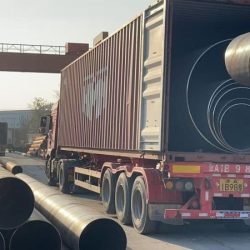
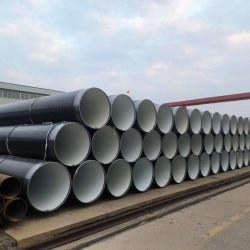
| API 5L PSL1 | API 5L PSL2 | |
| Application | Water pipes, city gas pipelines, low-pressure oil and gas pipelines | High-pressure oil and gas pipelines, pipelines for extreme environments |
| Chemical Composition Control | Meets basic requirements | Strict control |
| Impact Testing | Not required (Mandatory for certain grades and thicknesses) | Not required (Mandatory for certain grades and wall thicknesses) |
| Fracture Toughness Testing | Not required | Required for all PSL 2 pipes |
| Non-Destructive Testing (NDT) | Not required for seamless pipes | 100% NDT required |
| Hydrostatic Test | Required | Required |
| Traceability | Limited traceability | Full traceability from raw material to final product |
| Advantages | Low cost | High strength |
| Fast delivery | Strict performance guarantees | |
| Reliable basic performance | Strict control of chemical composition |
PSL1 pipes are suitable for standard, low-risk applications (e.g., transporting water, natural gas, or oil in mild environments).
PSL2 is suitable for high-pressure, high-temperature, or acidic environments (e.g., offshore drilling, deepwater pipelines, and corrosive environments).
Select the appropriate API 5L pipe based on your project’s specific requirements to ensure the success and long-term operation of your pipeline infrastructure.
Fill in the form below and our team will be happy to assist you