Welcome to ALLLAND Steel Pipe Co., Ltd.
ALLLAND Boiler Steel Pipe Supply
Welcome to ALLLAND Steel Pipe Manufacturing Company, is one of China’s leading pipe manufacturers. The company uses advanced technologies and precise manufacturing processes to ensure the quality and performance of API 5L X46 PIPE, meeting stringent industry standards.
Alllandsteel is a steel pipe manufacturer based in China with 25 years of experience. The facility spans 22,000 square meters, represents a RMB 700 million investment, and operates four production lines (JCOE, ERW, SMLS, SSAW) alongside five coating lines. With an annual production capacity of 250,000 tons, the factory covers specifications ranging from Ø406 to Ø1524 and holds multiple international certifications (API/ASTM/EN/ISO/JIS). Focused on steel pipes, creating value for you!
HOT PRODUCTS
POPULAR ARTICLES
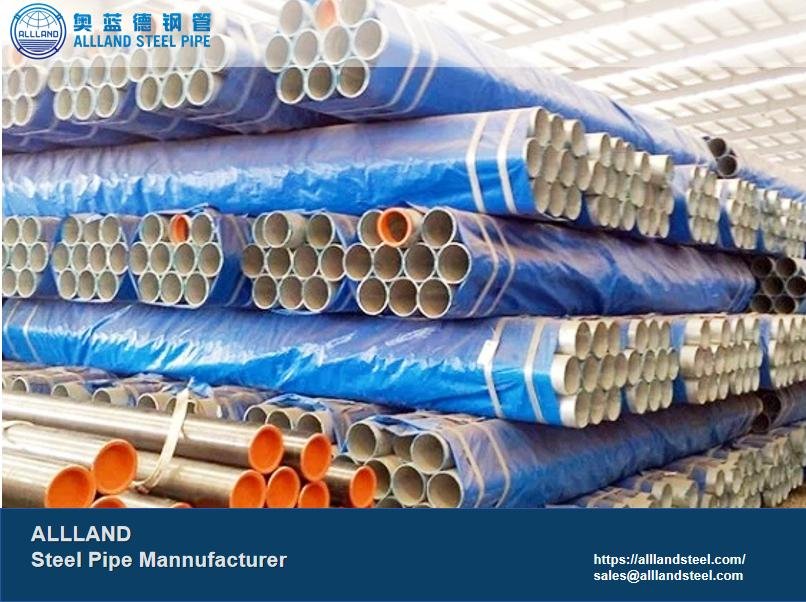
The American Petroleum Institute (API) developed the API 5L X46 pipe grade for transporting oil, gas, and other fluids. In the API 5L standard, X46 belongs to the X series of pipes, where “X” refers to the yield strength level, and X46 indicates a minimum yield strength of 46,000 psi (about 317 MPa). It falls between traditional carbon steel and modern high-strength microalloyed steel, making it suitable for medium-pressure fluid transportation.
W.T.:
SCH 10/ SCH 20/ SCH 40/ SCH 80/ SCH 160/ XS / XXS
Length:
6-12 m, available in fixed or multiple lengths; custom lengths per project requirements.
Process:
ERW/ LASW/ SSAW/ SMLS
Standards:
API 5L/ ISO 3183
Steel Grades:
X46 PSL1/ X46 PSL2
Tube Ends& Surface Treatment:
Square, Chamfered; Black Skin, Pickled, Painted/Oiled for Rust Prevention
Delivery Conditions:
Grade, Specification, Furnace Number, Standard
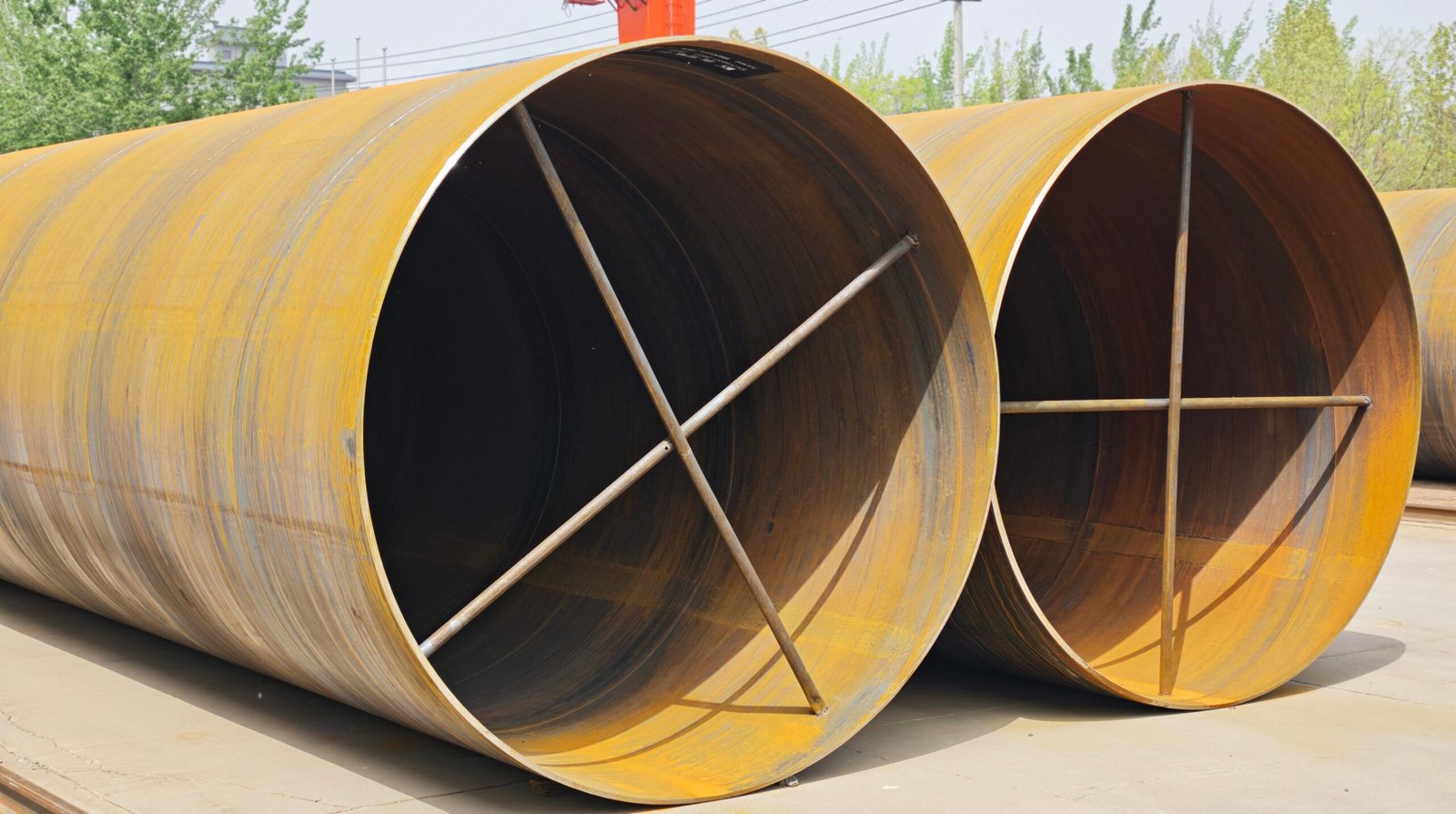
API 5L X46 PIPE can be customized to various sizes based on project requirements, typically within the following ranges:
Outer Diameter: The common outer diameter ranges from 4 inches to 48 inches (or larger). For large pipeline projects, such as long-distance oil and gas transportation, the diameter can be even larger, reaching several inches.
Wall Thickness: Usually ranges from 0.375 inches to 1.5 inches . The thicker the wall, the greater the pressure capacity of the pipe. Engineers typically choose the combination of outer diameter and wall thickness based on the design pressure.
Length: The length of API 5L X46 PIPE can vary from a few meters to hundreds of meters, depending on actual needs and construction requirements.
API 5L X46 PIPE is available in two specifications: PSL1 and PSL2. PSL1 is for general-use pipes with basic quality standards, while PSL2 requires more stringent chemical composition, mechanical performance, testing, and inspection standards. PSL2 has three different delivery conditions: N (Normalized), Q (Quenched), and M (Thermomechanical).
PSL1 is typically used for general transportation needs and does not require special treatments or tests. It suits environments that do not involve extreme temperatures, pressures, or corrosive conditions.
PSL2 pipes require higher performance, suitable for high-pressure, high-temperature, or low-temperature environments, especially for oil and gas transportation under extreme conditions, such as offshore platforms. PSL2 pipes usually cost more due to their stricter quality requirements, but they offer superior performance.
The design and manufacturing of API 5L X46 PIPE is based on its excellent mechanical properties, making it suitable for medium-pressure environments. Engineers often select it when their projects require higher mechanical performance than X42 offers. Key mechanical performance indicators include:
Minimum Yield Strength: 46,000 psi (317 MPa). The name of API 5L X46 PIPE comes from its minimum yield strength of 46,000 psi. The actual yield strength ranges from 47,000 to 55,000 psi (324-379 MPa), ensuring the pipe does not undergo permanent deformation under normal working pressure.
Impact Toughness: API 5L X46 PIPE performs well in low-temperature environments (typically 0°C, -10°C, -20°C), meeting the impact energy requirements and maintaining performance under changing temperature conditions.
API 5L X46 PIPE uses carbon-manganese steel as the primary material, providing a balance between strength and ductility. Typical chemical compositions (for PSL 2) are as follows:
| Element | Percentage (%) | Technical Function |
| C | ≤0.22 | Ensures strength, but must be controlled for weldability |
| Mn | ≤1.40 | Solid solution strengthening, improving strength and toughness |
| P | ≤0.025 | Harmful element, strictly controlled |
| S | ≤0.015 | Harmful element, strictly controlled |
| Si | ≤0.45 | Deoxidizer, solid solution strengthening |
Microalloying Design: Modern API 5L X46 uses microalloying technology to enhance performance:
Carbon Equivalent Control: To ensure good weldability, PSL 2 has strict carbon equivalent requirements:
This chemical composition balances strength, toughness, and weldability.
The production process of API 5L X46 PIPE can generally be divided into two types:
Hot Rolling: Manufacturers widely use the hot rolling process to produce API 5L X46 PIPE. It provides a uniform steel pipe performance, a smooth appearance, and resistance to deformation, especially suitable for large diameter and thick-walled pipes.
Hot Expansion: Manufacturers also employ hot expansion for this type of pipe, especially for custom-sized production. During expansion, technicians can adjust the steel pipe’s cross-section to meet different mechanical requirements.These processes ensure the quality and stability of API 5L X46 PIPE, especially when used in demanding oil and gas environments.
Internal Corrosion: The internal surface of the pipeline, in direct contact with the transported medium, faces the following risks:
| Corrosion Type | Conditions | Mechanism | Forms of Damage |
| CO₂ Corrosion | Presence of CO₂, especially in the presence of moisture | Electrochemical corrosion forming localized pits | Uniform corrosion, pitting, and crevice corrosion |
| H₂S Corrosion | Presence of H₂S (acidic environment) | Hydrogen atoms permeate the steel | Hydrogen-induced cracking (HIC), stress corrosion cracking (SSC) |
| Microbial Corrosion | Suitable temperature (10-50°C) and nutrients present | Metabolic products of microorganisms (e.g., H₂S from sulfate-reducing bacteria) accelerate corrosion | Localized pitting, biogenic corrosion under biofilms |
External Corrosion: Environmental factors mainly affect the pipeline’s external surface:
| Corrosion Type | Typical Environment | Protection Challenges |
| Soil Corrosion | Buried pipelines, affected by soil resistivity, humidity, pH | High variation in corrosion rate, difficult to monitor directly |
| Atmospheric Corrosion | Exposed pipelines, affected by humidity, salt, pollutants | Requires long-lasting anti-corrosion coatings |
| Stray Current Corrosion | Near electrified railways, high-voltage lines | Fast corrosion rate, requires special protection |
Coating Protection:
Cathodic Protection:
Corrosion Inhibitor Application: Film-forming inhibitors, volatile inhibitors, with controlled addition methods and concentrations.
API 5L X46, as a classic material in the oil and gas industry, continues to play an important role in global energy infrastructure due to its excellent overall performance, mature manufacturing processes, and reasonable economic benefits. As technology advances and industry demand changes, the X46 grade continues to evolve.
In the future, Hebei Allland Steel Pipe Manufacturing Co., Ltd. will continue to lead the industry by innovating and optimizing production processes, providing higher quality API 5L X46 PIPE to meet global energy transmission needs, ensuring pipeline system safety, and maintaining reliability.
Fill in the form below and our team will be happy to assist you