Welcome to ALLLAND Steel Pipe Co., Ltd.
ALLLAND Boiler Steel Pipe Supply
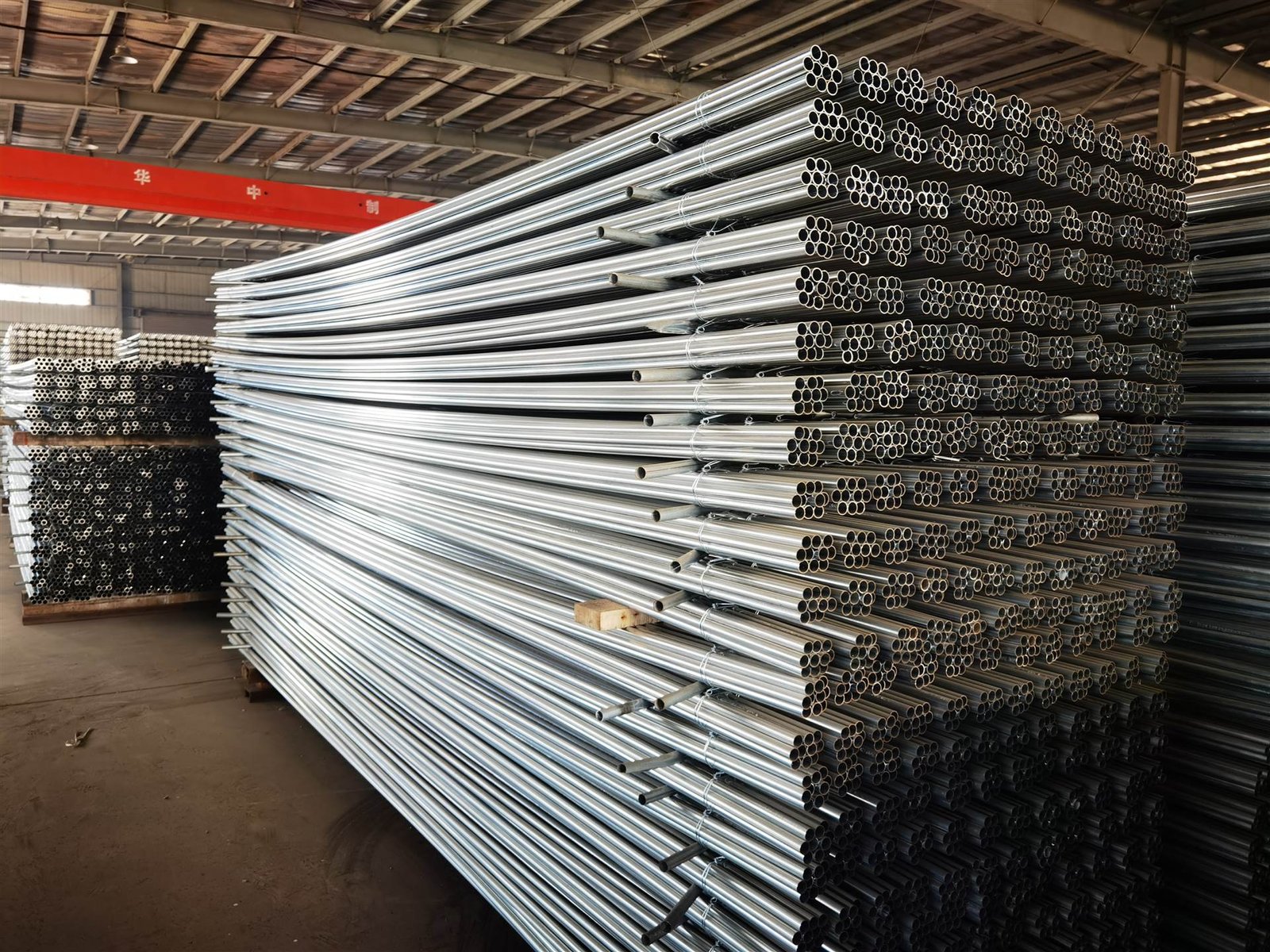
Welcome to ALLLAND Steel Pipe Factory. We specialize in manufacturing various types of galvanized steel pipes using processes such as pre-galvanizing, hot-dip galvanizing, and electrogalvanizing. We maintain strict control throughout the entire production process, from pipe substrate manufacturing to galvanized pipe transportation, ensuring both pipe quality and galvanizing quality. Galvanized pipes are widely used in water supply and drainage systems, fire protection pipelines, and support structures. All products can be customized to meet estimated standards or specific site conditions. Contact us for your requirements.
Alllandsteel is a steel pipe manufacturer based in China with 25 years of experience. The facility spans 22,000 square meters, represents a RMB 700 million investment, and operates four production lines (JCOE, ERW, SMLS, SSAW) alongside five coating lines. With an annual production capacity of 250,000 tons, the factory covers specifications ranging from Ø406 to Ø1524 and holds multiple international certifications (API/ASTM/EN/ISO/JIS). Focused on steel pipes, creating value for you!
HOT PRODUCTS
POPULAR ARTICLES
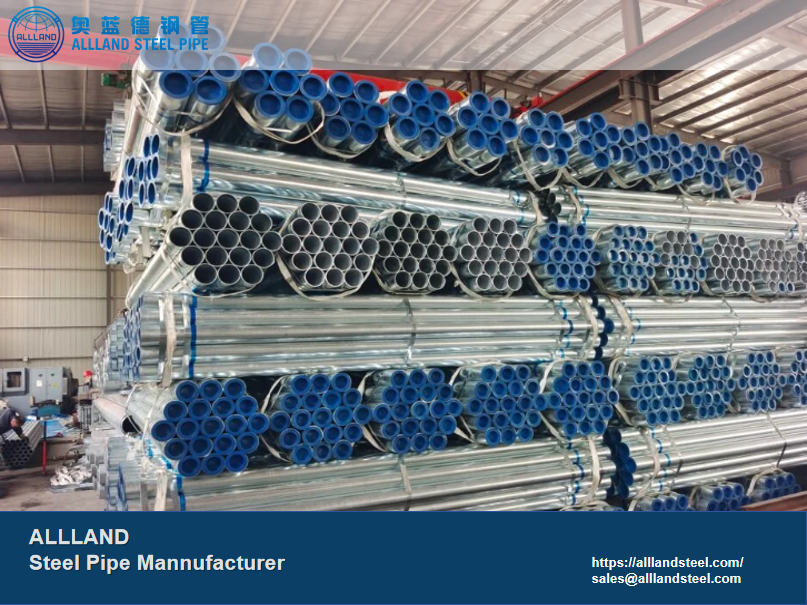
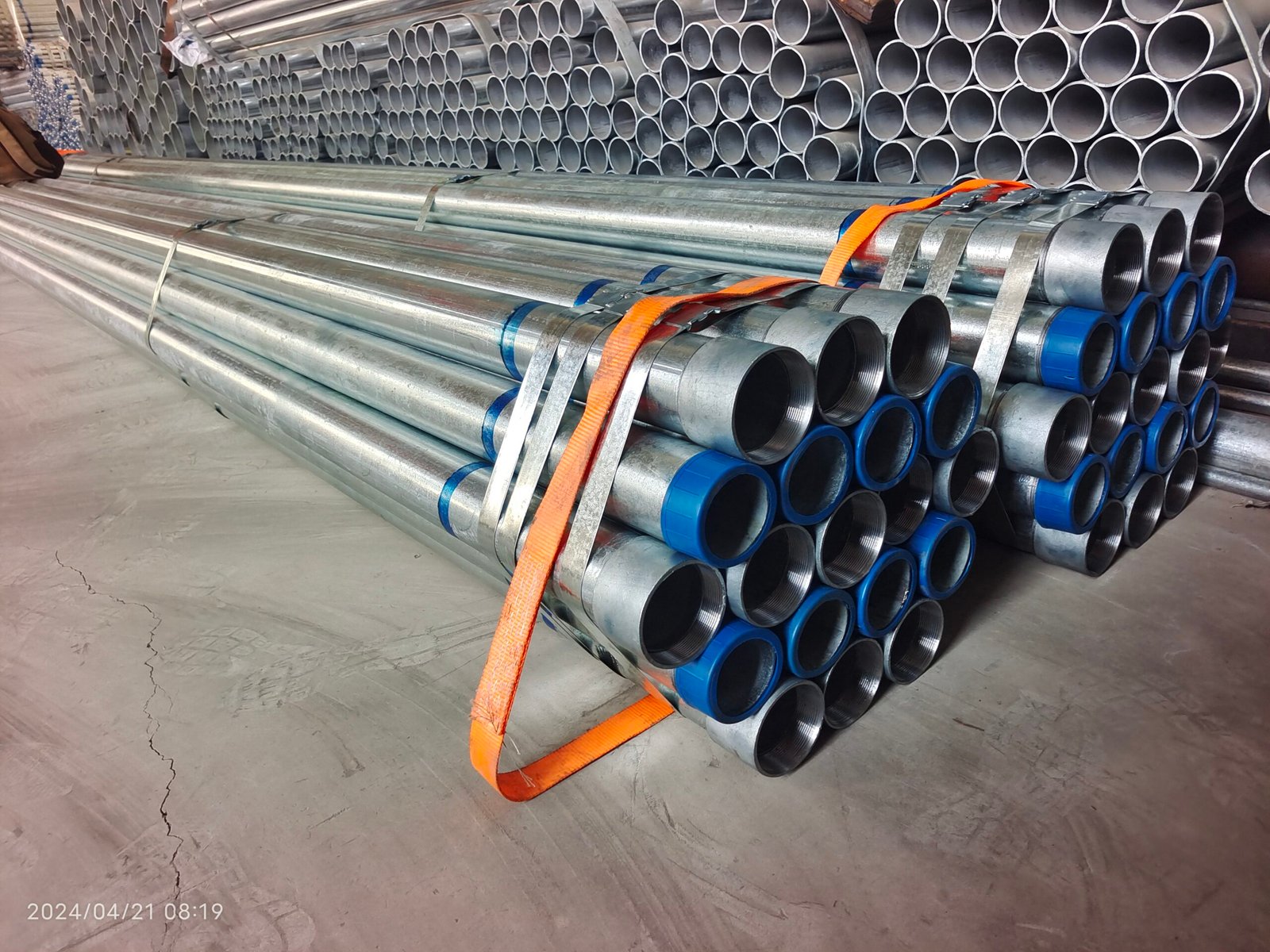
Galvanized Pipe is a composite metal pipe material featuring a zinc coating applied to the surface of carbon steel pipes. This coating isolates the pipe from corrosive elements like air and moisture, protecting the metal structure and extending the pipe’s service life. The galvanized layer provides dual protection through physical isolation and electrochemical shielding, ensuring stable performance in humid environments. It is commonly used in water supply and drainage, fire protection, agriculture, and other industries. Galvanized Pipe offers broad applicability and high cost-effectiveness.
For other steel pipe coating standards, click the link below: DIN 30670/ DIN 30678 PDF/ DIN 30671 PDF
O.D.:
DN15 to DN300, with production capability extending to DN400/DN500.
W.T.:
SCH 10 / 20 / 40 / 80
Length:
5.8 m / 6.0 m / 11.8 m / 12.0 m, or random lengths between 4-12m
Galvanized thickness:
85–55μm (275–600 g/m²), determined by steel grade and specific operating conditions
Standards:
ASTM A53 / A795, EN 10240 / EN 10255, ISO 1461, GB/T 3091 / GB/T 13912
Process:
Surface Treatment:
Silver-white / grayish-white zinc bloom, available with passivation / chromium-free passivation
End finishes:
Plain end, chamfered end, threaded end + cap
The corrosion resistance of galvanized pipes primarily stems from the thickness and structure of the zinc coating. In practical engineering applications, selecting an appropriate galvanized layer based on the usage environment and applicable steel pipe standards ensures the stable operation of the piping system. The following sections will explore galvanized layer thickness from two perspectives.
For galvanized pipes, coating thickness and standard selection should be based on service environment. Thicker zinc coatings in accordance with ISO 1461 or ASTM A123 provide enhanced corrosion resistance for outdoor, humid, and industrial applications, ensuring extended service life and reduced maintenance requirements.
| Operating Conditions | Zinc Coating Grade | Standard | Expected Corrosion Protection Life |
| Indoor dry environments | ≥ 275 g/m² | ISO 1461 | 15–20 years |
| General outdoor / urban environments | ≥ 400 g/m² | ASTM A123 | 20–30 years |
| Humid / industrial atmospheres | ≥ 600 g/m² | EN 10240 | Over 30 years |
| Light coastal environments | ≥ 600 g/m² or heavyweight | ISO 1461 | 30–40 years |
The zinc coating on galvanized pipe is determined not only by operating conditions but also by applicable standards. Manufacturers must design, produce, and inspect the zinc coating in accordance with pipe standards. Below are the requirements for galvanization and standards.
ISO 1461 / EN ISO 1461
Scope: Hot-dip galvanizing, including steel pipes and plates.
Galvanized Layer Thickness:
– Small pipe fittings: ≥ 55 μm
– Medium pipe fittings: ≥ 65 μm
– Large fittings: ≥ 85 μm
ASTM A123
Scope: Primarily for hot-dip galvanizing of pipes and structural components in pipelines.
Minimum galvanized coating thickness:
– DN ≤ 50 mm: ≥ 70 μm (550 g/m²)
– DN 50–200 mm: ≥ 85 μm (610 g/m²)
– DN > 200 mm: ≥ 95 μm (680 g/m²)
EN 10240
Scope: Galvanized pipes
General pipes: ≥ 55–85 μm
EN 10255
Scope: Small and medium diameter steel pipes, heating and water supply pipes.
General water supply and HVAC pipes: ≥ 55 μm
GB/T 13912
– Indoor or low-corrosion environments: ≥ 55 μm (approx. 275 g/m²)
– General outdoor environments: ≥ 65 μm (approx. 400 g/m²)
– Industrial or coastal environments: ≥ 85 μm (approx. 600 g/m²)
To ensure the quality of galvanized pipes and the normal operation of projects, these pipes must adhere to standard dimensions and tolerances. Below are common tolerance ranges, with specific requirements determined by standards and project conditions.
Galvanized pipes can be produced through hot-dip galvanizing, electrogalvanizing, or cold galvanizing. Currently, hot-dip galvanizing is the most widely used method and offers the strongest corrosion resistance. Below, we will discuss the differences between the two galvanizing methods and their application scenarios from a process perspective.
Process
Surface Pre-treatment: Remove surface oils, impurities, and oxide scale through degreasing, washing, or pickling.
Molten Zinc Immersion: Immerse steel pipes in molten zinc at 445-460°C to form an iron-zinc alloy layer and a pure zinc layer.
Characteristics
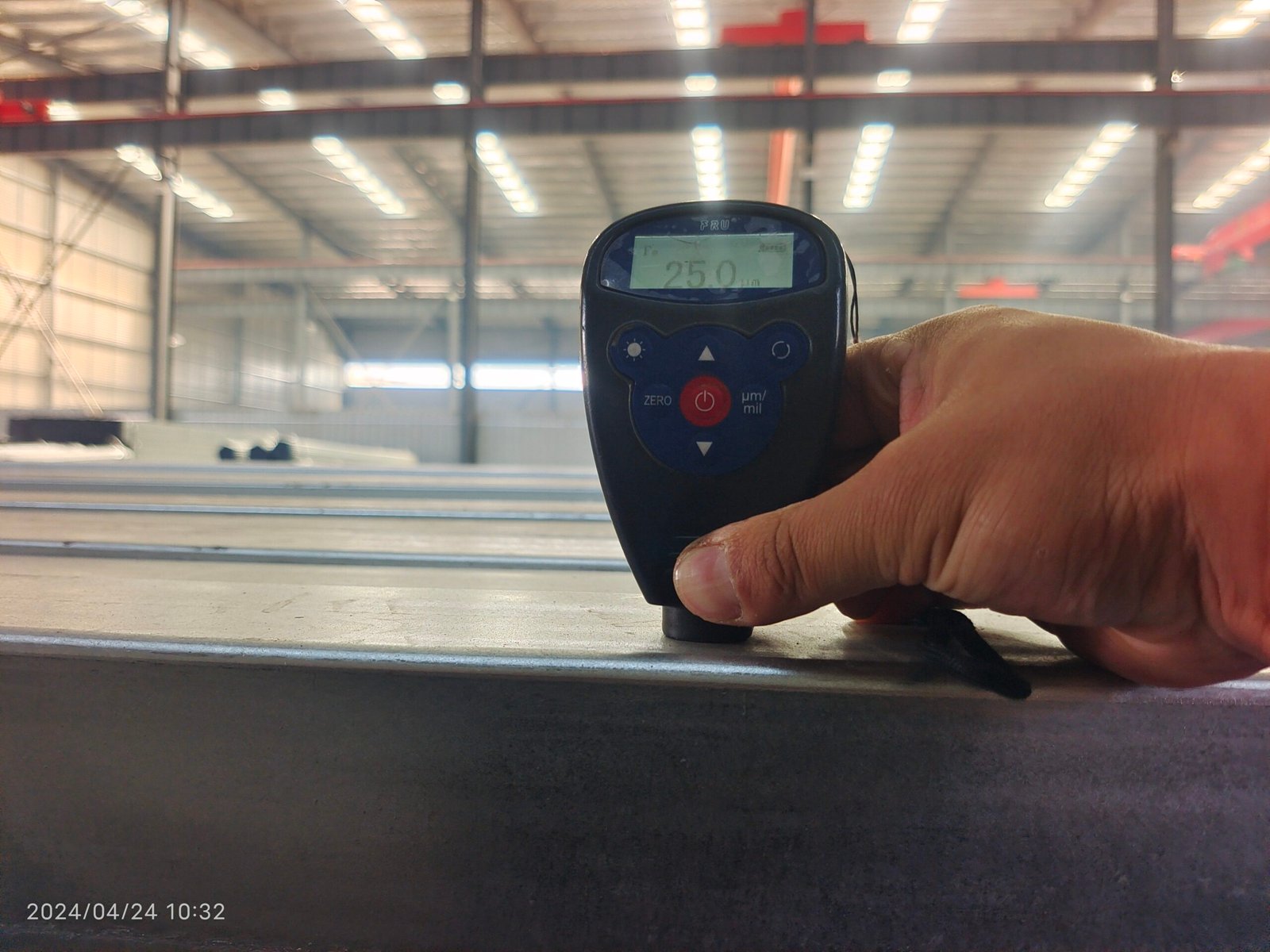
Typically 40–85 μm thick (equivalent to 275–600 g/m²), with a service life up to 40 years. The zinc coating covers both inner and outer pipe walls as well as welds. It exhibits strong adhesion, impact resistance, and wear resistance.
Process
Surface Cleaning: Degreasing, pickling, etc.
Electrogalvanizing: Steel pipe serves as the cathode, zinc as the anode. Zinc dissolves in the electrolyte and deposits onto the pipe surface. Zinc layer thickness is controlled by adjusting voltage and current.
Characteristics
Zinc layer typically 5–20 μm thick, with a smooth and uniform surface. Service life up to 10 years, significantly shorter than hot-dip galvanizing. Not suitable for harsh environments involving friction or impact.
1. Material Test Certificate (MTC)
2. Mechanical Properties Testing
3. Galvanized Layer Inspection
4. Dimensions and Shape Inspection
5. Third-Party Inspection Certificate
All testing can be provided to ensure the fundamental performance of steel pipes, with full traceability throughout every stage.
No. Zinc coating thickness must be within a certain range to balance dimensional requirements and cost. Excessively thick coating may compromise dimensional accuracy and affect subsequent threading, welding, and other performance aspects. Therefore, thicker isn’t necessarily better.
Galvanized pipes are typically produced by steel pipe manufacturers who first manufacture black pipes. These pipes then undergo standardized galvanizing processes in their own galvanizing workshops before entering the market. Manufacturers with integrated production capabilities are generally recommended for their greater strength. Numerous galvanized pipe manufacturers are located in Tianjin, Hebei, and Jiangsu provinces in China. Tianjin, with its convenient transportation and coastal location, is an excellent choice. Tianjin ALLLAND holds international certifications and possesses extensive experience in large-scale project production, positioning it as one of China’s most comprehensive galvanized steel pipe manufacturers.
Fill in the form below and our team will be happy to assist you