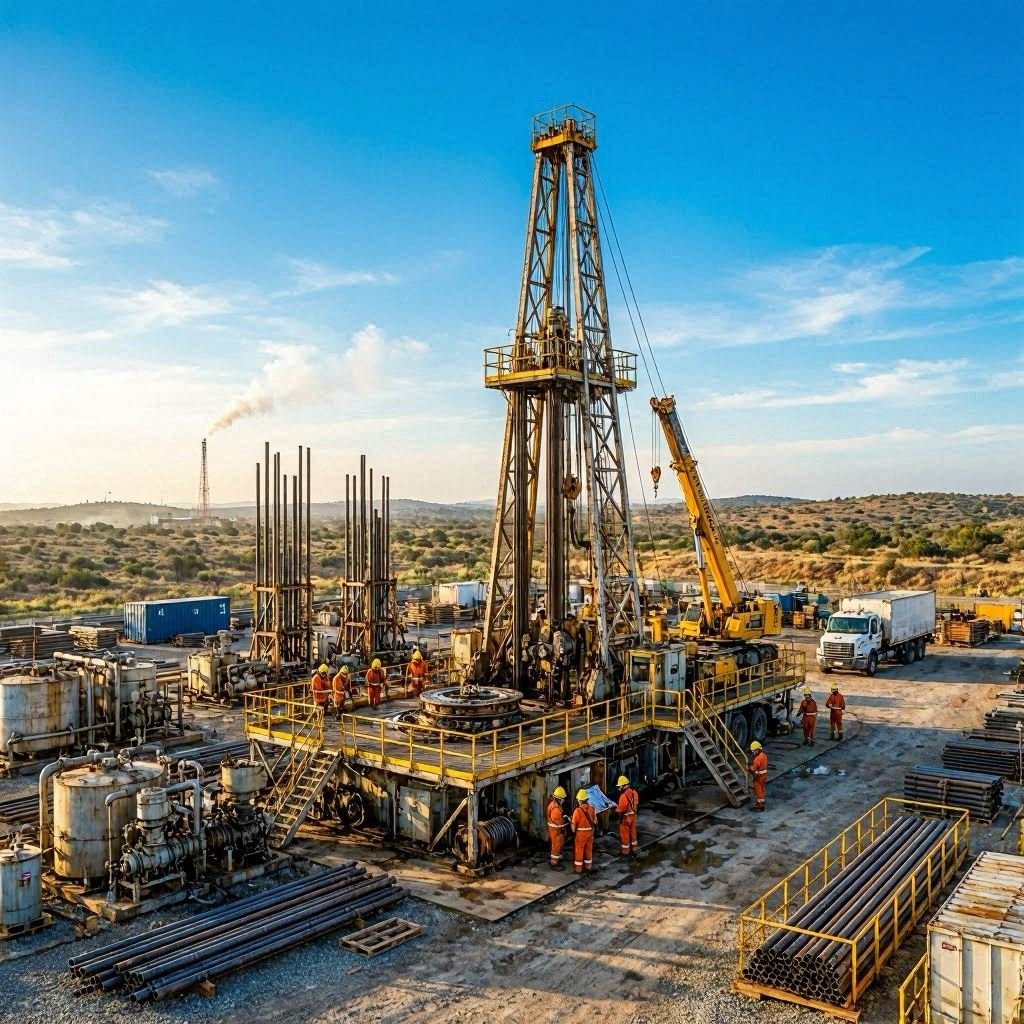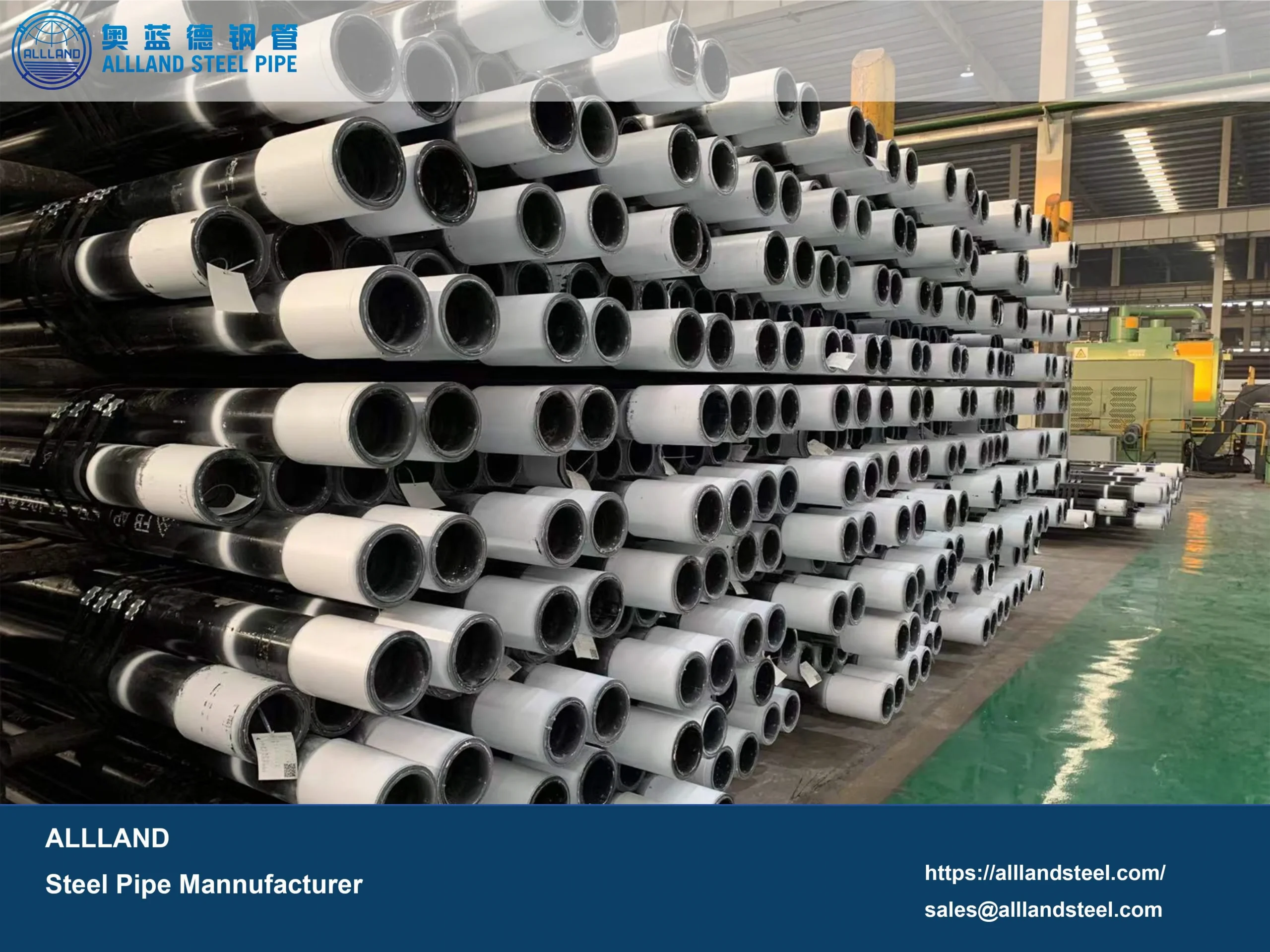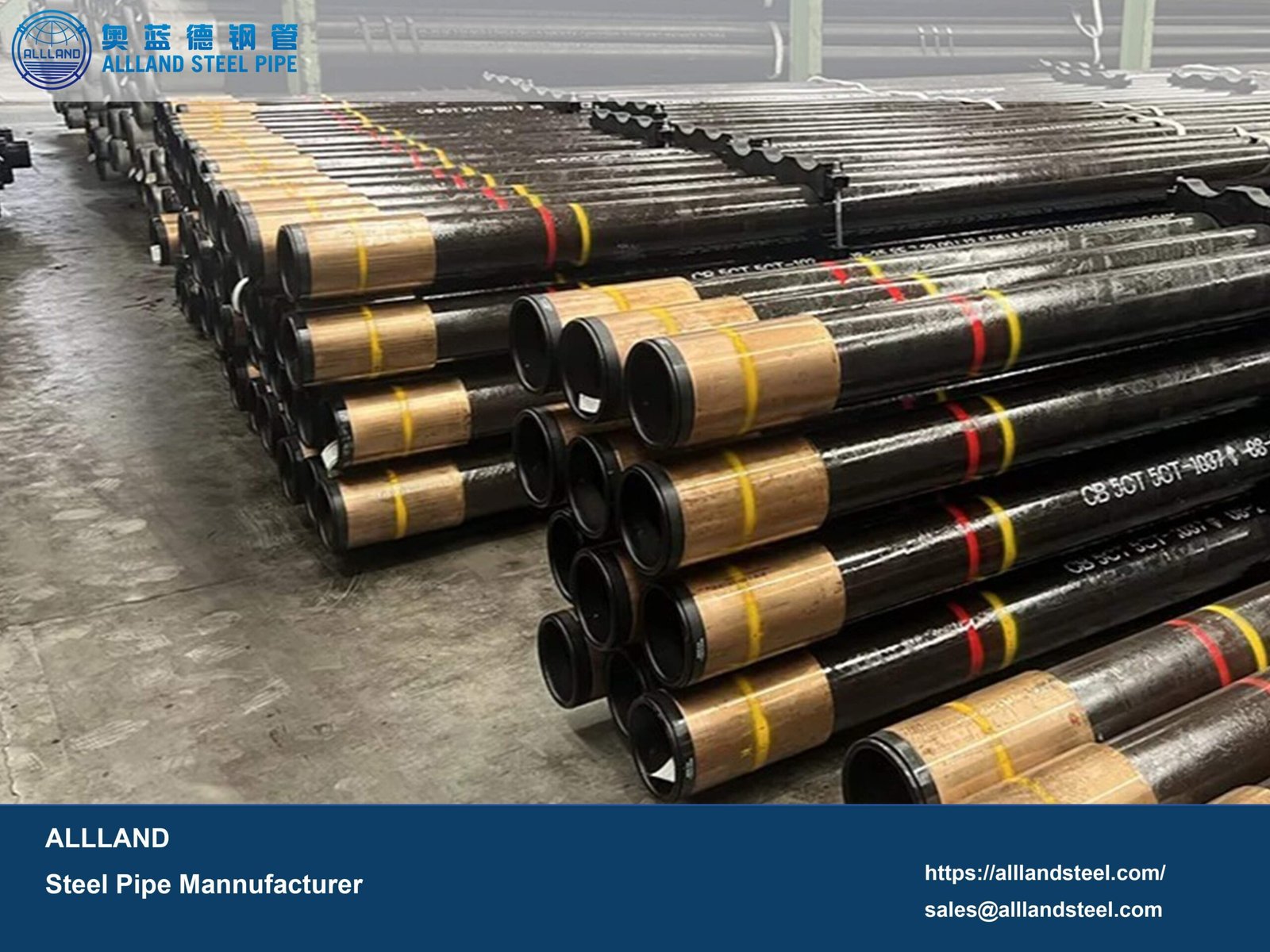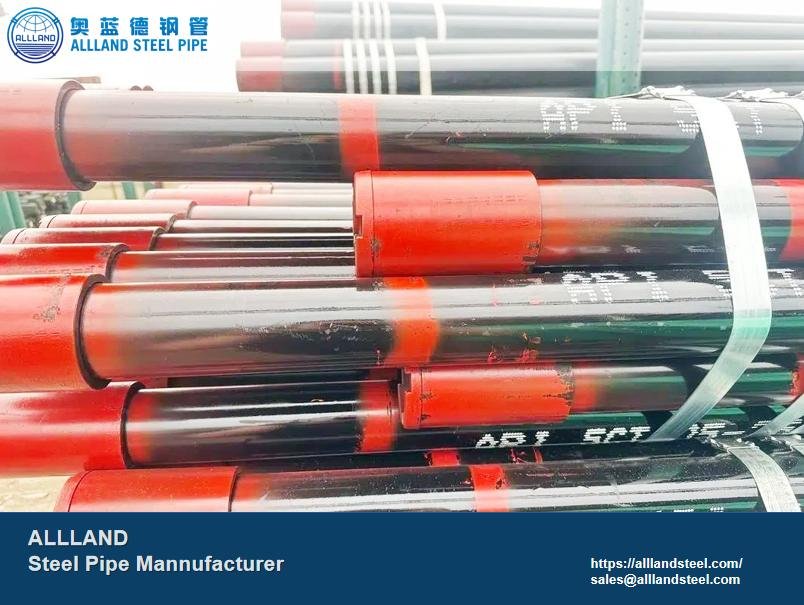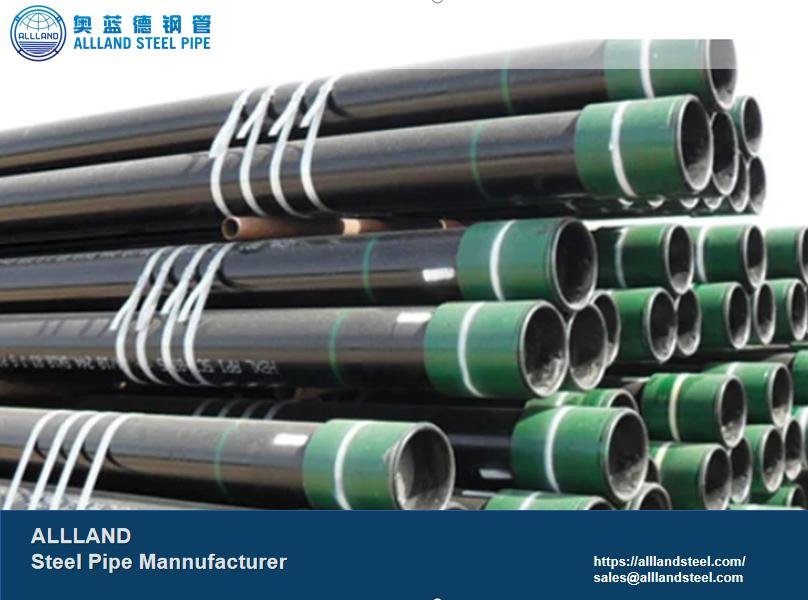

In the modern oil and gas industry, OCTG (Oil Country Tubular Goods) is one of the most critical tubular systems used in oil well drilling, cementing, and production. While many people believe that OCTG refers to a single type of steel pipe, it is actually a comprehensive hierarchical system comprising drill pipe, casing, and tubing.
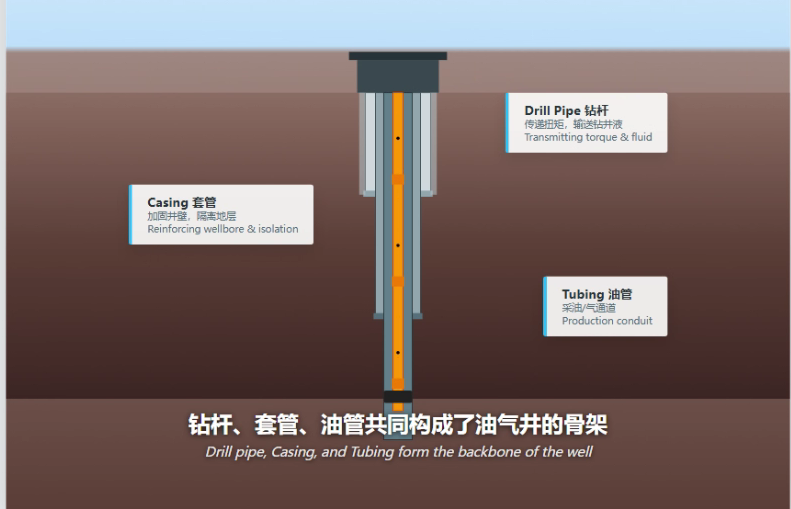
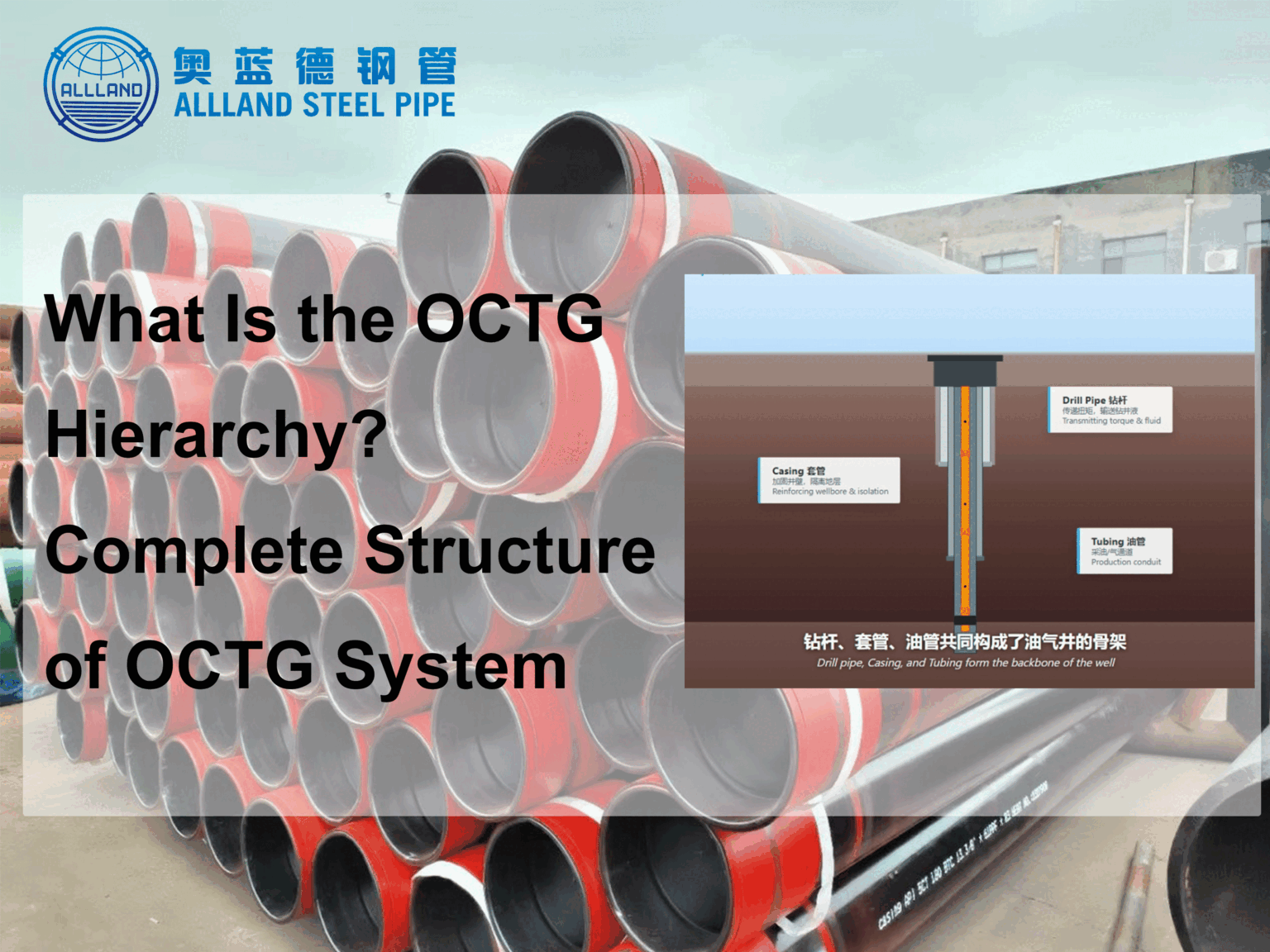
Different types of OCTG serve distinct functions in oil wells: Drill Pipe is used for drilling, Casing is used to support the wellbore and protect the wellbore, while Tubing is responsible for transporting oil and gas. Together, these three components form a complete OCTG system.
This article will provide a detailed analysis of the overall hierarchical structure of OCTG, as well as the functional differences and engineering applications of Drill Pipe, Casing, and Tubing.
What Does OCTG?
OCTG, which stands for Oil Country Tubular Goods, refers to a complete system of steel pipes used in the drilling, cementing, and production processes of oil and gas wells.
Within the complete well structure, OCTG is not a single product but rather a “hierarchical system” composed of multiple pipes with different functions.
Typically, OCTG can be divided into three core components:
1. Drill Pipe
2. Casing
3. Tubing
These components form a complete well string structure based on the sequence of downhole operations and their functional relationships.
Understanding the Complete OCTG Hierarchy
Top-down structural logic:
| Layer | Pipe Type | Main Function | Position in Well |
|---|---|---|---|
| First Layer | Drill Pipe | Transmits torque and drilling fluid | Used dynamically during drilling stage |
| Second Layer | Casing | Supports wellbore and isolates formations | Permanently installed after cementing |
| Third Layer | Tubing | Transports oil and gas | Used during productio |
In short:
Drill pipe is used for “drilling”
Casing is used for “protection”
Tubing is used for “production”
Together, these three components make up a complete OCTG system.
Drill Pipe System Structure and Function
Drill pipe is the most critical dynamic string of pipe during the drilling phase.
It is used to transmit rotational torque to the drill bit, transfer axial loads, convey drilling fluid, and drive the drill bit to break up the formation. It is a type of pipe designed for high-strength, high-fatigue applications.
Main Components of Drill String
In fact, there are even finer sub-components within the drilling system, which together make up the drill string:
| Component | Function |
|---|---|
| Kelly / Top Drive | Provides rotational power |
| Drill Pipe | Main drill string body |
| Heavy Weight Drill Pipe (HWDP) | Transitional load-bearing section |
| Drill Collar | Provides weight on bit (WOB) |
| Drill Bit | Rock breaking and drilling |
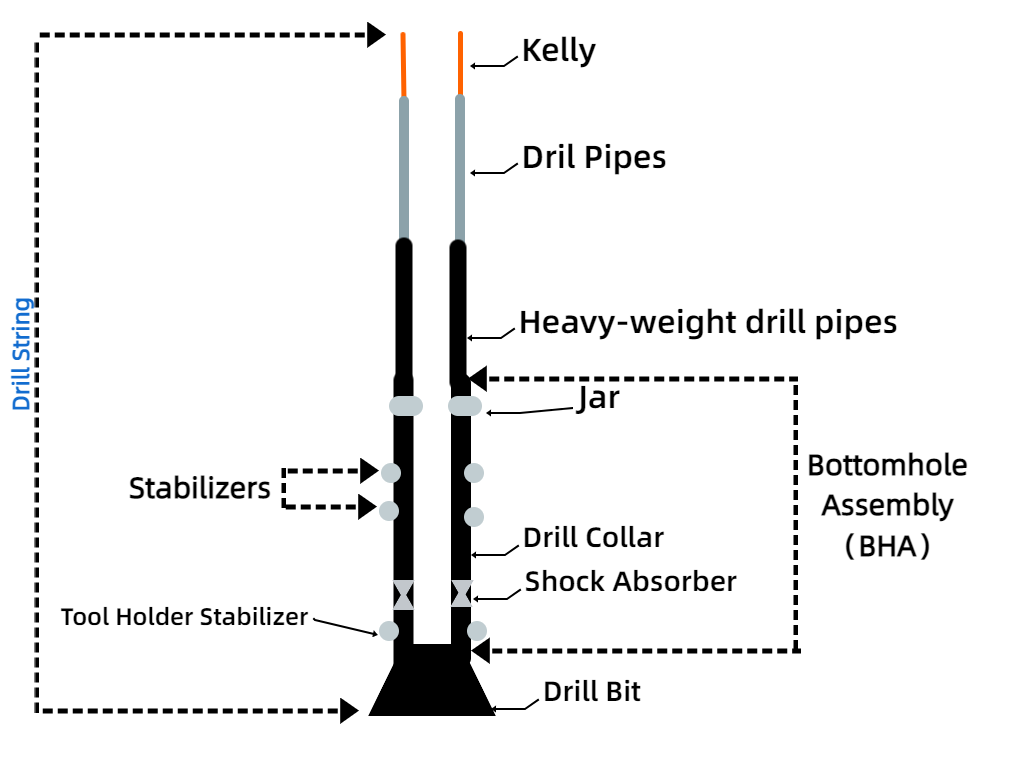
Because drill pipe must continuously transmit torque, withstand downhole vibrations, and transport drilling fluid during the drilling process, it is one of the pipe products in the entire OCTG system that operates under the most complex conditions and experiences the highest mechanical loads.
Consequently, drill pipe is typically manufactured from high-strength steel grades compliant with the API 5DP standard to meet the requirements of various well depths and drilling environments.
| Grade | Application |
| E75 | Standard wells |
| X95 | Medium-depth wells |
| G105 | High-strength drilling |
| S135 | Deep well drilling |
Among these, S135 is one of the most widely used high-strength drill pipe steel grades in oilfield drilling today, and is particularly suitable for deep, ultra-deep, and complex directional drilling operations.
Casing Hierarchy in the OCTG System
If drill pipe is considered a “construction tool,” then casing is more like the “steel skeleton” of an oil well. After being lowered into the well, casing is typically cemented in place and remains permanently inside the well.
Its key functions include:
- Preventing wellbore collapse
- Isolating different pressure zones
- Preventing formation contamination
- Providing structural strength to the wellbore
- Controlling the risk of blowouts
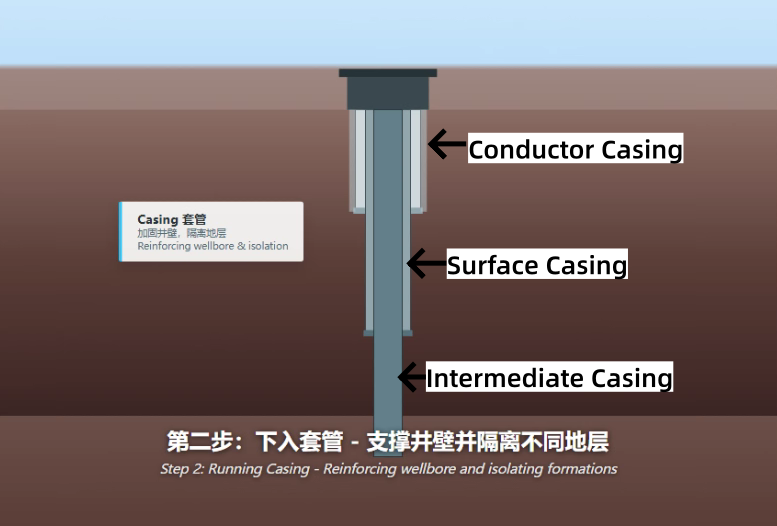
Complete Casing Hierarchy in OCTG System
Oil wells typically consist of multiple layers of casing rather than just a single layer:
| Casing Type | Function |
|---|---|
| Conductor Casing | Wellhead guidance |
| Surface Casing | Protects shallow formations |
| Intermediate Casing | Isolates complex formations |
| Production Casing | Final production zone cas |
This is a classic example of a nested casing structure, in which the diameter of each casing layer gradually decreases.
Common Casing Grades
Among all OCTG costs, casing typically accounts for the largest share, has the highest volume, and involves the most complex technical standards.
| Casing Grade | Minimum Yield Strength | Main Characteristics | Typical Applications |
| J55 | 55,000 psi | Basic OCTG grade with good weldability and relatively low cost | Shallow wells, low-pressure wells |
| K55 | 55,000 psi | Similar strength to J55 but with tighter chemical composition control | General oil & gas wells |
| N80 | 80,000 psi | Higher tensile strength and better collapse resistance | Medium-depth wells, higher pressure environments |
| L80 | 80,000 psi | Designed for sour service environments with improved corrosion resistance | H₂S-containing wells, corrosive fields |
| C90 | 90,000 psi | Better strength and sulfide stress cracking resistance | Sour service and deeper wells |
| T95 | 95,000 psi | High-strength casing with enhanced corrosion resistance | High-temperature and sour service wells |
| P110 | 110,000 psi | High yield strength for deep and high-pressure wells | Deep wells, HPHT wells |
| Q125 | 125,000 psi | Ultra-high strength grade for extreme drilling conditions | Ultra-deep wells and challenging drilling environments |
Types and Functions of OCTG Tubing
Tubing is the production string that is actually responsible for transporting oil, gas, and water once production begins. Oil and gas are typically transported from the bottom of the well to the surface through the tubing.
Common Tubing Types
| Tubing Type | Full Name | Connection Features | Advantages | Typical Applications |
| EUE Tubing | External Upset End Tubing | Pipe ends are externally thickened before threading | Higher connection strength and better pressure resistance | Standard oil & gas production wells |
| NUE Tubing | Non-Upset End Tubing | Pipe ends maintain original wall thickness | Lower cost and lighter weight | Low-pressure and shallow wells |
| Premium Connection Tubing | Premium Thread Tubing | Special proprietary gas-tight connections | Excellent sealing performance and torque resistance | Deep wells, HPHT wells, offshore drilling |
| Integral Joint Tubing | Integral Connection Tubing | Connection machined directly from pipe body | Improved structural integrity and reduced leakage risk | High-performance drilling and production systems |
| Flush Joint Tubing | Flush Joint Tubing | Connection OD nearly equal to pipe body OD | Smooth external surface for restricted wellbores | Slim-hole wells and tight clearance applications |
| Coiled Tubing | Continuous Steel Tubing | Long continuous pipe without threaded joints | Flexible operation and rapid deployment | Well intervention, cleanout and stimulation operations |
Tubing vs Casing
| Comparison Item | Tubing | Casing |
|---|---|---|
| Main Function | Oil & Gas Production | Wellbore Support and Well Protection |
| Application Stage | Production Stage | Drilling & Completion Stage |
| Installation Position | Installed inside the casing | Installed along the outer layer of the wellbore |
| Cementing Required | No cementing required | Usually requires cementing |
| Replaceability | Can be pulled out and replaced | Usually a permanent structure |
| Main Load Type | Internal Pressure | External Collapse Pressure |
| Main Design Focus | Sealing performance, corrosion resistance, internal pressure resistance | Collapse resistance, structural stability, long-term pressure bearing |
| Common Connection Types | EUE, NUE, Premium Connection | BTC, LTC, STC |
| Common Steel Grades | J55, N80, L80, P110 | J55, K55, N80, L80, P110 |
| Common Sizes | 2-3/8″, 2-7/8″, 3-1/2″ | 4-1/2″, 7″, 9-5/8″, 13-3/8″ |
| Direct Contact with Formation | No | Yes |
| Service Life | Replaceable according to production conditions | Usually lasts throughout the entire well lifecycle |
| Typical Working Environment | High-pressure fluid transportation environment | High formation pressure and complex downhole environment |
| Maintenance Frequency | Higher | Lower |
| Cost Characteristics | Lower cost per pipe but frequent replacement | Higher overall cost and a core part of the well structure |
| Role in Oil Well | Production Flow Path | Well Structural Support |
Why not produce directly through the casing?
Because tubing is replaceable and has low maintenance costs; it protects the casing and facilitates downhole operations.
Casing is a permanent structure, while tubing is a serviceable production string.
Types and Structure of OCTG Tubing
In the OCTG (Oil Country Tubular Goods) system, API Standards (American Petroleum Institute standards) serve as the cornerstone for ensuring standardization, interchangeability, and engineering safety across the entire oil well tubing system.
| OCTG Component | Main API Standard | Main Scope |
|---|---|---|
| Casing | API 5CT | Casing manufacturing specification |
| Tubing | API 5CT | Tubing manufacturing specification |
| Drill Pipe | API 5DP | Drill pipe specification |
| Threading | API 5B | Threading, gauging, and inspection specification |
| Drill Stem Components | API Spec 7 | Drill stem component specification |
| Line Pipe (Non-OCTG) | API 5L | Pipeline transportation system specification |
How OCTG Works Inside an Oil Well
In oil and gas drilling and production systems, OCTG (Oil Country Tubular Goods) is not a single steel pipe product, but rather a complete downhole string system that spans the entire process from drilling through completion to production.
From the moment the drill bit begins to break through the formation until crude oil and natural gas are finally transported to the surface, drill pipe, casing, and tubing perform different functions at different stages and collectively ensure:
- drilling safety (drilling safety) well integrity
- pressure isolation
- oil & gas production
Therefore, understanding how OCTG functions in an oil well essentially means understanding: how an oil well is established, protected, and maintained for long-term, stable production.
Common OCTG Thread Connection Types
In OCTG (oil country tubular goods) systems, threaded connections are among the most critical components of the entire well tubing system.
OCTG connections are generally divided into two categories:
| Type | Characteristics |
|---|---|
| API Connection | Standard API thread connection |
| Premium Connection | High-performance premium thread connection |
Key Challenges in OCTG Selection
In oil and gas engineering, selecting OCTG (Oil Country Tubular Goods) is not merely a matter of choosing a steel grade or size; rather, it is a systematic process involving multiple factors.
OCTG selection directly affects well safety, production efficiency, and operating costs.
High-Pressure Resistance Requirements
High pressure is one of the most critical challenges in selecting OCTG; when internal pressure exceeds the pipe’s pressure-bearing capacity, burst failure may occur. Typically, the following measures are taken:
| Well Condition | Recommended Grade |
| Standard Well | N80 |
| High Pressure Well | P110 |
| Ultra-Deep Well | Q125 |
Collapse Resistance Under High External Pressure
In addition to internal pressure, OCTG must also withstand immense external formation pressure. When external pressure exceeds the casing’s crush resistance, casing collapse may occur, which constitutes a serious downhole incident.
Which wells are most prone to this?
These include:
- deep wells
- depleted reservoirs
- offshore wells
Key Considerations for Selection
Therefore, the following factors require careful analysis:
- Collapse Resistance
- D/t Ratio (Diameter-to-Thickness Ratio)
- Steel Grade
- Ovality Control
Generally, thicker-walled casings made of higher-grade steel offer greater collapse strength.
OCTG Performance in High-Temperature Environments
High pressure is one of the most critical challenges in selecting OCTG; when internal pressure exceeds the pipe’s pressure-bearing capacity, burst failure may occur. Typically, the following measures are taken:
High temperatures can cause:
| Issue | Impact |
|---|---|
| Strength Reduction | Reduction in mechanical strength |
| Thermal Expansion | Thermal expansion deformation |
| Seal Failure | Seal integrity failure |
| Material Softening | Material softening at high temperatures |
High-temperature wells typically require:
- Heat-treated OCTG
- Premium connections
- High-temperature-resistant steel grades: P110, Q125
Corrosion in H₂S Oil and Gas Wells
In sulfur-containing oil and gas wells, H₂S can cause sulfide stress cracking (SSC). Therefore, sour service typically involves:
| Grade | Application |
| L80 Type 1 | Mild sour service |
| C90 | Sour environment |
| T95 | Severe sour service |
OCTG Challenges in Deep and Ultra-Deep Wells
With advances in drilling technology, an increasing number of oil wells are exceeding depths of 5,000 m, 8,000 m, and 10,000 m.
3,000–5,000 m: Conventional Deep Wells
Typical operating conditions:
| Condition | Characteristics |
|---|---|
| Formation Pressure | Medium to high pressure |
| Temperature | 90–140°C |
| Drilling Load | Medium to high torque |
| Corrosion Risk | Moderate |
Recommended Casing Grade
| Application | Recommended Grade |
| Surface Casing | J55 / K55 |
| Intermediate Casing | N80 |
| Production Casing | N80 / L80 |
Recommended Tubing Grades
- J55
- N80
- L80
If CO₂ or mild H₂S is present, L80 is typically the preferred choice.
Recommended Drill Pipe Grade
| Well Depth | Recommended Drill Pipe |
| 3,000–4,000 m | E75 / X95 |
| 4,000–5,000 m | G105 |
5,000–8,000 m: Ultra-Deep Wells
Typical operating conditions:
| Condition | Characteristics |
|---|---|
| Temperature | 140–180°C |
| Pressure | High Pressure |
| Torque | High Torque |
| Collapse Load | Very High |
| Fatigue Risk | Increasing |
Recommended Casing Grade
| Casing Type | Recommended Grade |
| Intermediate Casing | N80 / L80 |
| Production Casing | P110 |
| High Collapse Section | P110 HC |
Recommended Tubing Grades
| Well Condition | Recommended Tubing |
| Standard Deep Well | N80 |
| Corrosive Well | L80 |
| HPHT Well | P110 |
Recommended Drill Pipe Grade
| Depth | Recommended Grade |
| 5,000–6,000 m | G105 |
| 6,000–8,000 m | S135 |
8,000–10,000 m: Extreme Deep Wells
At depths exceeding 8,000 meters, OCTG enters the realm of extreme engineering. Typical operating conditions:
| Condition | Characteristics |
|---|---|
| Temperature | 180–220°C+ |
| Pressure | Ultra High Pressure |
| Tensile Load | Extremely High |
| H₂S Risk | Often Severe |
| Fatigue Load | Very Hig |
Recommended Casing Grade
| Casing Type | Recommended Grade |
| Intermediate Casing | N80 / L80 |
| Production Casing | P110 |
| High Collapse Section | P110 HC |
Recommended Tubing Grade
Commonly used:
- P110
- T95
- Premium Alloy Tubing
Recommended Drill Pipe Grade
| Depth | Recommended Grade |
| 8,000–10,000 m | S135 |
| Extreme ERD Well | High-Torque S135 |
OCTG vs Line Pipe
| Comparison Item | OCTG (Oil Country Tubular Goods) | Line Pipe |
| Main Application | Oil well drilling, completion and production systems | Long-distance oil & gas transportation systems |
| Operating Location | Downhole environment | Surface or subsea pipeline systems |
| Industry Sector | Upstream Oil & Gas | Midstream / Pipeline Transportation |
| Core Function | Drilling, well protection and hydrocarbon production | Transportation of oil, gas, water and other fluids |
| Working Environment | High pressure, high temperature and corrosive downhole conditions | Continuous fluid transportation environment |
| Typical Products | Drill Pipe, Casing, Tubing | ERW, LSAW, SSAW and Seamless Line Pipe |
| Main Standards | API 5CT, API 5DP | API 5L |
| Common Grades | J55, N80, L80, P110, S135 | Gr.B, X42, X52, X65, X70 |
| Main Loads | Collapse, Burst, Tension and Torque | Internal Pressure and Bending Stress |
| Torque Resistance Requirement | Yes, especially for Drill Pipe | Usually not required |
| Thread Requirement | High-precision threaded connections | Primarily welded connections |
| Connection Types | BTC, LTC, EUE, Premium Connection | Welded Joint, Flange Connection |
| Sealing Requirement | Extremely high gas-ti |
Conclusion
OCTG is not merely ordinary steel pipe; it is a comprehensive well pipe system that spans the entire process of drilling, completion, and oil and gas production. Drill pipe, casing, and tubing each play distinct roles under different downhole conditions, and together they determine the safety, stability, and production efficiency of an oil well.
With the continuous development of deep wells, HPHT operations, and offshore drilling, market demands for OCTG steel grades, connection technologies, and manufacturing quality are becoming increasingly stringent.
ALLLAND Steel Pipe, with its stable production capacity, strict API standard compliance, and reliable quality inspection, ensures the long-term safe operation of oil wells.