
Welcome to ALLLAND Steel Pipe Co., Ltd.
ALLLAND AS/NZS 1163 Steel Pipe Supply
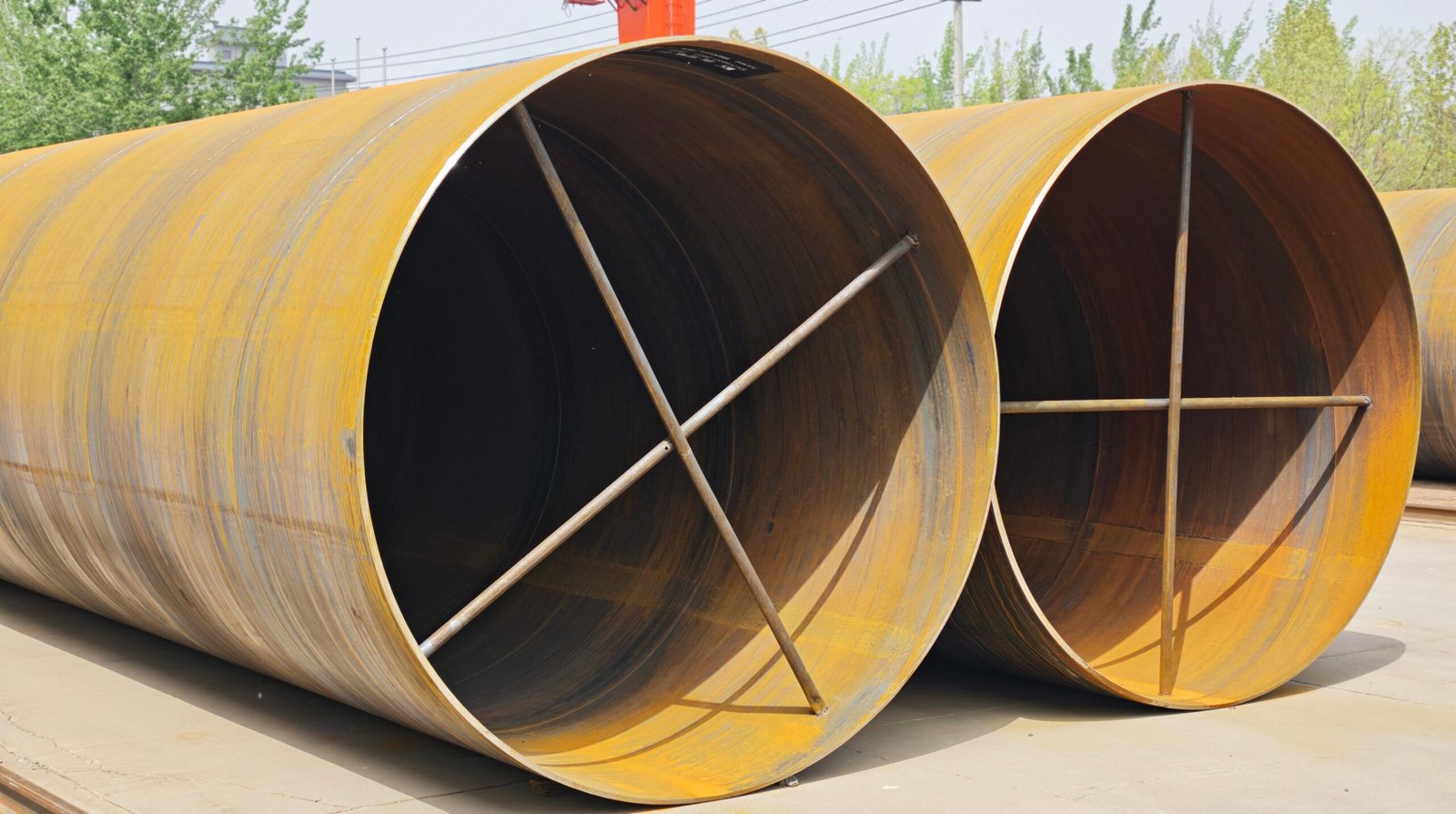
Welcome to ALLLAND. Our AS/NZS 1163 standard steel tubes are widely used in various structural engineering projects, including building steel structures, bridge engineering, machinery manufacturing, and photovoltaic mounting systems. Our product range includes round tubes (CHS), square tubes (SHS), and rectangular tubes (RHS), with outer diameters/side lengths ranging from 20 mm to 500 mm and wall thicknesses ranging from 1.6 mm to 16 mm. We can provide custom lengths and specifications to meet customer requirements. Our products are primarily manufactured from high-quality carbon structural steel and are available in various strength grades, including C250, C350, and C450, to meet different load-bearing requirements.
Alllandsteel is a steel pipe manufacturer based in China with 25 years of experience.
The facility spans 22,000 square meters, represents a RMB 700 million investment, and operates four production lines (JCOE, ERW, SMLS, SSAW) alongside five coating lines.
With an annual production capacity of 250,000 tons, the factory covers specifications ranging from Ø406 to Ø1524 and holds multiple international certifications (API/ASTM/EN/ISO/JIS). Focused on steel pipes, creating value for you!
HOT PRODUCTS
POPULAR ARTICLES
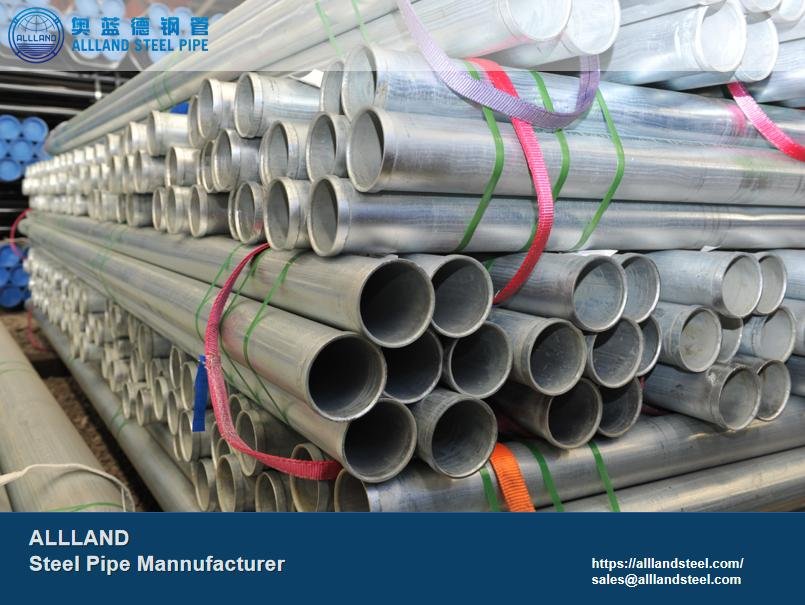
AS/NZS 1163 (Cold-formed structural steel hollow sections). This is a mandatory technical standard in Australia and New Zealand for cold-formed structural square, rectangular, and round tubes.
The standard mainly covers steel grades, chemical composition, mechanical properties, dimensions and wall thickness, tolerances, manufacturing requirements, inspection, and testing. It specifies the material, manufacturing, dimensional, and performance requirements for structural steel pipes and hollow sections. The standard is jointly used within the Standards Australia and Standards New Zealand systems.
The following sections provide a detailed introduction to the requirements and contents of AS/NZS 1163.
O.D.:
CHS:21.3 mm – 508 mm
SHS:20 × 20 mm – 400 × 400 mm
RHS:50 × 30 mm – 500 × 300 mm
W.T.:
Standard range: 1.6 mm – 16 mm
Common structural range: 2.0 – 12 mm (most common)
Length:
6-12 m, available in fixed or multiple lengths; custom lengths per project requirements.
Process:
Cold-formed / High-frequency resistance welding
Key Chemical Composition Control:
Carbon (C)/Manganese (Mn)/Phosphorus (P)/Sulfur (S)
Steel Grades:
C250/ C350/ C450
Surface Treatment:
Black pipe / Hot-dip galvanized / Pre-galvanized / Painted / Coated
Delivery Conditions:
Grade, Specification, Furnace Number, Standard
This standard lists the cold-formed hollow sections commonly used in Australia and New Zealand.The dimensions are based on published standard documents. In case of any discrepancy, please refer to the original standard document.
| Outside Diameter | Thickness | Mass per unit length | External surface area | Ratio | |
| do | t | Per unit length | Per unit mass | ||
| mm | mm | kg/m | m²/m | m²/t | do/t |
| 610.0 | 12.7CHS | 187 | 1.92 | 10.2 | 48.0 |
| 610.0 | 9.5CHS | 141 | 1.92 | 13.6 | 64.2 |
| 610.0 | 6.4CHS | 95.3 | 1.92 | 20.1 | 95.3 |
| 508.0 | 12.7CHS | 155 | 1.60 | 10.3 | 40.0 |
| 508.0 | 9.5CHS | 117 | 1.60 | 13.7 | 53.5 |
| 508.0 | 6.4CHS | 79.2 | 1.60 | 20.2 | 79.4 |
| 457.0 | 12.7CHS | 139 | 1.44 | 10.3 | 36.0 |
| 457.0 | 9.5CHS | 105 | 1.44 | 13.7 | 48.1 |
| 457.0 | 6.4CHS | 71.1 | 1.44 | 20.2 | 71.4 |
| 406.4 | 12.7CHS | 123 | 1.28 | 10.4 | 32.0 |
| 406.4 | 9.5CHS | 93.0 | 1.28 | 13.7 | 42.8 |
| 406.4 | 6.4CHS | 63.1 | 1.28 | 20.2 | 63.5 |
| 355.6 | 12.7CHS | 107 | 1.12 | 10.4 | 28.0 |
| 355.6 | 9.5CHS | 81.1 | 1.12 | 13.8 | 37.4 |
| 355.6 | 6.4CHS | 55.1 | 1.12 | 20.3 | 55.6 |
| 323.9 | 2.7CHS | 97.5 | 1.02 | 10.4 | 25.5 |
| 323.9 | 9.5CHS | 73.7 | 1.02 | 13.8 | 34.1 |
| 323.9 | 6.4CHS | 50.1 | 1.02 | 20.3 | 50.6 |
| 273.1 | 9.3CHS | 60.5 | 0.858 | 14.2 | 29.4 |
| 273.1 | 6.4CHS | 42.1 | 0.858 | 20.4 | 42.7 |
| 273.1 | 4.8CHS | 31.8 | 0.858 | 27.0 | 56.9 |
| 219.1 | 8.2CHS | 42.6 | 0.688 | 16.1 | 26.7 |
| 219.1 | 6.4CHS | 33.6 | 0.688 | 20.5 | 34.2 |
| 219.1 | 4.8CHS | 25.4 | 0.688 | 27.1 | 45.6 |
| 168.3 | 71CHS | 28.2 | 0.529 | 18.7 | 23.7 |
| 168.3 | 6.4CHS | 25.6 | 0.529 | 20.7 | 26.3 |
| 168.3 | 4.8CHS | 19.4 | 0.529 | 27.3 | 35.1 |
| 165.1 | 5.4CHS | 21.3 | 0.519 | 24.4 | 30.6 |
| 165.1 | 5.0CHS | 19.7 | 0.519 | 26.3 | 33.0 |
| 165.1 | 3.5CHS | 13.9 | 0.519 | 37.2 | 47.2 |
| 165.1 | 3.0CHS | 12.0 | 0.519 | 43.2 | 55.0 |
| 139.7 | 5.4CHS | 17.9 | 0.439 | 24.5 | 25.9 |
| 139.7 | 5.0CHS | 16.6 | 0.439 | 26.4 | 27.9 |
| 139.7 | 3.5CHS | 11.8 | 0.439 | 37.3 | 39.9 |
| 139.7 | 3.0CHS | 10.1 | 0.439 | 43.4 | 46.6 |
| 114.3 | 6.0CHS | 16.0 | 0.359 | 22.4 | 19.1 |
| 114.3 | 5.4CHS | 14.5 | 0.359 | 24.8 | 21.2 |
| 114.3 | 4.8CHS | 13.0 | 0.359 | 27.7 | 23.8 |
| 114.3 | 4.5CHS | 12.2 | 0.359 | 29.5 | 25.4 |
| 114.3 | 3.6CHS | 9.83 | 0.359 | 36.5 | 31.8 |
| 114.3 | 3.2CHS | 8.77 | 0.359 | 41.0 | 35.7 |
| 101.6 | 5.0CHS | 11.9 | 0.319 | 26.8 | 20.3 |
| 101.6 | 4.0CHS | 9.63 | 0.319 | 33.2 | 25.4 |
| 101.6 | 3.2CHS | 7.77 | 0.319 | 41.1 | 31.8 |
| 101.6 | 2.6CHS | 6.35 | 0.319 | 50.3 | 39.1 |
| 88.9 | 5.9CHS | 12.1 | 0.279 | 23.1 | 15.1 |
| 88.9 | 5.0CHS | 10.3 | 0.279 | 27.0 | 17.8 |
| 88.9 | 5.5CHS | 11.3 | 0.279 | 24.7 | 16.2 |
| 88.9 | 4.8CHS | 9.96 | 0.279 | 28.1 | 18.5 |
| 88.9 | 4.0CHS | 8.38 | 0.279 | 33.3 | 22.2 |
| 88.9 | 3.2CHS | 6.76 | 0.279 | 41.3 | 27.8 |
| 88.9 | 2.6CHS | 5.53 | 0.279 | 50.5 | 34.2 |
| 76.1 | 5.9CHS | 10.2 | 0.239 | 23.4 | 12.9 |
| 76.1 | 4.5CHS | 7.95 | 0.239 | 30.1 | 16.9 |
| 76.1 | 3.6CHS | 6.44 | 0.239 | 37.1 | 21.1 |
| 76.1 | 3.2CHS | 5.75 | 0.239 | 41.6 | 23.8 |
| 76.1 | 2.3CHS | 4.19 | 0.239 | 57.1 | 33.1 |
| 60.3 | 5.4CHS | 7.31 | 0.189 | 25.9 | 11.2 |
| 60.3 | 4.5CHS | 6.19 | 0.189 | 30.6 | 13.4 |
| 60.3 | 3.6CHS | 5.03 | 0.189 | 37.6 | 16.8 |
| 48.3 | 5.4CHS | 5.71 | 0.152 | 26.6 | 8.9 |
| 48.3 | 4.0CHS | 4.37 | 0.152 | 34.7 | 12.1 |
| 48.3 | 3.2CHS | 3.56 | 0.152 | 42.6 | 15.1 |
| 42.4 | 4.9CHS | 4.53 | 0.133 | 29.4 | 8.7 |
| 42.4 | 4.0CHS | 3.79 | 0.133 | 35.2 | 10.6 |
| 42.4 | 3.2CHS | 3.09 | 0.133 | 43.1 | 13.3 |
CHS
OD:≤ 168 mm: ±1% or ±0.5 mm (whichever is greater)
>168 mm: ±1%
WT:±10%
SHS / RHS
Side Length:≤ 100 mm:±1% or±0.5 mm(whichever is greater)
>100 mm:±1%
WT:±10%
AS/NZS 1163 Grade Naming Conventions
In this standard, steel grades are typically designated by the format:
“C” + nominal minimum yield strength + “L”.
C: Cold-formed.
L: Low yield-to-tensile strength ratio or identifies the material as structural hollow section.
Numerical value: Nominal minimum yield strength (MPa).
Toughness designation (impact grade): 0, 1, 2: Indicate different impact toughness requirements.
| Grade | Yield Strength (MPa) | Impact Resistance Guarantee | Typical Applications | |
| Base Strength Grade | C250 | 250 | / | Secondary structures, non-critical components |
| C250L0 | 250 | L0 (20℃) | Standard Interior Layout | |
| C250L1 | 250 | L1 (0℃) | May be exposed to temperatures of 0°C | |
| C250L2 | 250 | L2 (-20℃) | Secondary Structures in Cold Regions | |
| Common Strength Grades | C350 | 350 | / | Standard construction, no low-temperature requirements |
| C350L0 | 350 | L0 (20℃) | Most commonly used: main structures, industrial buildings | |
| C350L1 | 350 | L1 (0℃) | Main structures requiring low-temperature toughness | |
| C350L2 | 350 | L2 (-20℃) | Key Structures in Cold Regions | |
| High Strength Grades | C450 | 450 | / | High-stress components; no low-temperature requirements |
| C450L0 | 450 | L0 (20℃) | Long-span structures, heavy machinery, lightweight design | |
| C450L1 | 450 | L1 (0℃) | Applications of High-Strength Steel at 0°C | |
| C450L2 | 450 | L2 (-20℃) | High-strength steel for use in cold regions |
| Grade | Nominal Minimum Yield Strength MPa | Tensile Strength MPa min.. | Elongation min. |
| C250 | 250 | 320 | 18 |
| C350 | 350 | 430 | 18 |
| C450 | 450 | 500 | 14 |
| Elongation is determined using a gauge length of 50 mm or (S₀ is the original cross-sectional area) | |||
| For products with thin walls, the standard allows for adjustments to the elongation requirements in specific cases. Notes on yield strength values: Round tubes (CHS): Typically, the upper yield strength or the 0.5% total elongation strength is used. Square tubes/rectangular tubes (SHS/RHS): Typically, the 0.2% specified plastic elongation strength is used. | |||
| Grade Designation | Test Temperature ℃ | Minimum Average Absorbed Energy J | Minimum Individual Absorbed Energy J |
| L0 | 20 | 27 | 20 |
| L1 | 0 | 27 | 20 |
| L2 | -20 | 27 | 20 |
| Charpy V-notch specimens are used. | |||
| The impact energy value is the average of three specimens; while individual specimens may fall below the average, they must not fall below the specified minimum value for a single specimen. | |||
| If the grade designation does not include L0/L1/L2 (e.g., marked only as C350), this indicates that the material’s impact toughness is not guaranteed and it is not suitable for low-temperature or dynamic loading environments. | |||
| Full Grade Designation | MPa min. | MPa min. | Elongation min. | Impact Toughness Grade | Impact Test Temperature | Impact energy requirements 27J |
| C250L0 | 250 | 320 | 18 | L0 | 20℃ | ✓ |
| C250L1 | 250 | 320 | 18 | L1 | 0℃ | ✓ |
| C250L2 | 250 | 320 | 18 | L2 | -20℃ | ✓ |
| C350L0 | 350 | 430 | 18 | L0 | 20℃ | ✓ |
| C350L1 | 350 | 430 | 18 | L1 | 0℃ | ✓ |
| C350L2 | 350 | 430 | 18 | L2 | -20℃ | ✓ |
| C450L0 | 450 | 500 | 14 | L0 | 20℃ | ✓ |
| C450L1 | 450 | 500 | 14 | L1 | 0℃ | ✓ |
| C450L2 | 450 | 500 | 14 | L2 | -20℃ | ✓ |
| Grade | C % max. | Si % max. | Mn % max. | P % max. | S % max. | Other Elements |
| C250 C250L0 C250L1 C250L2 | 0.22 | 0.35 | 1.2 | 0.040 | 0.040 | — |
| C350 C350L0 C350L1 C350L2 | 0.22 | 0.35 | 1.4 | 0.040 | 0.040 | — |
| C450 C450L0 C450L1 C450L2 | 0.22 | 0.35 | 1.6 | 0.040 | 0.040 | Nb ≤ 0.05 V ≤ 0.10 Ti ≤ 0.05 Al ≥ 0.015 |
Carbon equivalent limits are set to ensure good weldability, calculated based on a formula from the International Institute of Welding.

| Grade | CE max. |
| C250 Series | 0.35 |
| C350 Series | 0.38 |
| C450 Series | 0.42 |
For the C450 series:
Minimum aluminum content is 0.015% to help form a fine microstructure, improving toughness and strength stability.
Microalloying elements like niobium, vanadium, and titanium can be added up to certain limits to increase strength through precipitation hardening and grain refinement.The maximum content limits for each element are as follows:
Nb≤ 0.05%
V ≤ 0.10%
Ti ≤ 0.05%
Forming Process
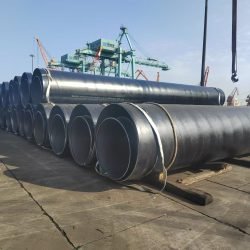
The AS/NZS 1163 standard explicitly stipulates that hollow sections must be manufactured using cold forming processes.
Cold forming: The process of shaping steel strips or sheets at room temperature.
Welding Process
The formed steel strip is closed by welding.
High-frequency resistance welding (HFW) or submerged arc welding (SAW) is typically used.
HFW is common for thin to medium-thick walls.
Welding Quality Requirements
The weld should be continuous and uniform, free from defects such as cracks, lack of fusion, or lack of penetration; the weld bead height should be kept within a reasonable range.
The mechanical properties of the welded area should be equivalent to those of the base material.
After welding, burrs should be removed, and heat treatment applied if needed to relieve stress.
AS/NZS 1163 Steel Tube Traceability Marking
The AS/NZS 1163 standard requires manufacturers to establish and maintain a traceability system to ensure that each batch of products can be traced back to its raw material sources and production records.
Traceability means each batch can be tracked from raw material through production to the finished pipe. Markings on each pipe include permanent identification, often by inkjet, hot stamping, or labeling.
The marked should include:
| Marking Requirements | Example | Notes |
| Manufacturer’s Name or Trademark | “XX Steel” | Identify the manufacturer. |
| Standard Number | AS/NZS 1163 | Applicable standard. |
| Grade | C350L0 | Strength and toughness Grades. |
| Specifications and Dimensions | 100×100×5.0 | Side length × Side length × Wall thickness |
| Batch Number / Heat Number | 2305-001 | Key information for traceability. |
Quality Certification Documents
The manufacturer must provide a Mill Certificate with the shipment.
1.Structural strength: AS/NZS 1163 steel pipes have a high yield strength, enabling them to meet the design requirements of various load-bearing structures, while also offering good ductility to ensure the safety and stability of the structure under load.
2.Weldability: Strict chemical composition limits help ensure excellent weldability, making it suitable for a variety of welding methods and improving construction efficiency.
3.High dimensional accuracy: Cold forming with tight tolerance controls guarantees precise sizes.
4.High quality consistency: Traceability and inspection ensure consistent quality throughout the mass production process.
5.Corrosion Resistance: The product surface can be treated with galvanization, coating, and other processes, making it suitable for outdoor and corrosive environments and extending its service life.
1.Building Structures
Used for load-bearing components: industrial plants, commercial buildings, sports venues, etc.
2.Infrastructure
Bridge engineering, tower structures, pile foundations, and support structures, etc.
3.Mechanical Manufacturing
Lifting equipment, transport equipment frames, etc.
4.Municipal Engineering
Bus shelters, pedestrian overpasses, landscape structures, etc.
5.Special Applications
Seismic-resistant structures: High toughness requirements to ensure plastic deformation capacity.
Low-temperature environments: Impact toughness guaranteed at -20°C.
Traceability System
We have established a comprehensive intelligent traceability system that creates a digital record for every steel pipe, ensuring 100% traceability and giving you peace of mind during project acceptance.
Comprehensive Coverage of Global Steel Pipe Standards
We support a wide range of steel pipe standards, including:
Australian and New Zealand: AS/NZS 1579, AS/NZS 1163
International: API 5L, ASTM A53, ASTM A671, ASTM A672, EN 10217, EN 10219, ISO 3183, JIS G3444, DIN 2458, and more.
Patented Technology
We have a proven process for double-sided submerged arc welding (JCOE) of thick-walled, large-diameter pipes, and have independently developed the “Aolande Five-Dimensional Quality System,” achieving a weld penetration uniformity of 98.7%.
A: AS/NZS 1163 is the standard for structural steel tubes used in Australia and New Zealand. It applies to cold-formed welded hollow sections (round, square, and rectangular tubes) and is primarily intended for use in building and engineering structures, rather than for fluid conveyance.
A: The suffixes indicate impact toughness grades, showing resistance to brittle fracture at different temperatures.
Higher numbers mean better performance.
A:For long-span structures, heavy machinery, projects needing weight savings, or components under high stress.
Fill in the form below and our team will be happy to assist you