Welcome to ALLLAND Steel Pipe Co., Ltd.
ALLLAND Boiler Steel Pipe Supply
Welcome to ALLLAND steel pipe actory. We possess extensive experience in the production and sales of cold galvanized pipes, holding professional product certifications and qualifications to ensure compliance with international standards. Our cold-galvanized steel pipes are widely used in building structures, scaffolding systems, fencing, agricultural facilities, machinery manufacturing, and various engineering projects.
Alllandsteel is a steel pipe manufacturer based in China with 25 years of experience.
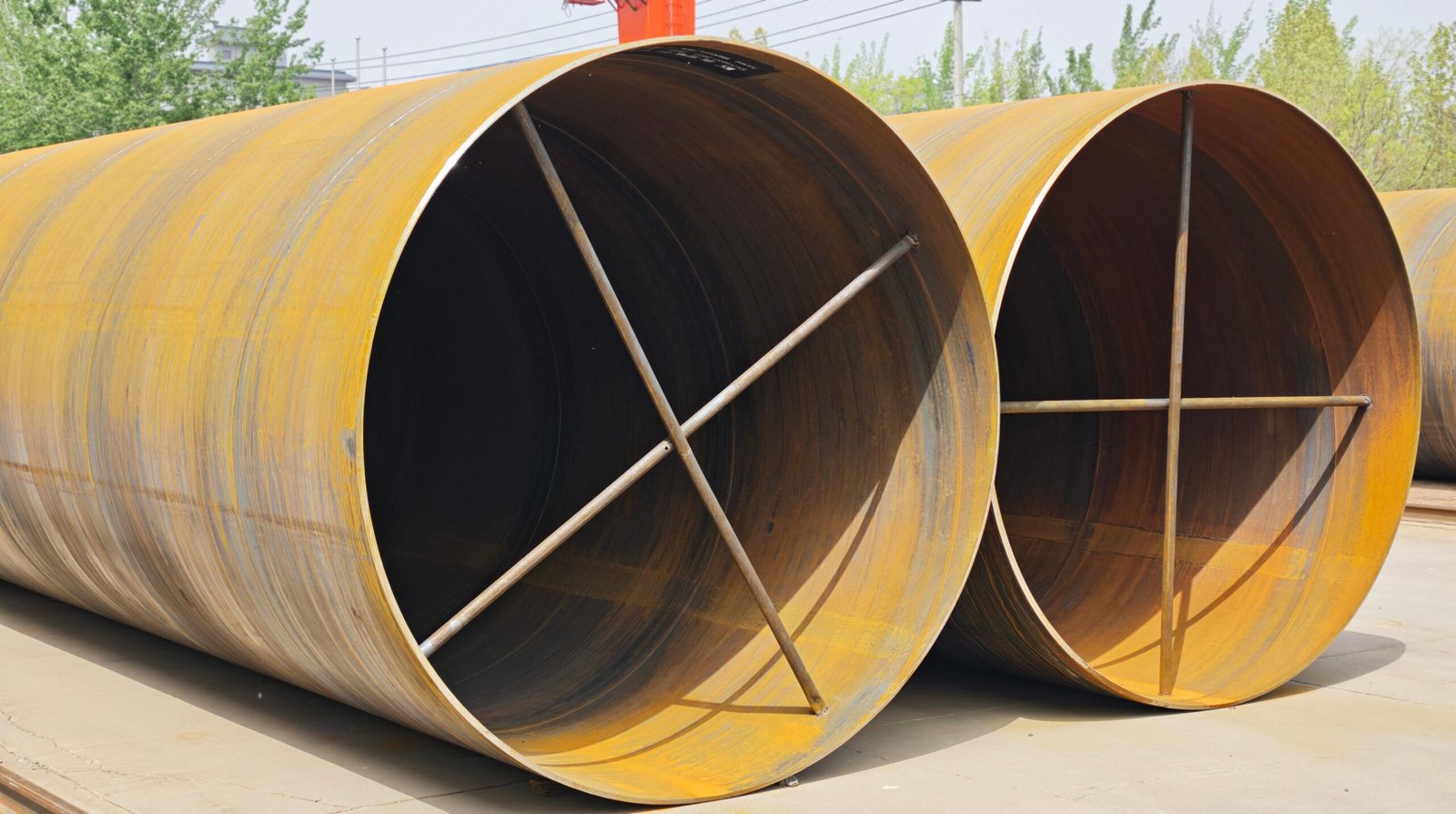
The facility spans 22,000 square meters, represents a RMB 700 million investment, and operates four production lines (JCOE, ERW, SMLS, SSAW) alongside five coating lines.
With an annual production capacity of 250,000 tons, the factory covers specifications ranging from Ø406 to Ø1524 and holds multiple international certifications (API/ASTM/EN/ISO/JIS). Focused on steel pipes, creating value for you!
HOT PRODUCTS
POPULAR ARTICLES
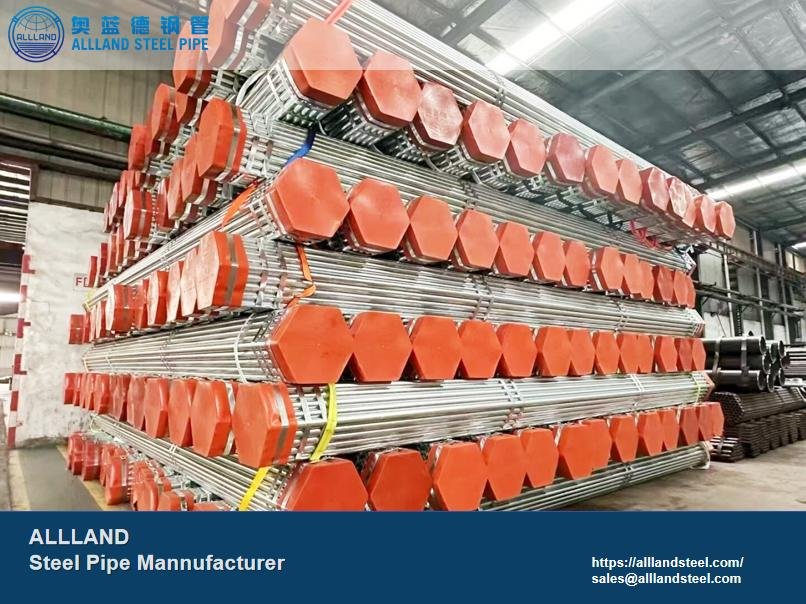
Cold galvanized pipe is steel pipe with a zinc coating applied via electroplating or spraying processes, providing corrosion protection through the zinc layer.
Compared to hot-dip galvanizing, the zinc coating in cold galvanizing is thinner, typically ranging from 10 to 25 micrometers (0.01 mm to 0.025 mm).
Cold galvanized pipe offers advantages such as a smooth surface, low cost, and ease of welding. It is widely used in mildly corrosive environments like building structures, electrical conduits, home appliances, and machinery, making it an ideal choice for many projects.
O.D.:
DN10–500 (common production range)
W.T.:
1.0 mm–12 mm (common production range)
Length:
6/12 m (customizable)
Galvanized thickness:
10–25 μm
Standards:
Q195, Q215, Q235, Q345, ST37, S235JR, S275JR, SS400, A36, A53
Surface Finish:
Bright silver galvanized, Passivation coating, Anti-fingerprint treatmen, Oiled surface
Galvanizing requirements::
The coating must be uniform, the surface smooth, and the corrosion resistance good.
Pipe End Types:
Flat end, beveled end, threaded end, clamp groove
For standard cold-galvanized pipes, the inner diameter can be calculated using the following formula:
ID = OD − 2 × WT
Common Specifications Reference
| Size | OD (mm) | Wall Thickness (mm) | Weight (kg/m) |
| 1/2″ | 21.3 | 1.2 | 0.59 |
| 1/2″ | 21.3 | 1.5 | 0.73 |
| 1/2″ | 21.3 | 2.0 | 0.95 |
| 3/4″ | 26.9 | 1.2 | 0.76 |
| 3/4″ | 26.9 | 1.5 | 0.94 |
| 3/4″ | 26.9 | 2.0 | 1.23 |
| 1″ | 33.4 | 1.5 | 1.18 |
| 1″ | 33.4 | 2.0 | 1.55 |
| 1″ | 33.4 | 2.5 | 1.90 |
| 1-1/4″ | 42.3 | 1.5 | 1.51 |
| 1-1/4″ | 42.3 | 2.0 | 1.99 |
| 1-1/4″ | 42.3 | 2.5 | 2.45 |
| 1-1/2″ | 48.3 | 1.8 | 2.06 |
| 1-1/2″ | 48.3 | 2.0 | 2.28 |
| 1-1/2″ | 48.3 | 2.5 | 2.82 |
| 2″ | 60.3 | 2.0 | 2.87 |
| 2″ | 60.3 | 2.5 | 3.56 |
| 2″ | 60.3 | 3.0 | 4.24 |
The specifications for cold-galvanized pipes primarily include outer diameter (OD) and wall thickness (WT), which can be customized according to the application requirements of the pipeline.
The electro galvanizing process utilizes an electrolytic reaction to deposit zinc ions onto the surface of steel pipes, forming a uniform zinc coating. (Coating thickness typically ranges from 10 to 25 microns.)
Advantages:
For applications requiring surface finishing or mildly corrosive environments.
The coating complies with ASTM B633 (specifying the SC grade—Service Condition grade—which is a key indicator used to define the minimum thickness required for electrogalvanized coatings).
In other words, the thickness of the zinc coating required depends on the specific environmental conditions in which the product will be used. This grade directly determines the coating’s corrosion resistance and cost.
Common SC:
| SC | Thickness |
| SC1 | 5 μm |
| SC2 | 8 μm |
| SC3 | 12 μm |
Material:
Q195, Q215, Q235, Q345 (Chinese standards), ST37 (Germany), S235JR, S275JR (Europe), SS400 (Japan), A36, A53 (USA)
DX51D (European) cold-galvanized steel, used as a base material for coated steel products.
SPCC (Japan, steel grade), refers to cold-rolled carbon steel sheet
Cold galvanized pipe is primarily produced using two processes: electroplating and spray coating. Both methods involve forming a protective zinc coating on the surface of steel pipes at relatively low temperatures, thereby enhancing the pipes’ corrosion resistance while maintaining the dimensional accuracy and surface quality of the base steel pipe.
The zinc spraying process involves applying zinc powder to the surface of steel pipes using spraying equipment, forming a thick zinc coating (typically 20-50 microns thick).
Advantages:
For applications requiring thicker, more corrosion-resistant zinc coatings.
The appropriate process can be selected based on project requirements to meet varying anti-corrosion and cost needs.
Corrosion Resistance
The zinc coating effectively prevents oxidation of the steel pipe surface, providing corrosion protection and thereby extending the service life of the pipeline.
Cost Control
Cold galvanizing offers corrosion protection at a relatively low production cost (suitable for budget-constrained projects).
Aesthetic Surface
Cold galvanized pipes feature a smooth, bright surface, making them ideal for applications requiring visual appeal, such as electrical industries and decorative uses.
Weldability
Cold galvanized pipes exhibit excellent weldability and are easily cut, welded, and processed for secondary fabrication.
Convenient Installation
Compared to other pipe materials (e.g., stainless steel pipes), cold galvanized pipes are lighter. The cold galvanizing process does not significantly increase increase the weight of the steel pipe itself, thereby reducing transportation costs and installation complexity.
Cold galvanized pipe has a wide range of applications in various fields,such as:
Building and Structural Piping
Lightweight Structures: Building frameworks such as brackets, scaffolding, and trusses.
HVAC Piping
Air conditioning, ventilation, and heating ductwork systems.
Home Appliances and Furniture
Housings for home appliances, brackets and frames in furniture manufacturing, etc.
Temporary Scaffolding and Barriers
Barriers, scaffolding, and other temporary structures at construction sites.
Water Supply and Drainage Piping
Water supply lines, drainage pipes, fire protection piping, etc.
Electrical Conduit
Power conduits, cable protection pipes, communication conduits, etc.
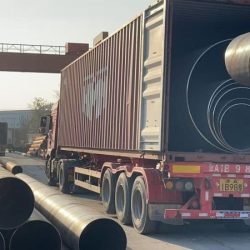
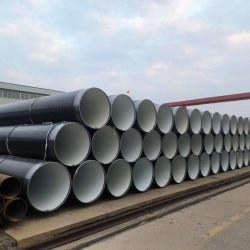
Hot-dip galvanized pipes utilize the hot-dip galvanizing process, wherein steel pipes are fully immersed in molten zinc baths. Through this hot-dip treatment, a zinc coating adheres to the pipe surface.
Fill in the form below and our team will be happy to assist you