

What Is Medium Carbon Steel Pipe?
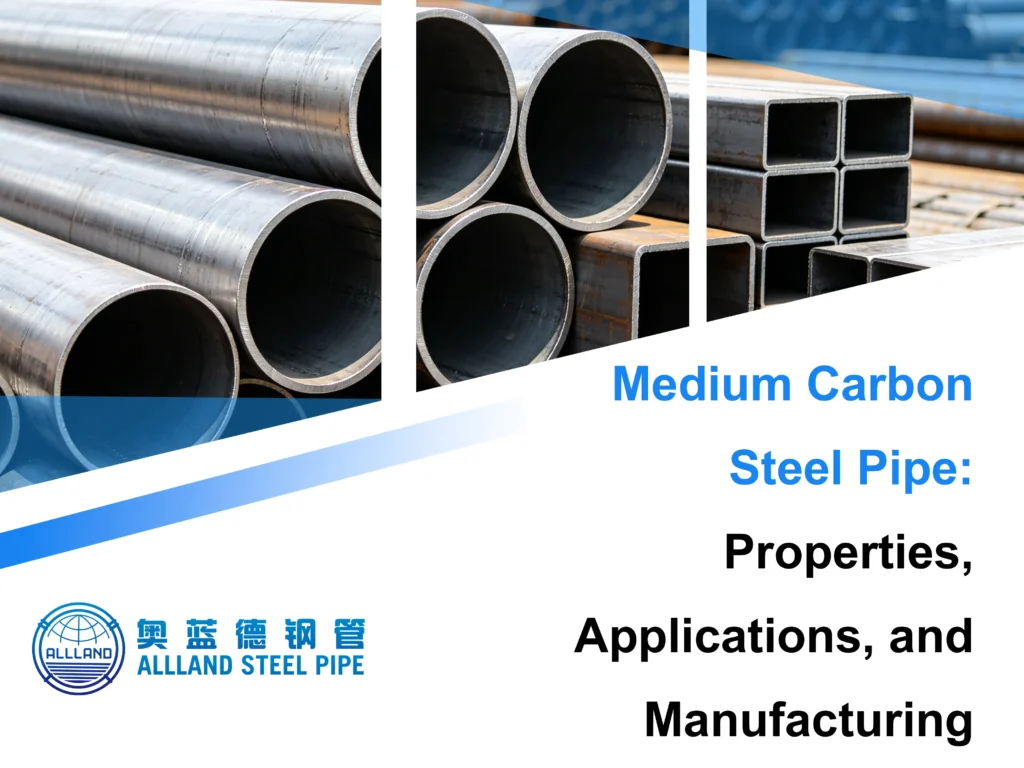
Medium-carbon steel pipe refers to carbon steel pipe products with a carbon content ranging from 0.25% to 0.60%. It is an important category of carbon steel pipe, falling between low-carbon steel pipe and high-carbon steel pipe.
Its key characteristic is the balance it achieves between strength and toughness, making it widely used in mechanical engineering and applications involving medium to high loads.
Medium Carbon Steel Pipe vs Other Carbon Steel Grades
| Steel Pipe Type | Carbon Content Range | Key Characteristics | Common Applications |
|---|---|---|---|
| Low Carbon Steel Pipe | Less than 0.25% | Excellent ductility, formability, and weldability | Construction, Water Pipelines, Structural Fabrication |
| Medium Carbon Steel Pipe | 0.25%–0.60% | Balanced strength, toughness, and wear resistance | Mechanical Parts, Shafts, Structural Machinery, Engineering Equipment |
| High Carbon Steel Pipe | Above 0.60% | High hardness and wear resistance, lower ductility | Cutting Tools, Springs, Wear-Resistant and Specialized Components |
Medium Carbon Steel Pipe
The typical composition range for medium-carbon steel is as follows:
- Carbon (C): 0.25% – 0.60%
- Manganese (Mn): 0.60% – 1.65%
- Trace amounts of Silicon (Si), Sulfur (S), and Phosphorus (P)/li>
👉 When carbon content is increased:
- Strength ↑
- Hardness ↑
- Weldability ↓ (compared to low-carbon steel)
Common Standards of Medium Carbon Steel Pipe
ASTM Standards (United States)
ASTM A106 – Seamless Carbon Steel Pipe for High-Temperature Service (certain grades are widely used in medium carbon steel applications)
ASTM A53 – Carbon Steel Pipe for Structural and Pressure Applications
ASTM A519 – Seamless Carbon and Alloy Steel Mechanical Tubing, one of the most common standards for medium carbon steel tubing
EN Standards (Europe)
- EN 10297-1 – Seamless Circular Steel Tubes for Mechanical and General Engineering Purposes
- EN 10210 – Hot-Finished Structural Hollow Sections
- EN 10219 – Cold-Formed Welded Structural Hollow Sections
JIS Standards (Japan)
JIS G3445 – Carbon Steel Tubes for Machine Structural Purposes
JIS G4051 – Carbon Steels for Machine Structural Use
Chinese Standards (China)
GB/T 8162 – Seamless Steel Pipes for Structural Purposes
GB/T 8163 – Seamless Steel Pipes for Fluid Transportation
GB/T 699 Grade 45 (45# Steel) – One of the most widely used medium carbon steel grades in China
40Cr Steel Pipe – Chromium-alloyed medium carbon steel pipe with improved strength, wear resistance, and hardenability
Key Mechanical Properties of Medium Carbon Steel Pipe
Medium carbon steel pipe typically provides:
- Higher tensile strength
- Moderate ductility
- Good wear resistance
- Can be heat treated
The tensile strength of medium-carbon steel tubes typically ranges from 550 to 900 MPa (depending on the grade and heat treatment). They can be used for components such as shafts and transmission parts that must withstand tensile and bending stresses, making them more suitable for “power transmission systems” than low-carbon steel.
The typical yield strength range is 300–700 MPa, providing better structural stability under mechanical loads.
Common hardness ranges: HRC 20–40 (higher values are possible after heat treatment). Hardness can be significantly increased through quenching, while tempering is used to balance hardness and toughness.
Elongation typically ranges from 10% to 25%.
Its ductility is lower than that of low-carbon steel, but it still possesses some plasticity and is not classified as a “brittle material.”
It can undergo a certain degree of cold working and forming, but is not suitable for extreme bending or complex forming.
Heat treatability is one of the most important performance advantages of medium-carbon steel.
Available heat treatment methods:
- Normalizing
- Quenching
- Tempering
Patterns of performance changes:
| Heat Treatment Method | Strength Level | Hardness Level | Toughness Level |
|---|---|---|---|
| Normalizing | Increased | Increased | Moderate |
| Quenching | Significantly Increased | Significantly Increased | Reduced |
| Tempering | Moderate to High | Reduced | Significantly Improved |
Key Applications of Medium Carbon Steel Pipe
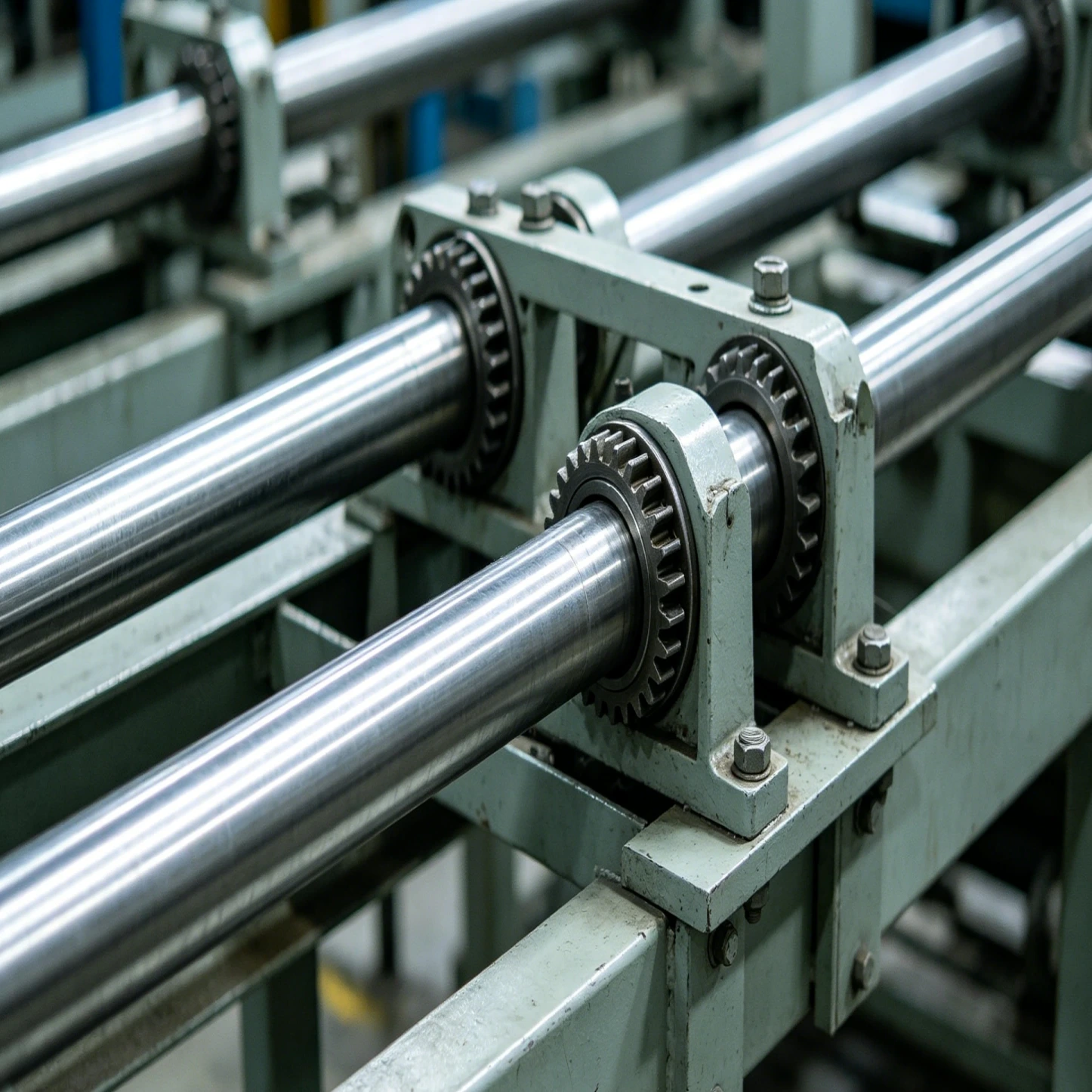
Medium Carbon Steel Pipe for Power Transmission Shafts
During operation, the shaft is constantly subjected to torsional forces, and torque fluctuations are significant (particularly in start-stop systems). Long-term rotational fatigue: Continuous operation (24/7 production line) results in an extremely high number of stress cycles.
High tensile strength (550–900 MPa) → High torsional strength
Adjustable hardness (HRC 20–40+) → Enhanced surface wear resistance
Heat treatability (quenching & tempering) → Improved fatigue life
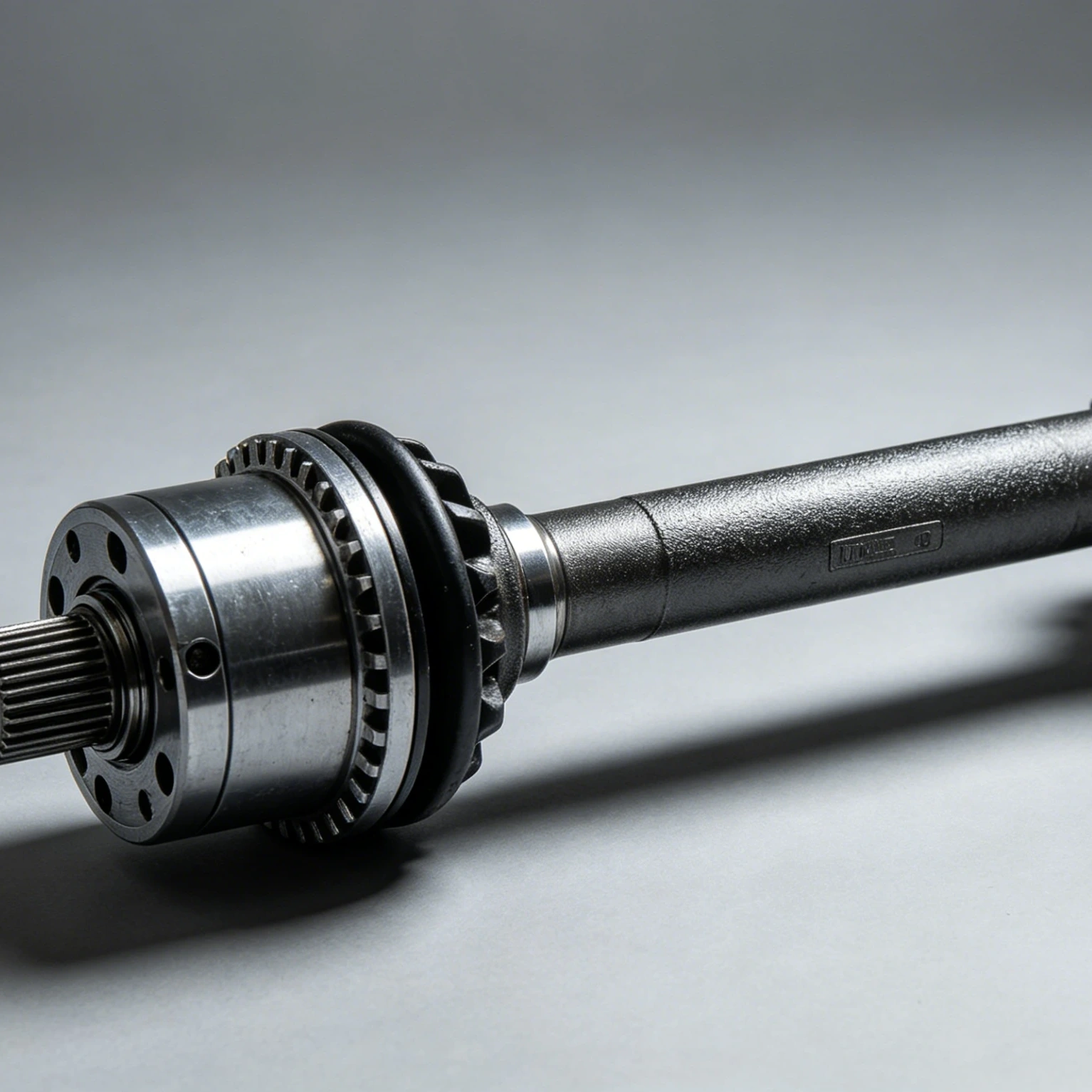
Medium Carbon Steel Pipe for Automotive Drive Shafts and Axles
- Automotive propeller shafts
- Rear axle shafts
- SUV/truck drive shafts
- Engineering vehicle drivetrains
Driveshafts are subjected to high-speed rotation and cyclic torsional loads over extended periods. In standard vehicles, driveshaft rotational speeds typically range from 500 to 3,000 RPM, and can exceed 4,000 RPM under certain operating conditions; therefore, they require materials with high strength stability and dynamic balance performance.
During vehicle acceleration, deceleration, and gear shifting, the driveshaft continuously endures varying torque loads. The operating torque for standard SUVs and light-duty trucks typically ranges from 500 to 3,000 N·m, while peak torque in heavy-duty vehicles can exceed 5,000 N·m. Prolonged cyclic loading can easily lead to fatigue cracks.
Furthermore, during off-road driving or heavy-load starts, the drivetrain is subjected to instantaneous impact loads, with peaks potentially reaching 1.5–3 times those under normal operating conditions, placing even higher demands on material toughness.
Medium-carbon steel tubes combine high strength with good toughness, typically achieving tensile strengths of 550–900 MPa. After quenching and tempering heat treatment, their hardness and wear resistance are further enhanced while maintaining good impact resistance. ALLLAND offers high-precision medium-carbon steel tubes and supports customized heat treatment processes to meet the dimensional tolerance, surface quality, and fatigue life requirements of automotive and commercial vehicle drivetrains.
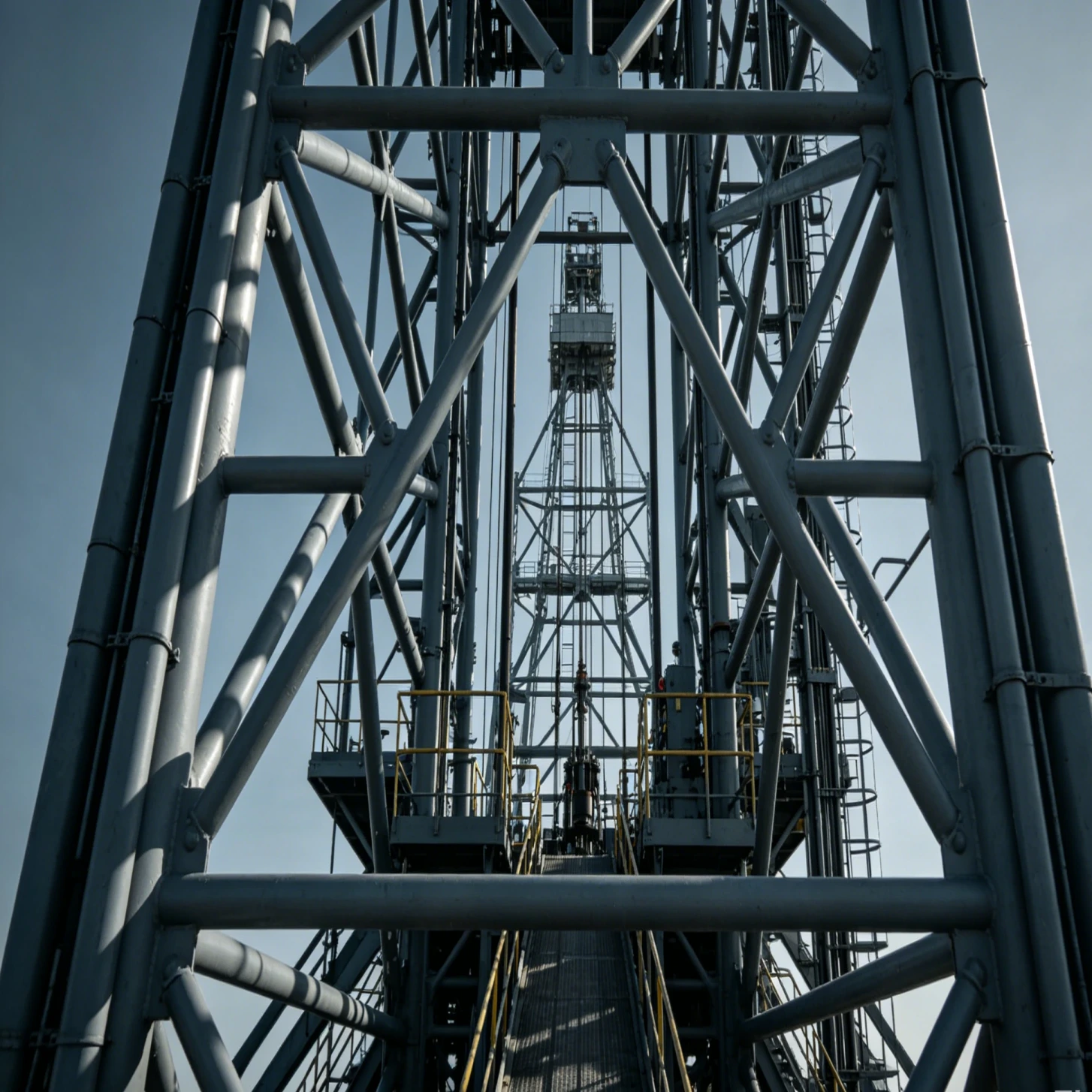
Medium Carbon Steel Pipe for Oilfield Equipment Structures
Oilfield structural components are typically subjected to both static and dynamic loads. Drilling equipment is heavy, with the structural load of a single unit often ranging from tens to hundreds of tons, accompanied by continuous vibration and operational impacts.
During drilling operations and equipment start-up and shutdown, structures are subjected to significant impact loads. This is particularly true in onshore drilling and mobile platform environments, where uneven ground further exacerbates dynamic stress fluctuations.
Furthermore, oilfield equipment is exposed to outdoor environments for extended periods. On offshore platforms or in coastal areas, air humidity typically exceeds 70%, and salt spray corrosion is a common issue, placing high demands on material durability and structural stability.
In non-extremely corrosive environments, medium-carbon steel pipes offer a balance of strength, workability, and cost-effectiveness, making them a common choice for structural supports in oilfield equipment. For projects in the energy and oil and gas industries, we supply medium-carbon steel pipes that comply with standards such as ASTM and EN, and we offer anti-corrosion coatings, sandblasting, and customized surface treatments to meet the diverse requirements of various oilfield environments.
Medium Carbon Steel Pipe for Construction Machinery
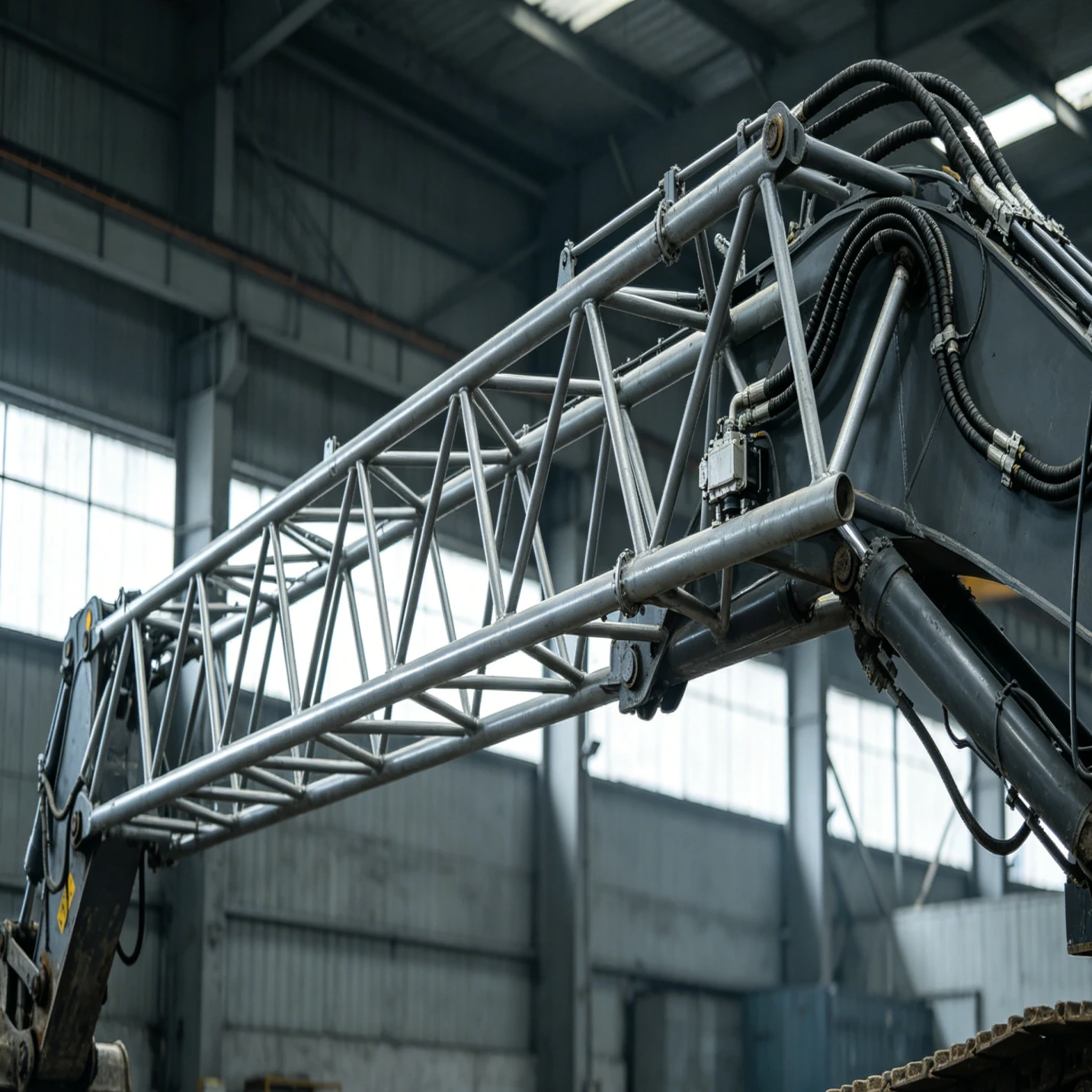
Medium-carbon steel tubes are widely used in excavator booms, crane support arms, structural tubing for loaders, and the frames of heavy-duty engineering equipment. These components typically serve as the primary load-bearing structures in construction machinery.
Construction machinery is subjected to extremely high dynamic loads during operation. Taking excavators as an example, during digging and lifting operations, structural loads fluctuate constantly with movement, and instantaneous impact forces are often far greater than those under static conditions.
During operations such as rock excavation and heavy-load lifting, the structure is also subjected to severe impact loads. Local stress levels in large engineering equipment can even reach 2–4 times those under normal operating conditions.
Medium-carbon steel has a high yield strength, typically ranging from 300 to 700 MPa, and is resistant to structural deformation under heavy loads.
Thanks to its high strength, good toughness, and heat-treatability, medium-carbon steel pipe has become one of the most commonly used materials in load-bearing structures for construction machinery, particularly for structural components in medium- and large-scale equipment. ALLLAND Steel Pipe possesses hot-rolling, cold-drawing, and cut-to-length processing capabilities, enabling us to supply medium-carbon steel pipes in various specifications and strength grades to meet the needs of the construction machinery industry, and we support bulk custom production.
Conclusion
Medium-carbon steel pipe, with its excellent strength, toughness, and heat treatment properties, is widely used in mechanical engineering systems, automotive components, oilfield equipment, and construction machinery. Compared to low-carbon steel, medium-carbon steel can withstand higher loads and fatigue stresses; compared to high-carbon steel, it offers better toughness and machinability, thereby achieving a balance between performance and cost in many engineering applications.
As industrial equipment demands ever-increasing structural strength, durability, and reliability, medium-carbon steel pipes remain a critical material in mechanical and structural engineering. Whether in high-speed rotating drive shaft systems or construction machinery structures subjected to high impact loads, medium-carbon steel delivers consistent and reliable performance.
As a professional steel pipe manufacturer, ALLLAND Steel Pipe offers a variety of medium-carbon steel pipe solutions—including hot-rolled, cold-drawn, seamless, and welded pipes—tailored to different engineering applications. We also provide heat treatment, corrosion protection, and customized processing services, delivering stable and reliable steel pipe products for global machinery manufacturing, energy, and industrial projects.