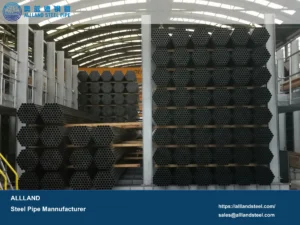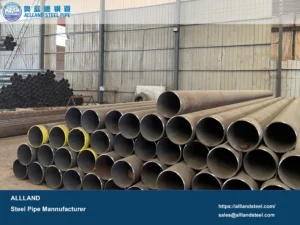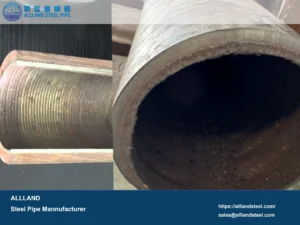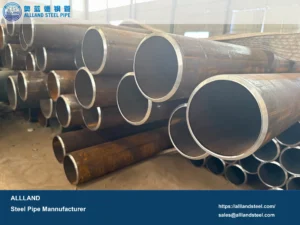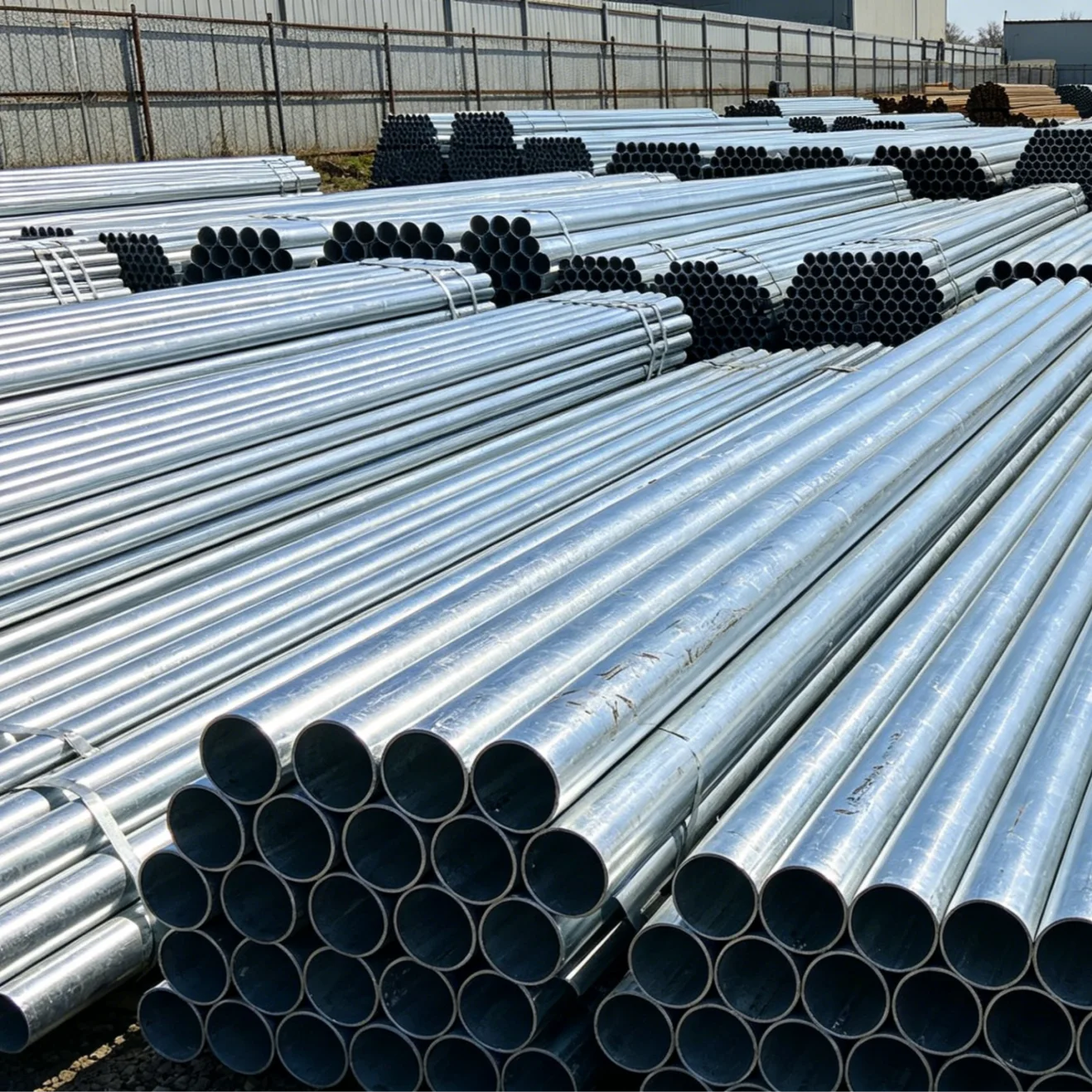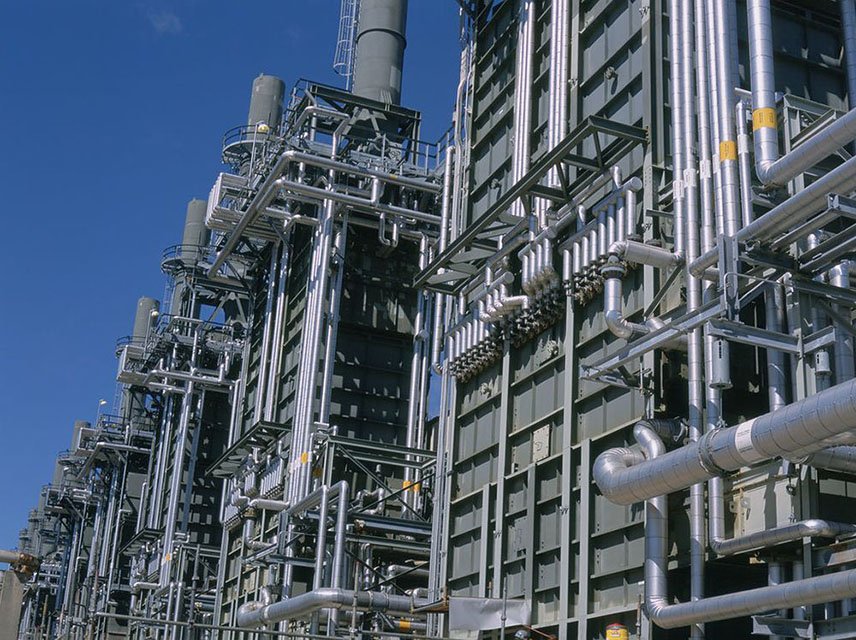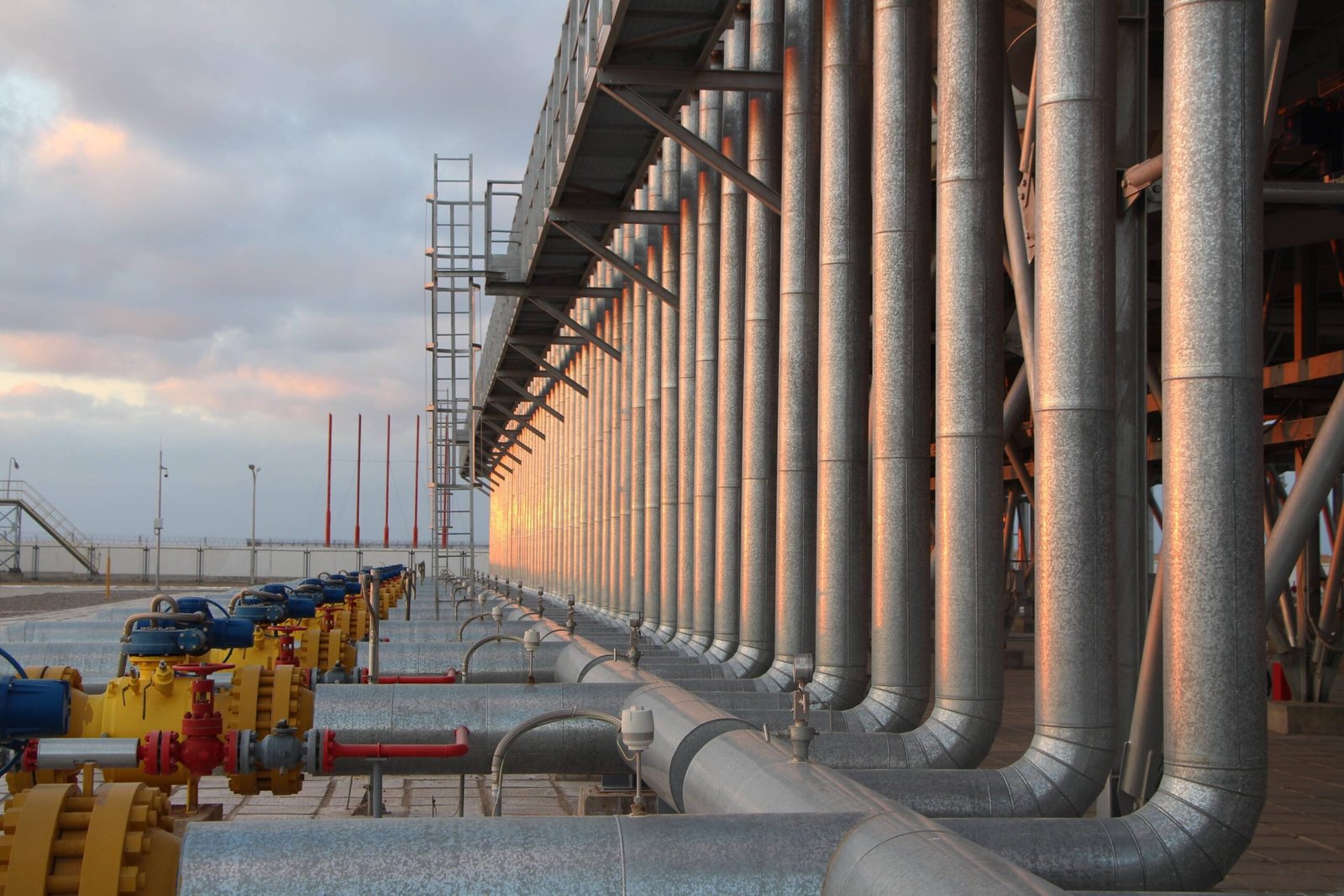




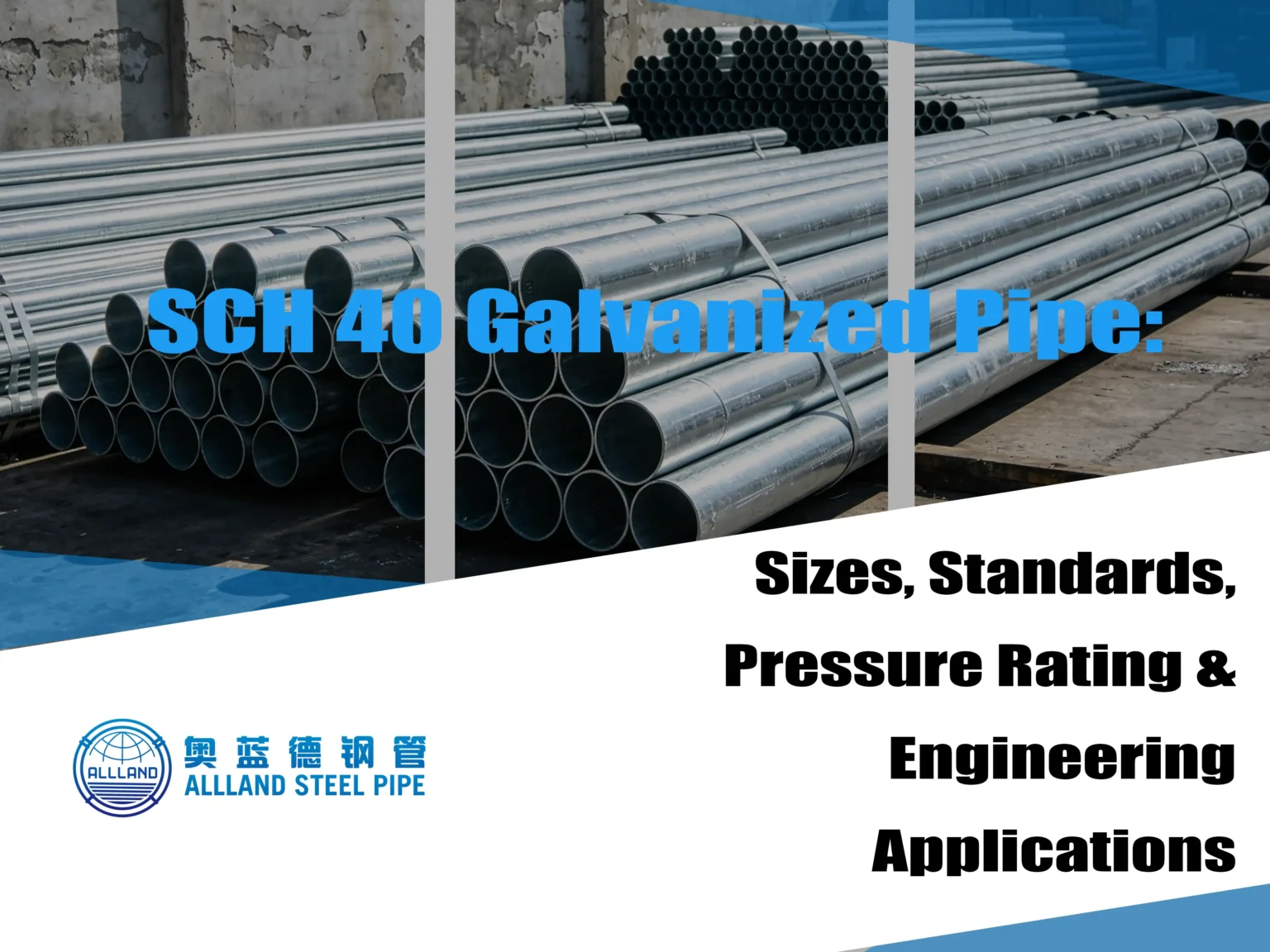
SCH 40 galvanized pipes are a type of medium-pressure piping system material widely used in industrial and construction applications.
They combine the structural strength of carbon steel pipes with the corrosion resistance of a hot-dip galvanized coating, striking a balance between cost, durability, and engineering suitability.
As a result, they are extensively used in water supply and drainage, fire protection, HVAC, and industrial conveyance systems.
What Are SCH 40 Galvanized Pipes?
SCH 40 Galvanized Pipe consists of two core concepts:
- SCH 40 (Schedule 40): Refers to the pipe wall thickness grade and is one of the thickness classifications in the ASME/ASTM pipe standards system
- Galvanized Pipe: Refers to carbon steel pipe that has undergone hot-dip galvanizing to form a protective zinc coating.
Its basic structure is as follows:
- Base Material: Carbon Steel Pipe
- Protective Layer: Zinc Coating
Why SCH 40 Galvanized pipe matters in piping systems
The importance of SCH 40 galvanized steel pipes lies primarily in the following:
- Offers a balance between strength and cost.
- Suitable for medium-pressure conveyance systems.
- Offers greater corrosion resistance than black steel pipes.
SCH 40 Galvanized Pipe Size Chart (NPS, OD, Wall Thickness & Weight)
- SCH 40 does NOT define diameter → it defines wall thickness
- Size system is based on NPS (Nominal Pipe Size)
- Standard Reference: ASME B36.10M Pipe Standard (Pipe Sizing System)
Common sizes:
- 2″ SCH 40 → plumbing / fire protection
- 3″ SCH 40 → HVAC / industrial flow
- larger sizes → infrastructure pipelines
👉 thicker pipes = higher pressure capacity
👉 weight increases significantly with diameter
SCH 40 Galvanized Pipe Standards & Technical Basis
The engineering performance of SCH 40 galvanized steel pipes is not determined by a single parameter, but rather is the result of constraints imposed by a combination of the standards system, material properties, and dimensional logic. As a result, these pipes offer a high degree of consistency and interchangeability in engineering projects worldwide.
In terms of standards, SCH 40 galvanized steel pipes primarily rely on two core specifications:
- ASTM A53: Specifies the material properties of carbon steel pipes and the scope of galvanizing application, ensuring that the pipes possess the basic strength and corrosion resistance required.
- ASME B36.10M: Defines the pipe sizing system and SCH (Schedule) wall thickness grades, ensuring that products from different suppliers have uniform engineering interfaces.
Pressure Rating (Working Pressure)
SCH 40 is not a fixed pressure rating, but rather a design-based thickness class.
Dependency: OD + wall thickness + material strength.
By standardizing wall thickness, it provides a calculable engineering pressure-bearing capacity rather than a preset, fixed pressure value.
In practical applications:
- Water supply systems → Moderate steady-state pressure
- Gas and air systems → Require a higher safety margin
- Industrial conveyance systems → Rely on design pressure calculations rather than empirical values
Wall Thickness Tolerance
Wall thickness tolerance is one of the key engineering control parameters for ensuring the long-term safe operation of piping systems.
Manufacturing tolerance limits are specified by ASTM/ASME standards:
- Ensuring structural consistency across batches of products.
- Directly affecting the safety factor.
Pipe Weight per Meter
Unit weight is an engineering parameter that is often overlooked but is extremely important in pipeline design.
Basic Calculation Formula:
W = 0.02466 × (D − t) × t × ρ
· W: Weight per unit length (kg/m)
· D: Outer diameter (mm)
· t: Wall thickness (mm)
· ρ: Material density (approximately 7.85 g/cm³ for carbon steel)
👉 As pipe diameter and wall thickness increase, weight rises significantly; therefore, during the project design phase, it is typically necessary to strike a balance between “pressure-bearing capacity” and “cost and construction difficulty.”
Engineering Support Capability
In many commercial building fire sprinkler system projects, we often encounter the issue of overly conservative equipment selection due to excessive safety redundancy.
For example, in a mixed-use commercial development project, the initial design called for SCH 80 for some of the main pipes, but a system review revealed that:
- The actual operating pressure remained within the safety range for SCH 40.
- SCH 80 resulted in increased pipe weight and structural loads.
- This led to a corresponding increase in installation and support costs.
After recalculating the design pressure and structural loads, the design was optimized as follows:
- The main pipeline was replaced with SCH 40 galvanized pipe.
- Higher-grade piping was retained in localized high-stress areas.
- The support spacing and load design were optimized accordingly.
👉 Essentially, this optimization does not involve lowering standards, but rather rationalizing structural redundancy (engineering optimization) while ensuring compliance with design pressures.
Applications of SCH 40 Galvanized Pipes
SCH 40 galvanized steel pipes are widely used in various engineering fields due to their balance of pressure-bearing capacity, corrosion resistance, and cost, and are classified as a typical general-purpose piping grade.
SCH 40 VS SCH10
| Comparison Item | SCH 10 (Thin Wall Pipe) | SCH 40 (Standard Medium Wall Pipe) |
| Wall Thickness | Thin wall | Medium wall |
| Pressure Rating | Lower pressure capacity | Medium pressure capacity |
| Structural Strength | Basic structural strength | Higher structural safety margin |
| Weight (per meter) | Lighter | Significantly heavier |
| Material Cost | Lower cost | Medium cost |
| Installation Difficulty | Easier handling due to light weight | Higher due to weight and support requirements |
| Typical Applications | Drainage, ventilation, low-pressure systems | Water supply, fire protection, industrial piping systems |
| Engineering Grade | Non-critical systems | Standard engineering piping systems |
| Safety Margin | Lower safety redundancy | Higher engineering safety margin |
| Service Life (same environment) | Moderate | More stable and durable |
The fundamental difference between SCH 10 and SCH 40 is not merely a matter of “wall thickness,” but rather their different engineering design purposes:
- SCH 10 = Lightweight, low-pressure, cost-priority; used for “non-critical fluid systems
- SCH 40 = Standard engineering grade that balances strength and cost
How Long Does SCH 40 Galvanized Pipe Last?
The typical service life ranges are as follows:
Indoor environments: Approximately 20–40 years (stable, low-corrosion environments).
Outdoor environments: Approximately 10–30 years (significantly affected by humidity and climate).
Marine or high-salinity environments: Service life is significantly reduced.
Conclusion
SCH 40 galvanized steel pipes strike a balance between pressure-bearing capacity, corrosion resistance, and cost, making them a standard pipe material commonly used in construction and industrial systems.
ALLLAND Steel Pipe offers SCH 40 steel pipes that comply with ASTM/ASME standards to support project selection and engineering application needs.