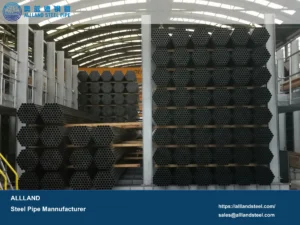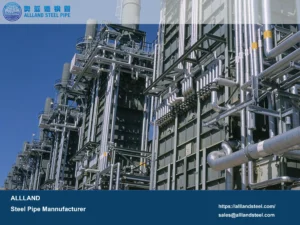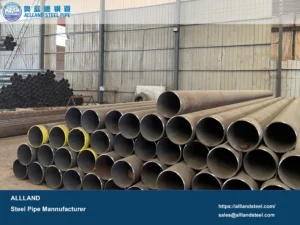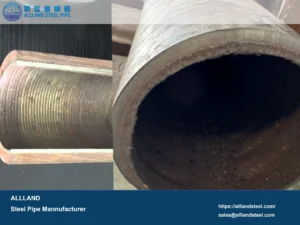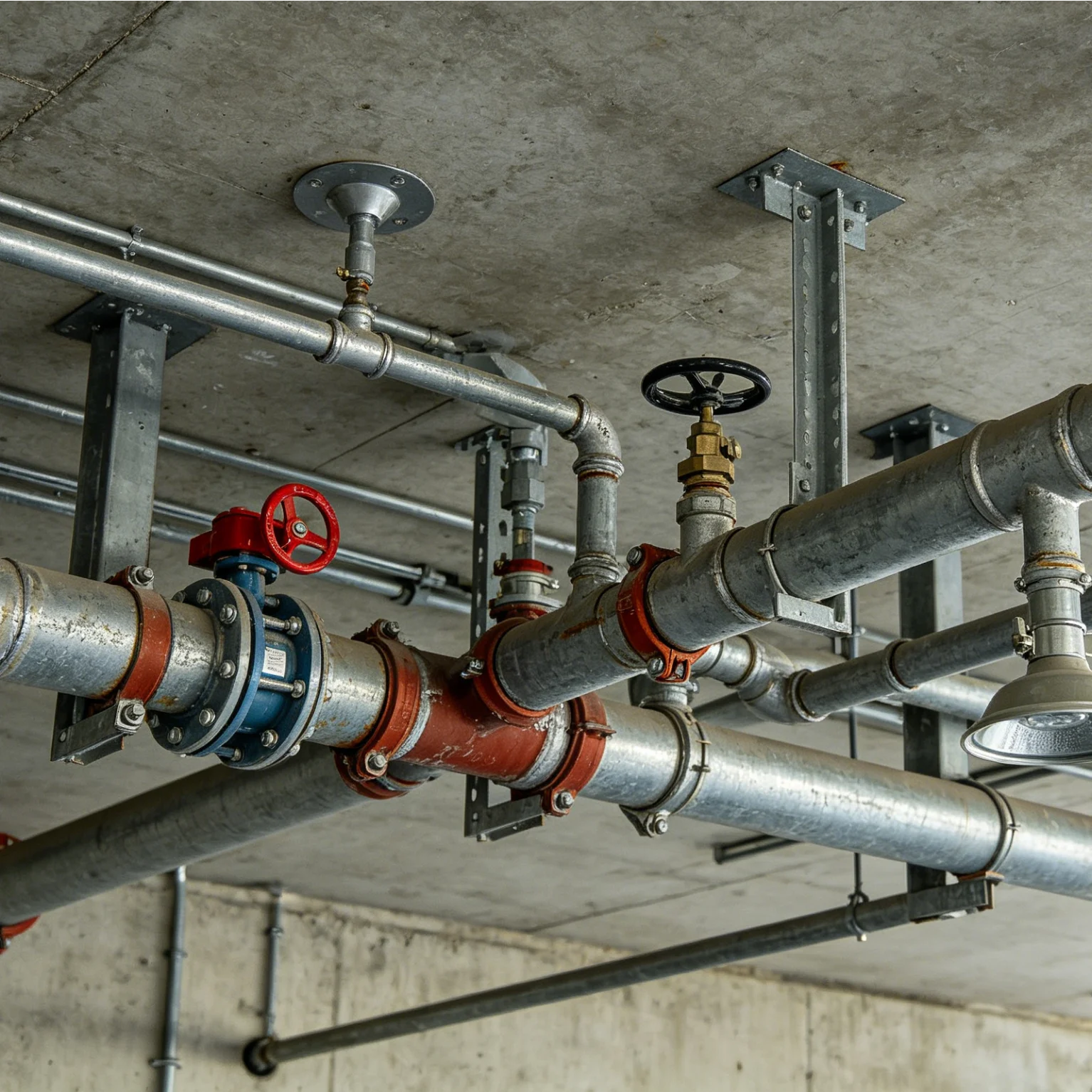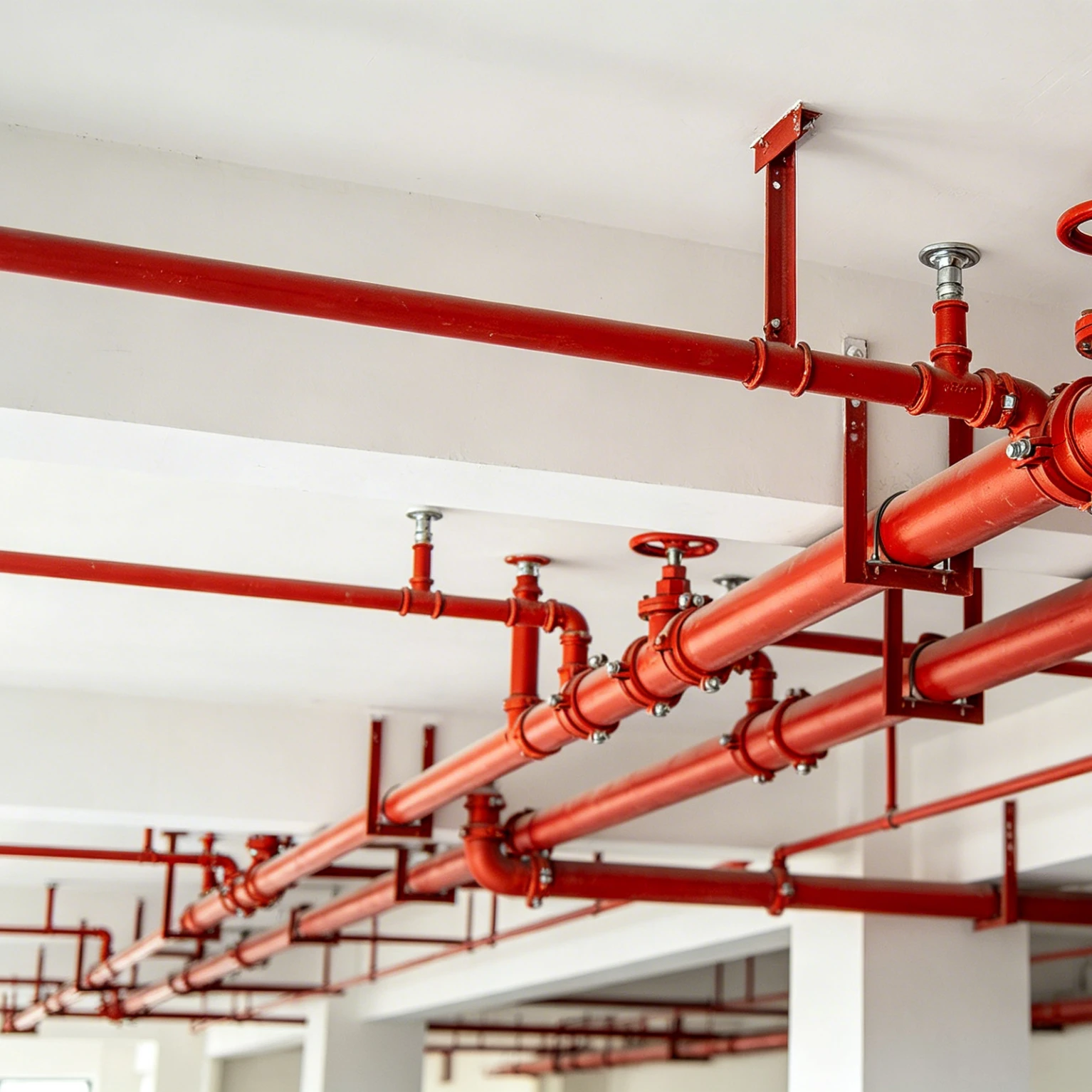


What Is Threaded 1"–2" Small-Diameter Fire Pipe?
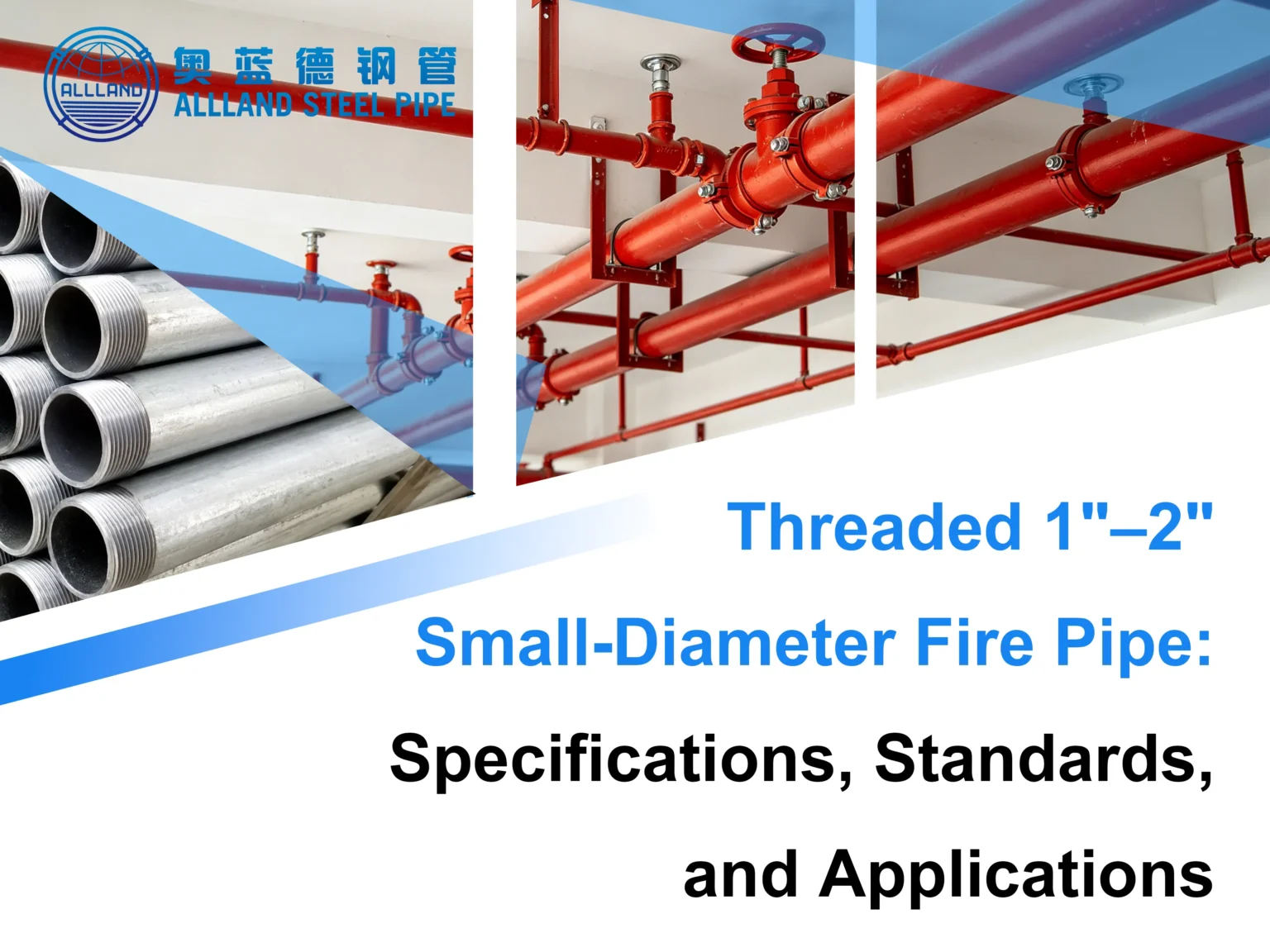
Threaded 1“–2” small-diameter fire pipes are carbon steel pipe products designed for fire protection systems, primarily used in automatic sprinkler systems and fire suppression systems.
These pipes typically feature **threaded ends**, eliminating the need for welding and enabling quick installation using fittings, elbows, tees, and couplings.
Common sizes range from NPS 1 inch to 2 inches (DN25–DN50), and they are widely used in the branch piping sections of fire protection systems.
At ALLLAND Steel Pipe, we offer threaded fire protection steel pipes that comply with international standards, widely used in commercial buildings, industrial facilities, and fire protection engineering projects worldwide.
Why Are Small-Diameter Fire Pipes Usually Threaded?
Easy Installation: Threaded connections require no welding equipment and can be quickly assembled using fittings, significantly improving on-site construction efficiency.
Lower Installation Cost: Compared to welded systems, threaded connections require less labor and equipment, effectively reducing overall project costs.
Suitable for Branch Lines: 1“–2” pipes are typically used in the branch lines of sprinkler systems, where they distribute water to the sprinkler heads, making them a critical component of fire protection systems.
Easy Maintenance and Replacement: Threaded connections can be quickly disassembled, facilitating system maintenance, repairs, and partial replacements.
Typical Sizes of Threaded 1″–2″ Fire Pipe
Selecting the appropriate threaded fire protection steel pipe involves not only the product specifications themselves but also a comprehensive consideration of various engineering factors, including fire safety codes, system pressure, corrosion-resistant environments, and installation methods. This is particularly true for small-diameter (1“–2”) fire sprinkler branch pipe systems, where pipe selection directly impacts the system’s safety, stability, and long-term maintenance costs.
During the actual procurement process for engineering projects, evaluation is typically conducted based on the following key criteria.
| Nominal Size (NPS) | DN | Outside Diameter (OD) | Common Schedule | Typical Application |
| 1″ | DN25 | 33.4 mm | SCH 10 / SCH 40 | Fire Protection |
| 1-1/4″ | DN32 | 42.2 mm | SCH 10 / SCH 40 | Fire Protection |
| 1-1/2″ | DN40 | 48.3 mm | SCH 10 / SCH 40 | Fire Protection |
| 2″ | DN50 | 60.3 mm | SCH 10 / SCH 40 | Fire Protection |
These specifications are widely used in fire sprinkler systems with different pressure ratings; the specific selection should be determined based on design requirements.
Manufacturing Standards for Small-Diameter Fire Pipe
The core standard for fire protection steel pipes, applicable to both welded and seamless fire protection piping.
A general-purpose carbon steel pipe standard, also commonly used for fire protection and structural applications.
UL certification ensures that products meet safety testing requirements for fire protection systems and is applicable to projects in North America and internationally.
FM certification indicates that products have passed rigorous fire resistance and reliability tests.
NFPA 13 is the core code for the design and installation of automatic sprinkler systems and is widely adopted worldwide.
Applications
1“–2” threaded fire protection steel pipes are primarily used in the branch piping networks of various building fire sprinkler systems. Due to their small diameter, flexible connections, and high installation efficiency, they are widely used in fire protection systems for commercial buildings, industrial facilities, and public buildings.
In modern fire protection engineering, steel pipes of this specification typically serve as the branch piping for sprinkler systems, responsible for precisely delivering water to each sprinkler head. They are an indispensable and critical component of the entire fire protection system.
Fire Sprinkler Branch Lines
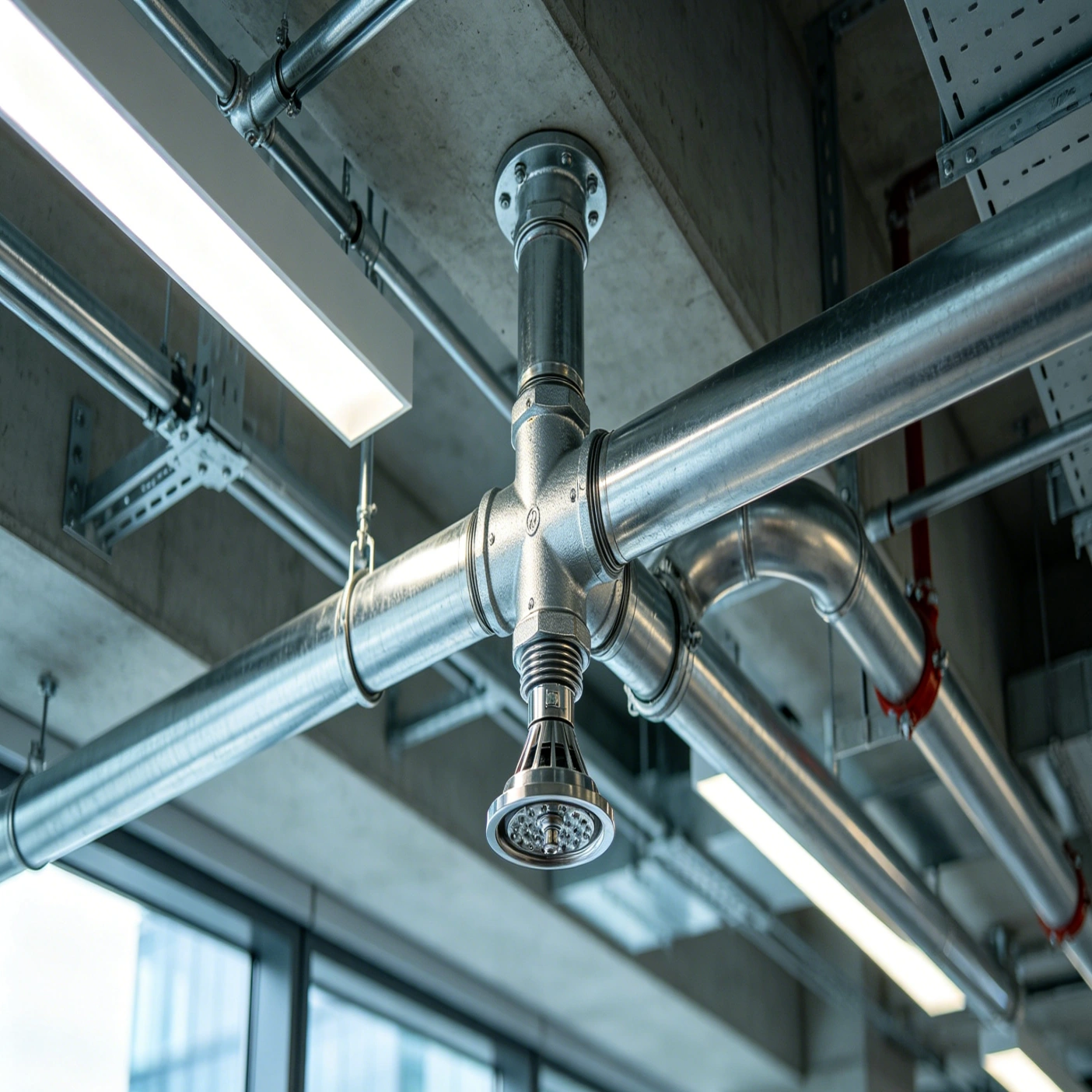
In an automatic sprinkler system, the piping is typically organized into a three-tier structure:
- Main Pipe
- Riser
- Branch Line
In particular, threaded 1“–2” steel pipes are used in the branch pipe system at the very end, where they connect directly to sprinkler heads to provide the final fire suppression coverage.
The characteristics of this level mean that the design focus is not on “high-volume transport”, but rather on:
- Precise traffic diversion
- Rapid response
- High-density deployment
Therefore, steel pipes of this specification generally use threaded connections to accommodate complex installation conditions at the ends.
Threaded Fire Pipe for Fire Protection Systems
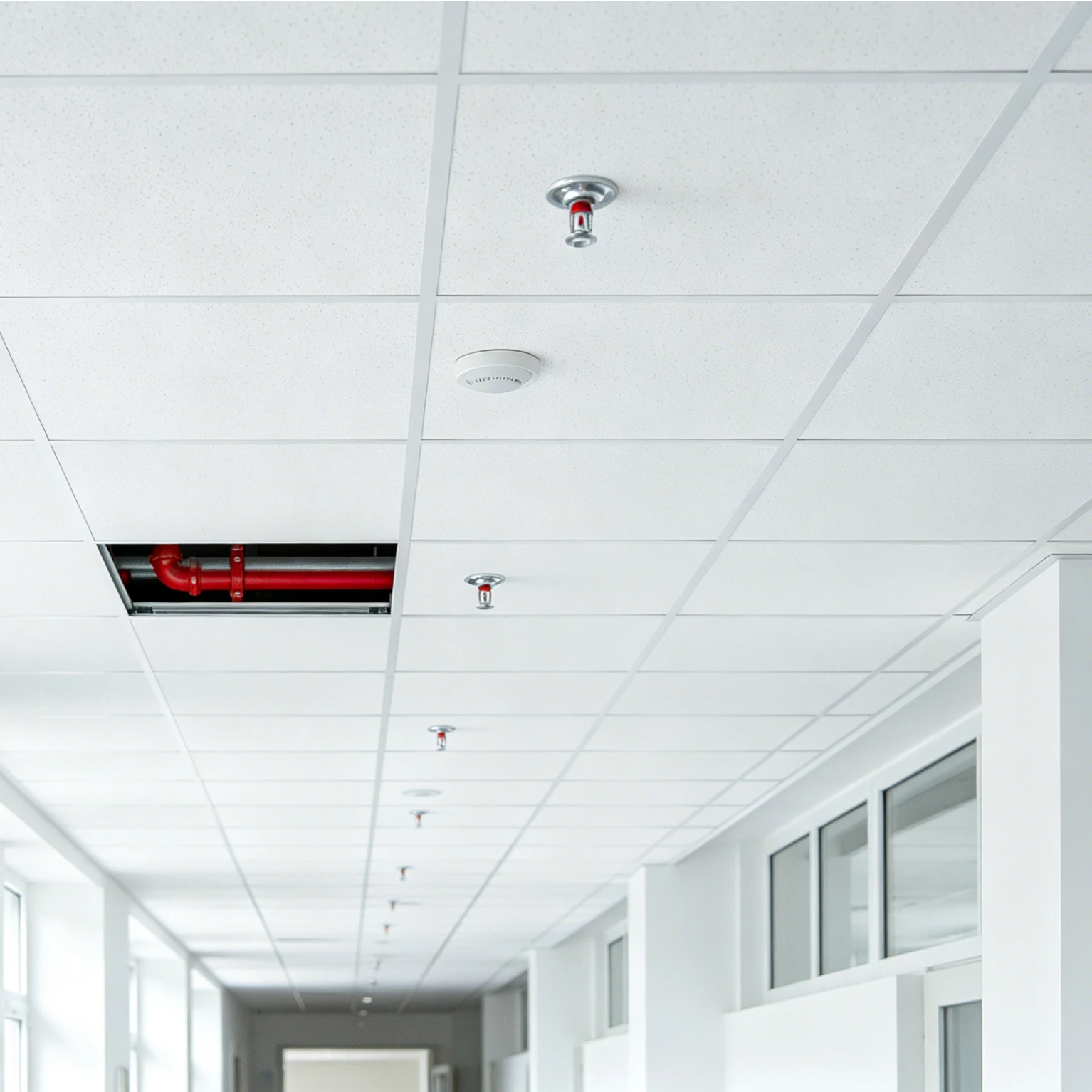
When sprinkler systems are installed in commercial buildings, such as office buildings, shopping malls, and hotels, the complexity of the branch piping system increases significantly.
Buildings of this type typically have the following characteristics:
- Multiple stories and complex spatial layouts
- Dense piping and wiring within the suspended ceilings
- Fire protection systems must comply with NFPA 13 standards
In this environment, the advantages of 1“–2” threaded steel pipes are further amplified:
Since a large number of branch sprinkler heads are required between floors, the piping system must offer:
- Quick installation
- Flexible adjustment
- Minimal disruption to construction
As a result, threaded connections have become one of the most common methods for connecting branch pipes in commercial buildings.
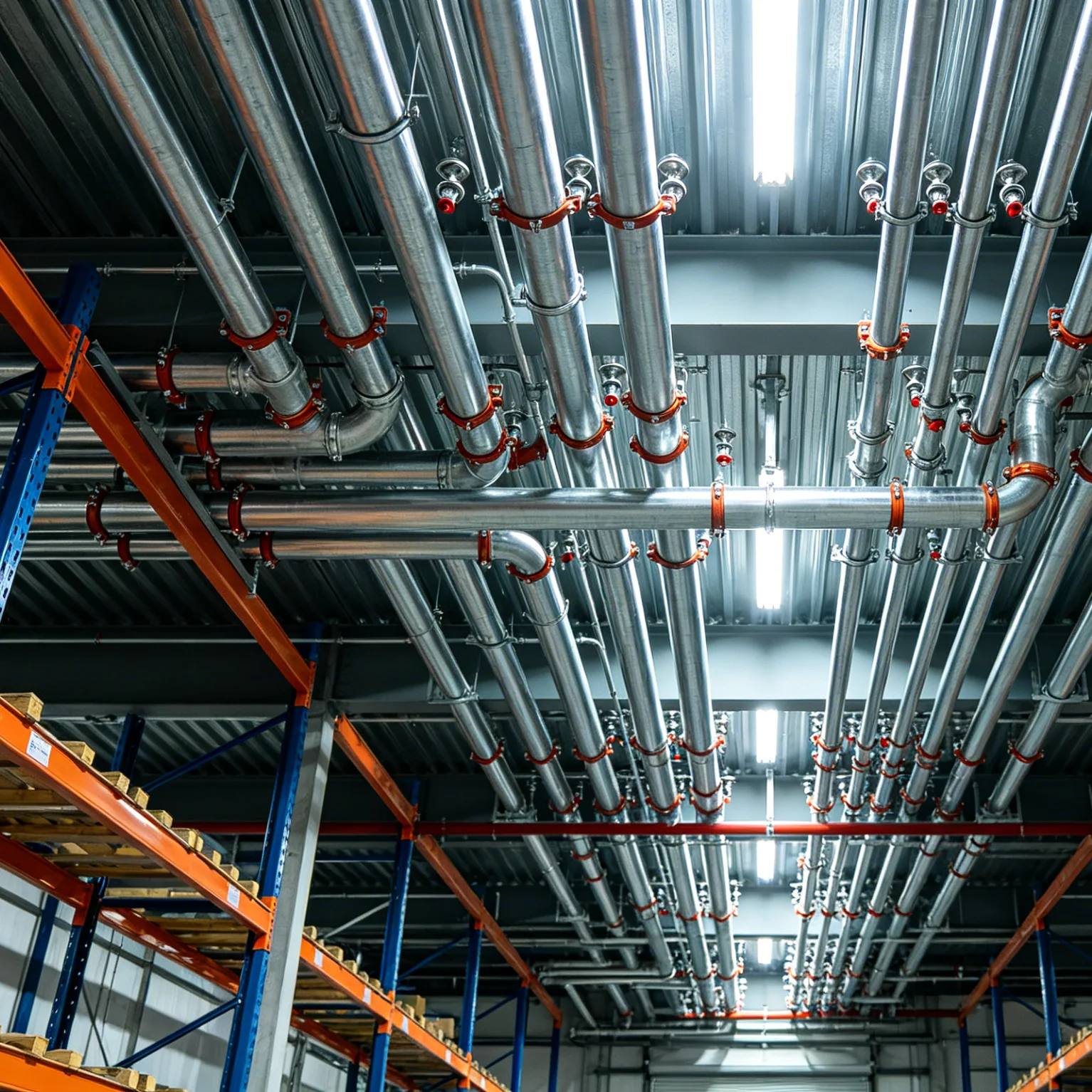
Threaded Fire Pipe for Warehouse and Logistics Fire Sprinkler Systems
While commercial buildings emphasize “complex layouts,” warehousing and logistics centers emphasize “coverage.”
In high-bay warehouses, sprinkler systems must cover larger areas and handle higher fire loads.
At this point, the branch pipe system serves the following purposes:
- Rapid coverage of large areas
- Ensuring a rapid response in the early stages of a fire
- Supporting a modular installation structure
1“–2” threaded steel pipes are primarily used here for the overhead spray branch network, enabling the system to quickly form a uniform water curtain.
This application has directly driven their widespread use in logistics centers across Europe, the United States, and the Middle East.
Industrial Fire Protection Applications
As the application of 1“–2” threaded fire protection steel pipes expanded from commercial buildings into industrial settings, the focus of system design began to shift from “spatial coverage efficiency” to “long-term operational reliability under complex conditions.”
In industrial facilities—such as petrochemical plants, manufacturing workshops, power generation facilities, and heavy industrial sites—fire protection systems are typically required to operate reliably in high-temperature, corrosive environments, and even under potentially flammable conditions. At the same time, these sites often demand continuous production, so fire protection piping systems must possess a higher level of stability and durability.
Under these application conditions, 1“–2” threaded steel pipes are not only used for branch distribution but must also meet stricter engineering standards, such as the ASTM A795 or ASTM A53 specifications. Additionally, when project requirements are more stringent, they must comply with UL/FM certification systems. Furthermore, to mitigate corrosion risks in industrial environments, hot-dip galvanizing or anti-corrosion coatings are typically applied.
Threaded 1″–2″ Small-Diameter Fire Pipe for Schools and Hospitals
Schools and hospitals are typical public safety-sensitive buildings, and their fire protection systems must comply with the most stringent design and acceptance standards.
In hospitals, sprinkler systems are typically divided into multiple independent zones—such as patient rooms, hallways, and operating areas—to enable more precise safety control; in school buildings, the focus is on multi-story coverage, rapid response capabilities, and long-term maintenance-free operation.
In such highly regulated environments, the role of 1“–2” threaded steel pipes is primarily focused on ensuring system stability. Their value lies mainly in their ability to support high-density branch pipe networks, provide reliable water supply within complex building structures, and facilitate convenient maintenance without disrupting normal operations.
Threaded vs Grooved vs Welded Fire Pipe
| Comparison Item | Threaded Fire Pipe | Grooved Fire Pipe | Welded Fire Pipe |
| Pipe Size Range | 1″–2″ (small diameter) | 2″–12″ (medium to large) | >2″ (all sizes, mainly large systems) |
| Connection Method | Threaded ends + fittings | Grooved coupling system | Welding (fusion connection) |
| Installation Speed | Fast | Very fast | Slow |
| Installation Difficulty | Low | Medium | High |
| Hot Work Required | No | No | Yes (welding required) |
| Tool Requirements | Basic hand tools | Grooving machine + couplings | Welding machine + certified welders |
| Installation Cost | Low | Medium | High |
| Maintenance & Disassembly | Easy (reusable connections) | Very easy (quick disassembly) | Difficult (cutting required) |
| Sealing Performance | Medium–High (depends on thread quality) | High (mechanical sealing system) | Very High (permanent joint) |
| Vibration Resistance | Medium | High | Very High |
| Typical Application | Branch lines (sprinkler systems) | Main distribution lines | High-pressure / critical systems |
How to Choose the Right Threaded Fire Pipe for Your Project
Selecting the appropriate threaded fire protection steel pipe involves not only the product specifications themselves but also a comprehensive consideration of various engineering factors, including fire safety codes, system pressure, corrosion-resistant environments, and installation methods. This is particularly true for small-diameter (1“–2”) fire sprinkler branch pipe systems, where pipe selection directly impacts the system’s safety, stability, and long-term maintenance costs.
During the actual procurement process for engineering projects, evaluation is typically conducted based on the following key criteria.
Confirm Compliance with International Fire Protection Standards
First, it is essential to verify that the steel pipes comply with relevant fire protection engineering standards, such as ASTM A795, ASTM A53, and the NFPA 13 Standard for Automatic Sprinkler Systems. For projects in North America and internationally, compliance with UL Listed or FM Approved certification requirements may also be necessary.
These standards not only determine whether the product will pass engineering acceptance inspections but also directly impact the system’s safety rating and long-term reliability.
ALLLAND Steel Pipe manufactures fire protection steel pipes in strict accordance with ASTM standards and can meet the requirements for UL/FM certification projects, making them suitable for fire protection engineering projects in various regions around the world.
Select Appropriate Wall Thickness (Schedule 10 / Schedule 40)
Common wall thickness grades for threaded fire sprinkler pipes include:
- Schedule 10: Commonly used in standard sprinkler branch systems
- Schedule 40: Suitable for systems with higher pressure requirements or stricter safety standards
Inappropriate wall thickness selection may result in unnecessary costs or insufficient load-bearing capacity; therefore, it must be selected in accordance with design drawings and engineering specifications.
ALLLAND offers fire-rated steel pipe products in various wall thickness grades to meet the needs of different engineering designs.
Evaluate Corrosion Protection Requirements
Fire protection systems are often used in a variety of environments, including dry indoor settings, humid environments, and even highly corrosive industrial settings. Therefore, corrosion resistance is one of the key factors to consider when selecting a system.
Common surface treatment methods include:
- Black Pipe: Suitable for dry indoor environments
- Galvanized Fire Pipe: Suitable for damp or corrosive environments
- Epoxy or protective coatings: Used for highly corrosive environments or projects with stringent requirements
ALLLAND offers a variety of corrosion protection solutions, including hot-dip galvanizing production lines and custom coating services, to extend the service life of pipelines in challenging environments.
Ensure Threading Accuracy and Installation Compatibility
The quality of the threads is a key factor affecting the sealing performance and installation efficiency of fire protection systems. If the threads are not machined properly, it can easily lead to leaks, installation difficulties, or system hazards.
Key requirements include:
- Standard NPT or BSPT threads
- Dimensional accuracy in accordance with engineering specifications
- Good compatibility with pipe fittings, elbows, and connectors
Choose a Reliable Manufacturer with Project Supply Capability
In actual fire protection projects, the procurement process involves not only the steel pipes themselves but also system-level products such as pipe fittings, flanges, grooved fittings, and prefabricated pipe sections. Therefore, the supplier’s overall supply capability is of critical importance.
ALLLAND Steel Pipe not only supplies 1“–2” threaded fire protection steel pipes, but also offers complete fire protection piping system solutions, including:
- Threaded Fire Protection Steel Pipes
- Grooved Fire Protection Steel Pipe Systems
- Pipe Fittings and Flanges
- Prefabricated Pipe Spools
- Custom Services (Cutting, Threading, etc.)
- Export Packaging and International Logistics Support
With extensive experience in international engineering projects, ALLLAND is able to provide contractors and distributors with a stable supply chain, helping to improve overall procurement efficiency and reduce project risks.
FAQ
Q1: What are small-diameter threaded fire hoses ranging from 1 inch to 2 inches?
Threaded 1“–2” Small-Diameter Fire Pipe refers to small-diameter steel pipes with 1-inch to 2-inch threads used in fire sprinkler systems. They are primarily used in the branch lines of automatic fire sprinkler systems and connect to fittings via threaded joints, enabling quick installation and maintenance.
This type of steel pipe is widely used in commercial buildings, warehouses, and industrial fire protection systems.
Q2: What are 1“–2” threaded fire protection steel pipes primarily used for?
Steel pipes of this size are primarily used for branch lines in fire protection systems, which transport water from the main trunk line to individual sprinkler heads.
Common applications include:
- Fire sprinkler branch line systems
- Fire protection systems in commercial buildings
- Sprinkler networks in warehousing and logistics centers
- Localized fire protection zones in industrial facilities
- Fire protection systems in schools and hospitals
Q3: Why are threaded connections typically used for small-diameter fire protection pipes?
Small-diameter fire protection steel pipes (1“–2”) use threaded connections primarily because they offer significant advantages in terms of installation and cost:
- Quick installation with no welding required
- Simple tools and low labor costs
- Suitable for complex ceiling structures and environments with dense piping
- Easy to maintain and replace in specific sections
As a result, threaded connections have become one of the standard connection methods for small-diameter fire protection branch pipe systems.
Q4: What is the difference between threaded fire pipe and grooved fire pipe?
The main differences between the two lie in their connection methods and applicable pipe diameters:
- Threaded Fire Pipe: Suitable for small-diameter branch systems (1“–2”), featuring simple installation and lower costs.
- Grooved Fire Pipe: Suitable for medium- to large-diameter pipes (2″ and above), offering faster installation and ideal for main trunk systems.
In actual engineering projects, both methods are typically used in combination to meet the needs of different pipeline network structures.