ALLLAND Boiler Steel Pipe Supply
ASTM A53 is one of the most widely used international standards for steel pipes, providing comprehensive specifications for pipe dimensions, chemical composition, mechanical properties, and manufacturing processes. Steel pipes manufactured in accordance with the ASTM A53 standard achieve an excellent balance between strength and ductility, workability and service performance, as well as cost-effectiveness and versatility. This comprehensive nature makes ASTM A53 a highly popular and commonly used standard for steel pipes, and it is widely applied across various industries.
Alllandsteel is a steel pipe manufacturer based in China with 25 years of experience.
The facility spans 22,000 square meters, represents a RMB 700 million investment, and operates four production lines (JCOE, ERW, SMLS, SSAW) alongside five coating lines.
With an annual production capacity of 250,000 tons, the factory covers specifications ranging from Ø406 to Ø1524 and holds multiple international certifications (API/ASTM/EN/ISO/JIS). Focused on steel pipes, creating value for you!
HOT PRODUCTS
POPULAR ARTICLES
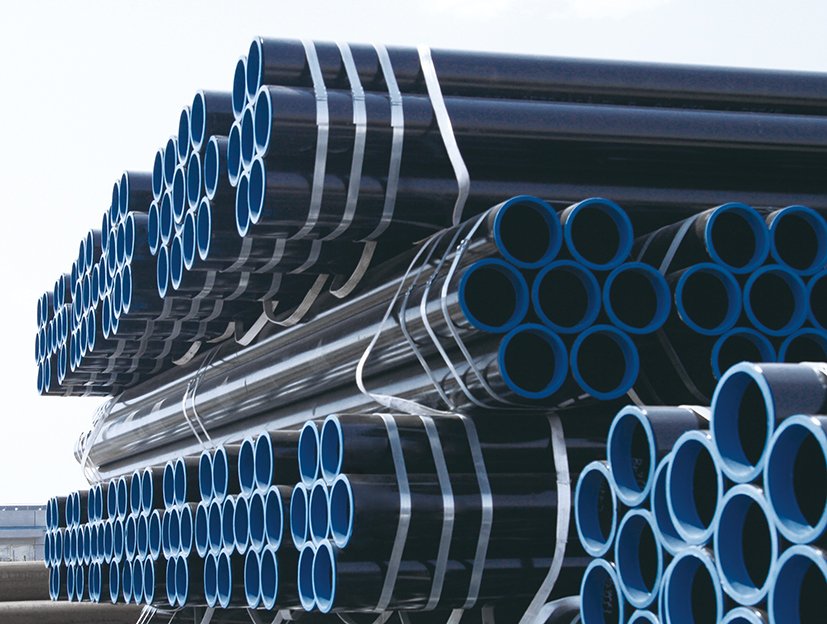
ASTM A53 is a standard specification developed by the ASTM International Organization for Standardization, applicable to black steel pipes, hot-dip galvanized steel pipes, welded steel pipes, and seamless steel pipes. Different grades of steel pipes produced according to the ASTM A53 standard can be selected based on varying pressure and strength requirements.
ASTM A53 imposes stringent requirements on the material, dimensions, tolerances, welding, and surface treatment of steel pipes, ensuring their reliability and safety in a variety of applications. The ASTM A53 standard is updated regularly; according to the latest official information, the current version is ASTM A53/A53M-24 (2024 edition). ALLLAND offers various types and grades of ASTM A53 steel pipes to meet the needs of different industries and customers.
O.D.:
1/8 inch (3.2 mm) to 26 inches (660 mm)
W.T.:
SCH 10, SCH 40, SCH 80, SCH 160, STD (Standard), XS (Thickened), XXS (Double Extra Strong)
Length:
6-12 meters, customizable to project requirements.
Product Identification:
Manufacturer name, standard, type, grade, size, batch number
Types:
Type F (furnace-welded steel pipe), Type E (resistance-welded steel pipe), Type S (seamless steel pipe)
Steel Grades:
Grade A, Grade B
Tube Ends:
Plain End, Beveled End (30°-35° bevel angle), Threaded End and Chamfered End
Surface:
Black Finish, Pickled, Hot-Dip Galvanized, Oil-coated for Rust Prevention
| NPS | OD (mm) | SCH 5 | SCH 10 | SCH 20 | SCH 30 | SCH 40 / STD | SCH 60 | SCH 80 / XS | SCH 100 | SCH 120 | SCH 140 | SCH 160 |
| 1/2″ | 21.3 | 2.11 | 2.11 | — | — | 2.77 | — | 3.73 | — | — | — | 4.78 |
| 3/4″ | 26.7 | 2.11 | 2.11 | — | — | 2.87 | — | 3.91 | — | — | — | 4.85 |
| 1″ | 33.4 | 2.77 | 2.77 | — | — | 3.38 | — | 4.55 | — | — | — | 5.54 |
| 1-1/4″ | 42.2 | 2.77 | 2.77 | — | — | 3.56 | — | 4.85 | — | — | — | 6.02 |
| 1-1/2″ | 48.3 | 2.77 | 2.77 | — | — | 3.68 | — | 5.08 | — | — | — | 6.35 |
| 2″ | 60.3 | 2.77 | 2.77 | — | — | 3.91 | — | 5.54 | — | — | — | 7.11 |
| 2-1/2″ | 73 | 3.05 | 3.05 | — | — | 5.16 | — | 7.01 | — | — | — | 8.56 |
| 3″ | 88.9 | 3.05 | 3.05 | — | — | 5.49 | — | 7.62 | — | — | — | 9.27 |
| 4″ | 114.3 | 3.05 | 3.05 | — | — | 6.02 | — | 8.56 | — | — | — | 10.97 |
| 5″ | 141.3 | 3.4 | 3.4 | — | — | 6.55 | — | 9.53 | — | — | — | 12.7 |
| 6″ | 168.3 | 3.4 | 3.4 | — | — | 7.11 | — | 10.97 | — | — | — | 13.49 |
| 8″ | 219.1 | 3.76 | 3.76 | 6.35 | — | 8.18 | — | 12.7 | — | — | — | 15.09 |
| 10″ | 273 | 4.19 | 4.19 | 6.35 | — | 9.27 | — | 12.7 | — | — | — | 15.09 |
| 12″ | 323.9 | 4.57 | 4.57 | 6.35 | — | 9.53 | — | 12.7 | — | — | — | 15.09 |
| 14″ | 355.6 | 4.78 | 4.78 | 6.35 | — | 10.97 | — | 15.09 | — | — | — | 18.26 |
| 16″ | 406.4 | 4.78 | 4.78 | 6.35 | — | 10.97 | — | 15.09 | — | — | — | 18.26 |
| 18″ | 457 | 4.78 | 4.78 | 6.35 | — | 12.7 | — | 15.09 | — | — | — | 20.74 |
| 20″ | 508 | 4.78 | 4.78 | 6.35 | — | 12.7 | — | 17.48 | — | — | — | 20.74 |
| 24″ | 609.6 | 5.16 | 5.16 | 6.35 | — | 12.7 | — | 17.48 | — | — | — | 22.23 |
| 30″ | 762 | 5.16 | 5.16 | 6.35 | — | 15.09 | — | 19.05 | — | — | — | 25.4 |
| 36″ | 914.4 | 5.16 | 5.16 | 6.35 | — | 15.09 | — | 19.05 | — | — | — | 25.4 |
“—” indicates that this Schedule is not typically manufactured or commonly used for the corresponding size.
All dimensions are in mm.
Thin-walled Schedules (SCH5/10) are not typically used for large-diameter pipes (≥24″) to ensure pipe strength.
The ASTM A53 standard mainly covers two processes: seamless and welded. Based on the manufacturing process, it is divided into:
Notice:
The default selection is Type E Grade B, which is applicable to 90% of general projects.
According to the ASTM A53 standard, steel pipes are mainly classified into two grades based on strength: Grade A and Grade B. The core difference lies in the requirements for mechanical properties and chemical composition. Grade A is suitable for applications requiring lower strength, while Grade B is suitable for applications requiring higher strength. In actual production, the most commonly used combination is Type E or Type S with Grade B, representing the optimal balance between strength, weldability, and economy.
Grade A
Grade A is the preferred choice when pipes need to be tightly coiled or cold-bent, and is suitable for low-pressure applications.
Tensile strength: minimum 45,000 psi (approximately 310 MPa).
Yield strength: Minimum 30,000 psi (approximately 205 MPa).
Grade B:
High strength, good weldability and formability, suitable for high pressure and high strength applications.
Tensile strength: minimum 70,000 psi (approximately 480 MPa).
Yield strength: minimum 35,000 psi (approximately 240 MPa).
The physical properties of ASTM A53 steel pipes mainly involve their physical characteristics such as density and coefficient of thermal expansion, while their mechanical properties include strength, toughness, and ductility. The table below lists the main physical properties of ASTM A53 steel pipes; all data are based on the requirements of the ASTM A53 standard and are provided for selection reference.
| Attribute | Value | Unit | Description |
| Density | 7.85 | g/cm³ | Used for weight calculation, commonly used value |
| Elastic Modulus | 200 | GPa | Stiffness design reference |
| Coefficient of Thermal Expansion | 12×10⁻⁶ | 1/°C | Used for thermal stress calculation |
| Thermal Conductivity | 50 | W/(m·K) | Heat exchange condition reference |
| Maximum Operating Temperature | Approximately 500 | °C | Above this temperature, A106 needs to be replaced |
Mechanical properties are the most crucial indicator of steel pipes, with key parameters including tensile strength, yield strength, elongation, and hardness. According to the ASTM A53 standard, the mechanical properties of steel pipes depend on the steel grade. The following lists the main mechanical property indicators for two steel grades of ASTM A53 steel pipes:
| Performance indicators | Grade A | Grade B | Unit |
| Yield strength (minimum) | ≥205 | ≥240 | MPa |
| ≥30,000 | ≥35,000 | psi | |
| Tensile strength (minimum) | ≥330 | ≥415 | MPa |
| ≥48,000 | ≥60,000 | psi | |
| Yield-to-tensile strength ratio (typical value) | Approximately 0.62 | Approximately 0.58 | – |
| Elongation (minimum) | Approximately ≥20% | Approximately ≥20% | % |
| Hardness (typical value) | Approximately 241 | Approximately 241 | HRB |
Note:
Grade B has higher strength and stronger pressure resistance, making it the first choice for the vast majority of projects.
A low yield strength ratio (approximately 0.58-0.62) indicates good plasticity, strong deformation capacity, and high safety.
Selection Recommendation: Choose Grade A when good bending and welding are more important than high pressure resistance; choose Grade B when pressure resistance and strength are more important.
Chemical composition is fundamental to determining the mechanical properties, weldability, and corrosion resistance of steel pipes. The following are detailed specifications for chemical composition in the ASTM A53 standard, for reference during selection.
ASTM A53 Chemical Composition Requirements (Maximum Values, %):
| Element | Symbol | Type S/E – Grade A | Type S/E – Grade B | Type F – Grade A | Type F – Grade B | Illustrate |
| Carbon | C | 0.25 | 0.30 | 0.30 | — | The core elements that determine strength and hardness |
| Manganese | Mn | 0.95 | 1.20 | 1.20 | — | Solid solution strengthening improves strength |
| Phosphorus | P | 0.05 | 0.05 | 0.05 | — | Impurities, if too high, can cause brittleness upon cooling. |
| Sulfur | S | 0.045 | 0.045 | 0.045 | — | Excessive impurities can lead to hot brittleness. |
| Copper | Cu | 0.40 | 0.40 | 0.40 | — | Other elements |
| Nickel | Ni | 0.40 | 0.40 | 0.40 | — | Other elements |
| Chromium | Cr | 0.40 | 0.40 | 0.40 | — | Other elements |
| Molybdenum | Mo | 0.15 | 0.15 | 0.15 | — | Other elements |
| Vanadium | V | 0.08 | 0.08 | 0.08 | — | Other elements |
The significance of chemical elements:
Black steel pipe
Definition: Black steel pipes are raw steel pipes that have not undergone surface treatment, and are usually dark gray or black. Because there is no coating or plating on the surface, they are prone to corrosion and rust.
Applications: Primarily used indoors in environments where corrosion is not a major concern, such as gas pipelines and heating, ventilation, and air conditioning (HVAC) system ducts.
Hot-dip galvanized pipe
Description: Hot-dip galvanizing involves immersing pipes in a bath of molten zinc to form a strong zinc layer. This zinc layer acts as a sacrificial anode, effectively protecting the steel pipe, improving its corrosion resistance, and extending its service life.
Applications: Outdoor wastewater pipelines, chemical applications requiring high corrosion resistance.
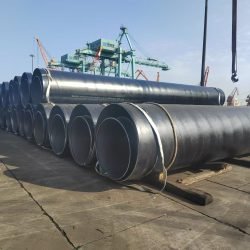
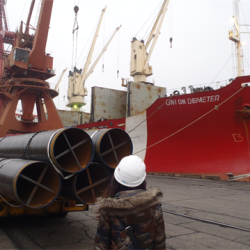
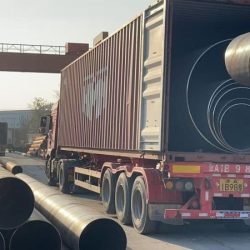
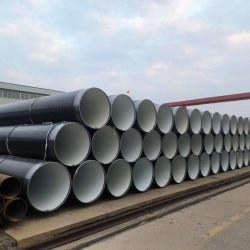
ASTM A53 steel pipe is an ideal choice for many industrial and civil engineering projects. It is designed to provide reliable material for mechanical and pressure applications, while also being suitable for everyday uses such as fluid transport and structural support. In short, ASTM A53 steel pipe is a versatile, fundamental steel material with applications primarily including the following:
When a project involves general water, fire protection, structural, or low-pressure process piping and specifies ASTM A53 Grade B or API 5L PSL1 Grade B, these two standards are equivalent at that specific grade. We can provide pipes that meet both standards (dual standards), fully satisfy the performance requirements, and have interchangeable fittings.
Projects involving long-distance pipelines or acidic environments typically require API 5L PSL2, with strict requirements for chemical composition and low-temperature toughness, which ASTM A53 cannot meet.
In summary, ASTM A53 and API 5L can be considered equivalent and interchangeable within Grade B. However, once outside this range, they are independent standards serving different engineering needs and are not interchangeable.
For fire protection systems, outdoor exposure, humid environments, and chemical plants—corrosion protection is the priority; galvanized pipes are the best choice.
For dry indoor environments, extensive welding, underground pipelines (requiring additional corrosion protection), and limited budgets—prioritizing cost, choose black pipes.
Although ASTM A53 steel pipes perform well in the normal temperature range, they are not specifically designed for high-temperature applications. It is recommended not to exceed 343°C. Above this temperature, ASTM A106 (high-temperature dedicated pipe) or ASTM A335 steel pipes should be used.