ALLLAND Boiler Steel Pipe Supply
ASTM A500 steel pipes, with their high strength, excellent machinability, good ductility and toughness, and versatility, have become the preferred choice for structural applications. ALLLAND is a professional supplier located in Cangzhou, Hebei Province—a major steel pipe manufacturing center. We hold multiple international certifications including API and ISO, and strictly adhere to the ASTM A500 standard in producing every steel pipe. From the spectral analysis of incoming raw materials to process control during forming and welding, and then to the flattening, bending, and hydrostatic tests of finished products, ALLLAND implements rigorous quality control throughout the entire process to ensure that every steel pipe meets the standard and is traceable by furnace number.
Alllandsteel is a steel pipe manufacturer based in China with 25 years of experience.
The facility spans 22,000 square meters, represents a RMB 700 million investment, and operates four production lines (JCOE, ERW, SMLS, SSAW) alongside five coating lines.
With an annual production capacity of 250,000 tons, the factory covers specifications ranging from Ø406 to Ø1524 and holds multiple international certifications (API/ASTM/EN/ISO/JIS). Focused on steel pipes, creating value for you!
HOT PRODUCTS
POPULAR ARTICLES
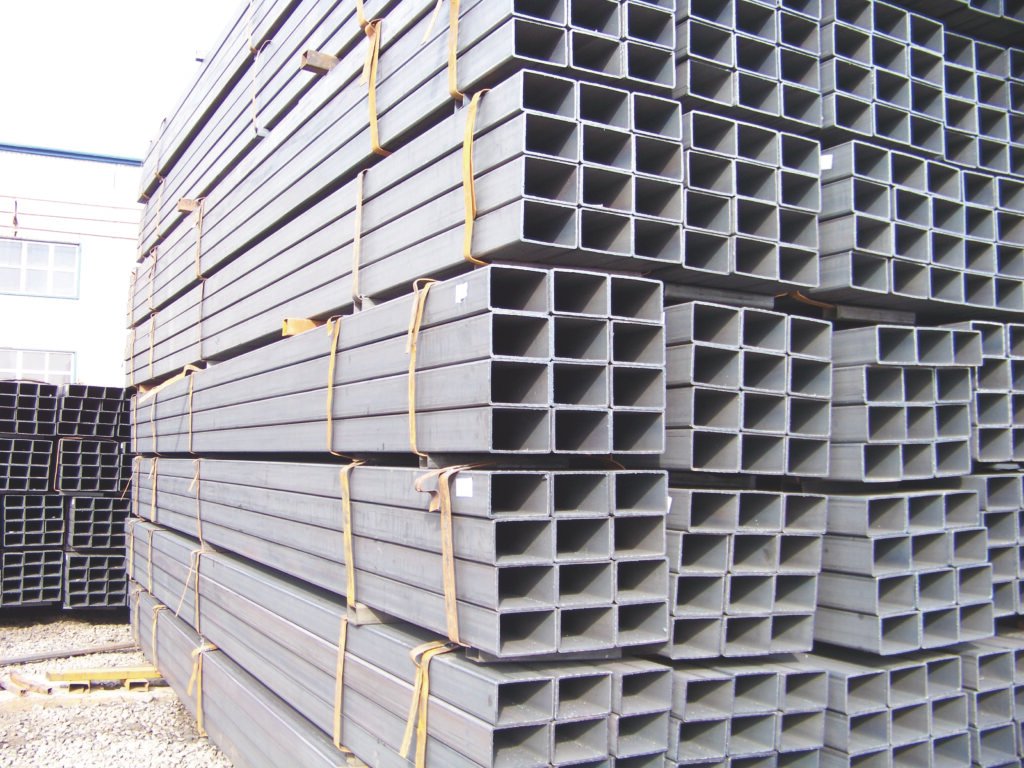
ASTM A500 is a standard that specifies the technical requirements for welded and seamless steel pipes. It applies to both hot-bent and cold-bent steel pipes, outlining requirements for dimensions, materials, chemical composition, mechanical properties, testing methods, and surface and end treatments. ASTM A500 is a leading standard specifically designed for load-bearing applications, encompassing various cross-sections such as round, square, and rectangular, characterized by high strength and good machinability.
O.D.:
1/8 inch (3.2mm) to 20 inches (508mm)
W.T.:
0.035 inches (0.89 mm) to 1.00 inches (25.4 mm)
Length:
Usually 6 meters, Random Length: 20 – 24 ft, Custom Length.
Process:
Cold Forming High-Frequency Welding (ERW)
Sizing and Straightening Cutting to Length
Grades:
Grade A, B, C, and D, with Grade C being the industry’s preferred grade.
Shapes:
Round, square, rectangular, special shapes (HSS: Hollow Structural Sections)
Tube Ends:
Plain End, Beveled End (30°-35° bevel angle), Threaded End, and Chamfered End
Surface treatment:
Black, Oiled, Painted, Galvanized
ASTM A500 is a standard for structural tubing, primarily used in building structures, steel structures, and support structures. The standard covers three types of tubing: round, rectangular, and square. The dimensions for these three different shapes will be described separately below.
The outer diameter range for round tubes is 21.3 mm – 660 mm (0.840“ – 26”), with wall thicknesses ranging from 1.6 mm to 12.7 mm.
| NPS | OD (inch) | WT (inch) |
| 1/2 | 0.065 / 0.083 / 0.095 | |
| 3/4 | 1.05 | 0.065 / 0.083 / 0.095 |
| 1 | 1.315 | 0.083 / 0.095 / 0.109 / 0.133 |
| 1-1/4 | 1.66 | 0.095 / 0.109 / 0.133 |
| 1-1/2 | 1.9 | 0.095 / 0.120 / 0.145 |
| 2 | 2.375 | 0.120 / 0.154 |
| 2-1/2 | 2.875 | 0.120 / 0.203 |
| 3 | 3.5 | 0.120 / 0.216 |
| 4 | 4.5 | 0.237 / 0.250 |
| 5 | 5.563 | 0.258 |
| 6 | 6.625 | 0.28 |
| 8 | 8.625 | 0.322 |
| 10 | 10.75 | 0.365 |
| 12 | 12.75 | 0.375 / 0.500 |
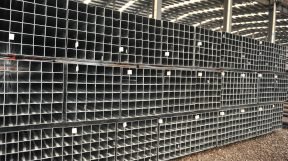
Square tube side lengths range from 12.7 mm to 500 mm (1/2“ to 20”), with wall thicknesses ranging from 1.6 mm to 22 mm.
| NPS | WT (inch) |
| 1 × 1 | 0.065 / 0.083 |
| 1-1/2 × 1-1/2 | 0.083 / 0.095 |
| 2 × 2 | 0.083 / 0.120 |
| 2-1/2 × 2-1/2 | 0.12 |
| 3 × 3 | 0.120 / 0.188 |
| 4 × 4 | 0.120 / 0.188 / 0.250 |
| 5 × 5 | 0.188 / 0.250 |
| 6 × 6 | 0.188 / 0.250 / 0.375 |
| 8 × 8 | 0.250 / 0.375 |
| 10 × 10 | 0.375 / 0.500 |
| 12 × 12 | 0.5 |
Rectangular tubing side dimensions range from 25 × 50 mm – 400 × 600 mm (1“ × 2” – 16“ × 24”), with wall thicknesses ranging from 1.6 mm – 12.7 mm.
| NPS | WT (inch) |
| 2 × 3 | 0.083 / 0.120 |
| 2 × 4 | 0.120 / 0.188 |
| 3 × 4 | 0.120 / 0.188 |
| 3 × 5 | 0.120 / 0.188 |
| 4 × 6 | 0.188 / 0.250 |
| 5 × 7 | 0.188 / 0.250 |
| 6 × 8 | 0.250 / 0.375 |
| 8 × 12 | 0.375 |
| 10 × 14 | 0.375 |
| 12 × 16 | 0.5 |
The ASTM A500 standard includes four steel grades: A, B, C, and D. Grade C is the most commonly used steel grade, with a yield strength of 50 ksi (approximately 345 MPa).
| Steel Grade | Applicable Scenarios |
| Grade A | Basic level, capable of handling normal loads and pressures, rarely used. |
| Grade B | General structural grade, high cost performance |
| Grade C | The most commonly used grade, with the highest strength, is suitable for high-pressure environments or high-load scenarios. |
| Grade D | Applicable only to round and square tubes (not applicable to rectangular tubes), requires heat treatment, and is used for specific needs. |
According to the latest ASTM A500 standard, the main dimensional ranges are as follows:
The mechanical properties of steel pipes are the core indicators for determining their suitability for structural load-bearing. These properties mainly include yield strength, tensile strength, and elongation. Specific mechanical property requirements for ASTM A500 vary depending on the steel grade. Grade C is currently the most mainstream and recommended first-choice grade in the market.
| Steel Grade | Cross-Sectional Shape | Minimum Yield Strength (MPa/ksi) | Minimum Tensile Strength (MPa/ksi) | Elongation (%) |
| Grade A | Round | 230 / 33 | 310 / 45 | 25 |
| Square/Rectangle | 269 / 39 | 310 / 45 | 25 | |
| Grade B | Round | 290 / 42 | 400 / 58 | 23 |
| Square/Rectangle | 317 / 46 | 400 / 58 | 23 | |
| Grade C | Round | 317 / 46 | 427 / 62 | 21 |
| Square/Rectangle | 345 / 50 | 427 / 62 | 21 | |
| Grade D | Round | 250 / 36 | 400 / 58 | 23 |
| Square/Rectangle | 250 / 36 | 400 / 58 | 23 |
Note: Elongation in the table is the minimum value; the specific value depends on the sample size and wall thickness.
In addition to the main properties listed in the table, ASTM A500 also specifies other important mechanical property requirements, such as bending performance, hardness, impact toughness, and pipe integrity. These properties ensure the safety, reliability, and durability of the steel pipe when used in high-strength, low-temperature, or extreme environments.
Lorem ipsum dolor sit amet, consectetur adipiscing elit. Ut elit tellus, luctus nec ullamcorper mattis, pulvinar dapibus leo.
Lorem ipsum dolor sit amet, consectetur adipiscing elit. Ut elit tellus, luctus nec ullamcorper mattis, pulvinar dapibus leo.
Lorem ipsum dolor sit amet, consectetur adipiscing elit. Ut elit tellus, luctus nec ullamcorper mattis, pulvinar dapibus leo.
The chemical composition of a pipe, as specified in ASTM A500, determines its weldability, stress resistance, and brittleness at low temperatures. The ASTM A500 standard imposes strict limits on the content of elements such as carbon, manganese, phosphorus, and sulfur to ensure that the steel pipe is weldable, bendable, has sufficient strength, and is safe enough.
The following are the main elements and requirements covered in ASTM A500:
| Element | Grade A | Grade B | Grade C |
| Carbon (C) | 0.26% | 0.26% | 0.26% |
| Manganese (Mn) | 0.30-1.35% | 0.30-1.35% | 0.30-1.35% |
| Sulfur (S) | ≤ 0.05% | ≤ 0.05% | ≤ 0.05% |
| Phosphorus (P) | ≤ 0.05% | ≤ 0.05% | ≤ 0.05% |
| Nickel (Ni) | ≤ 0.50% | ≤ 0.50% | ≤ 0.50% |
| Copper (Cu) | ≤ 0.50% | ≤ 0.50% | ≤ 0.50% |
| Molybdenum (Mo) | ≤ 0.10% | ≤ 0.10% | ≤ 0.10% |
*The copper content requirement applies only when the order specifies “copper-containing steel”; there is no minimum requirement if not specified.
Phosphorus and sulfur are the most undesirable elements in steel; excessive levels can lead to cold brittleness or hot brittleness. Moderate amounts of copper can slightly improve steel’s resistance to atmospheric corrosion, but too much copper can cause the steel to become brittle and affect its weldability.
ASTM A500 steel pipes are characterized by high strength, excellent processing adaptability and corrosion resistance, making them suitable for various fields such as construction, bridges, energy, and oil and gas pipelines.
Steel structure buildings: including high-rise buildings, industrial plants, etc. The high strength of ASTM A500 steel pipes ensures the stability of buildings under heavy loads and is easy to weld together.
Bridge construction: Bridge frame structures require high-strength, durable steel tubing, and ASTM A500 steel tubing can provide this support, ensuring long-term safe use.
Including urban traffic bridges and highway bridges, steel pipes need to bear enormous weight on the main deck and piers. ASTM A500 steel pipes can meet this requirement and provide stable support.
Available in a full range of ASTM A500 specifications and with various surface treatments, ASTM A500 steel pipes are suitable for the construction of everyday public facilities. They can be used as guardrail materials to protect vehicles and withstand strong impacts. In tunnels and road structures, steel pipes are used as supporting frames, providing long-term reliable support.
In the industrial sector, the dimensional accuracy of ASTM A500 structural tubing provides a significant advantage for equipment assembly. It is commonly used in industrial equipment and mechanical frame structures, and is suitable for support and skeleton components in cranes, transportation equipment, and various heavy machinery.
ASTM A500 square and rectangular tubes are ideal for photovoltaic support systems in large-scale ground-mounted and rooftop solar projects. In offshore and onshore wind power towers, they serve as support columns, maintaining stability under high wind pressure. In solar thermal power plants, they are commonly used for heliostat support structures and collector tube supports.
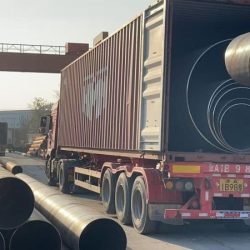
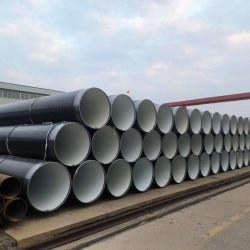
Because of its high cost-performance ratio, Grade C is the default first choice due to its high strength, low steel consumption, and low total cost.
Yes, carbon steel will inevitably rust if stored outdoors for a long time. This is a common aging phenomenon of carbon steel and not a quality issue. Storage recommendations include avoiding direct sunlight and using the first batch of steel stored in the warehouse before it is used to prevent rusting.
If you are using it for load-bearing structures such as columns, beams, trusses, and supports, choose ASTM A500 Grade C. Its yield strength reaches 50 ksi, which is more than 30% higher than A53 Grade B (35 ksi). You can meet the strength requirements with less steel, and the overall cost is actually lower.
If you are using it to transport fluids such as water, gas, or oil, or if there are pressure requirements, choose ASTM A53.