
ALLLAND Boiler Steel Pipe Supply
Welcome to ALLLAND. ASTM A333 is commonly used in cryogenic engineering, where low-temperature impact toughness is critical; this relies on rigorous non-destructive testing and physical and chemical testing. ALLLAND is equipped with a comprehensive testing chain, including in-line inspection: plate flaw detection equipment, in-line automatic ultrasonic flaw detectors, and X-ray flaw detectors, ensuring the internal quality of welds and base materials. Additionally, we conduct physical and chemical tests using hydrostatic testing machines and a range of physical and chemical testing equipment to verify yield strength, tensile strength, and, most critically, low-temperature impact energy.
Alllandsteel is a steel pipe manufacturer based in China with 25 years of experience.
The facility spans 22,000 square meters, represents a RMB 700 million investment, and operates four production lines (JCOE, ERW, SMLS, SSAW) alongside five coating lines.
With an annual production capacity of 250,000 tons, the factory covers specifications ranging from Ø406 to Ø1524 and holds multiple international certifications (API/ASTM/EN/ISO/JIS). Focused on steel pipes, creating value for you!
HOT PRODUCTS
POPULAR ARTICLES
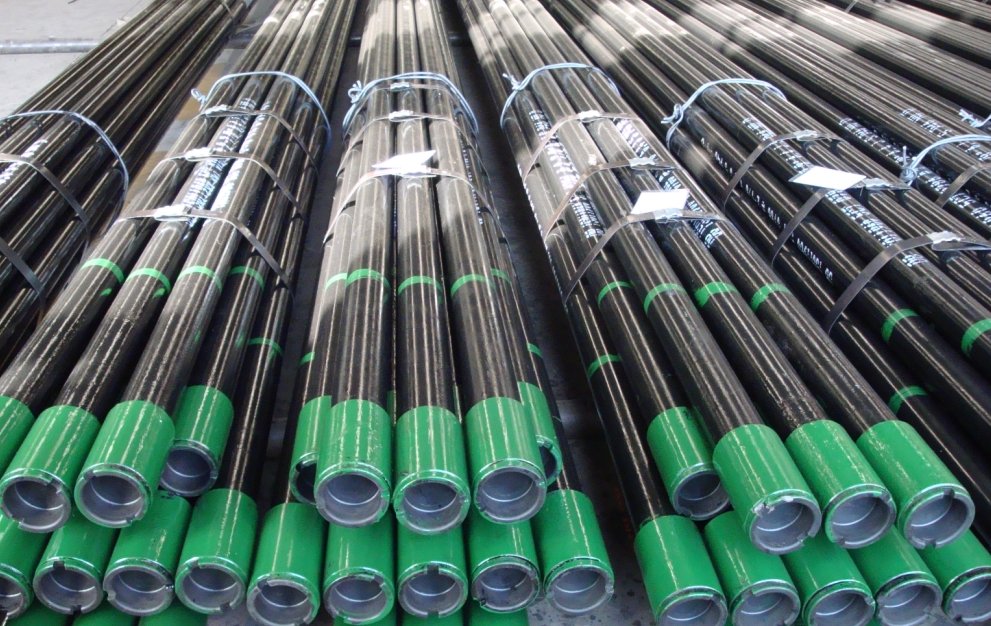
ASTM A333 is an internationally recognized material standard for cryogenic pipelines. Its core objective is to ensure that the steel pipe maintains sufficient toughness under low-temperature conditions, preventing it from becoming brittle and prone to breakage like ordinary steel. The latest version is ASTM A333/A333M-24. The ASTM A333 standard includes several grades of cryogenic steel, with Grade 6 being the most commonly used carbon steel grade.
O.D.:
Ranges from 1/8 inch (3.2 mm) to 60 inches (1524 mm).
W.T.:
Common wall thicknesses include Schedule 40, Schedule 80, Schedule 160, etc.
Length:
6-12 m, available in fixed or multiple lengths; custom lengths per project requirements.
Process:
Seamless, ERW (electric resistance welded), and LSAW pipes may be used.
Tolerance:
Outer diameter tolerance: ±0.25 mm to ±1.5 mm; Wall thickness tolerance: ±12.5%.
Steel Grades:
Available in Grades 1, 3, and 6; Grade 6 is suitable for cryogenic environments.
Surface Treatment:
Black steel, sandblasted, hot-dip galvanized, epoxy coating, or anti-corrosion coating
Pipe End:
Available with plain ends (PE), beveled ends (BE), or threaded ends.
| OD (inch / mm) | Wall Thickness WT (inch / mm) | Length (m) | Steel Grade | Theoretical Weight (kg/m) |
| 1/2″ (21.3 mm) | 0.109 – 0.237 (2.8 – 6 mm) | 6 – 12 | 1, 3, 6 | 3 – 7 |
| 3/4″ (26.7 mm) | 0.109 – 0.250 (2.8 – 6.35 mm) | 6 – 12 | 1, 3, 6 | 4 – 9 |
| 1″ (33.4 mm) | 0.133 – 0.300 (3.38 – 7.62 mm) | 6 – 12 | 1, 3, 6 | 5 – 12 |
| 1.5″ (48.3 mm) | 0.145 – 0.375 (3.68 – 9.53 mm) | 6 – 12 | 1, 3, 6 | 8 – 18 |
| 2″ (60.3 mm) | 0.154 – 0.500 (3.91 – 12.7 mm) | 6 – 12 | 1, 3, 6 | 11 – 25 |
| 3″ (88.9 mm) | 0.188 – 0.500 (4.78 – 12.7 mm) | 6 – 12 | 1, 3, 6 | 17 – 35 |
| 4″ (114.3 mm) | 0.219 – 0.625 (5.56 – 15.9 mm) | 6 – 12 | 1, 3, 6 | 24 – 50 |
| 6″ (168.3 mm) | 0.280 – 0.750 (7.11 – 19.1 mm) | 6 – 12 | 1, 3, 6 | 42 – 85 |
| 8″ (219.1 mm) | 0.322 – 0.875 (8.18 – 22.2 mm) | 6 – 12 | 1, 3, 6 | 65 – 120 |
| 10″ (273 mm) | 0.375 – 1.000 (9.53 – 25.4 mm) | 6 – 12 | 1, 3, 6 | 90 – 160 |
| 12″ (323.9 mm) | 0.406 – 1.125 (10.3 – 28.6 mm) | 6 – 12 | 1, 3, 6 | 115 – 210 |
| 14″ (355.6 mm) | 0.438 – 1.250 (11.1 – 31.8 mm) | 6 – 12 | 1, 3, 6 | 145 – 250 |
| 16″ (406.4 mm) | 0.500 – 1.375 (12.7 – 34.9 mm) | 6 – 12 | 1, 3, 6 | 180 – 320 |
| 18″ (457.2 mm) | 0.500 – 1.500 (12.7 – 38.1 mm) | 6 – 12 | 1, 3, 6 | 200 – 380 |
| 20″ (508 mm) | 0.500 – 1.500 (12.7 – 38.1 mm) | 6 – 12 | 1, 3, 6 | 220 – 420 |
| Steel Grade | Minimum Operating Temperature | Material Characteristics |
| Grade 6 | -46℃ | Carbon manganese steel is the most commonly used and offers the best cost-performance ratio. |
| Grade 3 | -101℃ | 3.5% Nickel Steel |
| Grade 8 | -196℃ | 9% Nickel Steel |
| Grade 1 | -46℃ | carbon manganese steel |
| Grade 10 | -60℃ | carbon manganese silicon steel |
Phosphorus in chemical elements makes steel brittle at low temperatures, while sulfur causes steel to crack during processing. Therefore, in order to ensure that A333 can work safely in cold environments, the ASTM A333 standard has stricter control over phosphorus and sulfur than ordinary carbon steel pipes (phosphorus and sulfur ≤ 0.025%).
Taking Grade 1 and Grade 6 as examples, the chemical composition of ASTM A333 steel pipes is listed according to the standard:
| Element | Grade 1 (%) | Grade 6 (%) |
| Carbon (C) | ≤ 0.30 | ≤ 0.12 |
| Manganese (Mn) | 0.60 – 1.35 | 0.60 – 1.65 |
| Silicon (Si) | 0.10 – 0.35 | 0.10 – 0.35 |
| Phosphorus (P) | ≤ 0.025 | ≤ 0.025 |
| Sulfur (S) | ≤ 0.025 | ≤ 0.025 |
| Chromium (Cr) | ≤ 0.20 | ≤ 0.20 |
| Nickel (Ni) | ≤ 0.25 | ≤ 0.25 |
| Copper (Cu) | ≤ 0.25 | ≤ 0.25 |
| Aluminum (Al) | Not specified | Not specified |
| Molybdenum (Mo) | Not specified | Not specified |
Additional information regarding the chemical composition of Grade 6:
Lorem ipsum dolor sit amet, consectetur adipiscing elit. Ut elit tellus, luctus nec ullamcorper mattis, pulvinar dapibus leo.
Lorem ipsum dolor sit amet, consectetur adipiscing elit. Ut elit tellus, luctus nec ullamcorper mattis, pulvinar dapibus leo.
Lorem ipsum dolor sit amet, consectetur adipiscing elit. Ut elit tellus, luctus nec ullamcorper mattis, pulvinar dapibus leo.
The main mechanical property requirements of ASTM A333 include tensile strength, yield strength, ductility, and impact toughness. Impact toughness is the most fundamental difference between A333 and ordinary steel pipes: ordinary steel pipes do not need to guarantee low-temperature toughness, while A333 must guarantee it.
| Comparison Items | Grade 1 | Grade 6 (Most Commonly Used) | Difference Analysis |
| Yield Strength | ≥205 MPa | ≥240 MPa | Gr.6 is 17% higher than Gr.1. |
| Tensile Strength | ≥380 MPa | ≥415 MPa | Gr.6 is 9% higher than Gr.1 |
| Elongation | ≥35% | ≥30% | Gr.1 has slightly better plasticity. |
| Impact Test Temperature | -45℃ | -46℃ | Basically the same |
| Impact Energy Requirements | ≥18J | ≥18J | completely consistent |
| Hardness (Typical Value) | ≤137 HBW | ≤197 HBW | Gr.6 can be slightly higher |
Grade 6 has a market share of over 80% and can be used for all low-temperature applications of carbon steel above -46℃ (high-altitude cold regions, LPG, refrigeration plants, petrochemical plants). For projects in northern regions and chemical refrigeration systems, Grade 6 offers the best cost performance, the largest inventory, and the most transparent pricing.
ASTM A333 cryogenic tubing is required for any application where media need to be safely transported in environments below 0°C.
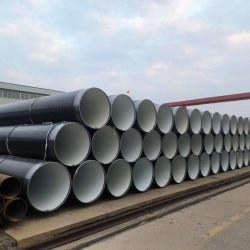
What flanges and fittings are used with A333 Gr.6 pipe?
To ensure the safety and stability of the overall piping system under low-temperature conditions, ASTM A333 steel pipes should be used with fittings and flanges that meet low-temperature standards.
| Pipeline | Matching Pipe Fittings | Matching Flange | Matching Bolts |
| A333 Gr.6 | A420 WPL6 | A350 LF2 Class 1 | A320 L7 |
| A333 Gr.3 | A420 WPL3 | A350 LF3 | A320 L7 |
| A333 Gr.8 | A420 WPL8 | A350 LF8 | A320 L7 |