
ALLLAND Boiler Steel Pipe Supply
The ASTM A252 steel pipes manufactured by our company are specifically designed for structural load-bearing and foundation engineering, and are widely used in building foundations, bridge engineering, port terminals, and marine structures. This standard, established by ASTM International, primarily specifies the material properties and load-bearing capacity of welded and seamless steel pipe piles.
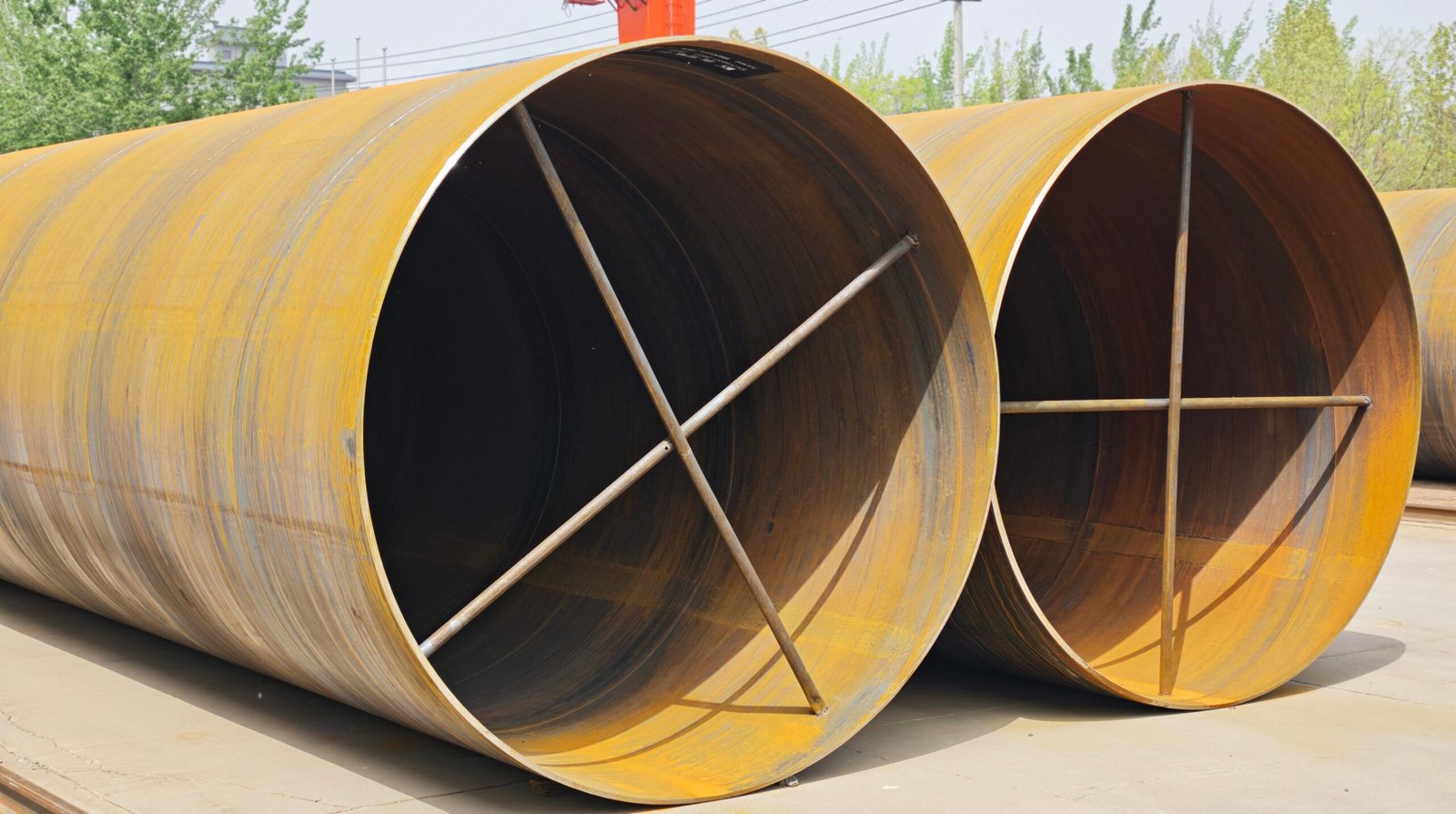
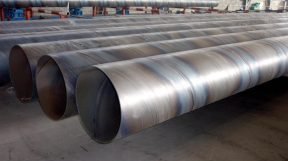
ALLLAND offers ASTM A252 Grade 1, Grade 2, and Grade 3 steel pipes, which feature excellent yield strength and tensile properties to meet the load-bearing requirements of various engineering projects. Our products are manufactured using SSAW, LSAW, ERW, or seamless processes, are available in a wide range of dimensions, and support customization for large diameters and thick walls to accommodate various complex foundation conditions.
Alllandsteel is a steel pipe manufacturer based in China with 25 years of experience.
The facility spans 22,000 square meters, represents a RMB 700 million investment, and operates four production lines (JCOE, ERW, SMLS, SSAW) alongside five coating lines.
With an annual production capacity of 250,000 tons, the factory covers specifications ranging from Ø406 to Ø1524 and holds multiple international certifications (API/ASTM/EN/ISO/JIS). Focused on steel pipes, creating value for you!
HOT PRODUCTS
POPULAR ARTICLES
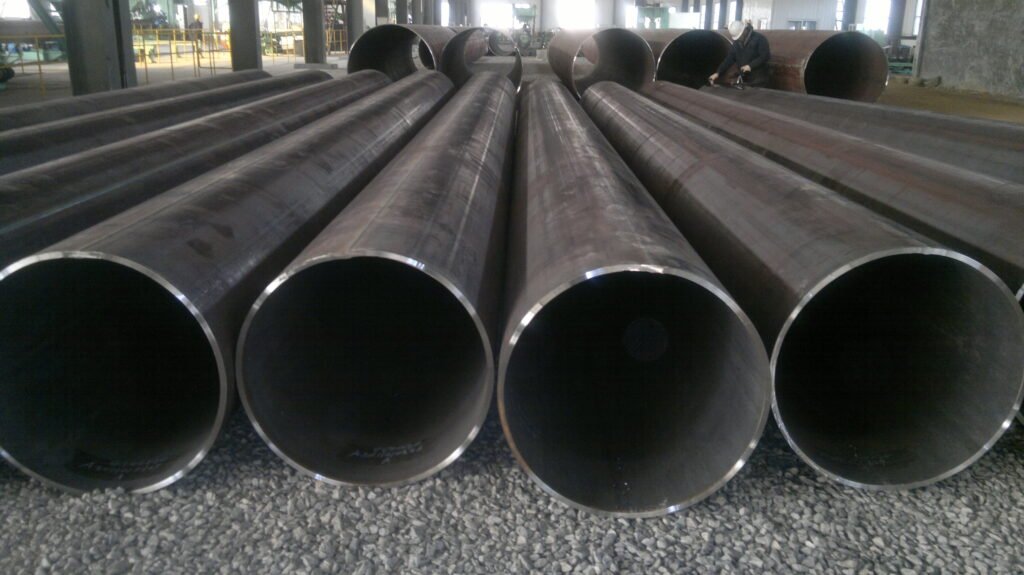
ASTM A252 is a technical specification established by the American Society for Testing and Materials (ASTM) for structural and seamless steel pipes used in piling applications. This standard applies to steel pipes used in foundations or support structures, primarily to transfer structural loads to the ground. The ASTM A252 standard does not specify hydrostatic pressure requirements or strict chemical composition requirements; its core requirement is axial load-bearing capacity. This standard generally does not apply to pipes used for fluid transportation.
O.D.:
219 mm – 3000 mm+, no specific restrictions; primarily large-diameter pipes.
W.T.:
5 mm – 50 mm+, The thicker the wall, the greater the load-bearing capacity.
Length:
Typically 3 to 12 meters. Custom lengths up to 18–32 meters are available upon project requirements.
Process:
Primarily focus on welded pipes: ERW, LSAW, and SSAW; seamless pipes are used only for small, specialized projects.
Tolerance:
Outer Diameter Tolerance: ± 1/8 ; Wall Thickness Tolerance: ± 10%
Applications:
Foundations in building, bridge, and marine engineering.
Tube Ends:
lain ends, beveled ends, threaded ends
Surface Treatment:
hot-dip galvanizing, sandblasting or spray coating, paint coating.
| OD (mm) | WT (mm) | Length (m) | Steel Grade | Cross-sectional Area (cm²) | Theoretical Weight (kg/m) | Remarks |
| 219 | 5 | 6 – 12 | 1,2,3 | 6.89 | 54 | Small-diameter, light-load |
| 219 | 6 | 6 – 12 | 1,2,3 | 8.22 | 64 | |
| 273 | 6 | 6 – 12 | 1,2,3 | 10 | 78 | Medium load |
| 273 | 8 | 6 – 12 | 1,2,3 | 13.3 | 104 | |
| 325 | 8 | 6 – 12 | 1,2,3 | 16.2 | 126 | |
| 325 | 10 | 6 – 12 | 1,2,3 | 20.2 | 157 | |
| 406 | 10 | 6 – 12 | 1,2,3 | 25.3 | 197 | Large load |
| 406 | 12 | 6 – 12 | 1,2,3 | 30.2 | 235 | |
| 508 | 12 | 6 – 12 | 1,2,3 | 38 | 295 | Extra-large |
| 508 | 16 | 6 – 12 | 1,2,3 | 50.2 | 389 | |
| 610 | 14 | 6 – 12 | 1,2,3 | 57 | 442 | |
| 610 | 18 | 6 – 12 | 1,2,3 | 73 | 566 | |
| 762 | 16 | 6 – 12 | 1,2,3 | 88 | 682 | |
| 762 | 20 | 6 – 12 | 1,2,3 | 108 | 837 | |
| 914 | 20 | 6 – 12 | 1,2,3 | 144 | 1116 | Extra-large, heavy-duty |
| 914 | 25 | 6 – 12 | 1,2,3 | 179 | 1388 |
The mechanical properties of ASTM A252 mainly include three core indicators: yield strength, tensile strength, and elongation.
| Steel Grade | Minimum Yield Strength | Minimum Tensile Strength | Minimum Elongation | Applicable Scenarios |
| Grade 1 | 205 MPa (30,000 psi) | 345 MPa (50,000 psi) | 30% | Lightweight piling, soft soil foundation, residential foundation |
| Grade 2 | 240 MPa (35,000 psi) | 415 MPa (60,000 psi) | 25% | The preferred choice for routine projects, with the largest usage volume. |
| Grade 3 | 310 MPa (45,000 psi) | 455 MPa (66,000 psi) | 20% | Heavy-duty pile foundations, bridges, port terminals, and offshore wind power |
Elongation Explanation: Elongation varies with wall thickness; the greater the wall thickness, the lower the required elongation. Typical values are shown in the table.
Compared to other standards, ASTM A252 does not specify an upper limit for yield strength, has relatively lower elongation requirements, and does not mandate hydrostatic testing. When selecting an ASTM A252 steel grade, higher strength is not always better. While Grade 3 is stronger, it is also more expensive; Grade 2 offers the best value for money for routine projects.
ASTM A252 specifies the chemical composition to ensure that steel pipe piles have sufficient strength, toughness, and corrosion resistance. ASTM A252 only mandates one condition: phosphorus ≤ 0.05%. Although the standard does not mandate other elements, to ensure weldability and mechanical properties meet standards, mainstream steel pipe manufacturers generally adopt the following control ranges in actual production:
| Element | Carbon (C) | Silicon (Si) | Manganese (Mn) | Sulfur (S) | Phosphorus (P) |
| Content | ≤0.26% | ≤0.45% | ≤1.6% | ≤0.046% | ≤0.05% |
Phosphorus is a major cause of low-temperature brittleness in steel. Piling projects are often carried out outdoors, and in the low-temperature environment of winter, excessive phosphorus content may cause steel pipes to break brittlely when hammered. Therefore, standards must strictly limit it.
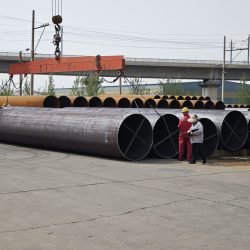
Pile foundation construction
By extending deep into the ground, it provides strong support, ensuring that heavy structures can stand firmly on unstable soil or weak foundations.
Bridge engineering
In bridge infrastructure construction, ASTM A252 steel pipe piles are commonly used for the foundations of load-bearing structures such as piers and columns. Steel pipe piles can withstand the heavy loads of bridges, effectively distribute pressure, and provide stable support.
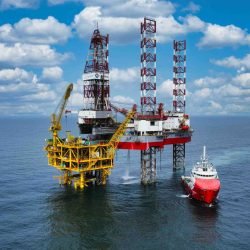
Port and Ocean Engineering
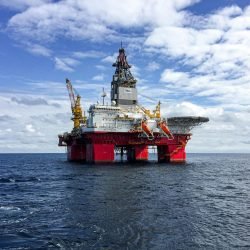
In offshore structures such as oil platforms, wind power platforms, and offshore drilling platforms, ASTM A252 steel pipe piles are commonly used as foundation supports. Steel pipe piles are corrosion-resistant and resistant to seawater erosion, making them suitable for use in marine environments and capable of withstanding extreme weather and high-pressure conditions.
Industrial and energy facilities
Industrial equipment experiences heavy loads and frequent vibrations, placing far higher demands on its foundations than ordinary buildings. Specific applications include heavy machinery manufacturing workshops, steel structure plants, cooling towers, chimneys, and boiler support infrastructure.
No, the core of ASTM A252 is axial load-bearing capacity, not internal pressure load-bearing capacity. The ASTM A252 standard explicitly does not mandate hydrostatic testing; its welds and internal wall quality have not been pressure-verified, making its use for transporting media extremely risky. For transporting water, oil, or gas, choose API 5L or ASTM A106; only choose A252 if piling is required.
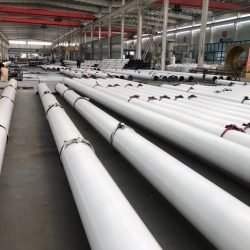
The appropriate measures should be selected based on the corrosion level. For mild corrosion, epoxy zinc-rich primer + topcoat is recommended ; for moderate corrosion, FBE (fusion bonded epoxy powder) can be used for corrosion prevention; and for severe corrosion, a solution of 3LPP (triple-layer polypropylene) + cathodic protection is required.
ALLLAND has its own anti-corrosion company with multiple anti-corrosion production lines, including FBE, 2PE/3PE, and 3LPP, with an annual production capacity of 4 million square meters. It can provide one-stop service from steel pipes to anti-corrosion.