ALLLAND Boiler Steel Pipe Supply
AS/NZS 1074
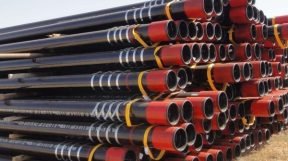
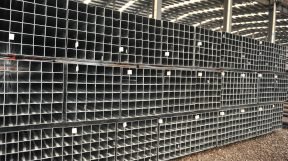
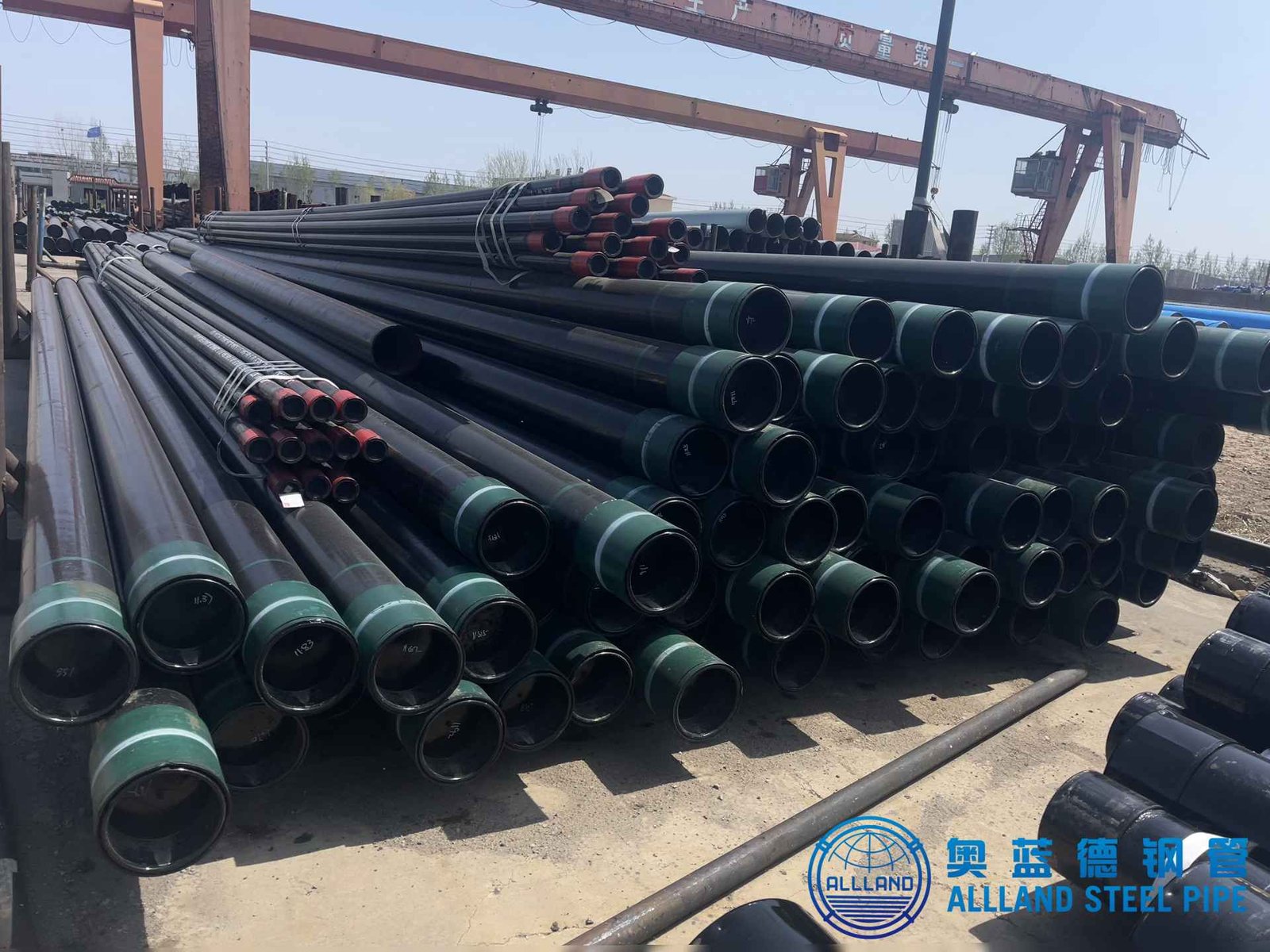
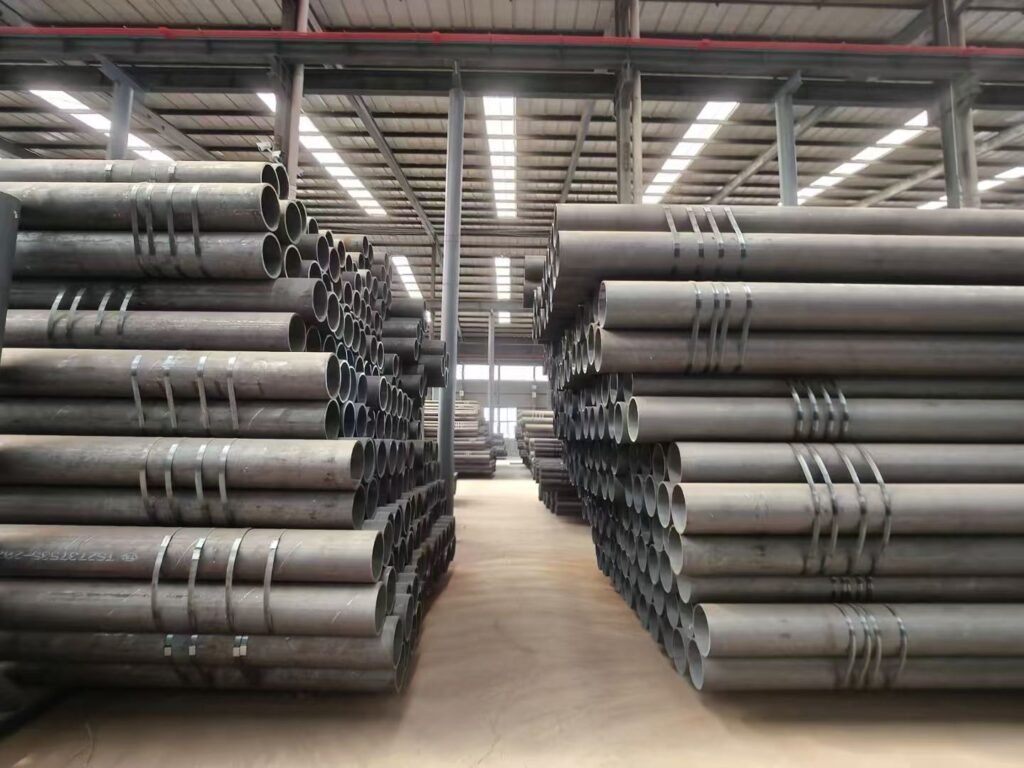
Welcome to ALLLAND Steel Pipe Manufacturing. We specialize in the production and export of AS/NZS 1074 steel pipes, and our state-of-the-art production lines offer a one-stop solution from raw materials to finished products. We offer a comprehensive range of product specifications and can accommodate custom project requirements. All products undergo rigorous testing to ensure quality and performance. Every steel pipe is fully traceable, providing peace of mind for your projects.
- O.D. DN8-DN150
- W.T. 1.8 – 5.4mm
- Length 5-18m
- Standards: AS/NZS 1074
Alllandsteel is a steel pipe manufacturer based in China with 25 years of experience.
The facility spans 22,000 square meters, represents a RMB 700 million investment, and operates four production lines (JCOE, ERW, SMLS, SSAW) alongside five coating lines.
With an annual production capacity of 250,000 tons, the factory covers specifications ranging from Ø406 to Ø1524 and holds multiple international certifications (API/ASTM/EN/ISO/JIS). Focused on steel pipes, creating value for you!
HOT PRODUCTS
POPULAR ARTICLES
AS/NZS 1074 (Steel tubes and tubulars for ordinary service) is a standard jointly developed by Australia and New Zealand for “welded steel tubes for general purposes,” applicable to low-pressure conveyance and general engineering.
AS/NZS 1074 is primarily divided into two grades: Grade 250 and Grade 350.
AS/NZS 1074 Steel Pipe Specification
O.D.:
13.7mm – 164.1mm
DN8 – DN150
1/4″ – 6″
(Common seamless process dimensions)
W.T.:
Light
Medium
Heavy
1.8mm – 5.4mm
Surface Coating:
Bare, Varnishing, Hot Dip Galvanizing
Steel Grade:
≥Q195
Length:
5 – 18 mtrs, available in fixed or multiple lengths; custom lengths per project requirements.
Pipe Machining:
Welding, Bending, Hole Drilling, Punching, Swaging, Tapering, Flaring, Expanding
Procedure:
ERW, SMLS
Tube Ends:
Plain, Threaded, Grooved
ALLAND STEEL PIPE is a professional steel pipe manufacturer with 25 years of experience in production and sales.
AS/NZS 1074 Dimensions
AS/NZS 1074 classifies steel pipes by wall thickness into three categories: light, medium, and heavy. A single outer diameter can correspond to three different wall thicknesses.
Dimensions of AS 1074 Steel Tubes - Light
| Nominal size | Outside diameter mm | Thickness mm | Mass of black tube kg/m | ||
| Min. | Max. | Plain or screwed ends | Screwed and socketed | ||
| DN 8 | 13.2 | 13.6 | 1.8 | 0.515 | 0.519 |
| DN 10 | 16.7 | 17.1 | 1.8 | 0.670 | 0.676 |
| DN 15 | 21.0 | 21.4 | 2.0 | 0.947 | 0.956 |
| DN 20 | 26.4 | 26.9 | 2.3 | 1.38 | 1.39 |
| DN 25 | 33.2 | 33.8 | 2.6 | 1.98 | 2.00 |
| DN 32 | 41.9 | 42.5 | 2.6 | 2.54 | 2.57 |
| DN 40 | 47.8 | 48.4 | 2.9 | 3.23 | 3.27 |
| DN 50 | 59.6 | 60.2 | 2.9 | 4.08 | 4.15 |
| DN 65 | 75.2 | 76.0 | 3.2 | 5.71 | 5.83 |
| DN 80 | 87.9 | 88.7 | 3.2 | 6.72 | 6.89 |
| DN 100 | 113.0 | 113.9 | 3.6 | 9.75 | 10.0 |
| NOTE:Dimensions and masses are in accordance with ISO 65. | |||||
Dimensional Tolerance of AS 1074 Steel Pipes
Outer Diameter Tolerance: ±1%
Wall Thickness Tolerance: The minimum wall thickness must not be less than the nominal thickness.
Typically: +10%
Straightness: ≤ 0.2% × pipe length
Mass Tolerance: Typically ±10% (theoretical weight)
Chemical Composition of AS 1074 Carbon Steel Pipe
The chemical composition requirements in AS/NZS 1074 are not as stringent as those for structural steel; instead, a performance-based approach is used.
In actual production, the following values are typically maintained:
| Elements | Max % |
| S | 0.045 |
| P | 0.045 |
| CE | 0.0100 |
| AS/NZS 1074 does not specify a mandatory CE (Carbon Equivalent) value; however, in actual production, the CE is controlled to ensure weldability. | |
Mechanical Requirements of AS 1074 Carbon Steel Pipe
When purchasing steel pipes, mechanical properties are a key factor that engineers must consider. Steel pipes manufactured in accordance with the AS/NZS 1074 standard must meet strict requirements regarding mechanical properties.
| Yield Strength | ≥ 195 MPa |
| Tensile Strength | 320 ~ 460 MPa |
| Elongation | ≥ 20% |
| When the gauge length is 5.65√So, the elongation shall be not less than 20%. (So is the original cross-sectional area of the specimen). | |
Testing Requirements of AS 1074 Carbon Steel Pipe
Product testing is a critical component of quality assurance. Steel pipes that comply with the AS/NZS 1074 standard must undergo a series of rigorous tests to ensure comprehensive verification of everything from material properties to finished product quality.
Tensile Test: The most basic material property test, including yield strength, tensile strength, and elongation.
Visual Inspection: Inspects the surface quality, weld quality, and straightness of steel pipes.
Dimensional Inspection: Ensures product consistency.
Flattening Test: Evaluates weld quality and material ductility; requires that no cracks or delamination occur after flattening.
Optional Tests
Hydrostatic Test: Checks for leaks, directly verifying the reliability of weld quality.
Non-Destructive Testing (NDT): Includes Ultrasonic Testing (UT) and Eddy Current Testing (ET) to detect defects in welds.
Applications of AS/NZS 1074 Carbon Steel Pipe
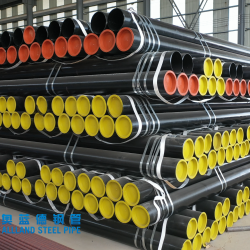
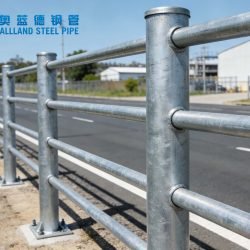
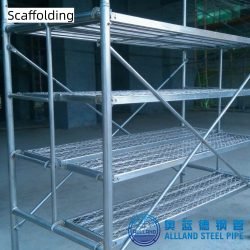
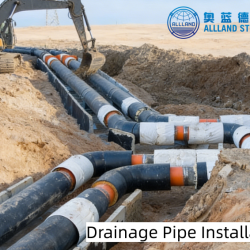
Low-pressure fluid transport
Low-pressure water systems: drainage pipes, stormwater pipes, irrigation systems, etc.
Low-pressure air systems: compressed air lines (low-pressure), ventilation ducts, etc.
Construction auxiliary use
Non-load-bearing structures: temporary support structures, guardrails, etc.
Light-load structures: scaffolding, temporary work platforms, etc.
Fencing & infrastructure
Fence posts, guard rails, etc.
Agricultural applications
Sprinkler supports, ranch fence posts, greenhouse frames, awning supports, etc.
Quick Guide
| Type | Applicable |
| General Fluid Transport | √ |
| Fence | √ |
| Scaffolding | √ |
| Main Building Structure | × |
| Oil & Gas Pipelines | × |
| High-Temperature Equipment | × |
FAQ
Differences Between AS/NZS 1074 and AS/NZS 1163.
Both are Australian and New Zealand standards and specify carbon steel pipes.
However, AS/NZS 1074 applies only to steel pipes for general purposes and has lower strength.
AS/NZS 1163 applies to steel pipes for structural purposes and can be used in load-bearing structures.
Differences Between AS/NZS 1074 and API 5L.
API 5L is suitable for high-pressure oil and gas pipelines and is subject to rigorous testing.
AS/NZS 1074 is suitable for general-purpose low-pressure transportation.