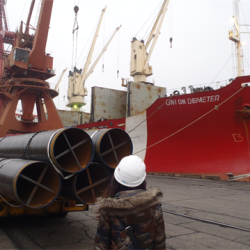
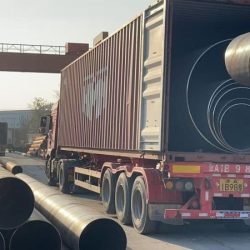
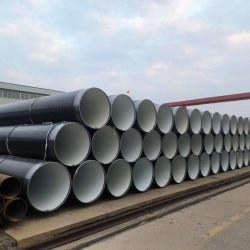
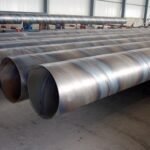
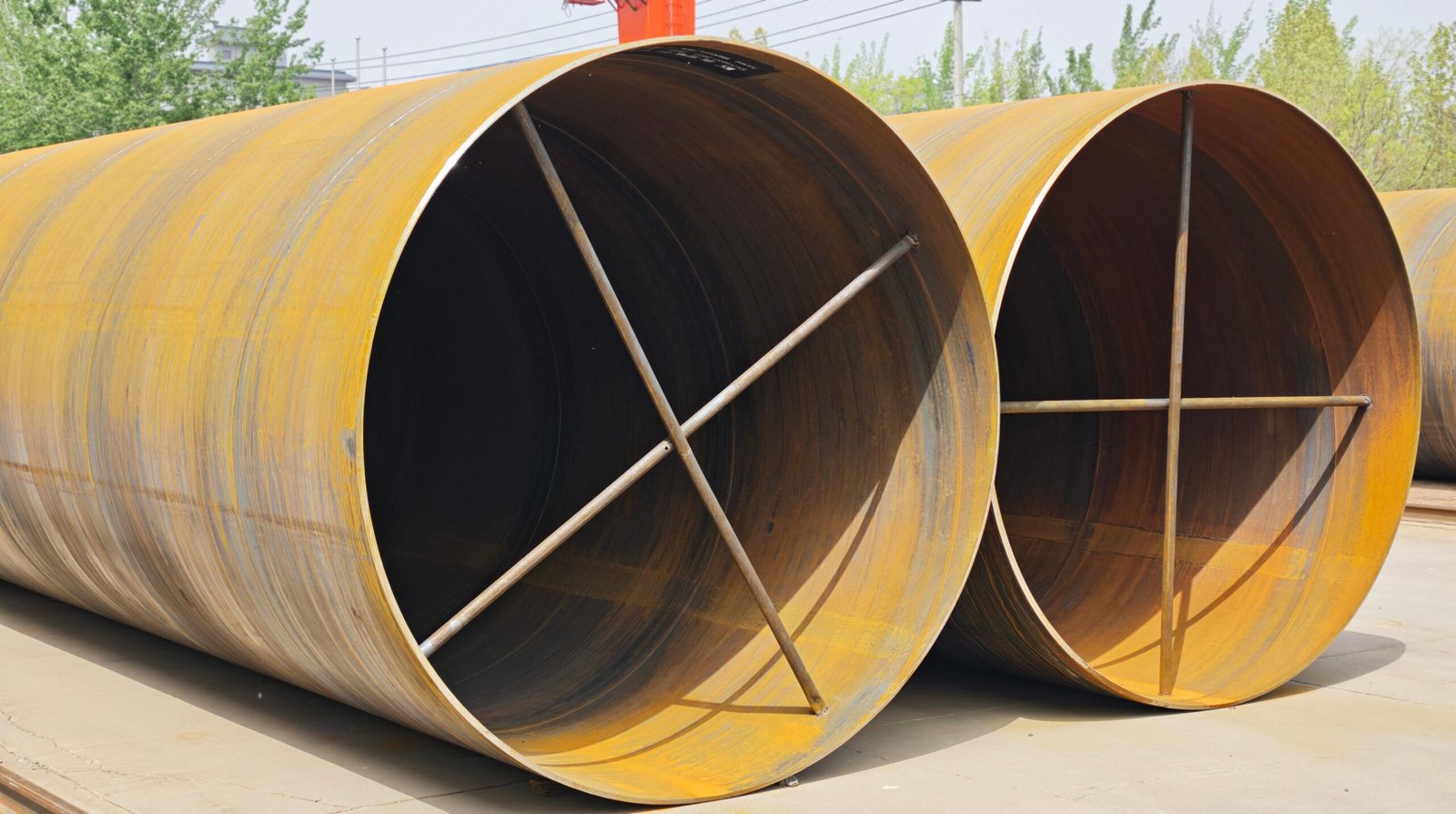
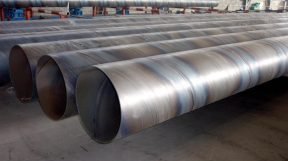
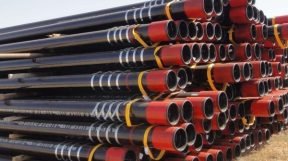
API 5L X60 is a high-strength pipeline steel specified in the American Petroleum Institute (API) 5L standard, primarily used for long-distance transportation of petroleum, natural gas, and refined oil products. X60 is a pipeline grade within the API 5L standard characterized by high yield strength and corrosion resistance, making it suitable for long-distance, large-diameter pipelines. “X”: Represents pipeline pipe “60”: Represents a minimum yield strength of 60,000 psi (pounds per square inch) Product grades: PSL1 (Basic Grade), PSL2 (High Quality Grade, with mandatory impact toughness).
API 5L X60 Specifications
O.D.:
21.3 mm to 1016 mm; LSAW and SSAW up to 406 mm to 2500 mm.
W.T.:
SCH10, SCH20, SCH30, SCH40, SCH60, SCH80, SCH100, SCH120, SCH140, and SCH160.
Length:
Between 10 m and 12 m, custom lengths available.
Process:
Seamless steel pipe, ERW resistance welded pipe, LSAW , and SSAW spipe
Operating Temperature:
Stable operation from -30°C to 400°C.
Pipe Pressure:
8 MPa to 12 MPa, up to 15 MPa maximum
Tube Ends:
Plain End and Beveled End
Anti-corrosion Coating:
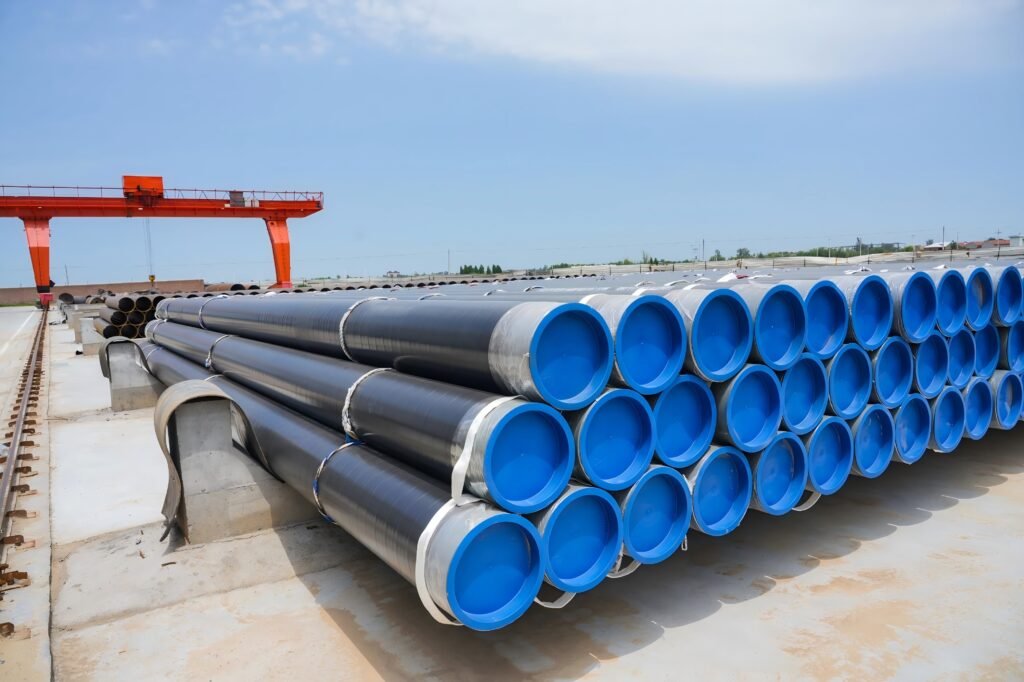
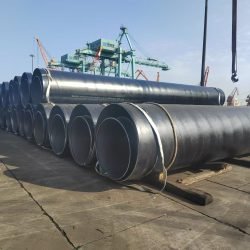
Black pipe, FBE (Fusion-bonded Epoxy coating), 3LPE (Triple-layer Polyethylene coating), or 3LPP (Triple-layer Polypropylene coating
Advantages of API 5L X60 DE Produced by Allland
API 5L X60 is a medium-to-high-strength pipe with a tensile strength exceeding 520MPa, suitable for long-distance oil and gas transportation. Note that Charpy impact tests are required during production at PSL2 classification.
API 5L X60 pipe steel employs a low-carbon microalloyed steel design with carbon content below 0.26%, offering excellent weldability. Pipes fabricated using welding processes can be used with confidence.
ALLLAND undertakes FBE/3LPP/3LPE anti-corrosion coating projects. Our in-house coating production line enables one-stop pipeline manufacturing.
When selecting API 5L X60, pay attention to the PSL1 and PSL2 grades to avoid discrepancies in parameters and tests that could affect final pipeline performance.
API 5L X60 Size Charts
API 5L X60 is available in various diameters, sizes, and specifications. The following table lists common imperial sizes and corresponding nominal outside diameters for API 5L X60 PIPE under the API 5L standard:
| Nominal size (inches) | Nominal outer diameter OD (mm) | Common wall thickness range WT (mm) |
| 1/2″ | 21.3 | 2.0-5.0 |
| 3/4″ | 26.7 | 2.0-5.5 |
| 1″ | 33.4 | 2.5-6.0 |
| 2″ | 60.3 | 3.0-8.0 |
| 3″ | 88.9 | 3.5-10.0 |
| 4″ | 114.3 | 3.2-13.0 |
| 6″ | 168.3 | 3.5-16.0 |
| 8″ | 219.1 | 4.0-20.0 |
| 10″ | 273.1 | 4.5-22.0 |
| 12″ | 323.9 | 5.0-25.0 |
| 16″ | 406.4 | 6.0-30.0 |
| 20″ | 508 | 6.0-35.0 |
| 24″ | 609.6 | 6.5-40.0 |
| 30″ | 762 | 7.0-45.0 |
| 36″ | 914.4 | 8.0-50.0 |
| 42″ | 1067 | 8.0-60.0 |
| 48″ | 1219 | 9.0-65.0 |
Note : Wall thickness and length can be customized according to project requirements.
Chemical Composition and Mechanical Properties of API 5L X60
Chemical composition
Precise control of chemical elements is crucial for ensuring steel performance and on-site welding quality. Its main chemical components include:
| Element |
Value(%) |
Functions and effects |
| Carbon (C) |
≤ 0.28% |
The core component improves weldability, reduces heat-affected zone hardness, and decreases cold cracking sensitivity. |
| Manganese (Mn) |
≤1.60 |
Solid solution strengthening improves strength, compensating for the loss from low carbon content. |
| Phosphorus (P) |
≤0.030 |
Prevent cold brittleness and segregation. |
| Sulfur (S) |
≤0.030 |
Prevents hot brittleness and improves resistance to hydrogen sulfide stress corrosion (SSC). |
| Silicon (Si) |
≤0.45 |
Steelmaking deoxidizer, with appropriate solid solution strengthening. |
| Microalloying elements |
Nb≤0.05, V≤0.08, Ti≤0.04 |
Grain refinement and precipitation strengthening improve both toughness and strength. |
| Carbon Equivalent (CEV) |
≤0.43 (depending on wall thickness) |
A comprehensive indicator for assessing weldability is that the lower the CEV (Carbon Equivalent Value), the lower the welding preheating requirements and the lower the risk of cold cracking. |
Note: If the on-site welding conditions are harsh (such as winter construction or high restraint), special attention should be paid to the limits of carbon equivalent (CEV) and weld crack susceptibility index (Pcm), and stricter internal control requirements may be proposed if necessary.
Mechanical properties X60 Pipe
| Performance parameters |
Unit |
PSL1 required value |
PSL2 required value |
Engineering significance |
| Yield strength |
MPa |
415 |
415 |
The core calculation basis for pipeline design pressure determines the pipe material’s ability to resist plastic deformation. |
| Tensile strength |
MPa |
520 |
520 |
Ensure the safety of pipelines under overpressure or accidental overload to prevent breakage. |
| The ratio of yield strength |
– |
No requirements |
≤0.93 |
It reflects the material’s strain hardening capacity and safety margin. The lower the ratio, the greater the plasticity reserve. |
| Elongation after fracture |
% |
API calculation table |
API calculation table |
The ability to measure the uniform deformation of a material is crucial for pipe bending and on-site cold bending operations. |
Manufacturing Process of API 5L X60 Pipe
API 5L X60 Seamless Steel Pipe (SMLS)
- Process: Hot-rolled or cold-drawn from solid round steel billets.
Specifications range: outer diameter 21.3mm-660mm.
Advantages: Seamless construction, highest pressure resistance, suitable for small-diameter high-pressure applications, water injection lines, and casings.
ERW High-Electric Resistance Welding
Process: After the steel strip is formed, the weld seam is welded using high-frequency current (without filler metal).
Specifications range: outer diameter 114.3mm-660mm.
Advantages: High dimensional accuracy, cost-effective, suitable for gas pipeline networks and medium-pressure pipelines.
LSAW Process of API 5L X60
Process: Weld the steel plate (JCOE or UOE forming) inside and out (submerged arc welding).
Specifications range: outer diameter 406.4mm-1626mm.
Advantages: Excellent weld quality, capable of producing thick-walled pipes, making it the preferred choice for long-distance high-pressure transportation (natural gas, oil) and marine pipelines.
API 5L X60 Pipe SSAW Process
Process: Submerged arc welding after hot-rolled coil is spirally formed.
Specifications range: outer diameter 219.1mm-3000mm.
Advantages: Flexible specifications, economical cost, suitable for large-diameter water transportation or low-pressure gas transmission pipelines.
Advantages of API X60 Pipe
It possesses excellent pressure resistance, making it suitable for high-pressure pipeline transportation. It maintains high strength and stability during long-distance transport, reducing the risk of failure.
Advanced smelting and welding technologies are used to ensure the quality and consistency of each pipe.
A rigorous quality control system ensures that all pipelines undergo multiple inspections, including ultrasonic testing and X-ray examination, to guarantee that there are no defects.
The company’s production processes adhere to environmental protection and energy-saving standards, ensuring that the environmental impact of the products is minimized during manufacturing.
We provide comprehensive technical support and consulting services to help customers solve problems in pipeline design, construction, and maintenance.
Differences Between API 5L X60 and X42/X52
| Comparison Item |
API 5L X42 |
API 5L X52 |
API 5L X60 |
| Mechanical Properties |
Lower yield strength among the three grades; suitable for lower pressure pipeline systems. |
Higher yield strength than X42, suitable for medium pressure pipeline transportation. |
Significantly higher yield strength; can withstand higher pressure or use thinner pipe walls under the same pressure, helping reduce steel consumption. |
| Manufacturing Process |
Can be produced through conventional controlled rolling processes. |
Also generally produced by controlled rolling processes. |
Usually requires TMCP (Thermo-Mechanical Controlled Processing), which demands higher equipment capability and stricter process control. |
| Alloy Design |
Mainly relies on C and Mn solid solution strengthening. |
Begins to adopt microalloying design. |
Typical combination of microalloying elements (Nb, V, Ti) with TMCP, improving performance through grain refinement and precipitation strengthening. |
| Typical Applications |
Mainly used in low-pressure branch pipelines or urban gas pipeline networks. |
Widely used in medium-pressure trunk pipelines and general oil & gas transmission systems. |
Commonly used in high-pressure pipelines, large-diameter pipelines, offshore pipelines, and low-temperature environments requiring higher material performance. |
| Cost Level |
Relatively low cost because it is essentially carbon–manganese steel. |
Moderate cost as a transitional steel grade. |
Higher cost due to microalloying design and TMCP manufacturing process. |
FAQ