ALLLAND Boiler Steel Pipe Supply
Welcome to ALLLAND Steel Pipe Manufacturing. We specialize in the production, R&D, and supply of seamless and welded steel pipes. Our boiler steel pipe are manufactured from premium steel billets through hot rolling, cold drawing/cold rolling, and standardized heat treatment processes. Available in a comprehensive range of dimensions, our products meet diverse application requirements. All products undergo rigorous testing before shipment, including chemical composition analysis, mechanical property testing, hydrostatic pressure testing, non-destructive testing (UT/ET), and dimensional/visual inspection. This ensures every pipe meets the safety requirements for boiler system applications.
Alllandsteel is a steel pipe manufacturer based in China with 25 years of experience. The facility spans 22,000 square meters, represents a RMB 700 million investment, and operates four production lines (JCOE, ERW, SMLS, SSAW) alongside five coating lines. With an annual production capacity of 250,000 tons, the factory covers specifications ranging from Ø406 to Ø1524 and holds multiple international certifications (API/ASTM/EN/ISO/JIS). Focused on steel pipes, creating value for you!
HOT PRODUCTS
POPULAR ARTICLES
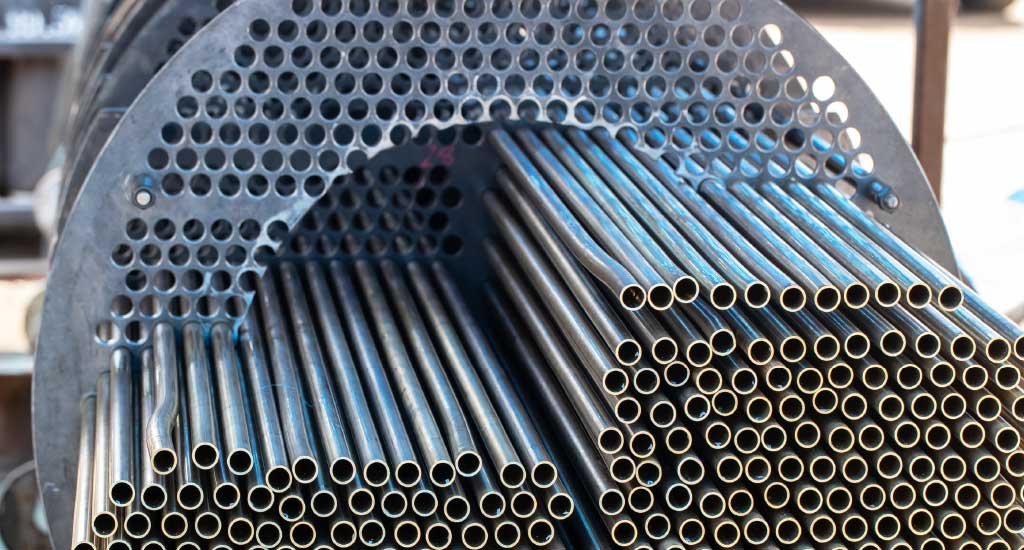
Hydraulic Pipe is specifically engineered for hydraulic systems, featuring high-pressure resistance, fatigue resistance, excellent surface quality, and strict dimensional control. It is widely used in construction machinery, marine engineering, automation systems, and other industries. Most Hydraulic Pipes are manufactured using seamless processes, typically cold-drawn or hot-rolled, followed by surface treatments to ensure quality.
O.D.:
6MM-114.3MM (1/4”- 4 1/2”), Common diameters: 6/8/10/12/14/16/18/20/25/32/38/42/50mm
Standards:
EN 10297-1, EN 10216-4, DIN 2391, ASTM A106, ASTM A179
W.T.
1.0mm-20.0mm
Material:
Carbon Steel, Alloy Steel
Steel Grades:
E235 / E355, ST52, SAE 1026, 20MnV6, 42CrMo
Process:
Seamless – Cold Drawn
Surface Treatment:
Bright Annealed, Phosphated, Pickled, Polished
End Form:
Plain End (PE), Beveled End (BE), Cut End
The following tables comply with EN 10297-1 / EN 10216-4 pipe standards. The theoretical weight calculation formula is:
Weight(kg/m) = 0.02466 × (OD − WT) × WT. Actual weights may vary.
| OD (mm) | WT (mm) | Theoretical Weight (kg/m) |
| 6 | 1 | 0.09 |
| 6 | 1.5 | 0.14 |
| 8 | 1.5 | 0.18 |
| 10 | 1 | 0.16 |
| 10 | 1.5 | 0.24 |
| 10 | 2 | 0.32 |
| 12 | 1.5 | 0.29 |
| 12 | 2 | 0.38 |
| 12 | 2.5 | 0.47 |
| 16 | 2 | 0.63 |
| 16 | 2.5 | 0.78 |
| 16 | 3 | 0.93 |
| 20 | 2 | 0.78 |
| 20 | 2.5 | 0.97 |
| 20 | 3 | 1.16 |
| 25 | 2.5 | 1.47 |
| 25 | 3 | 1.77 |
| 25 | 4 | 2.32 |
| 32 | 3 | 2.49 |
| 32 | 4 | 3.31 |
| 38 | 4 | 4.74 |
| 42 | 5 | 6.58 |
| 50 | 6 | 10.04 |
| 57 | 7 | 13.44 |
| 60 | 7 | 14.1 |
| 63 | 8 | 17.18 |
| 76 | 9 | 24.25 |
| 89 | 10 | 32.26 |
| 114.3 | 12 | 55.4 |
1. Construction Machinery Systems
Heavy-duty construction vehicles such as cranes, loaders, excavators, as well as hydraulic cylinders and pumps used in engineering projects. These hydraulic pipes come in various diameters and must withstand dynamic pressures and impact loads.
2. Industrial Hydraulic Equipment
Hydraulic power units in industrial machinery, hydraulic control cabinets, and hydraulic drive systems. These pipes demand excellent pressure resistance and the ability to operate continuously for extended periods.
3. Automated Production Lines
Systems requiring hydraulic piping, such as robotic hydraulic arms and automated assembly lines. These pipes feature small diameters and require flexible routing. Cold drawing is the primary manufacturing process, ensuring rapid response times.
4. Marine Industry
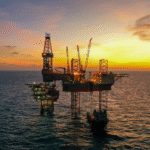
Applications include ship propulsion systems and hydraulic lifting equipment on offshore platforms. Pipes must withstand impact and vibration while offering high corrosion resistance to ensure uninterrupted vessel operations.
5. Energy Sector
Used in power plants, metallurgical facilities, and hydraulic pump stations. These larger-diameter pipes require high-strength steel for sustained high-load operation.

Among these, the mandrel process is optimal for boiler tube manufacturing. This method involves elongating the billet in a multi-stand machine to reduce wall thickness, ensuring surface quality and uniform wall thickness.
Hydraulic pipes must operate continuously under high-pressure conditions, demanding exceptionally high material quality. The selection of steel grades directly impacts the proper functioning of hydraulic systems. Below is a brief introduction to steel material selection for hydraulic pipes.
EN 10297-1, also known as the Seamless Precision Mechanical and Hydraulic Tubes standard, is the widely adopted European specification for hydraulic pipes. It defines pipe dimensions and operational requirements while imposing strict chemical composition specifications on the steel. E235 and E355 are steel grades within the EN 10297-1 standard.
E235 is a low-carbon steel. Pipes made from this grade do not require high strength but demand exceptional dimensional accuracy. This grade is typically used in applications requiring good toughness for manufacturing small-diameter pipes.
E355 is the most widely applied steel grade in EN 10297-1. Its popularity stems from excellent physical properties and cost-effectiveness, making it prevalent in automated equipment like construction machinery. Note: This grade is typically cold-drawn and traded in +SR or +NB conditions.
ST52 is a steel grade under DIN 2391, composed of high-strength carbon steel. It is extensively used in Europe’s machinery industry. This grade is frequently employed in medium-to-high-pressure systems, offering excellent fatigue resistance and long-term stable operation. ST52 is produced via cold drawing, achieving high dimensional accuracy. Pipes manufactured by our company in this grade have gained recognition from multiple clients.
SAE 1026 is a steel grade under ASTM A106 / ASTM A519 standards, composed of medium-carbon steel and widely used in North America. This grade operates in medium-to-high pressure systems with moderate heat resistance, commonly found in construction machinery and power equipment. It is suitable for systems with higher material and safety requirements.