Welcome to ALLLAND Steel Pipe Co., Ltd.
ALLLAND ASTM Standards Steel Pipe Supply
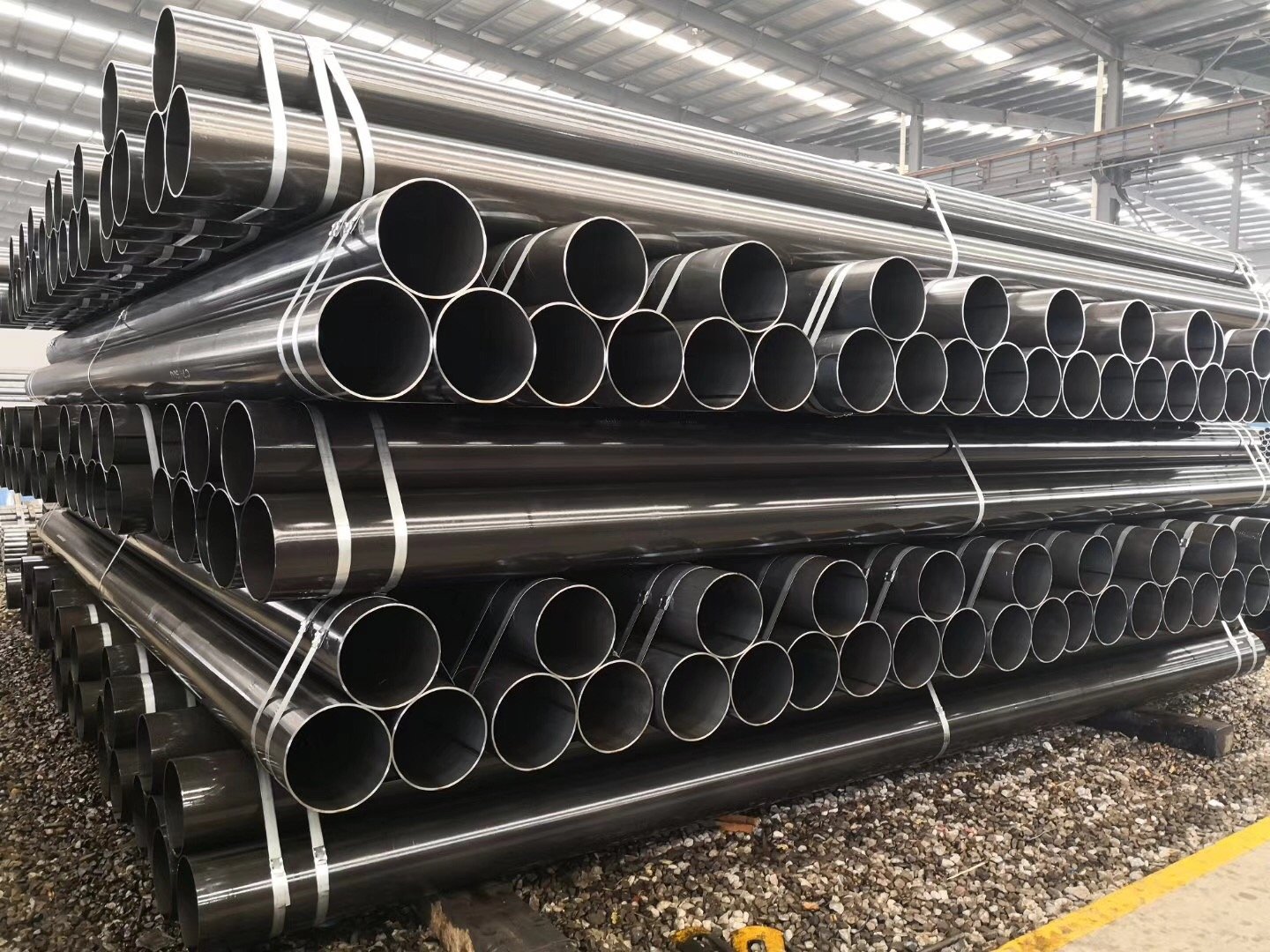
ALLLAND, as an ASTM International Standard certified enterprise, strictly adheres to steel pipe manufacturing specifications such as ASTM A53/A106/A500. Seamless steel pipes, welded steel pipes, and special alloy pipes all meet the stringent requirements of ASTM standards for chemical composition, mechanical properties, and process quality. They are widely used in the petroleum, natural gas, chemical, and machinery manufacturing sectors. Leveraging high-precision rolling, non-destructive testing, and intelligent packaging technologies, our products are exported to markets in the Middle East, South America, and Southeast Asia, establishing us as a strategic supplier for numerous multinational corporations.
Alllandsteel is a steel pipe manufacturer based in China with 25 years of experience. The facility spans 22,000 square meters, represents a RMB 700 million investment, and operates four production lines (JCOE, ERW, SMLS, SSAW) alongside five coating lines. With an annual production capacity of 250,000 tons, the factory covers specifications ranging from Ø406 to Ø1524 and holds multiple international certifications (API/ASTM/EN/ISO/JIS). Focused on steel pipes, creating value for you!
HOT PRODUCTS
POPULAR ARTICLES
ASTM, the American Society for Testing and Materials, is one of the globally influential standards organizations. It primarily defines material properties, product quality, and inspection methods, providing manufacturers with production guidelines and sellers with verification standards. ASTM standards focus on general-purpose steel pipes or structural steel pipes, widely applied in construction, energy, machinery manufacturing, and chemical industries, with official adoption in North America and worldwide.
Core ASTM standards include ASTM A53, ASTM A106, ASTM A333, ASTM A500, and ASTM A795. Each standard specifies distinct production processes and steel grades, with varying application scopes.
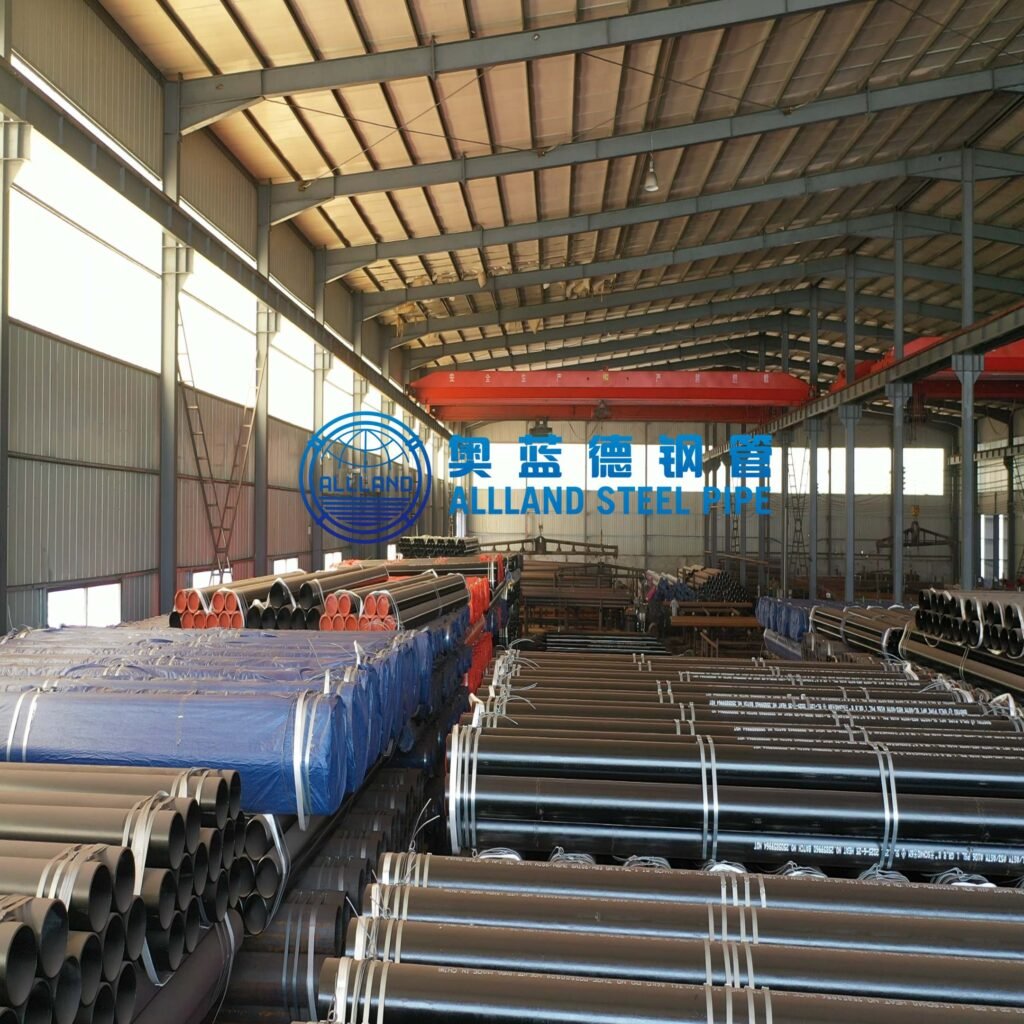
ASTM standards serve as foundational specifications for piping systems, providing the steel pipe industry with unified and globally recognized technical guidelines. These standards effectively elevate quality benchmarks within the sector while enhancing the overall competitiveness of certified manufacturers. Below we outline several commonly used ASTM standards and their applications. For inquiries, please contact us.
| Standard | Process | Steel Grade | Application |
| ASTM A53 | Seamless / Welded Steel Pipes | Gr.A / Gr.B | General environments or standard piping systems for transporting water, gas, and steam. |
| ASTM A500 | Square Tubes / Round Tubes / Rectangular Tubes | Gr.A / B / C / D | Used as structural supports, typically in square, round, or rectangular configurations for bridges and buildings. |
| ASTM A106 | Seamless Steel Pipes | Gr.A / Gr.B / Gr.C | Employed in high-temperature, high-pressure, boiler, and oil/gas systems. |
| ASTM A333 | Seamless Steel Pipes | Gr.1 / Gr.3 / Gr.6 | LNG and cryogenic piping systems. |
| ASTM A795 | Welded Steel Pipes | Gr.A / Gr.B | Primarily utilized in fire sprinkler piping systems. |
Chemical composition significantly influences steel properties such as toughness, hardness, and corrosion resistance. Therefore, strict control of chemical composition is essential. ASTM standards specify the permissible ranges for chemical composition in each steel grade. Below are the chemical composition requirements for ASTM A53, along with explanations of each element’s impact on steel properties.
| Elements | Type S (Seamless) Grade B | Type E (ERW) Grade B |
| Carbon max. % | 0.30* | 0.3 |
| Manganese % | 1.2 | 1.2 |
| Phosphorous, max. % | 0.05 | 0.05 |
| Sulfur, max. % | 0.045 | 0.045 |
| Copper, max.% | 0.4 | 0.4 |
| Nickel, max. % | 0.4 | 0.4 |
| Chromium, max. % | 0.4 | 0.4 |
| Molybdenum, max. % | 0.15 | 0.15 |
| Vanadium, max. % | 0.08 | 0.08 |
C: Determines steel strength and hardness
Mn: Enhances steel toughness and improves post-heating properties
P and S are harmful impurities requiring strict content control.
The standard specifies tensile strength and yield strength. Tensile strength indicates the maximum stress a pipe can withstand before deformation, while yield strength denotes the stress at which plastic deformation occurs. Therefore, load-bearing capacity must be considered under harsh environmental conditions.
The ASTM standard defines pipe dimensions, including outer diameter, wall thickness, length, and permissible deviation ranges. It also specifies straightness and surface quality requirements, ensuring greater dimensional accuracy.
ASTM standards define production methods, including seamless manufacturing procedures and welded pipe processes. Detailed specifications cover subsequent heat treatment operations and final end finishing and threading techniques.
Manufacturing processes determine the pipe’s pressure resistance and stability, constituting a critical phase in steel pipe production.
Steel pipe inspection is a critical step in ensuring the quality and structural safety of steel pipes. This process encompasses chemical composition analysis, flattening or flaring tests, hydrostatic pressure tests, and non-destructive testing. The inspection workflow spans the entire lifecycle of steel pipes, from material procurement and production processes to meeting final application performance requirements.
Fill in the form below and our team will be happy to assist you