ALLLAND Boiler Steel Pipe Supply
Welcome to ALLLAND Steel Pipe Manufacturing. We specialize in the production, R&D, and supply of seamless and welded steel pipes. Our boiler steel pipe are manufactured from premium steel billets through hot rolling, cold drawing/cold rolling, and standardized heat treatment processes. Available in a comprehensive range of dimensions, our products meet diverse application requirements. All products undergo rigorous testing before shipment, including chemical composition analysis, mechanical property testing, hydrostatic pressure testing, non-destructive testing (UT/ET), and dimensional/visual inspection. This ensures every pipe meets the safety requirements for boiler system applications.
Alllandsteel is a steel pipe manufacturer based in China with 25 years of experience. The facility spans 22,000 square meters, represents a RMB 700 million investment, and operates four production lines (JCOE, ERW, SMLS, SSAW) alongside five coating lines. With an annual production capacity of 250,000 tons, the factory covers specifications ranging from Ø406 to Ø1524 and holds multiple international certifications (API/ASTM/EN/ISO/JIS). Focused on steel pipes, creating value for you!
HOT PRODUCTS
POPULAR ARTICLES
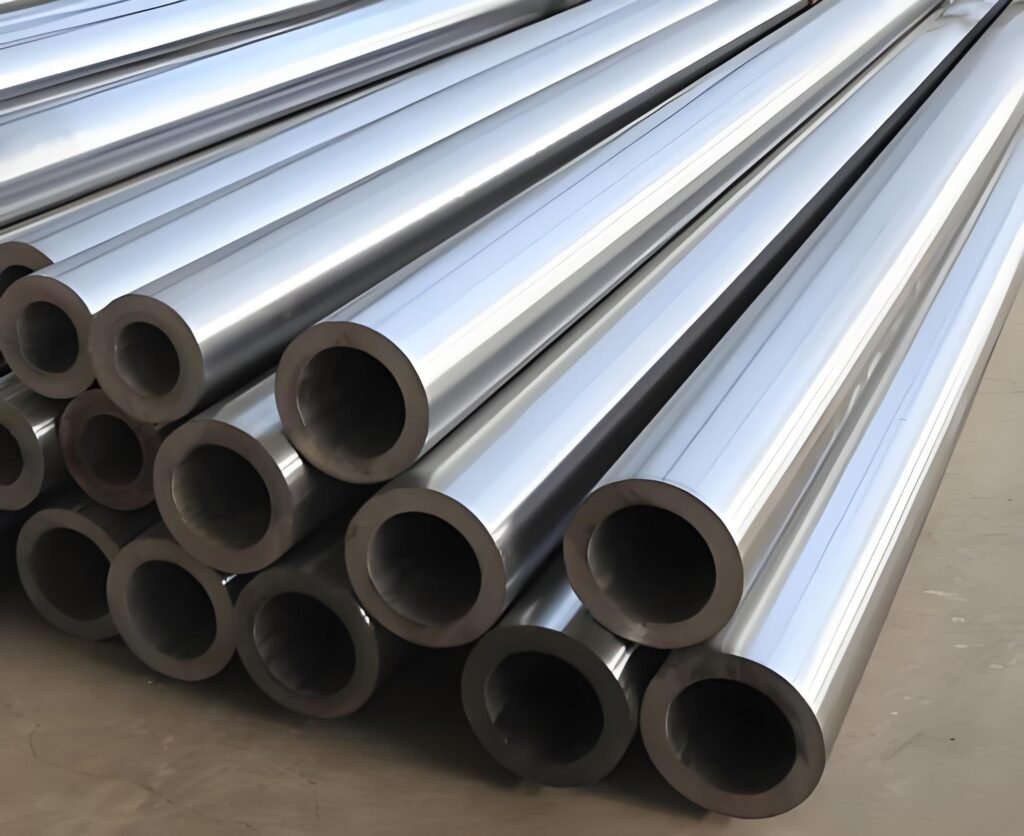
Boiler pipe is a type of steel pipe used in boiler equipment, which can be either welded or seamless. Due to the high-temperature and high-pressure operating conditions of boiler steel pipes, seamless boiler steel pipes are generally preferred. Compared to welded pipes, seamless boiler steel pipes offer significant advantages and are more widely applied.
O.D.:
12.7 mm – 508 mm (Common seamless process dimensions)
W.T.:
1.2 mm – 80 mm,suitable for LP to HT / HP applications.
Length:
6-12 m, available in fixed or multiple lengths; custom lengths per project requirements.
Process:
Hot-rolled seamless / Cold-drawn seamless; Normalized, Normalized + Tempered, Annealed
Standards:
ASTM A192 / A210 / A335; EN 10216-2; DIN 17175
Steel Grades:
SA192, SA210 Gr.A1 / Gr.C, P235GH / P265GH
Tube Ends& Surface Treatment:
Square, Chamfered; Black Skin, Pickled, Painted/Oiled for Rust Prevention
Delivery Conditions:
Grade, Specification, Furnace Number, Standard
Boiler tubes manufactured by ALLLAND
First, boiler tubes operate under high-temperature, high-pressure conditions with frequent thermal cycling, demanding exceptional material quality and manufacturing precision. Seamless boiler tubes are formed by piercing a solid steel billet, resulting in a continuous tube body without fractures or welds, significantly reducing the risk of tube rupture.
Second, under identical outer diameter and wall thickness specifications, seamless tubes can withstand greater pressure loads.
Finally, the continuous and uniform metallurgical structure of seamless boiler tubes makes them highly suitable for long-term boiler operation.
Among these, the mandrel process is optimal for boiler tube manufacturing. This method involves elongating the billet in a multi-stand machine to reduce wall thickness, ensuring surface quality and uniform wall thickness.
Our company manufactures boiler tubes with an outer diameter (O.D.) range of 12.7 mm to 508 mm. The application scenarios, materials, and inspection methods vary for different sizes. Below is a detailed introduction to the specific applications of boiler tubes in different sizes.
Applications: Primary high-pressure steam pipelines, boiler-to-equipment connections.
Characteristics: Primarily pressure-bearing with minimal heat exchange. Must withstand prolonged high-temperature, high-pressure conditions.
Pipe Characteristics: Wall thickness is the most critical parameter for large-diameter pipes, requiring creep resistance under prolonged high-temperature and high-pressure conditions.
Process Requirements: Typically manufactured using hot-rolled seamless processes, necessitating metallographic microstructure inspection and stringent heat treatment specifications.
Common Grades: ASTM A335 P22, ASTM A335 P91 / P92
Application Scope: Waterwall tubes, superheaters, reheaters, heat exchanger tubes.
Application Characteristics: In these scenarios, boiler tubes are arranged in rows, featuring high quantities and long lengths. Heat transfer is the primary function.
Pipe Characteristics: Thin walls and small diameters. Effectively reduces thermal resistance and optimizes material utilization.
Process Requirements: Excellent high-temperature resistance and stringent surface finish specifications. Typically manufactured via cold-drawn seamless processes.
Common Steel Grades: SA192, SA210 Gr.A1, SA
Application Scope: Boiler system connecting pipes, medium-pressure steam transport pipes.
Application Features: Requires both heat exchange and pressure-bearing functions. Outer diameter and wall thickness must balance operational pressure with preheating exchange performance.
Process Requirements: Typically manufactured using hot-rolled seamless processes.
Common Grades: SA210 Gr.C, ASTM A106 Gr.B
| Standard Number | Application | Steel Grades | Features | ||
| ASTM / ASME | ASTM A192 / SA192 | Low-pressure boilers, heat exchange tubes | SA192 | MT / LP | Compact size, heat exchange applications, commonly used for water-cooled walls |
| ASTM A210 / SA210 | Medium- and high-pressure boilers | Gr.A1 / Gr.C | MHT / MHP | Widest application, mainstream in power station boilers | |
| ASTM A335 / SA335 | High-temperature, high-pressure boilers | P11 / P22 / P91 | HT / HP | Alloy steel, creep-resistant | |
| EN | EN 10216-2 | Boilers and pressure equipment | P235GH / P265GH | MT / MHP | Emphasis on material consistency |
| EN 10216-5 | High-temperature service tubes | X11CrMo9-1 | HT / HP | Corresponds to American standard P91 | |
| GB | GB/T 5310 | High-pressure boilers | 20G / 12Cr1MoVG | MHT / HP | Mainstream in domestic power stations |
| DIN | DIN 17175 | Boilers and pressure vessels | St45.8 / 13CrMo44 | HT / HP | Traditional European standard |
| JIS | JIS G3461 | Boilers and heat exchangers | STB340 / STBA24 | MHT / MHP | Commonly used in the Japanese market |
The following table lists standard nominal pipe sizes (NPS) and wall thickness (Schedule) in accordance with ASME B36.10 / B36.19. Alland Steel manufactures seamless boiler and alloy steel pipes conforming to ASTM A179, A192, A210, A213, and A335 standards, covering both tube and piping dimensions for medium- and high-pressure service.
| Outer Diameter (mm) | Outer Diameter (inch) | Typical Wall Thickness (mm) | Pressure Range | Typical Applications |
|---|---|---|---|---|
| 12.7 | 1/2″ | 1.2 – 2.5 | Low to Medium | Instrument Tubes, Auxiliary Heat Exchange |
| 19.05 | 3/4″ | 1.5 – 3.0 | Medium | Small Heat Exchangers |
| 25.4 | 1″ | 2.0 – 4.0 | Medium | Heat Transfer Tubes |
| 31.8 | 1-1/4″ | 2.3 – 5.0 | Medium to High | Water Wall Tubes |
| 38.1 | 1-1/2″ | 2.5 – 6.0 | Medium to High | Superheater Tubes |
| 50.8 | 2″ | 3.0 – 7.0 | Medium to High | Boiler Heating Surface |
| 76.2 | 3″ | 4.0 – 9.0 | High | High Pressure Boiler Tubes |
| Outer Diameter (mm) | Outer Diameter (inch) | Typical Wall Thickness (mm) | Pressure Class | Typical Applications |
|---|---|---|---|---|
| 88.9 | 3-1/2″ | 4.0 – 10.0 | Medium | Economizer Tubes |
| 114.3 | 4-1/2″ | 5.0 – 14.0 | Medium to High | Boiler Connecting Pipes |
| 168.3 | 6″ | 6.0 – 20.0 | High | Steam Distribution Lines |
| 219.1 | 8″ | 8.0 – 25.0 | High | Boiler Main Pipes |
| Outer Diameter (mm) | Outer Diameter (inch) | Typical Wall Thickness (mm) | Service Condition | Typical Applications |
|---|---|---|---|---|
| 273.1 | 10″ | 10.0 – 30.0 | High Temperature / High Pressure | Main Steam Pipes |
| 355.6 | 14″ | 14.0 – 40.0 | High Temperature / High Pressure | Power Plant Boiler Systems |
| 508.0 | 20″ | 20.0 – 55.0 | Ultra High Pressure | Header and Main Connections |